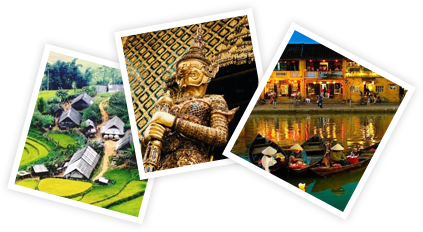

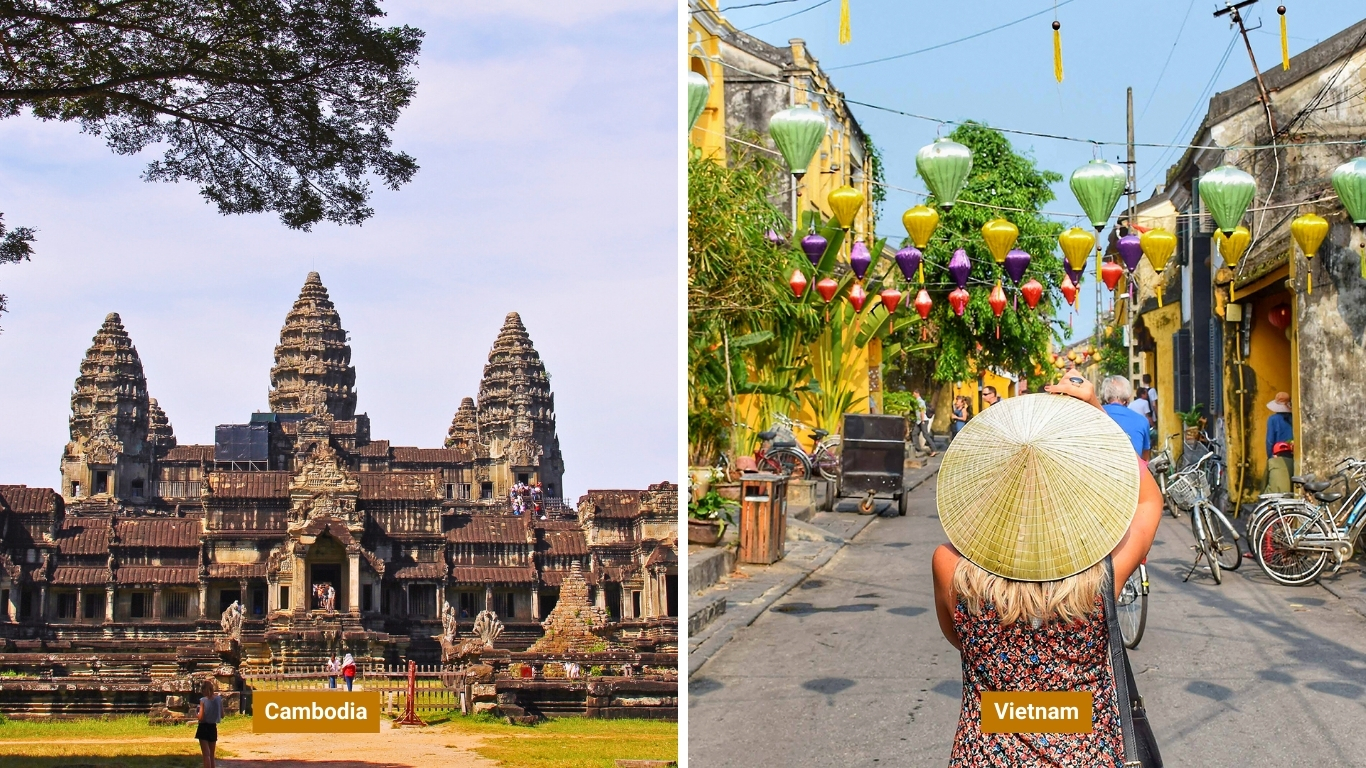
Cambodia and Vietnam, two neighboring countries in Southeast Asia, offer travelers a wealth of experiences, but each with its own distinct flavor. Cambodia charms with its laid-back vibe and iconic Angkor temples, while Vietnam impresses with diverse scenery and bustling cities. So, Cambodia or Vietnam? Which country will captivate your heart?
Having helped thousands of travelers explore both countries over the years, our team at Indochina Voyages has curated this in-depth comparison: from visas to vibes to help you make the right call for your next adventure.
Quick Answer: Cambodia or Vietnam?
If you want ancient temple grandeur, a slower pace, and a more compact trip: choose Cambodia. If you want diverse landscapes, a world-class food scene, and better infrastructure: choose Vietnam. If you have 2-3 weeks: visit both.
Visa Processing
Cambodia has a straightforward visa process. Most nationalities can get a 30-day tourist visa on arrival at Phnom Penh and Siem Reap airports or major land borders for about $30 USD. An e-visa is also available online for $36 USD, processed within 3 business days. You can apply Cambodia e-visa here.
Vietnam’s process is more complex. While some nationalities enjoy visa-free entry, most need to obtain a visa beforehand. Vietnam offers a 30-day single-entry e-visa for $25 USD, typically processed within 3-5 business days. For longer stays or multiple entries, applications must be made through a Vietnamese embassy or consulate, taking up to two weeks and costing $60-$100 USD.
Cambodia edges out Vietnam in terms of visa simplicity and convenience for most travelers, offering a quicker, more flexible process.
Practical tip: Always check your country’s current visa eligibility within two weeks of departure, as policies can change. Apply only through official government websites to avoid scam third-party agencies.
Accessibility
Travelers in Vietnam and Cambodia benefit from a growing network of flights, established land border crossings, and an expanding range of river cruises, facilitating exploration of each country’s unique cultures and landscapes.
Flights
Overall, Vietnam provides better flight accessibility for both international and domestic travel, particularly for travelers from Western countries, with more direct flight options and potentially lower fares due to competition in the airline market.
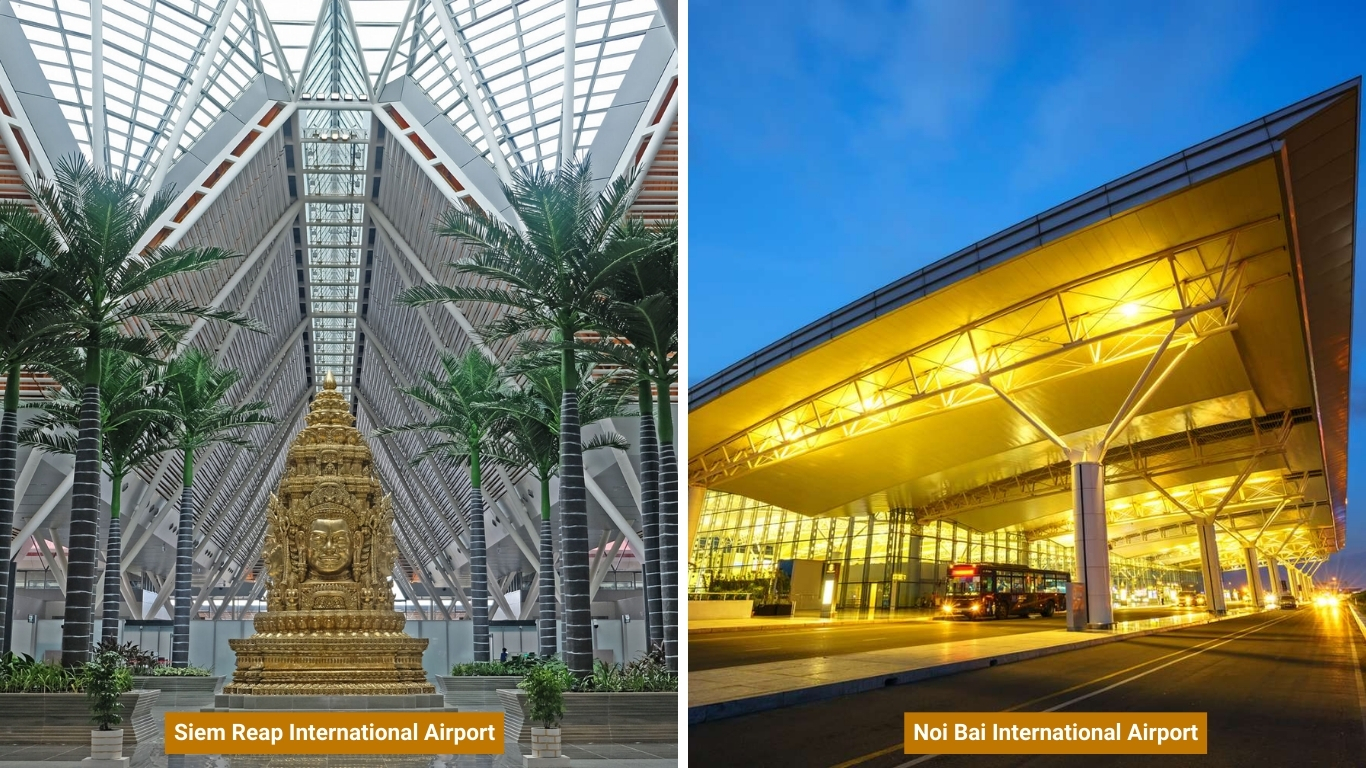
Cambodia’s main international gateways are Phnom Penh International Airport (PHN) and Siem Reap International Airport (SAI). While they handle international flights, options are limited, with direct flights primarily from Asian hubs like Bangkok, Singapore, and Kuala Lumpur. Long-haul flights usually require connections. Domestically, a few airlines connect key cities like Siem Reap, Phnom Penh, and Sihanoukville, but the network is not extensive.
In contrast, Vietnam has broader air connectivity with major international airports in Hanoi (Noi Bai), Ho Chi Minh City (Tan Son Nhat), and Da Nang. These airports offer a wider range of flight options, including more direct long-haul flights from Europe and North America. Vietnam’s domestic flight network is well-developed, making travel between major cities and tourist destinations convenient and efficient.
Land Border Crossing
Cambodia shares borders with Thailand, Laos, and Vietnam. Popular crossings include Poipet (from Thailand to Siem Reap), Bavet (from Vietnam to Phnom Penh), and Tropaeng Kreal (from Laos). Border facilities have improved, but some crossings can still be time-consuming and potentially confusing for first-time visitors.
Vietnam has land borders with China, Laos, and Cambodia. Well-organized crossings include Lao Cai (from China), Dien Bien Phu (from Laos), and Moc Bai (from Cambodia to Ho Chi Minh City). Vietnam’s land borders are generally better developed, with clearer processes and more frequent public transport options on either side.
While both countries offer land border crossing options, Vietnam’s are typically better organized and offer more route choices, especially for travelers exploring multiple countries in the region.
River Travel
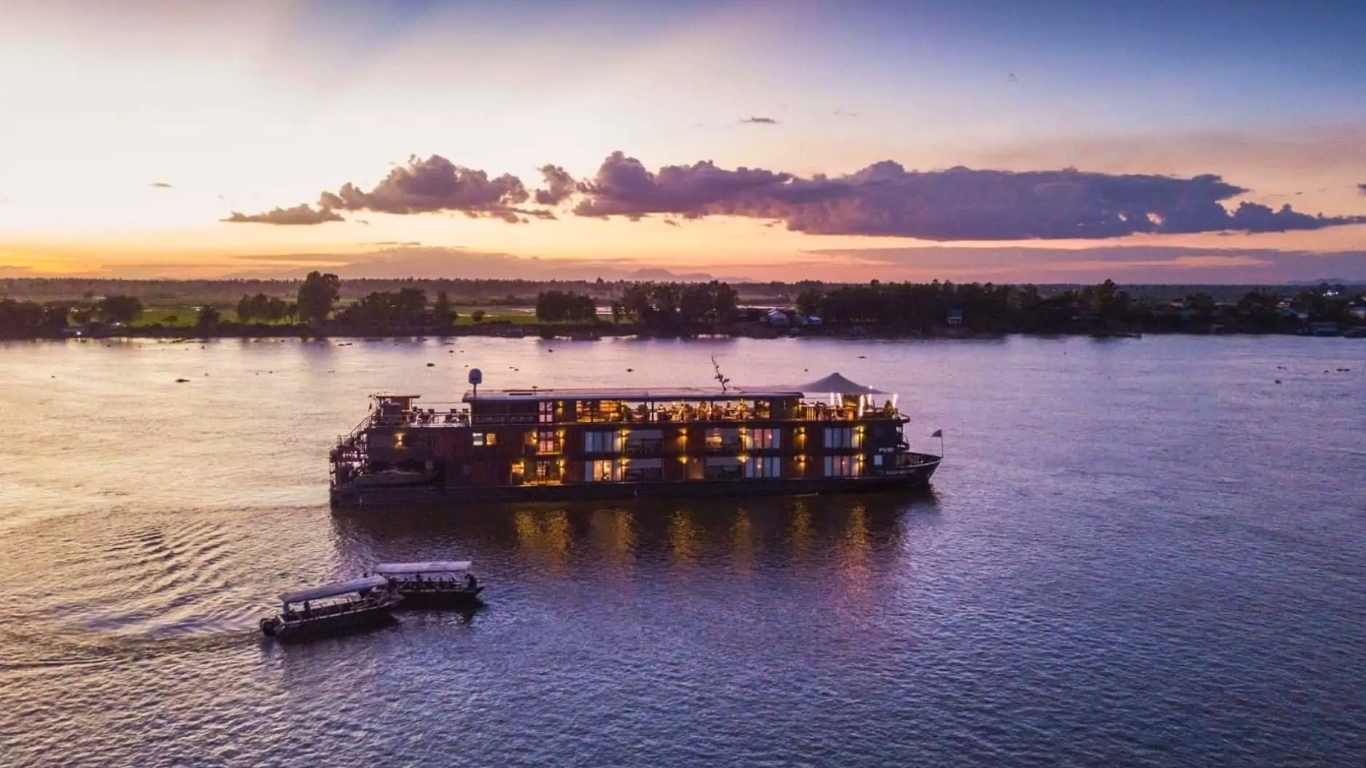
River travel along the Mekong is one of the most rewarding ways to experience both countries together. In Cambodia, river cruises historically connected Phnom Penh and Siem Reap — however, seasonal water levels now mean the Siem Reap leg often ends in Kampong Chnang, with passengers continuing by bus.
Vietnam’s Mekong Delta features a more extensive waterway network and a wider variety of cruise options, from day trips to multi-day excursions with stops at floating markets and rural villages. For the ultimate experience, combined Vietnam-Cambodia Mekong river cruises (typically 8 days/7 nights) allow you to journey between both countries by boat – a slow-travel highlight for those who love history, culture, and scenic waterways.
Verdict: Vietnam wins on overall accessibility and transport flexibility. However, Cambodia’s airport infrastructure has improved, and the country’s compact size actually makes it easier to cover key highlights in fewer days.
Development and Infrastructure
Vietnam currently offers a more developed and easier-to-navigate environment for travelers, especially those looking to cover longer distances or explore beyond major tourist hubs.
Cambodia is rapidly developing, particularly in major tourist areas like Siem Reap, Phnom Penh, and Sihanoukville, where roads and public facilities have improved. However, rural areas still face infrastructure challenges. Public transportation is enhanced with air-conditioned buses, but it can be less reliable than in neighboring countries.
Vietnam has more advanced infrastructure, with modern amenities and well-maintained roads in larger cities. An extensive network of domestic flights, trains (including overnight sleeper options), and VIP buses connects various regions. Roads are generally in better condition, making travel more comfortable. Vietnam also features a more developed tourism infrastructure, offering a wider range of tours and better-maintained facilities.
Accommodation
Both countries offer excellent value, but Vietnam provides more variety and higher quality in mid-range and luxury segments.
Cambodia’s standout options include:
- Siem Reap: Charming boutique hotels with traditional Khmer architecture, ranging from $15 budget guesthouses to luxury properties like Raffles Grand Hotel d’Angkor
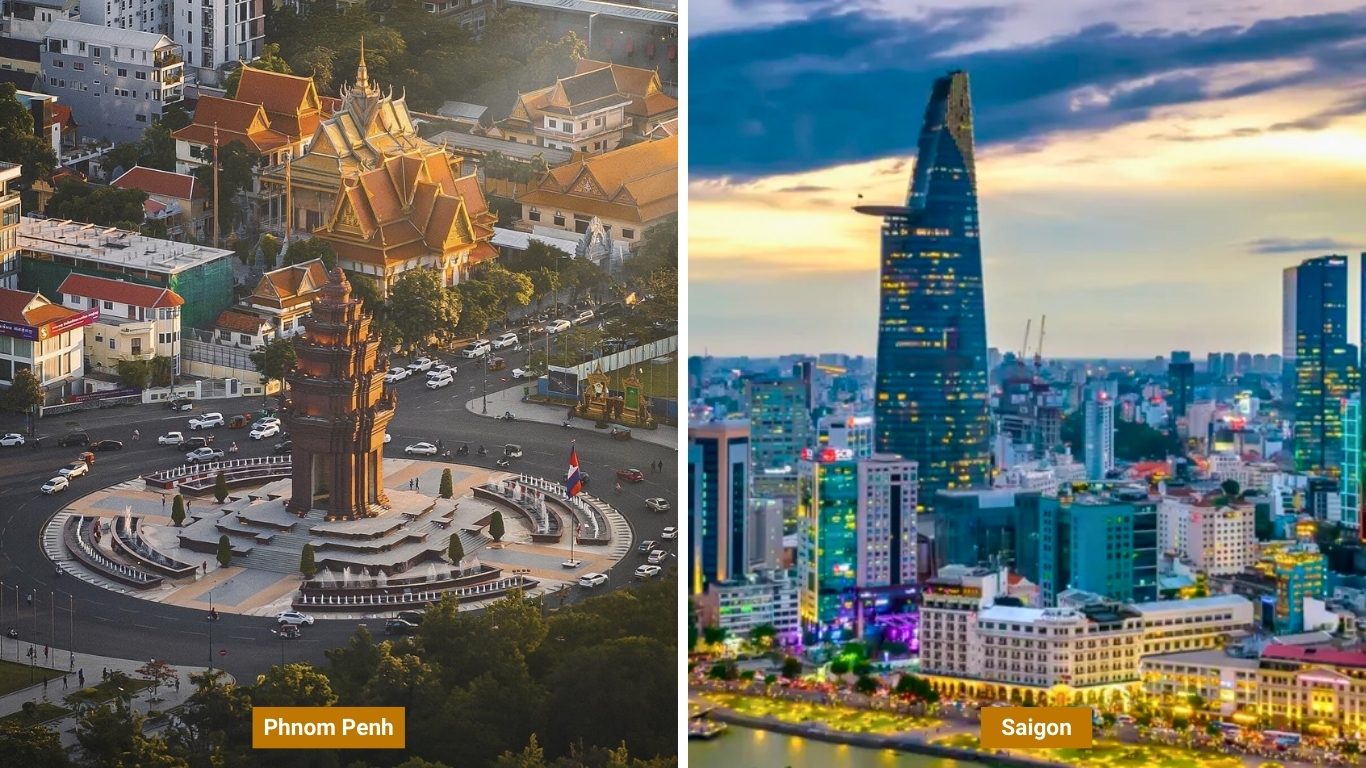
- Phnom Penh: Modern high-rise hotels with riverside views
- Coastal areas (Sihanoukville, Koh Rong): Beachfront bungalows and boutique resorts, note that Sihanoukville has undergone major changes in recent years and is still recovering its backpacker identity; Koh Rong and Koh Rong Samloem islands remain the preferred choice for beach travelers
Vietnam’s accommodation options span:
- Hanoi and Ho Chi Minh City: From $8 backpacker hostels to five-star international hotels
- Hoi An: Boutique stays in restored ancient townhouses with pool villas
- Halong Bay: Overnight cruises on traditional junks or luxury vessels
- Sapa: Mountain lodges with terraced valley views
- Da Nang: High-end beach resorts along My Khe Beach
- Mekong Delta: Eco-lodges and homestays with local families
Verdict: Vietnam wins on variety and consistent quality. Cambodia shines in Siem Reap’s boutique scene and its untouched island retreats.
Cultural Heritage
Cambodia
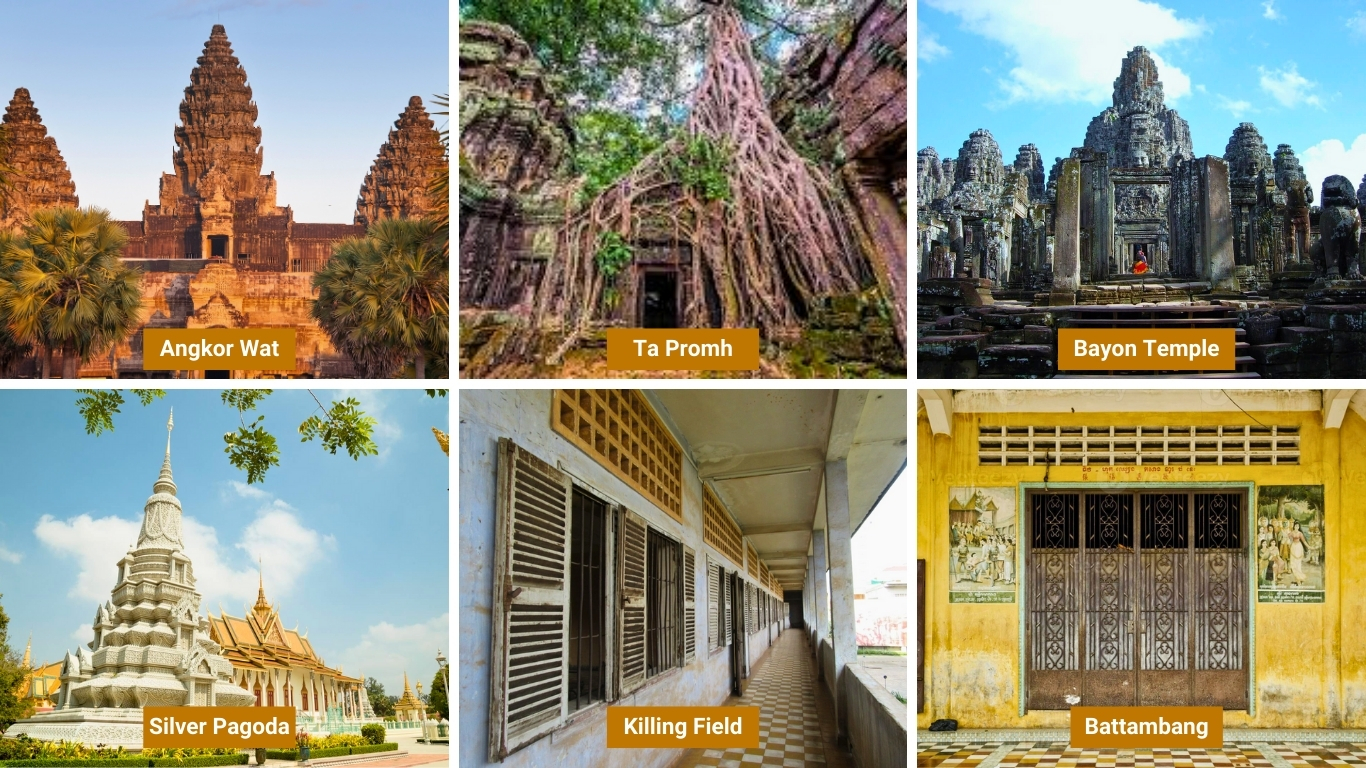
Cambodia’s crown jewel is the Angkor Archaeological Park, a UNESCO World Heritage site that spans over 400 square kilometers. This remarkable site is home to hundreds of temples and monuments that reflect the country’s rich history.
- Angkor Wat: The iconic temple complex, known for its grandeur and intricate carvings.
- Ta Prohm: Famous for its tree-covered ruins, blending nature with architecture.
- Bayon: Renowned for its distinctive stone faces and intricate bas-reliefs.
- Royal Palace and Silver Pagoda: Located in Phnom Penh, showcasing regal architecture and cultural treasures.
- Killing Fields and Tuol Sleng Genocide Museum: Remnants of the Khmer Rouge era, offering a poignant reflection on Cambodia’s past.
- Colonial Architecture in Battambang: A glimpse into the country’s colonial history through preserved buildings.
Vietnam
Vietnam boasts a diverse array of cultural attractions that span its rich history and various regional influences.
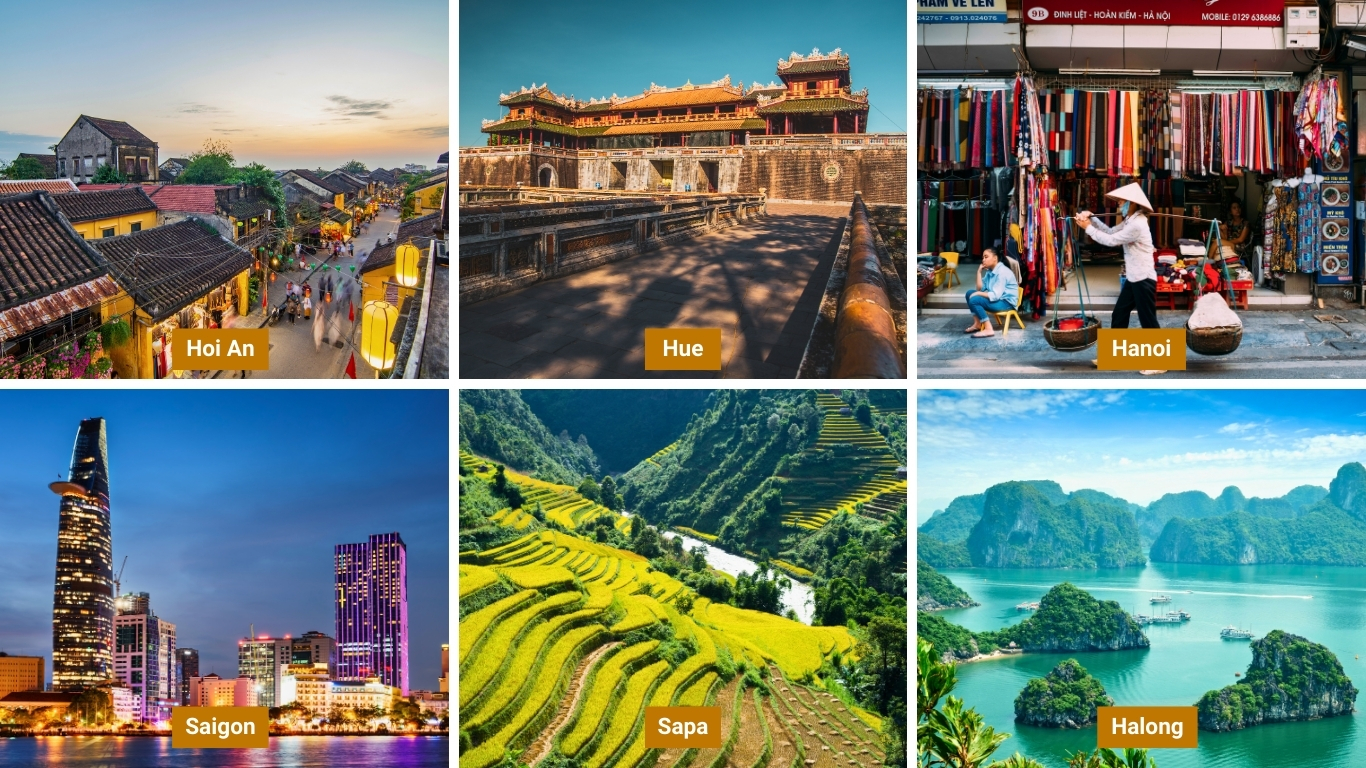
- Hoi An: A UNESCO-listed ancient town known for its well-preserved architecture and multicultural heritage.
- Hue’s Imperial Citadel: Provides insights into Vietnam’s royal history and the Nguyen Dynasty.
- Hanoi: Home to significant historical sites like the Temple of Literature (Vietnam’s first university) and the Ho Chi Minh Mausoleum.
- Ho Chi Minh City: Features a blend of colonial architecture, modernist structures, and war-related sites, including the War Remnants Museum and Cu Chi Tunnels.
- Sapa: Known for its unique hill tribe cultures and stunning mountainous landscapes.
While Cambodia’s Angkor Wat stands out for its unparalleled grandeur and historical significance, Vietnam offers a broader range of cultural experiences that reflect its diverse history and regional influences.
Natural Landscapes
Cambodia or Vietnam then also have each charm in natural landscape for travelers explore:
Cambodia
Cambodia’s landscape is characterized by its central plains and significant natural features, offering unique experiences for nature lovers.
- Tonle Sap Lake: The largest freshwater lake in Southeast Asia, central to the country’s ecology and local livelihoods.
- Sihanoukville: Home to less-developed beaches and the pristine islands of Koh Rong and Koh Rong Samloem, ideal for relaxation and exploration.
- Cardamom Mountains: A haven for ecotourism, these mountains host diverse wildlife, including rare species like clouded leopards and Asian elephants.
- Mekong River: Flowing through the east, it supports rich ecosystems and traditional fishing communities, adding to the country’s natural charm.
Vietnam
Vietnam features a wider array of landscapes due to its larger size and varied geography, appealing to nature enthusiasts.
- Halong Bay: Famous for its emerald waters and limestone karsts, creating breathtaking seascapes.
- Sapa and Ha Giang: Known for stunning terraced rice fields and dramatic mountain views, perfect for trekking and photography.
- Coastal Areas: Long stretches of beautiful beaches, including the lively Da Nang and secluded Quy Nhon, cater to beachgoers.
- Central Highlands: Regions around Dalat offer cooler climates, waterfalls, and scenic mountain retreats.
- Mekong Delta: An intricate network of rivers and canals that showcases rural Vietnamese life and biodiversity.
- Phong Nha-Ke Bang National Park: Home to spectacular caves and lush forests, including Son Doong, the world’s largest cave, attracting adventure seekers.
While both countries boast natural beauty, Vietnam’s greater geographical diversity offers a wider range of landscapes and outdoor activities, from coastal scenery to alpine-like mountain ranges, providing more options for nature lovers and adventure seekers.
Food and Cuisine
Cambodian cuisine features bold flavors and unique dishes like fish amok and lap Khmer, while Vietnamese cuisine is celebrated for its fresh ingredients and regional diversity, showcasing iconic dishes such as pho and banh mi. For each country, you can expect:
Cambodian Cuisine
Cambodian cuisine, though less internationally recognized, delights with its combination of fresh ingredients and bold flavors.
Signature Dishes:
- Fish Amok: A rich curry steamed in banana leaves, showcasing local fish and spices.
- Lap Khmer: A refreshing lime-marinated beef salad, often served with herbs and vegetables.
- Kuy Teav: A flavorful noodle soup, commonly enjoyed for breakfast.
Distinctive Ingredients:
- Prahok: A fermented fish paste that imparts a unique flavor to many dishes.
- Unique Fruits: Varieties like durian and mangosteen add to the culinary experience.
Street Food: Phnom Penh and Siem Reap feature vibrant street food scenes, offering affordable and authentic tastes of local culture.
Vietnamese Cuisine
Vietnamese cuisine is celebrated globally for its fresh ingredients, vibrant flavors, and regional diversity.
Regional Specialties:
- Northern Vietnam: Known for pho (beef noodle soup) and bun cha (grilled pork with noodles).
- Central Vietnam: Features complex dishes like bun bo Hue (spicy beef noodle soup) and banh xeo (crispy pancakes).
- Southern Vietnam: Offers lighter, sweeter flavors with dishes like com tam (broken rice) and canh chua (sweet and sour soup).
Culinary Influences: The French colonial legacy is evident in dishes like banh mi (Vietnamese sandwich) and in the country’s vibrant coffee culture.
Street Food: Abundant and diverse throughout the country, with each city showcasing its own specialties.
While both Cambodian and Vietnamese cuisines are delicious, Vietnam’s food scene is more diverse and internationally renowned. The variety of regional cuisines within Vietnam offers a broader culinary journey, making it particularly appealing for food enthusiasts seeking a wide array of flavors and dishes.
Safety for Travelers
This is an important category the original post did not address and it matters to many travelers.
Cambodia is generally safe for tourists in major cities and tourist areas. Common issues include petty theft (bag snatching from motorbikes), scams targeting tourists around Angkor Wat, and occasional drink-spiking incidents in Phnom Penh’s bar district. Sihanoukville has experienced a significant increase in crime in recent years and warrants extra caution, particularly at night.
Vietnam is also considered safe for travelers, with low rates of violent crime against tourists. The main concerns are motorbike bag snatching (especially in Ho Chi Minh City), traffic accidents (road safety standards differ significantly from Western countries), and tourist scams around taxi meters, shoe-shining, and cyclo rides in major cities. Always use Grab (the regional equivalent of Uber) for reliable, metered transport.
Both countries have limited fire safety infrastructure in older buildings, and water safety standards vary. Travel insurance covering medical evacuation is strongly recommended for both destinations.
People and Hospitality
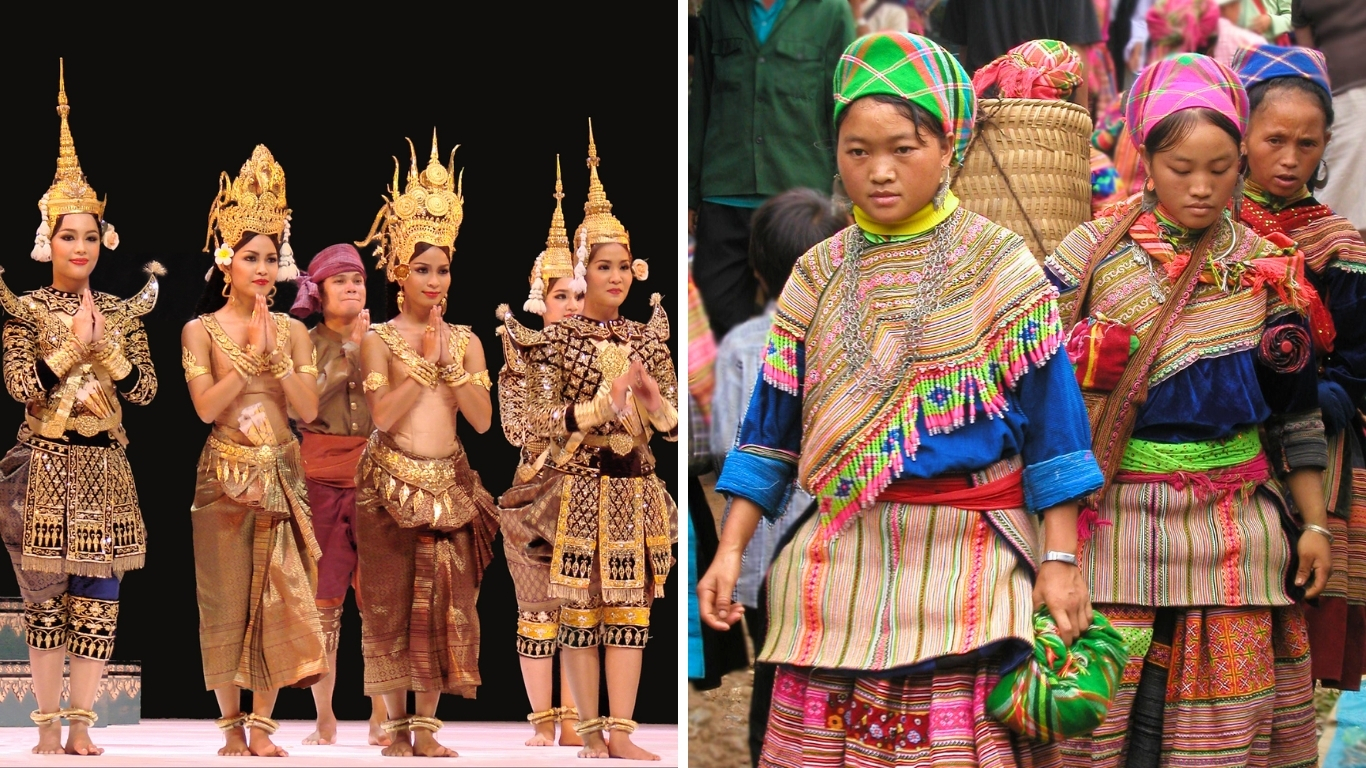
Both countries offer warm hospitality, but experiences differ: Cambodia tends to be more laid-back and easygoing, with a slower pace of life, while Vietnam’s hospitality is infused with energy and enthusiasm, reflecting its dynamic development.
Cambodians are known for their warm smiles and gentle nature, reflecting resilience despite a challenging history. In tourist areas, they are eager to share their culture, valuing respect and face-saving in interactions. English is commonly spoken, easing communication.
Vietnamese people are friendly and curious, though they may seem reserved in crowded cities. In rural areas, hospitality shines, with locals often inviting visitors to share meals. Their strong work ethic and entrepreneurial spirit are evident in bustling markets and street life. While language barriers may exist outside major tourist spots, locals are generally willing to help.
The Vibe and Nightlife
If you’re after an energetic nightlife, Vietnam is the better choice with colorful clubs and bars, while Cambodia offers a more relaxed atmosphere.
Cambodia’s nightlife is centered around Siem Reap’s Pub Street, with bars and restaurants, and Phnom Penh’s rooftop bars. Sihanoukville and nearby islands host laid-back beach parties, making the scene low-key.
In contrast, Vietnam boasts vibrant nightlife, especially in major cities. Ho Chi Minh City’s District 1 features rooftop bars and nightclubs, while Hanoi’s Old Quarter is lively with beer streets and live music. Hoi An offers charming lantern-lit streets, and coastal cities like Nha Trang and Da Nang attract beachgoers, complemented by bustling night markets.
Weather and Best time to visit
Both countries can be visited year-round, but Vietnam’s varied climate offers more flexibility in planning trips. Travelers can usually find favorable weather in some part of Vietnam at any time, whereas Cambodia’s climate is more uniform, limiting optimal travel periods.
Cambodia has a tropical climate with a dry season (November to April) and a wet season (May to October). The best time to visit is during the dry season, especially from November to February, when temperatures are cooler and humidity is lower, though this also marks peak tourist season around Angkor Wat. The wet season offers lush landscapes and fewer crowds, but some rural areas may be inaccessible due to flooding.
Vietnam‘s climate varies significantly due to its size and geography. The north has four seasons, while the south experiences dry and wet seasons. The best times to visit are generally from February to April and August to October. Good weather can often be found year-round in different regions; for instance, while central Vietnam may have heavy rain in November, the south can still be pleasant.
For more details information, let’s read our blog: When is the best time of year to visit Vietnam and Cambodia? – Complete Travel Guide
Is Cambodia or Vietnam Cheaper?
Both Vietnam and Cambodia are also affordable. In general, Cambodia typically edges out Vietnam in overall affordability for budget travelers, but Vietnam’s greater variety of options allows for tailored trips across different price ranges.
Cambodia is generally more budget-friendly, with lower costs for accommodation, food, and activities, especially outside tourist areas. Dorm beds can be as low as $5 USD, and local meals range from $2-3 USD, though Angkor Wat’s one-day pass has risen to $37 USD.
Vietnam is still affordable but tends to be pricier, particularly in major cities and tourist spots. Accommodation and food costs are slightly higher, and transportation can be more expensive due to the country’s size. However, some attractions in Vietnam may be cheaper than in Cambodia.
So, is Cambodia or Vietnam Better?
Choosing between Cambodia and Vietnam ultimately depends on your personal preferences and travel style. Both countries offer unique experiences that cater to different types of travelers.
This table provides a clearer, more digestible comparison between the two countries, making it easier for travelers to quickly assess which destination might better suit their preferences:
| Choose Cambodia if you prefer: | Choose Vietnam if you prefer: |
| Ancient archaeological wonders | Diverse landscapes |
| Laid-back, slower-paced travel | Extensive culinary experiences |
| Budget-friendly options | Better infrastructure and transportation |
| Simpler visa process | Varied historical sites across the country |
| Compact travel experience | Diverse and lively nightlife |
| Off-the-beaten-path feel | Longer trips with more variety |
Focusing on one country offers an in-depth experience, but combining Vietnam and Cambodia in a single trip is feasible and enriching. Spending 2-3 weeks allows you to explore both. In 2 weeks, visit one part of Vietnam, often the south, before heading to Cambodia. A 3-week itinerary lets you enjoy highlights of both countries without feeling rushed.
This combination allows for firsthand comparison of their unique characteristics: Vietnam’s diverse landscapes and culinary scene alongside Cambodia’s awe-inspiring temples and relaxed vibe. You’ll experience Vietnam’s developed tourism infrastructure and Cambodia’s off-the-beaten-path charm.
Maybe you’ll want to read more: Vietnam and Cambodia 2 Weeks: Perfect Itinerary & Complete Travel Guide
Both Cambodia and Vietnam offer rewarding travel experiences. Each country has its own unique charm, history, and attractions that make it special. Whichever you choose, approach your journey with an open mind and a willingness to embrace new experiences. Both Cambodia and Vietnam have the power to create lasting memories and potentially life-changing encounters.
—
Whether you choose the ancient wonders of Cambodia, the diverse landscapes of Vietnam, or decide to experience both, Indochina Voyages also specializes in customizing your amazing journey to both of Southeast Asia countries.
As one of the region’s premier boutique tour companies, we understand that every traveler is unique. That’s why we offer customized itineraries tailored to your interests, pace, and travel style. From bustling cities to tranquil temples, from street food adventures to luxury cruises, let us help you design your perfect Indochina experience. With our deep local knowledge and commitment to exceptional service, your dream trip to Southeast Asia is just a conversation away. Contact us here or drop us an offline message on the screen today and start your journey of a lifetime.