Yes, Cambodia is worth visiting in July if you go in with the right expectations. July sits in the middle of the monsoon season, which means daily afternoon showers, lush green scenery, and significantly fewer tourists than peak season. Temperatures stay warm and manageable, prices drop by up to 40%, and iconic temples like Angkor Wat are genuinely uncrowded. This guide covers exactly what you’ll face: real weather data by region, the best places to visit, practical packing tips, and a cultural bonus most travelers miss entirely.
What is the Weather Like in Cambodia in July?
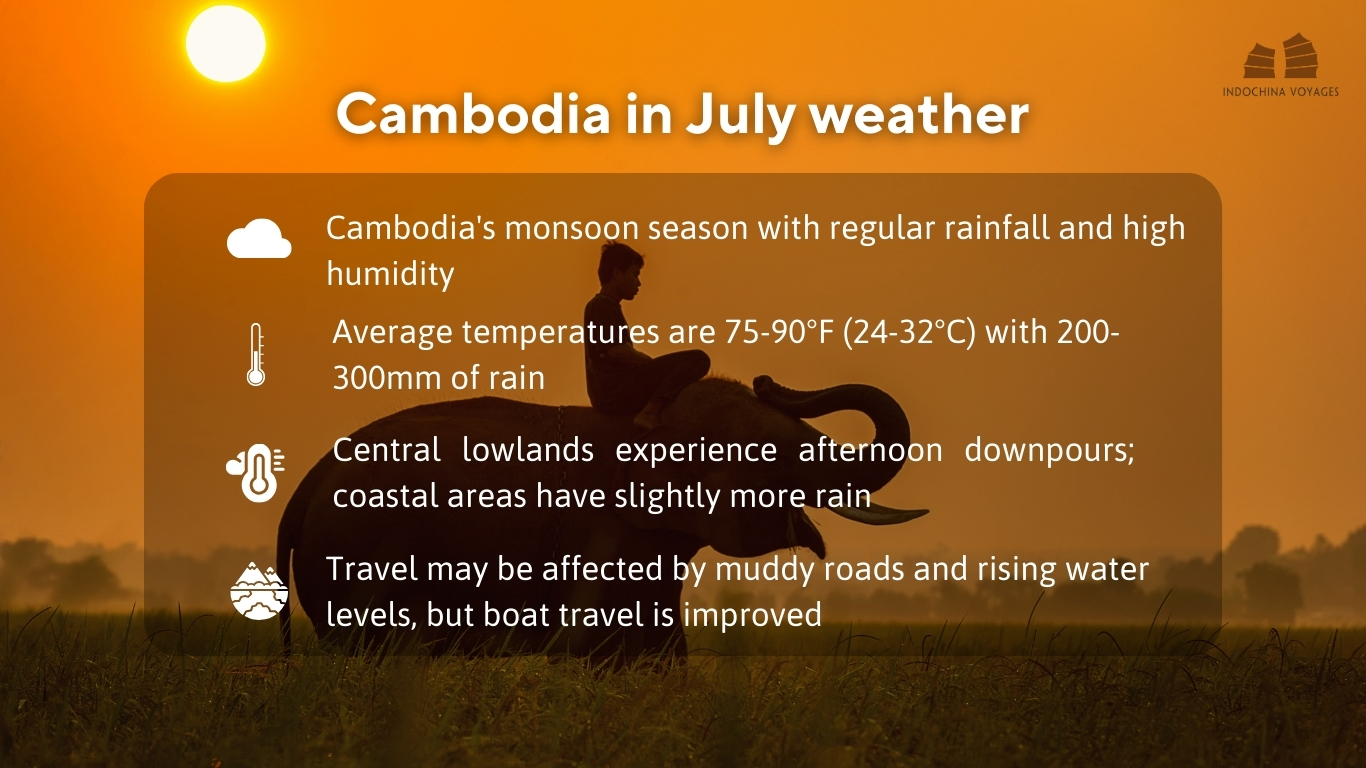
July is firmly within Cambodia’s wet season (May-October), but it’s not the wettest month- that’s October. What you’ll actually experience is warm, humid days punctuated by short, heavy afternoon showers rather than all-day downpours. Mornings are typically clear and usable for outdoor plans; rain usually builds in the late afternoon and clears before evening.
Cambodia July weather breakdown:
| Metric | Details |
|---|---|
| Average daytime temperature | 31-33°C (88-91°F) |
| Average nighttime temperature | 24-25°C (75-77°F) |
| Average monthly rainfall | 175-220mm |
| Average rainy days | 14-23 days |
| Humidity | 80-85% |
| Daily sunshine hours | ~5 hours |
| UV index | High, sunscreen essential |
| Sea temperature (south coast) | 28–29°C |
Note: Rainfall data varies meaningfully by source and by specific location within Cambodia. The southern coast (Sihanoukville, Kep) receives the heaviest rainfall; Phnom Penh and Siem Reap tend to be somewhat drier.
Regional weather breakdown
| Region | Temperature | Rainfall Level | Notes |
|---|---|---|---|
| Siem Reap | 25-32°C | Moderate | Bright mornings common; afternoon showers |
| Phnom Penh | 26-32°C | Moderate | Late-day storms possible; urban drainage is adequate |
| Sihanoukville / Kep | ~30°C | Heavy | Rougher seas; best for beach-side rain retreats |
| Cardamom Mountains | Cooler than lowlands | Heavy | Spectacular waterfalls; cooler trekking conditions |
| Ratanakiri / Kratie (northeast) | ~28°C | High precipitation | Coolest region; lush rainforest scenery |
One practical note: late July and early August carry a higher flood risk in Phnom Penh and low-lying areas near rivers. Check local forecasts before travel and avoid lingering in flood-prone zones after heavy rain.
>> Cambodia in June Weather: Best Guide for Cambodia Trip
So, Is July a Good Time to Visit Cambodia?
The short answer: yes, for the right kind of traveler. July rewards those who prioritize cultural exploration, value savings, and don’t mind planning their days around a predictable rain window. It’s not ideal if beach activities are your main goal, as seas along the southern coast become choppy and visibility for diving is reduced.
Pros and Cons at a glance:
| Pros | Cons |
|---|---|
| 20-40% lower hotel rates across the country | Afternoon rain requires flexible scheduling |
| 30-50% fewer tourists at major sites | Coastal waters too rough for snorkeling/diving |
| Lush green landscapes, best time for photography | Rural roads can flood or become muddy |
| Authentic local atmosphere at markets and villages | High humidity (80-85%) feels heavy in cities |
| Angkor Wat moats and reservoirs return to full capacity | Some remote areas harder to reach |
| Cooler than the peak hot season (March-May) | Mosquito activity increases |
Where to Go in Cambodia in July?
Structure your days with outdoor activity in the mornings and indoor or covered plans for the afternoon. Most sites operate normally throughout the rainy season.
Visit Angkor Temples in Siem Reap
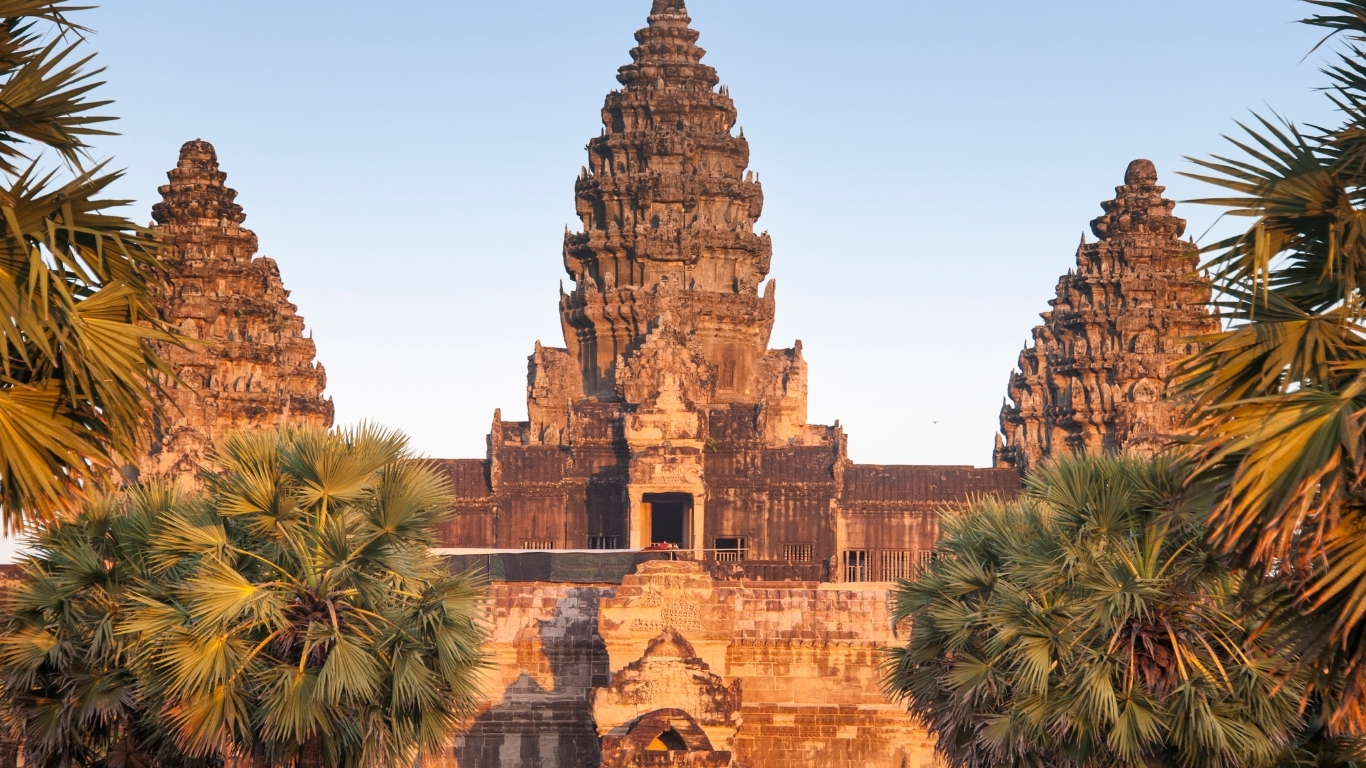
Siem Reap is arguably the best destination in Cambodia during July. The Angkor Archaeological Park takes on a genuinely different character in the wet season: the moats and reservoirs fill to their original design levels, the surrounding jungle turns a deep, vivid green, and morning mist frequently drifts across the stone towers, a photographic opportunity you simply won’t find in December or January.
Practical tips for temple visits in July:
- Start at sunrise (around 5:41-5:49 AM) to maximize dry morning hours
- Angkor Wat, Bayon, and Ta Prohm all see dramatically fewer visitors, no queues at popular spots
- Allocate 3-4 days to spread your temple visits and allow for weather flexibility
- The countryside around Siem Reap turns into flooded rice paddies that mirror the sky, take the time to explore by bicycle or tuk-tuk
Tonle Sap Lake: July is an excellent time to visit the floating villages on Tonle Sap. The lake begins its dramatic annual expansion during this month: water levels rise fast, making boat access to communities like Kampong Phluk genuinely impressive. It’s not yet at peak flood stage, so conditions are good.
Phnom Penh
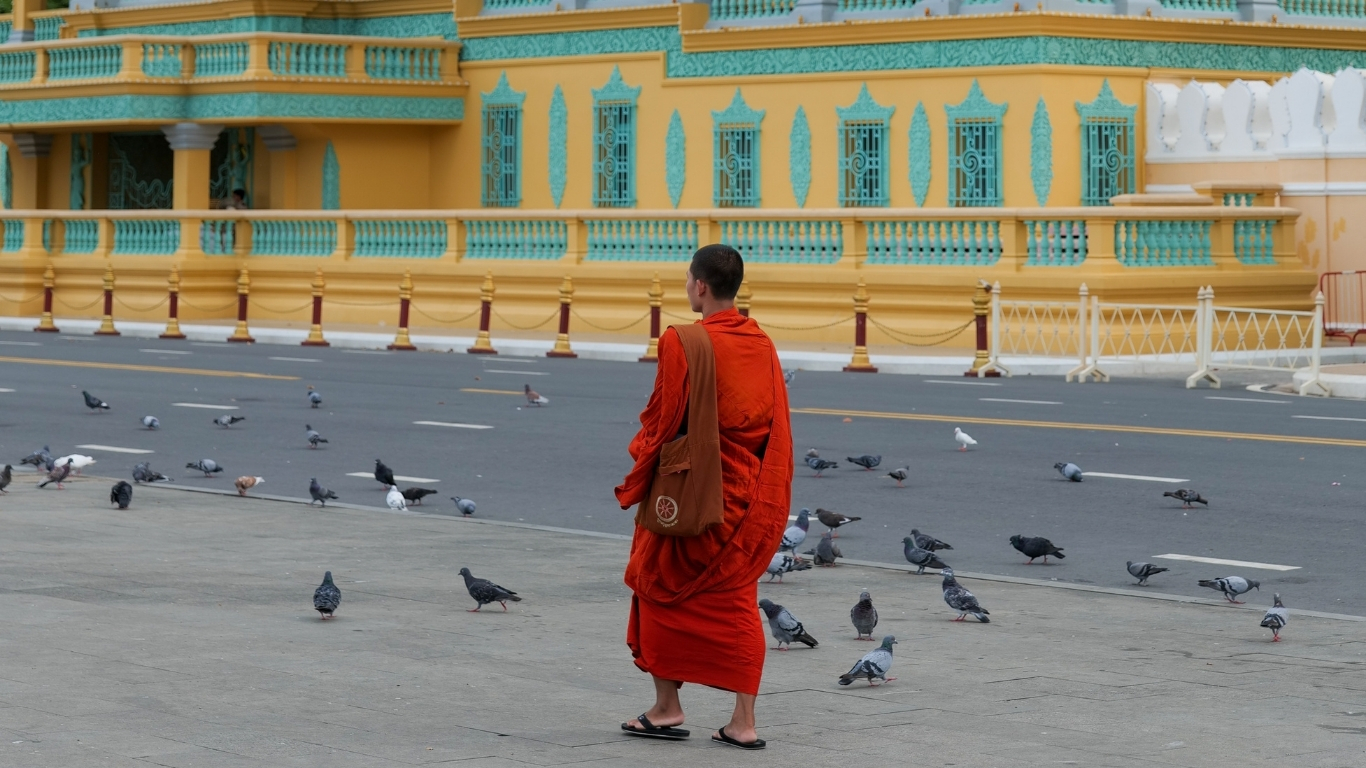
The capital is well-suited to the rainy season because many of its most meaningful sites are fully or partially indoors. Plan outdoor riverfront walks for morning; use afternoon downpours as an opportunity to visit museums at a leisurely pace.
Best things to do in Phnom Penh in July:
- Royal Palace and Silver Pagoda (less crowded, stunning against grey skies)
- Tuol Sleng Genocide Museum and Choeung Ek Memorial (both fully indoor, deeply important)
- National Museum of Cambodia (excellent collection, sheltered)
- Riverside promenade (lush and green; visit in the morning before rain)
- Central Market and Russian Market (rain or shine, always lively)
The city’s drainage handles rain reasonably well in most neighborhoods, though brief street flooding can occur in low-lying areas during heavy downpours. Tuk-tuks remain the most practical transport option; negotiate a half-day rate with your driver.wers.
Sihanoukville and the Southern Coast
The coast in July is a different experience from peak season, best suited to travelers who want solitude, dramatic tropical scenery, and very low prices rather than beach swimming or snorkeling.
What works well:
- Hotel rates often drop 50% or more from peak season
- Koh Rong and Koh Rong Samloem: the islands receive heavy rain but tropical downpours create an atmospheric, quiet experience among jungle-covered hills
- Spa facilities, hammocks, and resort swimming pools come into their own during rainy afternoons
- Fresh seafood is at peak quality and very affordable
What doesn’t work well:
- Offshore visibility for diving is poor
- Seas can be rough; some boat services between islands run on reduced schedules
- Kep’s crab market and beachfront remain enjoyable for day visits
KEP: Kep is worth a specific mention. It’s quieter than Sihanoukville even in peak season, and in July it becomes genuinely peaceful. The famous Kep Crab Market continues operating, and the mangrove kayaking trail through Kep National Park is at its most lush and rewarding.re the tropical downpours create a peaceful atmosphere among the jungle-covered hills.
Cardamom Mountains Region
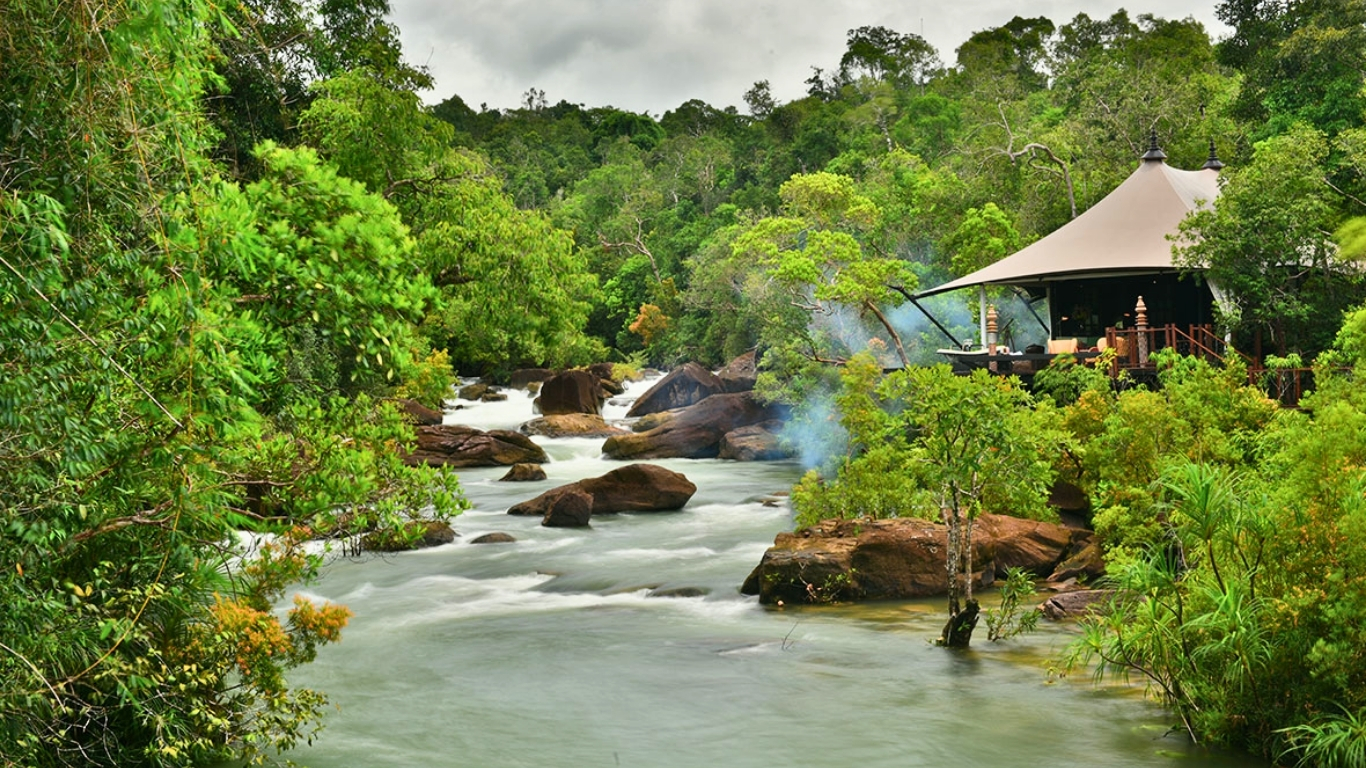
For nature lovers and adventure travelers, the Cardamom Mountains region in western Cambodia is arguably at its best in July. The reason is simple: the waterfalls are spectacular.
Why go in July:
- Waterfalls like Tatai and Kbal Chhay reach their maximum flow are genuinely dramatic
- The ancient rainforest is fully alive with new growth and birdlife
- Cooler temperatures due to elevation make trekking more comfortable than the hot season
- Wildlife is more active: birdwatching in particular is excellent
- Community-based ecotourism operations in Chi Phat offer guided treks and river trips designed for the wet season
Trekking routes become more demanding due to mud and river crossings, but this adds to the experience rather than detracting from it. Book with an established operator who knows the seasonal conditions
Cost & Crowd
July is firmly Cambodia’s low season, and the savings are real across every category of travel.
Typical price comparision: July vs Peak Season
| Category | Peak Season (Nov-Feb) | July (Low Season) | Estimated Saving |
|---|---|---|---|
| 5-star hotels, Siem Reap | $200-300+/night | $120-160/night | 30-45% |
| Mid-range hotels | $60-100/night | $35-60/night | 30-40% |
| Budget guesthouses | $20-35/night | $12-22/night | 30-40% |
| Private tour operators | Full price | 15-25% discount common | Negotiable |
| Angkor Wat entrance | $37/day (unchanged) | $37/day (unchanged) | No discount |
| Restaurants | Stable | Stable | Minimal change |
Note: The Angkor Archaeological Park entrance fee does not change by season. Factor this into your budget: $37 for a one-day pass, $62 for three days, $72 for seven days (as of 2025; verify before travel as fees are subject to change).
Crowds: Major sites operate at 30–50% of their peak capacity. Angkor Wat – which can see thousands of visitors per day in December and January becomes remarkably accessible in July. Sunrise at Angkor is still worth doing, but you won’t be fighting for position.nge accommodations become particularly affordable, with clean, comfortable rooms often available for $15-30 per night in major tourist areas.
What to Pack for Cambodia in July
Packing smartly for Cambodia’s rainy season requires balancing protection from the elements with comfort in the tropical heat and humidity. The right gear will help you stay dry without overheating in the warm temperatures.
| Category | What to Pack | Notes |
|---|---|---|
| Clothing | Lightweight synthetic or linen shirts, quick-dry shorts and trousers | Avoid cotton, it holds moisture and stays damp |
| Rain gear | Compact umbrella + light breathable rain jacket or poncho | Poncho gives better ventilation in the heat |
| Footwear | Sandals with grip (Teva-style) or water-resistant walking shoes | Flip-flops are fine for urban use but not for temple walking |
| Temple visits | Lightweight trousers or long skirt, scarf/sarong | Required for entry to Angkor and all wats |
| Electronics | Waterproof phone case or dry bag | Non-negotiable, sudden heavy rain is real |
| Sun protection | SPF 30+ sunscreen, UV-blocking sunglasses, wide-brim hat | UV index is high even through cloud cover |
| Health | Insect repellent (DEET-based), anti-fungal powder, electrolyte sachets | Mosquito activity peaks in wet season; stay hydrated |
| Extras | Microfiber quick-dry towel, small first-aid kit | Useful throughout |
Key principle: pack for both rain and sun in the same day. Mornings can be bright and hot; afternoons wet. Layering with technical fabrics is far more effective than cotton.xibility. Similarly, while raincoats provide good protection, many travelers find that in Cambodia’s warm climate, a poncho offers better ventilation and comfort during brief showers.
Extra Travel Tips
- Time your days strategically. Plan outdoor temple visits and nature activities for 6:00–11:00 AM. Use 12:00-3:00 PM for lunch, travel between sites, or indoor attractions. Resume outdoor plans after 4:00-5:00 PM once rain clears.
- Book accommodation with airport or site shuttle options. Tuk-tuks work well in light rain but become impractical in heavy downpours. Many hotels in Siem Reap and Phnom Penh offer complimentary umbrellas for guests, ask at check-in.
- Mosquito protection is not optional in July. Apply repellent at dawn and dusk, and consider lightweight long-sleeved options for evening activities. Dengue is present in Cambodia; a travel health consultation before departure is advisable.
- Photography in July is genuinely exceptional. Storm light over Angkor, reflections in flooded rice paddies, and misty jungle canopy create images that dry-season visitors simply cannot replicate. Bring a lens hood and keep microfiber cloths accessible.
- Check the flood situation before visiting low-lying rural areas, especially in late July and August. Phnom Penh’s riverfront and some roads in the Mekong Delta area can experience brief flooding after sustained heavy rain.
- Visa: Most nationalities can obtain a Cambodia e-Visa online for $36 USD (30-day single entry), or a visa on arrival. Apply through the official government portal (evisa.gov.kh) at least a week before travel.
- Currency: The Cambodian Riel (KHR) and US Dollar are both widely used and accepted. ATMs dispense USD; carry small bills for tuk-tuks, markets, and temple offerings.
Our specialists have guided travelers through Cambodia in every season, including the rainy months when the country reveals a quieter, greener, and more authentic side of itself. If you’re planning a Cambodia trip in July and want a tailored itinerary, we’re happy to help, contact us here or drop us an offline message on the screen and let our speacialists handle the rest!