
Twenty days is enough to experience the North, Centre and South of Vietnam at a comfortable pace. It is not enough to see everything, and that is the point of planning well. A 20-day trip works best when you choose a few places and give each of them time, rather than trying to fit in every famous name.
This guide gives you a day-by-day route for first-time visitors, alternatives for different interests, realistic transport times, a cost breakdown, current visa information and practical tips. It is written by the Indochina Voyages team, who plan and run private trips across the country every day.
Short on time? Read our 14-day Vietnam itinerary from north to south.

Is 20 days in Vietnam enough or too long?
Twenty days in Vietnam is an ideal duration that allows you to thoroughly explore the country’s diverse regions and experience its rich cultural tapestry. With this timeframe, you can truly delve deep into Vietnam’s wonders, from the mountainous north to the vibrant south, without feeling rushed.
In 20 days, you can:
- Fully explore all three distinct regions of Vietnam (Northern, Central, and Southern)
- Spend quality time in major destinations like Hanoi, Halong Bay, Hoi An, and Ho Chi Minh City
- Include more off-the-beaten-path locations like Ninh Binh, Sapa, and Dalat
- Experience both cultural immersion and relaxation at the beaches
- Travel at a comfortable pace that allows for deeper experiences in each location
The three-week timeframe strikes a perfect balance, giving you enough time to appreciate Vietnam’s diversity while maintaining an engaging pace. You’ll experience the magnificent mountains of the North, the charming beaches of Central Vietnam, and the vibrant plateaus of the South without feeling rushed between destinations.
20 days in Vietnam at a glance
| Classic route | Hanoi, Ninh Binh, Ha Long Bay, Hue, Hoi An, Ho Chi Minh City, Mekong Delta, plus a southern extension |
| Best months for this route | February to April, when all three regions are in their dry season at the same time |
| Biggest trade-off | Adding Sapa or Ha Giang, or a beach stay, means taking something else out |
| Rough budget (per person, excluding international flights) | About USD 900 to 1,500 (budget), 2,000 to 3,500 (mid-range), 4,500 and up (premium private) |
| Visa | Check your nationality first: 45 days visa-free for 24 countries; otherwise a 90-day e-visa |
What 20 days realistically allows:
- First-time travellers can comfortably combine Hanoi, Ninh Binh, Ha Long Bay, Hue, Hoi An, Ho Chi Minh City and the Mekong Delta.
- Mountain areas such as Sapa or Ha Giang can be added, but something else usually has to come out.
- Beach stops such as Nha Trang or Phu Quoc are possible, but they change the balance of the trip.
- The best route depends on the month you travel and how fast you like to move.
How to plan 20 days in Vietnam
Start with the season
Vietnam is long and narrow, and its three regions do not share one weather pattern. February to April is the one window when the North, Centre and South are all in their dry season at the same time, which is why this period suits a country-wide route best. Central Vietnam (Da Nang, Hoi An, Hue) is rainy from September to December, peaking in October and November, with real typhoon and flood risk.
If your dates are fixed, build the route around the weather rather than the other way round. We cover each season in detail further down.
Decide how much moving around you want
Most 20-day trips fit one of three styles:
- Classic North to South: the best choice for first-timers, covering the main highlights with a domestic flight or two to save time.
- Slower Vietnam: fewer destinations and longer stays (for example, 3 or 4 nights in each place). This suits travellers who dislike packing every other day.
- Culture, nature and beach: adds a beach destination and reduces time in the big cities.
Allow time for travel between destinations
Places that look close on a map can still take half a day to reach. Vietnam’s roads are busy, trains are slow but scenic, and domestic flights are the main time-saver between regions. Build in the transfer time for every move, and avoid planning big sightseeing on the day you fly. The “How to get around” section has real journey times.
>>>> Want help building a route around your dates? Take a look at our Vietnam tours.
The best 20-day Vietnam itinerary for first-time visitors
This is our recommended route for a first visit. It uses private cars for shorter journeys and domestic flights between regions. Timings assume a comfortable pace, and every move includes the transport and approximate journey time.
Route overview
| Days | Stop | Getting there |
|---|---|---|
| 1–2 | Hanoi | International arrival |
| 3–4 | Ninh Binh | Private car, about 2 hrs |
| 5–6 | Ha Long Bay (overnight cruise) | Private car, roughly 3.5–4 hrs from Ninh Binh |
| 7–8 | Hue | Cruise back to Hanoi, then a flight, about 1 hr 20 min |
| 9–11 | Hoi An and Da Nang | Car over Hai Van Pass, about 3–4 hrs with stops |
| 12–13 | Ho Chi Minh City | Flight from Da Nang, about 1 hr 20 min |
| 14–15 | Mekong Delta | Car, about 2–4 hrs depending on destination |
| 16–20 | Southern extension (your choice) | See options below |
Days 1–2: Hanoi
Arrive in Hanoi and give yourself a gentle start. Walk the Old Quarter, visit Hoan Kiem Lake and the Temple of Literature, and spend an evening on food. Hanoi is famous for its street food, so a guided evening food walk is one of the best ways to start the trip. Try egg coffee and a bowl of bun cha, and take your time.
Planning note: Two nights is enough for the highlights without overloading the start of the trip, when jet lag is still part of the picture. If you love museums and markets, add a third night.
>>>> Want ideas beyond the Old Quarter? Read our guide to exploring Hanoi off the beaten path.

Days 3–4: Ninh Binh
Ninh Binh is about two hours from Hanoi by road. The train from Hanoi also takes around two hours. Give it two nights, because it deserves more than a rushed day trip.
- Trang An or Tam Coc: a quiet boat ride through limestone karsts, rice fields and caves
- Hoa Lu: the former capital of Vietnam, with temples set among the hills
- Mua Cave: a viewpoint climb with a view over the whole area (it involves many steps, so it’s optional)
- Countryside by bike or on foot: the best way to see village life
Choose accommodation in the countryside rather than in town if you want the scenery in the morning light.
Note on place names: Since mid-2025, Ninh Binh is part of a larger province that also includes the former Nam Dinh and Ha Nam areas. The sights above are the same, but you may see the new name on maps and booking sites.
>>>> Planning your time here? Read our full guide to the best things to do in Ninh Binh.

Days 5–6: Ha Long Bay (overnight cruise)
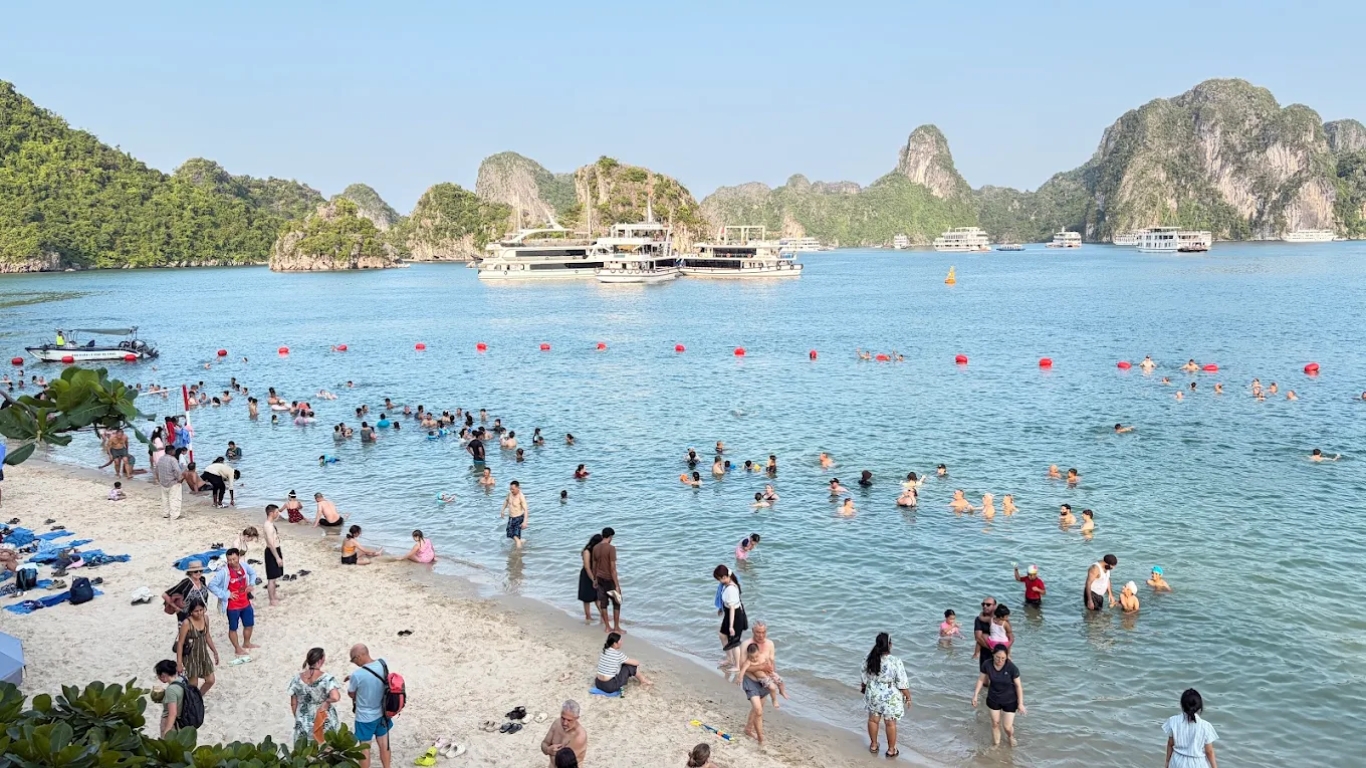
Treat the cruise as the experience, not as another sightseeing stop. The classic format is two days and one night, and it is the right choice for most first-time visitors.
- Boarding is around midday, with lunch served as you sail through the limestone islands
- Afternoon activities depend on the cruise: kayaking, swimming, a cave visit or a fishing village
- Sunset on deck, dinner on board, and sunrise over the bay the next morning
- Disembark late morning and return to Hanoi by mid-afternoon
Transport: The transfer from the Old Quarter to Ha Long takes about 2.5 to 3 hours including a break. From Ninh Binh, allow a little longer, roughly 3.5 to 4 hours.
Which bay? “Ha Long Bay” is often used to mean three areas. Lan Ha Bay and Bai Tu Long Bay are the alternative cruise areas, and they are generally quieter than the central Ha Long route.
>>>> Deciding between bays and cruise styles? Our complete Ha Long Bay travel guide explains how to choose.
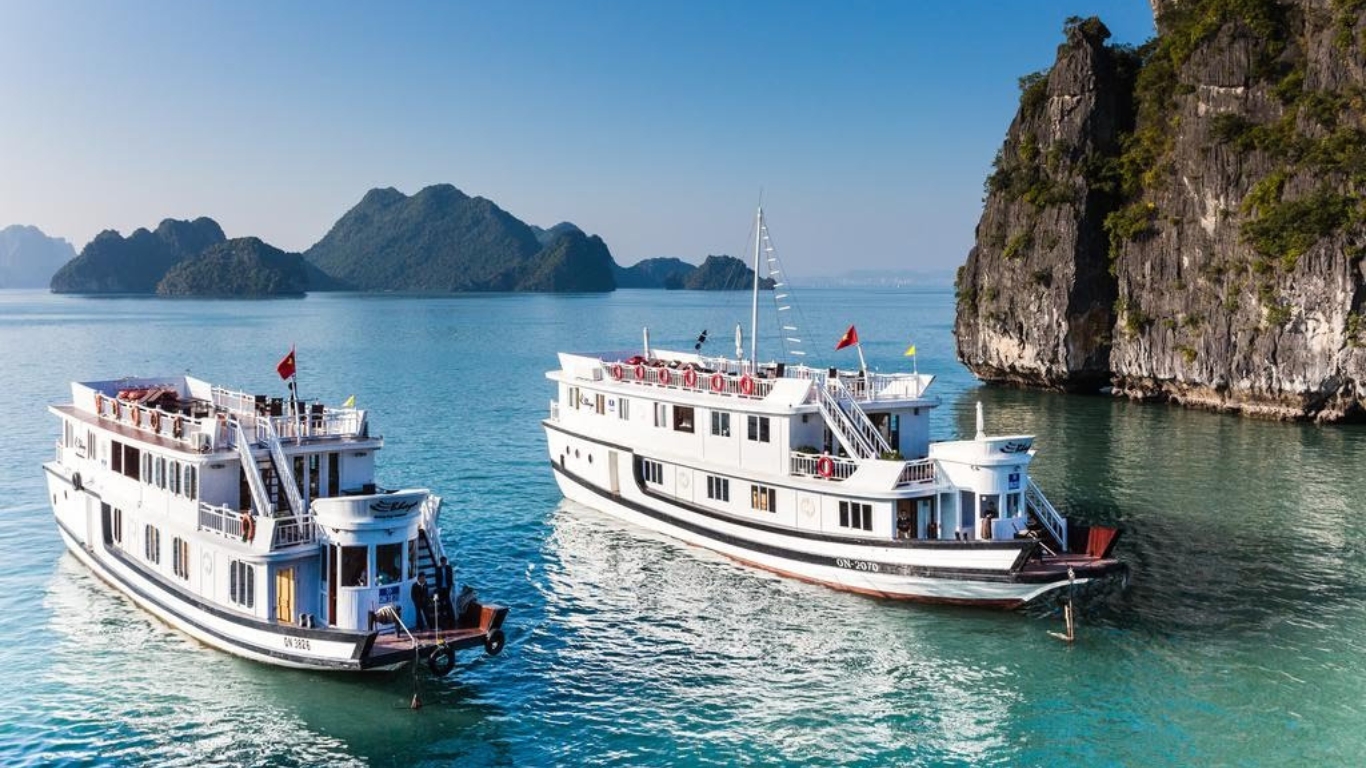
Good to know: Single-use plastic bags and bottles are not allowed in Ha Long Bay. Pack a light jacket, because evenings on deck can be cool in winter. In stormy weather cruises can be cancelled or rerouted, so keep your schedule flexible between June and October.
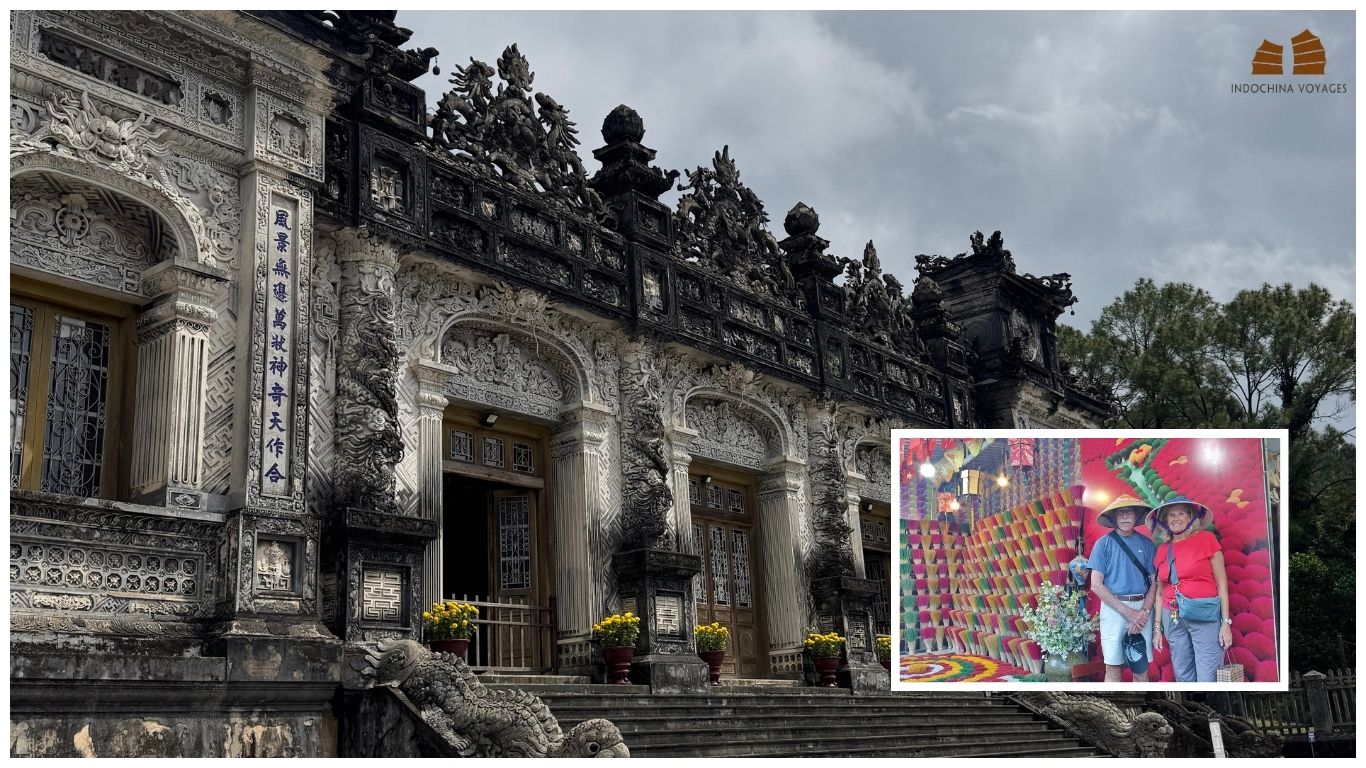
Days 7–8: Hue
Spend the night of Day 6 in Hanoi, then take a morning flight to Hue (about 1 hour 20 minutes). Hue was the imperial capital, and it has a quieter, more traditional pace than Hanoi or Hoi An.
- Imperial City: the walled palace complex
- Royal tombs: Tu Duc and Khai Dinh are the favourites
- Thien Mu Pagoda and the Perfume River: best by boat
- Hue cuisine: small, elegant dishes that are different from other regions. Try bun bo Hue and banh khoai.
Planning note: Hue is now a centrally run city rather than a province, which has little effect on visitors but is useful to know if you’re booking online.
Alternative: The train from Hanoi to Hue takes 12 to 14 hours. That makes it practical only as an overnight sleeper, not as a way to save time.
>>>> Hue rewards a slower pace. Read our guide to unusual things to do in Hue for ideas beyond the main palace and tombs.
Days 9–11: Hoi An and Da Nang
Make Hoi An your base for three nights. Da Nang is only about 30 minutes away, so there is no need to treat it as a separate stop with its own hotel change.
On Day 9, travel from Hue to Hoi An by private car over the Hai Van Pass. The Hue to Da Nang rail line is also a scenic option, taking about 2.5 to 3 hours. Allow time for stops along the way, such as a viewpoint on the pass, Lang Co beach, Marble Mountains and the Cham Museum in Da Nang.
In Hoi An:
- Ancient Town: best early morning or in the evening when the lantern-lit streets come alive
- Local food: cao lau, white rose dumplings and banh mi
- Countryside experience: a cycle through the rice paddies, a basket boat or a cooking class
- My Son Sanctuary: an optional half-day excursion to the Cham temples
- An Bang or Cua Dai beach: best in the dry months
Why three nights? It gives you time to enjoy Hoi An without turning the Central Vietnam section into constant packing and unpacking.
A note on names: Since the 2025 provincial changes, Hoi An sits inside the enlarged Da Nang city. You may see “Da Nang” on tickets and addresses for places in Hoi An.
Weather note: Hoi An’s old town is flood-prone. Flooding is most common in October and November.
>>>> Planning your days in town? See our guide to unique things to do in Hoi An, from cooking classes to countryside rides.
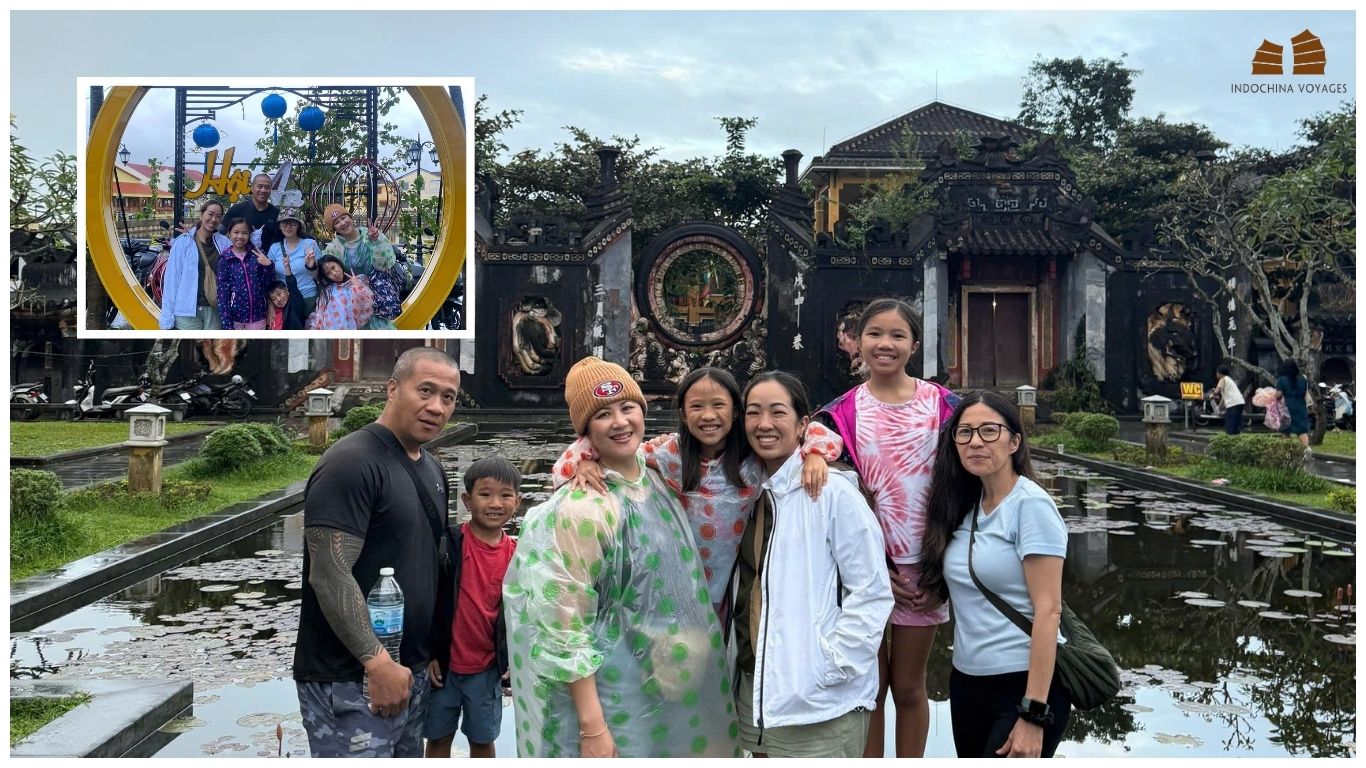
Days 12–13: Ho Chi Minh City
On Day 12, take a morning flight from Da Nang to Ho Chi Minh City (about 1 hour 20 minutes). Ho Chi Minh City (still called Saigon by many locals) is bigger, faster and hotter than Hanoi.
- War Remnants Museum and Reunification Palace
- Central Post Office and Notre-Dame Cathedral
- Ben Thanh Market area (shop with a plan, and expect to bargain)
- Cu Chi Tunnels as a half-day trip, if you want more history
- Food: a street food tour by scooter or on foot is a highlight
Two nights is enough for the main sights. Heat is the main limit, so plan indoor visits for the middle of the day.
>>>> Saigon is best explored on foot and by food. Start with our guide to life in Saigon’s alleys.

Days 14–15: Mekong Delta
The Mekong needs careful planning, because what you see depends on where you go and when. We recommend one night in the delta rather than a rushed day trip.
Options:
- Ben Tre: closer to Ho Chi Minh City (roughly 2 to 2.5 hours). Quieter, with coconut groves, small canals and village life.
- Can Tho: deeper into the delta, roughly 3.5 to 4 hours by road. Best if you want the floating market and a real overnight stay.
- Private boat and village visits: a smaller boat gets you into narrow canals the larger tourist boats cannot enter.

A word on floating markets: Don’t expect the classic postcard image. Cai Rang and other floating markets are declining as roads improve and trade moves onshore, and Cai Be closed for good in 2021. By seven in the morning the market at Cai Rang is already packing up. If a floating market is important to you, stay in Can Tho overnight and start before dawn. Phong Dien is a quieter, more intimate alternative. Treat it as one part of a Mekong morning, not the main event.
On Day 15, return to Ho Chi Minh City by road in the afternoon (or fly from Can Tho where flights fit your plans) and spend the night there before your extension.
>>>> Want more on villages, boat trips and overnight stays? Read our guide to the best things to do in the Mekong Delta.
Days 16–20: Choose your southern extension
This is where the trip becomes your own. Instead of forcing everyone into the same final stop, pick the ending that matches your travel style.
Option A: Phu Quoc (best for beach relaxation). Fly from Ho Chi Minh City (about 1 hour) on Day 16 and stay four nights. This works best between November and April. Phu Quoc’s dry season runs from November to April, and its rainy season from May to October. Fly out of Phu Quoc on Day 20, or via Ho Chi Minh City for your international flight.
Helpful links for this ending:
Option B: Da Lat (best for cooler weather and scenery). A one-hour flight from Ho Chi Minh City into the Central Highlands. Three nights in Da Lat give you pine forests, waterfalls, coffee farms and a slower, cooler atmosphere. Return to Ho Chi Minh City on Day 19 for your departure on Day 20. Da Lat’s weather is mild compared with the coast, but heavy rain in October and November affects the highlands too.
>>>> Planning your highland days? See our guide to the hidden gems of Da Lat.
Option C: More time in Ho Chi Minh City and the Mekong (best if you dislike flights and hotel changes). Add a night in Can Tho, a day trip to the Cu Chi Tunnels or Cao Dai Temple, and a slow final few days. This keeps logistics simple.
Option D: Return north for a mountain experience. If Sapa or Ha Giang is your priority, don’t simply tack it on at the end. It means a long backtrack. It is better to redesign the whole route so the mountains come early. See the route table below.
How many days to spend in each destination
| Destination | Ideal stay | Best for |
|---|---|---|
| Hanoi | 2–3 days | Culture, food, city life |
| Ninh Binh | 1–2 days | Nature, countryside |
| Ha Long Bay | 2 days | Cruise, scenery |
| Sapa | 2–3 days | Mountains, ethnic culture |
| Ha Giang | 3–4 days | Dramatic landscapes, road adventure |
| Hue | 2 days | History, heritage, cuisine |
| Hoi An | 2–3 days | Heritage, food, slower pace |
| Nha Trang | 2–3 days | Beach and relaxation |
| Da Lat | 2–3 days | Highland scenery, cooler climate |
| Ho Chi Minh City | 2–3 days | History, food, urban life |
| Mekong Delta | 1–2 days | Rural life, waterways |
| Phu Quoc | 3–4 days | Beach resort holiday |
If you add up the high end of every row, you get far more than 20 days. That’s the main planning mistake first-timers make. Pick the places that matter most to you, then give them time.
Other 20-day Vietnam route options
Not everyone wants the same classic route. Here are four ways to rebalance the trip.
| Route style | Stops | What you gain | What you give up |
|---|---|---|---|
| First-timers (classic) | Hanoi, Ninh Binh, Ha Long, Hue, Hoi An, Ho Chi Minh City, Mekong | The easiest all-round choice | Mountains and long beach stays |
| Nature and mountains | Hanoi, Ninh Binh, Ha Long, Sapa or Ha Giang, Hoi An, Ho Chi Minh City, Mekong | Terraced fields, trekking, dramatic scenery | Hue, and most beach time |
| Culture and heritage | Hanoi, Ninh Binh, Ha Long, Hue, Hoi An, My Son, Ho Chi Minh City, Mekong | Deeper history, temples and food | Beaches and highlands |
| Beach time | Hanoi, Ninh Binh, Ha Long, Hoi An, Nha Trang or Phu Quoc, Ho Chi Minh City, Mekong | Real downtime by the sea | Hue and a slower cultural pace |
>>>> Want to compare routes side by side? You can see sample itineraries here.
Choosing a beach. The right beach depends on the month. Nha Trang receives nearly half its annual rainfall in October and November, so it is a poor pick in those months. Phu Quoc is at its best from November to April. In the middle of the year, the central and northern beaches are better bets.
By traveller type:
- Couples: Hanoi, Ninh Binh, Ha Long Bay, Hoi An, Mekong Delta, then Phu Quoc. Prioritise a private cruise cabin, boutique hotels and a romantic stay by the beach.
- Families: Hanoi, Ninh Binh, Ha Long Bay, Hoi An, Ho Chi Minh City and the Mekong. Keep transfers short, avoid long treks, and build in pool time.
- Travellers who prefer comfort and a slower pace: private transfers, 2 to 3 nights per stop, fewer hotel changes, private guides, an overnight Ha Long cruise and a flexible sightseeing pace.
>>>> Planning for a specific group? These guides may help:
- Vietnam vacations for couples: places to go and a perfect itinerary
- Vietnam family vacation: the best Vietnam itinerary with kids
Sapa or Ha Giang? Sapa is easier to reach, has gentler trekking and is good for terraced fields and ethnic-minority culture. Ha Giang is more dramatic and adventurous, with long, winding road journeys.
Da Lat or Nha Trang? Da Lat is for cool highland scenery, food and a slower mood. Nha Trang is for beach resorts and water activities.
Best time for a 20-day Vietnam itinerary
There is no single best month for the whole country. Here is how each season affects a countrywide route.
| Months | North | Centre | South |
|---|---|---|---|
| Dec–Feb | Cool, often grey | Cooler and rainy at times, especially Dec | Dry and pleasant |
| Mar–May | Warm and improving | Dry and sunny | Hot, building toward the wet season |
| Jun–Aug | Hot, humid, some storms | Hot, good for beaches | Wet season, short heavy afternoon rain |
| Sep–Nov | Often excellent in Oct–Nov | Rainy, storms and flooding risk | Wet season ending |
December to February
The North is cooler, sometimes with grey skies and a chill at night (pack a layer). Central Vietnam can be wet, especially early in the season. Southern Vietnam is generally the most pleasant. This period includes Tết (Lunar New Year), which falls in late January or February and is the busiest and most disruptive time to travel, so book flights, trains and hotels well ahead.
March to May
This is one of the strongest periods for a countrywide itinerary. February to April is the only stretch when the North, Centre and South are all dry at the same time. March and April are also the best months for all three regions. Expect heat building in the South by April and May. The North can still be drizzly in March.
June to August
It’s hot and humid across most of the country. Northern and central beaches can be very good. The south’s wet season brings short, heavy afternoon bursts of rain that rarely ruin a full day. Mountain trekking needs weather awareness, and Ha Long cruises can be disrupted by storms. Phu Quoc is in its wet season, so choose a different beach or a different month for a resort stay.
September to November
The North can be wonderful, especially in October and November, with clear days and (in early October) golden rice terraces. But Central Vietnam enters its wettest period. October is the peak month for central coast rainfall, with Hue recording around 700 mm and Hoi An around 550 mm. Typhoons mainly affect the centre and northern coast from August to November, with October the peak risk. If you travel in these months, consider flying over Central Vietnam, shortening the Hoi An stay, or reorganising the route around the north and south. And check forecasts before you go, as flooding can change plans at short notice.
>>>> Worried about disruption? Read our medical and insurance articles before you book.
How much does 20 days in Vietnam cost?
Costs depend mainly on your comfort level, how often you fly and whether you travel privately or independently. These are ranges per person, for land costs only (international flights not included). They are editorial estimates based on published 2026 cost guides, so please replace them with IV’s current pricing.
| Style | Per day (approx.) | 20 days (approx.) | What it looks like |
|---|---|---|---|
| Budget | USD 45–75 | 900–1,500 | Simple hotels, local food, buses and a few flights |
| Mid-range | USD 100–175 | 2,000–3,500 | 3–4★ hotels, mix of private cars and flights, guided excursions |
| Premium private | USD 225+ | 4,500+ | 4–5★ and boutique stays, private guides and drivers, upgraded cruise |
For context, published guides put typical independent daily spend at about USD 18 to 27 for budget travellers, USD 50 to 70 mid-range, and 180 or more for luxury, with private tours and frequent flights pushing the total toward the higher end.
What drives the price:
- Accommodation: the biggest single line, especially in Hoi An, Hanoi and beach resorts
- Domestic flights: several on this route (Hanoi to Hue, Da Nang to Ho Chi Minh City and your extension)
- Private transfers and guides: these add comfort and flexibility
- Ha Long Bay cruise: two-day, one-night cruises range from about USD 108 to 248 per person depending on cabin and boat standard, with luxury cruises priced well above that
- Food: street food is cheap, and sit-down meals in tourist areas cost more
- Entrance fees and activities: sites, boat rides and cooking classes
- Tips: see the tipping notes in the practical tips section
- Resort upgrades: beach resorts in Phu Quoc, Da Nang and Ha Long can be USD 150 to 400 per night at the top end
Ways to control the budget: travel in the shoulder months, book domestic flights early, use trains for short scenic legs, and pick a cruise by itinerary quality, not star rating alone.
How to get around Vietnam in 20 days
| Route | Best mode | Approx. time |
|---|---|---|
| Hanoi to Ninh Binh | Private car or train | ~2 hrs |
| Hanoi to Ha Long Bay | Private car or shuttle | 2.5–3 hrs |
| Hanoi to Hue / Da Nang | Flight | ~1 hr 20 min |
| Hue to Hoi An | Private car (over Hai Van Pass) | 3–4 hrs with stops |
| Da Nang to Ho Chi Minh City | Flight | ~1 hr 20 min |
| Ho Chi Minh City to Mekong (Ben Tre / Can Tho) | Private car | ~2–4 hrs |
| Ho Chi Minh City to Phu Quoc or Da Lat | Flight | ~1 hr |
(Flight and road times are approximate and vary with traffic, airport waiting and stops. Check current schedules before booking.)
Domestic flights
Best for the long hops: Hanoi to Central Vietnam, Central Vietnam to Ho Chi Minh City, and Ho Chi Minh City to Phu Quoc or Da Lat. A Hanoi to Ho Chi Minh City flight takes about two hours. The trip by train is far longer. Book early for peak periods and keep checked baggage limits in mind.
Private car
Best for shorter regional journeys: Hanoi to Ninh Binh, Hue to Hoi An and the Mekong. It is the most comfortable option for families and travellers who prefer a slower pace, and it lets you stop at viewpoints and villages.
Train
Good for scenic or overnight journeys. The full Reunification Express line runs 1,726 km and takes about 32 hours end to end. It is best used in short sections. Hue to Da Nang takes 2.5 to 3 hours and passes along the coast, and it’s the standout. From Hanoi to Lao Cai (for Sapa), the overnight train takes around 8 to 9 hours. Trains can run late, so avoid tight connections.
Sleeper bus
A budget option for overnight journeys, but it isn’t our default recommendation for comfort-focused travellers.
Vietnam visa and entry requirements for a 20-day trip
Rules depend on your nationality and passport type, and they change. Always check the official government sources before you book: the e-visa portal is evisa.gov.vn, and the Vietnam Ministry of Foreign Affairs publishes the current exemption lists.
If you are visa-exempt
Citizens of 24 countries can enter Vietnam for 45 days without a visa, under two separate government resolutions.
- Group 1 (any purpose of visit): Germany, France, Italy, Spain, the UK, Russia, Japan, South Korea, Denmark, Sweden, Norway and Finland. This runs until 14 March 2028.
- Group 2 (tourism only): Belgium, Bulgaria, Croatia, the Czech Republic, Hungary, Luxembourg, the Netherlands, Poland, Romania, Slovakia, Slovenia and Switzerland. This runs until 14 August 2028.
Other nationalities have their own exemptions of different lengths. Around 39 countries are exempt in total, with stays between 14 and 90 days depending on nationality, and the 90-day group includes Chile and Panama. Since these lists change, please check your own country on the official site rather than relying on this summary.
Entry conditions to know about:
- Your passport must be valid for at least six months, and there must be a minimum 30-day gap since your latest exit from Vietnam. If you plan to leave and come back (for example for a side trip to Cambodia), check whether a gap rule affects you.
- The exemption period counts from your entry date, so make sure your 20 days, plus any buffer, sit comfortably inside it.
If you need an e-visa
The e-visa is open to every nationality, valid for up to 90 days, and costs USD 25 for single entry or USD 50 for multiple entry. Approval usually takes about three working days. Apply only on the official portal, because many look-alike sites charge extra fees. E-visa extensions are not currently available. If you are combining Vietnam with Cambodia, Laos or Thailand and will re-enter Vietnam, a multiple-entry e-visa is the one to choose.
Phu Quoc
All nationalities are exempt from visas for Phu Quoc Island for 30 days when travelling directly or transiting through another Vietnamese international airport. This only helps if your whole trip stays on Phu Quoc. On a 20-day trip that includes the mainland, you need a visa or exemption that covers your whole stay.

>>>> Unsure about your own passport? Our contact details are on this page.
Practical tips for 20 days in Vietnam
Money. The currency is the Vietnamese dong (VND). Cards work at hotels and larger restaurants, but carry cash for markets and street food. ATMs are common and dispense dong only, usually with a fee.
Internet. Roaming can cost USD 10 to 16 a day, so an eSIM or local SIM is much cheaper. Keep mobile data on for maps and ride-hailing apps such as Grab and Be.
>>>> Need data on arrival? Read our guide on how to buy and use a Vietnam SIM card.
Electricity. Vietnam runs on 220 V at 50 Hz, so bring a universal adapter and a power bank.
Language. English works well in hotels, tourist sites and city restaurants, and less so in small towns and markets. Learn a few phrases such as “xin chào” (hello) and “cảm ơn” (thank you), and carry a hotel business card to show taxi drivers.
Tipping. Tipping is optional and not expected at street stalls or local eateries. Guides and drivers are the main exception, so follow your tour operator’s guidance.
>>>> Not sure how much to tip? Read our guide to tipping in Vietnam.
Crossing the street. Motorbike traffic never really stops. Walk slowly and steadily without sudden changes of direction, and let the traffic flow around you.
Essentials. Carry tissues and hand sanitiser, since some public toilets have no paper or soap, and take out travel insurance that covers medical care and trip disruption.
What to pack for 20 days in Vietnam
You don’t need 20 days of clothing, since laundry is cheap and easy in hotels and in town. Pack for the season, and bring:
- Lightweight, breathable clothing, plus something modest for temples (covered shoulders and knees)
- One warmer layer for the North, and a light jacket for the Ha Long cruise
- Comfortable walking shoes and sandals
- A light rain jacket or compact umbrella
- Sun protection: hat, sunglasses and sunscreen
- Swimwear
- A small daypack
- A universal travel adapter (Vietnam uses 220 V / 50 Hz, with a mix of plug types)
- A power bank
- Medication and personal essentials (bring the prescriptions you need, as brands can differ)
>>>>Want more on seasons, health and etiquette? See our Vietnam travel hints
Should you book a tour or travel independently for 20 days?
| Independent | Private customised tour | Small-group tour | |
|---|---|---|---|
| Freedom | Highest | High (the route is built around you) | Lower (fixed route and schedule) |
| Planning effort | High | Low | Low |
| Transfers and tickets | You arrange everything | Handled for you | Handled for you |
| Guides | Optional, booked separately | Private guide and driver | Shared guide |
| Pace | Your choice | Adjustable | Set by the group |
| Cost | Lowest, usually | Higher | Mid-range |
| Best for | Experienced, confident travellers | Families, couples, and travellers who prefer comfort | Solo travellers, social travellers |
Independent travel works well in Vietnam if you enjoy planning, but a 20-day trip involves a lot of moving parts: domestic flights, cruise bookings, weather changes and timing around holidays. A private tour takes those off your hands, lets you adjust the pace, and gives you a local guide who can put each place in context.
Our team builds private trips around the way you like to travel, and can adjust the route, pace, hotels and activities.
>>>> Want a ready-made 20-day route? See the Grand Sensational Vietnam 20 Days tour.
Short on time? These shorter tours cover a similar route:
Can you combine Vietnam with another country in 20 days
Yes, but each added country takes depth away from Vietnam.
- Vietnam only: best for a first visit, with the most depth and the least rushing.
- Cambodia: works well as an add-on, especially with Siem Reap and Angkor. Allow time for the border or the flight.
- Laos: possible if you focus on northern Vietnam and Luang Prabang.
- Thailand: workable, but better for travellers who have already visited or want a faster, multi-country trip.
Looking for ideas in these countries? Browse our tours here:
The key message: 20 days is enough for Vietnam on its own. If you do add another country, these tours are a good starting point:
- Vietnam & Cambodia Family Holiday 15 Days
- Discovery Southern Vietnam & Cambodia 13 Days
- Far East Discovery 22 Days
>>>> Planning two weeks across both countries? Read our guide to Vietnam and Cambodia itineraries for 2 weeks.
Frequently asked questions about 20 days in Vietnam
Twenty days gives you time to see the best of Vietnam without the stress of rushing. The key is choosing the right places for your season, your interests and your pace.
Ready for the next step? Browse our Indochina tours, or read more about trips that combine Vietnam with Cambodia, Laos and Thailand.
You can also email us at info@indochinavoyages.com with your dates and interests. More trip-planning ideas are in our Vietnam travel guide.
Indochina Voyages Travel Specialists