
Tam Giang Lagoon is a vast brackish coastal lagoon on the eastern edge of Hue, where fishing, aquaculture and village life still set the rhythm of the day. A short drive from the city leads to mangrove canals at Ru Cha, fishing communities such as Thai Duong Ha, and open water where flat-bottomed boats drift through the last light of the afternoon. Fresh seafood, dawn fish markets and wide, quiet horizons complete the picture. For travellers who have seen the Citadel and the royal tombs and want to understand how Hue’s countryside lives, this guide covers location, tours, timing, transport and ready-made itineraries. For more ideas in and around the city, see our guide to unusual things to do in Hue.

What Is Tam Giang Lagoon? Location, Size and Setting
Tam Giang Lagoon lies in Hue City on Vietnam’s central coast, stretched between the mouth of the O Lau River and the Thuan An inlet, where the Perfume River finally reaches the sea. A long sand barrier separates the water from the East Sea, and behind it the lagoon spreads out in shallow channels, fish traps and aquaculture enclosures. Around half a million people live along the wider lagoon system, and fishing remains a main source of income for many of them. Visitors tend to experience it as a quiet counterpoint to the Imperial City: less a single attraction than a working landscape that rewards a slow visit.
The figures below help with planning.
| Fact | Detail |
|---|---|
| Location | Hue City, between the O Lau river mouth and the Thuan An inlet |
| Tam Giang lagoon proper | About 24 km long, about 52 km² |
| Tam Giang–Cau Hai system | About 68–70 km long, about 22,000 hectares, the largest lagoon system in Southeast Asia |
| Typical depth | 1–3 m |
| Distance from central Hue | About 12–25 km depending on the access point, roughly 30–50 minutes |
| Entry fee | None for open shoreline. Boats, meals and activities are paid |
| Best light | Sunrise and the hours before sunset |
Lagoon, Estuary or Lagoon System? Clearing Up the Names
Search results and older guides use several names for the same stretch of water, which can make planning confusing. Tam Giang is one lagoon in a longer chain, the Tam Giang–Cau Hai system, which also includes Sam Chuon, Thuy Tu and Cau Hai running south-east along the coast. Tam Giang reaches the sea through the Thuan An inlet, while Cau Hai connects through the Tu Hien inlet further south. Vietnamese sources call the lagoon Phá Tam Giang, and the word phá simply means lagoon.
The two sets of numbers quoted online are both correct. About 52 km² describes Tam Giang alone, while roughly 22,000 hectares describes the complete system, which is widely recognised as the largest lagoon system in Southeast Asia. There is no main gate or ticket office. Visitors choose an access point, such as Ru Cha, Thuan An, Thai Duong Ha or Chuon, and the experience changes with each one.
Why the Lagoon Mattered to Imperial Hue
Before modern roads, water was the easiest way to move people and goods around this part of Vietnam, and the Thuan An inlet served as the sea gateway to the capital. Boats heading for Hue entered through the inlet, crossed the lagoon and continued along the Perfume River. The channel was never stable. Storms in 1897 and 1904 closed the old inlet and opened a new one, splitting the fishing village of Thai Duong into two communities, Thai Duong Thuong on one side and Thai Duong Ha on the other. Both villages still honour the same founder, yet they hold their festivals on different days.
Best Things to Do in Tam Giang Lagoon
The most rewarding visits combine time on the water with at least one stop that shows how the community lives from it. Below, seven experiences appear roughly in order of appeal to first-time visitors. Moreover, most of them fit into a single half day.
Watch the Tam Giang Lagoon Sunset
Sunset is the reason most visitors come, and the lagoon suits it well. Open water, low horizons and slow fishing boats create a calm scene. Good viewpoints include the shoreline near Thuan An, the Thai Duong Ha waterfront and the water itself. A boat also keeps buildings and power lines out of the frame. However, colour depends on weather and season, so treat dramatic light as a bonus rather than a promise. Therefore, leave Hue between 3:30 and 4:00 pm. That timing leaves enough room to board a boat before the light turns golden. In contrast, sunrise offers early fishing activity instead of colour. The best-time section below covers it.
Take a Boat Trip on the Lagoon
A boat trip gives the clearest view of how the lagoon works. Operators typically use flat-bottomed wooden sampans that glide through shallow channels. From the water, you pass fish traps, nets and aquaculture enclosures that the shore hides. Many tours start at Thuan An and then head into the Sam Chuon area. There, reed-lined waterways open onto village shorelines. Some boatmen also let guests try fishing gear. In addition, conversation with the boatman is often the best source of local knowledge.
You can also hire private boats directly from fishing families around Chuon village. Reported quotes run from roughly VND 200,000 to 250,000 per boat for four to six passengers. However, prices shift with season and demand. Therefore, agree the price, the duration and the return point before you set off. Some points on the lagoon also offer stand-up paddleboarding. It suits travellers who prefer to move under their own power. Ask your operator whether it currently runs.
Explore Ru Cha Mangrove Forest
Ru Cha is a protected mangrove stand of about five hectares in Thuan Hoa village, Huong Phong commune. Fighting cleared most of it during the war, but local people have since restored it. The Cha trees, with their broad, exposed roots, give the place a character you will not find elsewhere on the lagoon. To reach it, first follow National Road 49 from central Hue toward Thuan An, which is roughly 9 km. Then continue toward the beach, turn left and cross Tam Giang Bridge. Ru Cha lies about 4 km beyond. In addition, there is no entrance fee. Local families also rent out small wooden boats for the channels.

Timing matters here. From late September through October, the foliage turns yellow, which makes this one of the most photogenic periods of the year. However, it also coincides with the start of the rainy season. For this reason, check the forecast before you go. Finally, avoid contact with Cha tree resin, because it can irritate the skin.
Visit Thai Duong Ha Fishing Village
Thai Duong Ha sits in Thuan An ward, roughly 12 km north-east of central Hue. It stands where the lagoon meets the sea. Therefore, visit in the morning to see the village at work. Boats return with their catch, and families sell fish along the waterfront. The communal house looks out over the estuary and anchors village life. In addition, it hosts the annual Spring Ceremony on the 9th and 10th days of the first lunar month. The ritual honours the village founder. Afterwards, villagers re-enact fishing and fish selling and hold a boat race on the lagoon. Dates follow the lunar calendar, so check the year’s timing in advance. On ordinary days, ask permission before photographing residents at close range. Many people gladly agree, so courtesy goes a long way.
See the Fishing Market at Ngu My Thanh
The fishing market at Ngu My Thanh village is the lagoon’s most distinctive working stop. From early morning, hundreds of boats gather on the water. There, fishermen sell the night’s catch to traders who carry it on to markets on land. Meanwhile, other vendors sail among them selling rice, vegetables and daily necessities. In fact, locals say the market has operated for decades.

However, you should set expectations accurately. This is a working fish market. It is much smaller and quieter than the floating markets of the Mekong Delta, and it does not stage anything for visitors. Trading starts well before dawn and finishes early. Therefore, leave Hue early, and take a local guide or boatman.
Discover Chuon Lagoon
Chuon Lagoon forms part of the Sam Chuon section of the system and sits among quiet fishing hamlets. The water here is calm and wide. Boats moor along the banks, and nets dry on frames. As a result, the setting suits unhurried photography. Many sunset tours also stop in the area, and local boat owners offer short trips for small groups. Chuon feels less structured than Ru Cha or Thai Duong Ha. In fact, that is part of its appeal.

Taste Lagoon Seafood and Hue Specialities
Eating is part of the visit. Fish, shrimp, crab and clams all come from the lagoon, and the catch has a fresh, slightly sweet flavour. Boat tours commonly end with a seafood hotpot. In addition, a few waterside restaurants float on the lagoon itself. For a lighter meal, try porridge made with dìa, a local lagoon fish. Because seafood often sells by weight, confirm the price per kilogram, any cooking charges and the total before ordering.
Tam Giang Lagoon Tours from Hue: What to Expect
Most visitors see the lagoon on a guided half-day tour. A typical sunset itinerary first collects guests from their Hue hotel around 4:00 pm. Next, the guide drives to the lagoon and stops at Chuon or Thuan An. Then a boat ride follows through the Sam Chuon area. Guests watch the sun go down from the water. Afterwards, they eat a seafood dinner and return to Hue after dark. Longer excursions also add Ru Cha and Thai Duong Ha, while dawn departures focus on the fishing market.
The table compares the main formats.
| Format | Duration | Suits |
|---|---|---|
| Private car plus boat | Half day | Couples, families |
| Motorbike-style excursion | Half day | Independent travellers |
| Dawn fish-market tour | 3–4 hours | Photographers, early risers |
| Full-day combination with Ru Cha and villages | Full day | Travellers with time to spare |
Before booking, compare the details below, as they vary more than the headline price suggests.
- Transfers: whether hotel pickup and return are included, and for which areas.
- Guide: language, local knowledge and whether the guide travels with the group or only meets it at the boat.
- Boat: private or shared, and how long guests actually spend on the water.
- Meals: what the seafood dinner includes and whether drinks are extra.
- Group size: smaller groups make the boat quieter and the stops more flexible.
- Cancellation terms: what happens if weather stops the boats.
Best Time to Visit Tam Giang Lagoon
Choosing the Right Season
Hue’s drier months, roughly March to August, give the most dependable conditions for boat trips and clear evening light. The rainy season runs from around September into winter, and flooding is common in Hue from October through the end of the year, which can limit boat operations and make roads unpleasant. Within the dry months, May to August is hot, so late-afternoon departures are far more comfortable than midday ones, while March and April tend to be milder. Autumn offers a trade-off: Ru Cha turns golden in late September and October, but weather risk is higher, so keep the schedule flexible.
| Months | Conditions | Notes |
|---|---|---|
| March–August | Dry and bright, warmer from May | Best for boats and sunsets |
| September–October | Rains return | Ru Cha turns golden |
| October–December | Peak flood and storm risk | Boat operations may be limited |
| January–February | Cooler, changeable | Check the forecast before booking |
Sunrise or Sunset?
Sunrise brings the fishing market, returning boats and cooler air, which suits photographers and travellers who dislike heat. Sunset fits most itineraries more easily, since it leaves the day free for the Citadel or the tombs and does not require a pre-dawn start. Either way, check the forecast and confirm that boats are running on the day, because wind and rain can change plans at short notice.
How to Get to Tam Giang Lagoon from Hue
Tam Giang Lagoon stretches for kilometres, so the journey depends on the section you choose. Most visitors head east or north-east from central Hue along National Road 49 toward Thuan An. In most cases, allow 30 to 50 minutes, depending on the destination and the traffic.
| Destination | From central Hue | Route |
|---|---|---|
| Ru Cha | About 13 km | National Road 49 toward Thuan An, then left across Tam Giang Bridge |
| Thuan An beach and boats | About 15 km | National Road 49 |
| Thai Duong Ha | About 12 km | Thuan An ward, near the estuary |
| Chuon and Sam Chuon | About 20 km | Village roads east of Hue; a local driver or guide is recommended |
Private Car, Taxi or Grab
A car suits couples, families and travellers combining several stops. Grab and Be both operate in Hue. However, finding a ride back from rural areas after dark is much harder. Therefore, ask your driver to wait or return at a set time, particularly on sunset visits.
Motorbike
Riding yourself gives the most flexibility and lets you stop wherever the light is good. Confident riders will find the main road manageable. However, traffic around Hue is heavy at commuting hours, and jetties turn slippery in the rain. Check the weather and the route before leaving. Also, save an offline map, since signal can be patchy near the water.
Joining a Local Tour
A tour removes the guesswork. First, the operator handles transfers, boat hire and communication with local hosts. Second, a guide can explain what you see. Before booking, confirm that the price covers transfers, guide services, meals and the boat trip.
Finally, identify the exact destination before you navigate, whether Ru Cha, Thai Duong Ha or Thuan An. Save that pin instead of searching for Tam Giang Lagoon, because map results for the name lead to different places.
Suggested Tam Giang Lagoon Itineraries from Hue
The plans below are flexible templates rather than fixed schedules. Weather, boat availability and your chosen access point will shape the details. Therefore, adjust each plan to the day’s conditions. The first three plans stay within Hue. The four that follow, however, extend across Central Vietnam.
Half-Day Sunset Excursion
- 3:30 pm: Leave Hue by car, then stop at a fishing village on the way.
- 4:30 pm: Next, board a boat and head into the lagoon.
- 5:30 pm onward: Watch the sun go down from the water, and adjust the timing to the day’s sunset.
- 6:30 pm: Afterwards, sit down to a seafood dinner near the shore.
- 8:00 pm: Finally, return to Hue after dark.
Dawn at the Lagoon
- 4:30 am: Depart Hue for the fishing market.
- 5:00 am: Watch the boats gather and trade begin.
- 6:00 am: Then catch first light over the water and walk the waterfront.
- 7:00 am: Next, have breakfast near the lagoon.
- 9:00 am: Finally, return to Hue in time for the rest of the day.
Lagoon and Hue Heritage in One Day
Pair the lagoon with imperial sights by giving each the hours it suits best. First, start at the Imperial City, where cooler morning light makes the courtyards easier to enjoy. Our guide to the Citadel Complex explains what to see. Then move on to Thien Mu Pagoda or one of the royal tombs of Hue. Finally, leave the lagoon for late afternoon. Squeezing in too much leaves little time for the water, so keep the pace manageable.
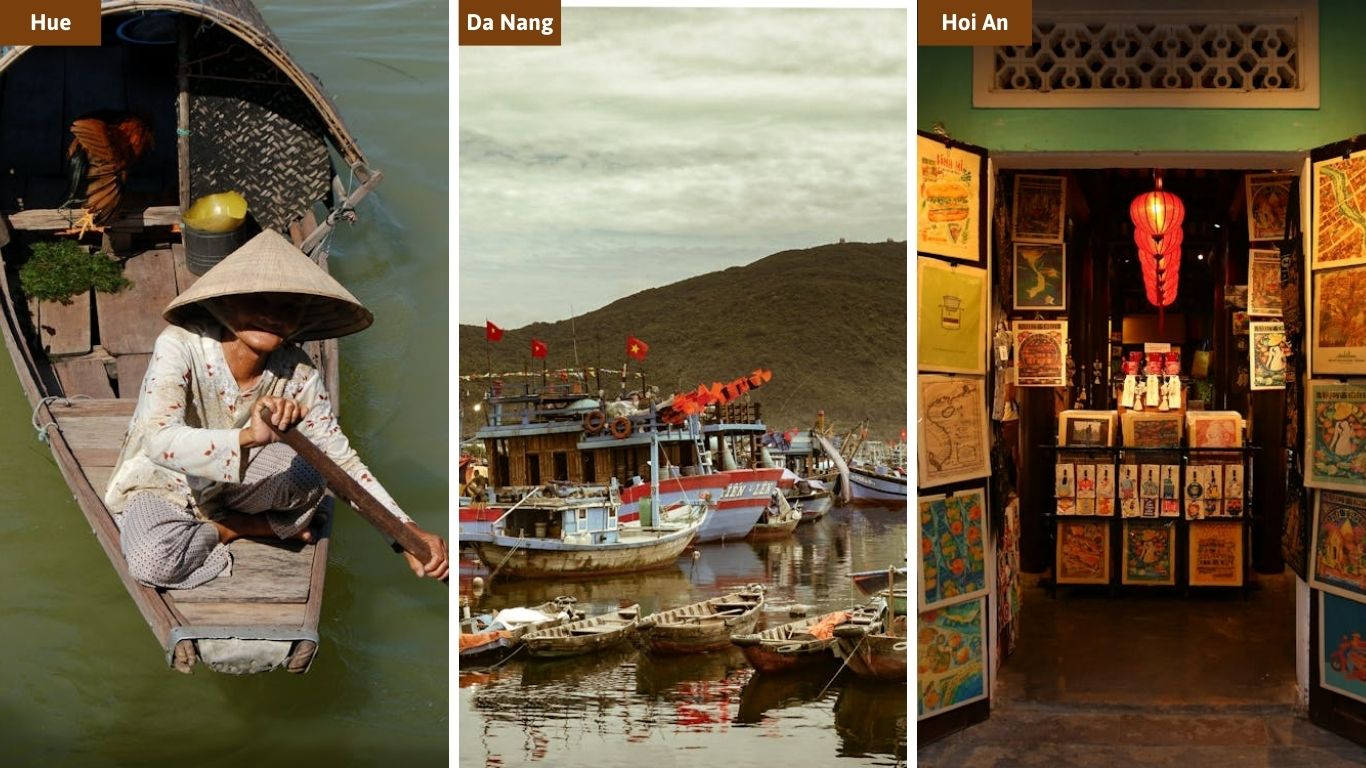
Hue, Da Nang and Hoi An
Hue is a natural midpoint on a Central Vietnam route, so the lagoon fits easily into a trip that continues south. On a Hue, Hoi An and Da Nang itinerary, allow two nights in Hue. Spend the first day on the imperial sights. Then visit the lagoon at sunset on the second afternoon. The transfer south crosses the Hai Van Pass, one of the country’s most scenic drives. In addition, Lang Co and Lap An Lagoon make a worthwhile stop along the way. The Classic Central Vietnam in 5 Days itinerary follows this Hue, Hoi An and Da Nang route.
Adding Phong Nha
Phong Nha’s caves and river landscapes suit travellers with six to eight days. However, avoid moving directly between Hoi An and Phong Nha, which is inefficient. Instead, route the trip through Hue. The transfer from Phong Nha to Hue also allows stops at DMZ sites and the Vinh Moc tunnels, so it becomes a full but rewarding day. Therefore, keep the lagoon for a free evening in Hue once the longer drive is behind you.
The Full Central Vietnam Loop
A route through Da Nang, Hoi An, Hue and Phong Nha, in that order or reversed, avoids backtracking. It also gives each region its own character. The lagoon works best on Hue’s second evening, after the main heritage sights. A trip of eight to fourteen days, moreover, allows a slower pace. You then have time for the lagoon, the countryside and the longer transfers. A ready-made route such as Vietnam Cultural Highlights 14D-13N is a useful starting point for a trip of this length.
Fitting the Lagoon into a Wider Vietnam Trip
Travellers who begin in Hanoi or finish in Ho Chi Minh City can still make room for the lagoon. A single night in Hue is enough for a sunset boat trip if you condense the imperial sights into one day. However, a second night makes the whole visit far more comfortable. For a country-wide route, see Vietnam Highlights.
Practical Tips for Visiting Tam Giang Lagoon
A few simple preparations make the visit smoother.
- Wear closed, grippy shoes for jetties and mangrove paths.
- Sun protection and drinking water matter from April onward.
- Agree on the boat price, duration and return time before departure.
- Ask for life jackets before boarding and follow the boatman’s instructions.
- Carry cash for boats and small meals, as card payment is rarely available.
- Photograph residents only with permission, and respect fishing equipment and private property.
- Insect repellent helps near the mangroves.
- Check the weather and confirm boat operations the day before.
Is Tam Giang Lagoon Worth Visiting?
The lagoon rewards travellers who enjoy photography, local life and food more than formal attractions. Its appeal lies in scenery combined with everyday work on the water. It does not offer a long list of monuments. However, visitors who prefer developed sites with extensive facilities may find it understated. Likewise, anyone with less than a full day in Hue will probably do better to focus on the Citadel and the tombs.
For travellers with an extra half day, however, it is a worthwhile addition once the historic centre is covered. In addition, those continuing south can look at another lagoon on the road to Da Nang, Lap An Lagoon.
FAQs
Whether you choose a half-day or full-day tour of the lagoon, Indochina Voyages team will welcome you warmly and ensure you have the chance to fully immerse yourself in the region’s natural beauty and vibrant local culture. So why not start planning your central Vietnam adventure today? The lagoon and all its wonders are waiting for you!
Thuy Dang – From Indochina Voyages