

Bangkok’s traffic is the stuff of legend, and not in a good way. Taxis idle for forty minutes to cover two kilometers. Tuk-tuks are charming until you’re late. Ride-hailing apps queue up in the same gridlock as everything else. The Bangkok Skytrain cuts through all of it, running above the streets on elevated tracks through the city’s most visited neighborhoods. If you’re planning a trip to Bangkok and want to move efficiently, affordably, and without the stress, this guide gives you everything you need to ride the BTS with confidence.
What Exactly Is the Bangkok Skytrain, and Why Does It Matter for Tourists?
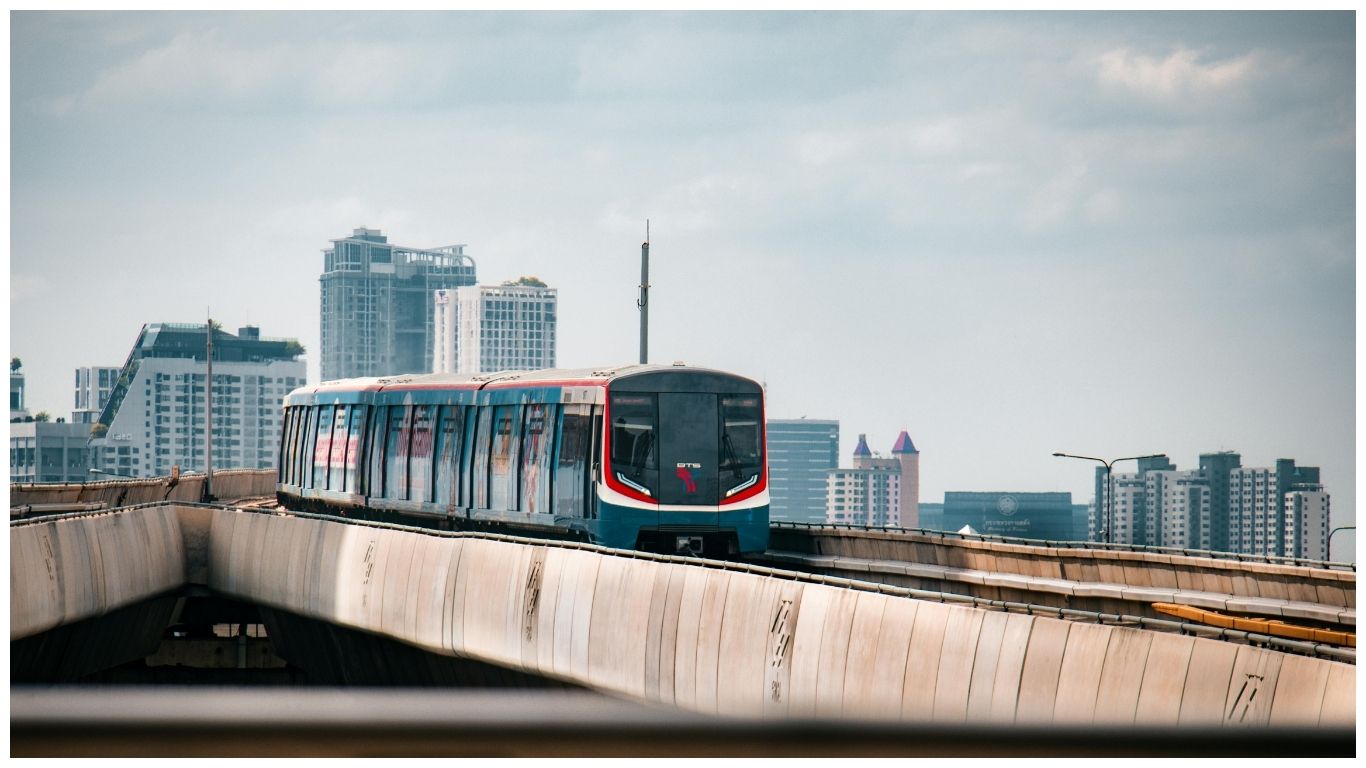
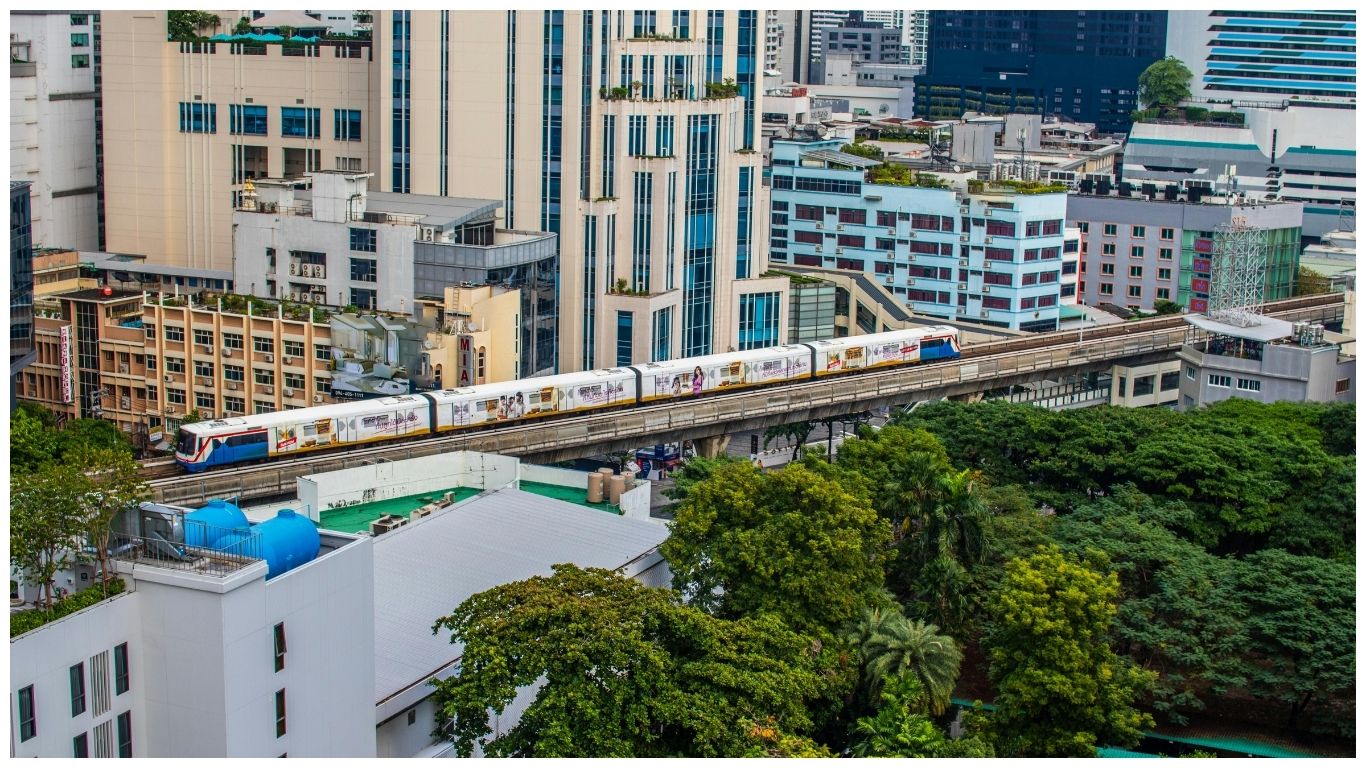
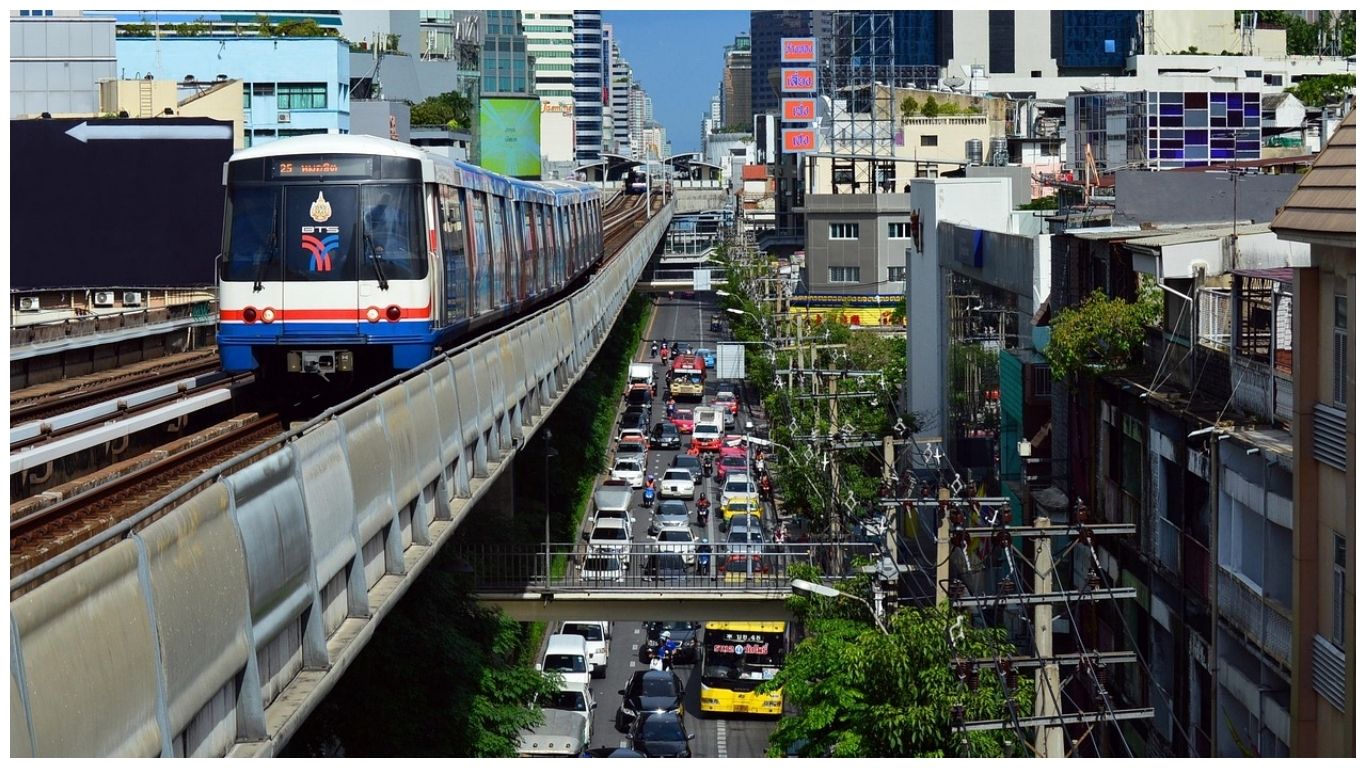
The BTS Skytrain (Bangkok Mass Transit System) is an elevated rail network that opened in 1999 – the first of its kind in Thailand. Unlike subway systems buried underground, the Bangkok Skytrain runs above street level, giving riders clear views over the city’s skyline and completely bypassing surface traffic.
This matters more in Bangkok than almost anywhere else in Southeast Asia. Cities like Hanoi, Ho Chi Minh City, and Phnom Penh still rely heavily on road-based transport. Bangkok’s elevated rail gives tourists something rare: predictable journey times regardless of traffic conditions below.
The BTS operates two main lines:
- Sukhumvit Line (Light Green): Runs from Mo Chit in the north to Kheha/Samut Prakan in the south, passing through Siam, Asok, and Thong Lo
- Silom Line (Dark Green): Runs from National Stadium in the west to Bang Wa, passing through Siam, Sala Daeng, and Chong Nonsi
The two lines intersect at Siam Station, which acts as the central hub of the entire network.
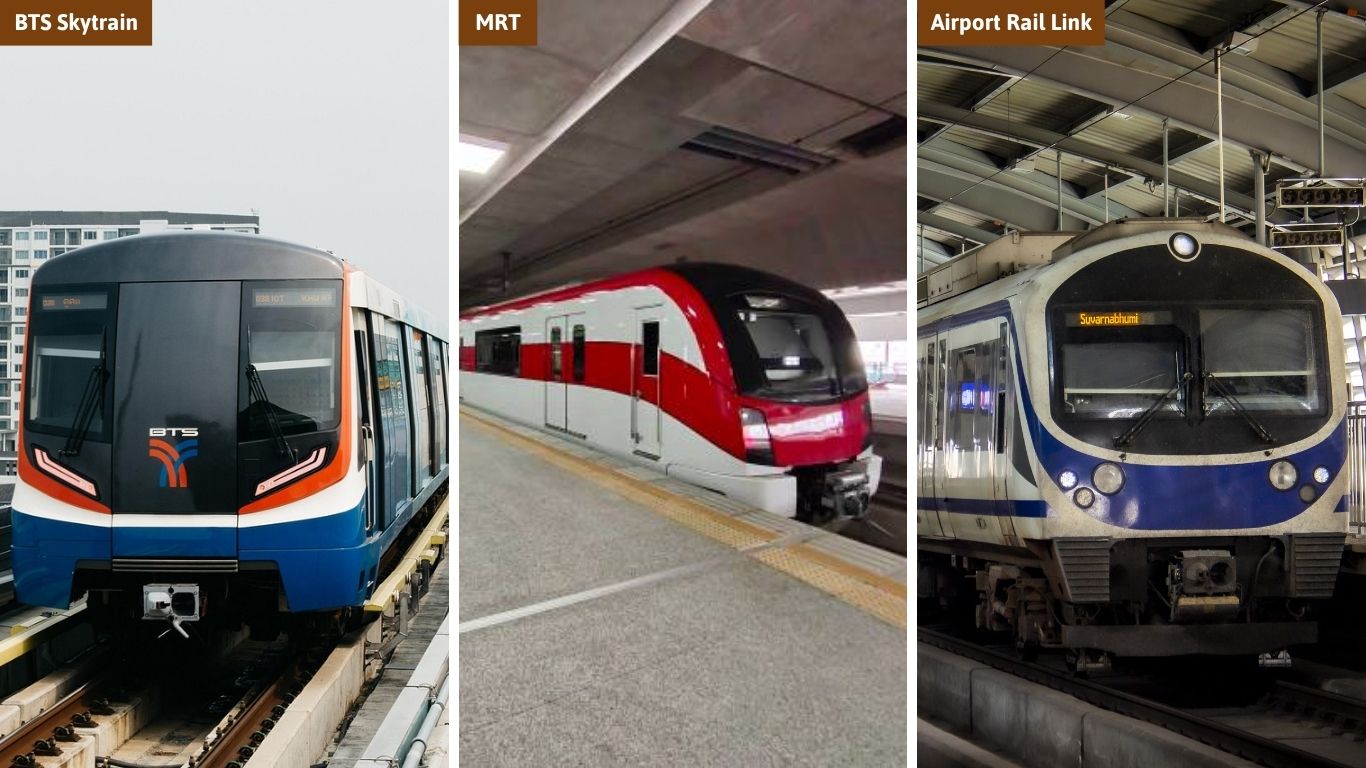
Note: Don’t confuse the BTS with the MRT (underground metro) or the Airport Rail Link. All three are separate systems with separate tickets, though they connect at key interchange stations.
The BTS Skytrain Map: Two Lines, One City Worth Knowing
Understanding the BTS map is the single most useful thing you can do before arriving in Bangkok. Here’s what each line covers for tourists:
Sukhumvit Line: Key Tourist Stations
| Station | What’s Nearby |
|---|---|
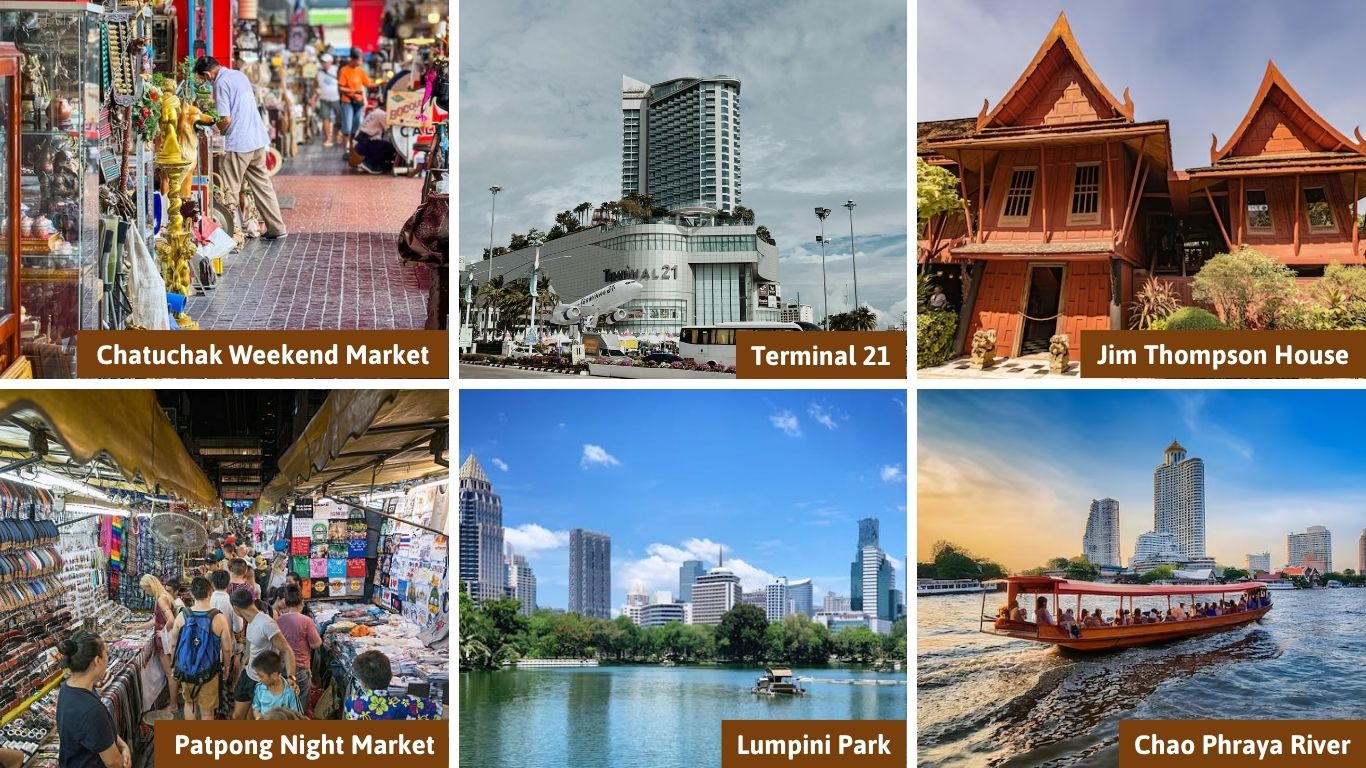
| Mo Chit | Chatuchak Weekend Market |
| Siam | Shopping malls, interchange point |
| Asok | Terminal 21, Sukhumvit street food |
| Thong Lo | Rooftop bars, expat cafés, nightlife |
| On Nut | Budget accommodation, local markets |
Silom Line: Key Tourist Stations
| Station | What’s Nearby |
|---|---|
| National Stadium | Jim Thompson House, MBK, Bangkok Art & Culture Centre |
| Sala Daeng | Patpong Night Market, Silom Road |
| Chong Nonsi | Lumpini Park, Sathorn district |
| Saphan Taksin | Chao Phraya River, ferry to Wat Arun & Wat Pho |
One important note: The Grand Palace and Wat Phra Kaew are not on the BTS Skytrain network. The closest access point is Saphan Taksin Station, from where you take the Chao Phraya Express Boat upriver – a scenic and practical combination.
Related reading:
Bangkok Hidden Gems: Discover the City Beyond the Temples
The Best Time to Go to Bangkok Is November – February, But Every Season Has Its Reward
How Much Does a BTS Ticket Cost, and Which Option Saves You the Most?
BTS fares are distance-based, calculated by the number of stations between your origin and destination.
Single Journey Fares
| Distance | Fare (THB) |
|---|---|
| 1-2 stations | 17 THB |
| 3-4 stations | 23-26 THB |
| 5-8 stations | 33-44 THB |
| 9+ stations | Up to 59 THB |
Ticket Options Compared
| Ticket Type | Price | Best For |
|---|---|---|
| Single journey token | 17-59 THB | Occasional riders, 1-2 trips/day |
| One-Day Unlimited Pass | 140 THB | Tourists covering multiple areas in a day |
| Rabbit Card (stored value) | 200 THB (100 deposit + 100 load) | Stays of 2+ days, small per-ride discount |
The Rabbit Card is Bangkok’s reloadable smart card, similar to London’s Oyster or Singapore’s EZ-Link. It offers a small discount per ride, eliminates the need to queue for tokens, and can be reloaded at any BTS station. The 100 THB deposit is refundable when you return the card.
Practical tip: Ticket machines accept Thai baht coins and small notes. Break larger bills at convenience stores inside stations before joining the machine queue.
How to Ride the Bangkok Skytrain: Step by Step for First-Timers
The system is designed to be tourist-friendly. Here’s the process from street level to platform:
- Enter the station via the ground-floor escalator or stairs (all stations are elevated)
- Buy a token at the self-service machine, select your destination station on the touchscreen map, insert coins or notes, collect your token
- Tap the token on the sensor pad at the turnstile to enter
- Board the train: screens on the platform show the next departure and terminus
- Exit by inserting your token into the slot at the destination turnstile (the token is consumed on exit)
Operational details to know:
- Hours: Approximately 5:30 AM to midnight daily (varies by station)
- Frequency: Every 3-5 minutes during peak hours; 5-8 minutes off-peak
- Peak hours to avoid: 7:30-9:00 AM and 5:00-7:30 PM on weekdays
- Air-conditioned throughout – a meaningful advantage in Bangkok’s heat and humidity
- Priority seating: Clearly marked for monks, elderly passengers, pregnant women, and passengers with disabilities
To transfer between BTS and MRT: use Asok Station (connects to Sukhumvit MRT) or Sala Daeng Station (connects to Si Lom MRT). These connections require exiting one system and entering the other with a separate ticket.
Planning Your Bangkok Visit Around the BTS Skytrain
The BTS Skytrain makes it practical to cover significant ground without a guide or private vehicle. A sample one-day itinerary entirely on the Bangkok Skytrain:
| Time | Station | Activity |
|---|---|---|
| 9:00 AM | National Stadium | Jim Thompson House |
| 11:00 AM | Siam | Explore Siam Paragon, lunch |
| 2:00 PM | Asok | Terminal 21, street food |
| 5:00 PM | Saphan Taksin | Chao Phraya ferry, Wat Arun sunset |
| 8:00 PM | Thong Lo | Dinner, rooftop bar |
This itinerary covers five distinct Bangkok neighborhoods, crosses between both BTS lines, and connects to the river network, all for under 300 THB in transport costs for the full day.
Ready to build your Bangkok itinerary around the BTS? Our Thailand specialists at Indochina Voyages design custom routes that combine Skytrain efficiency with the neighborhoods, restaurants, and experiences most travelers miss on their own. Explore our Thailand tours or customize your trip with our team now!
Is the Bangkok Skytrain Enough or Do You Need More?
The honest answer: the Bangkok Skytrain covers roughly 80% of what most tourists want to see, but not everything.
What BTS covers well:
- All major shopping districts
- Nightlife and dining corridors (Thong Lo, Asok, Silom)
- Key cultural sites accessible via river connection (Saphan Taksin)
- Business districts and transport interchanges
What requires other transport:
- Grand Palace and Wat Phra Kaew: river ferry from Saphan Taksin
- Floating markets (Damnoen Saduak, Amphawa): private vehicle or organized tour
- Chatuchak Weekend Market: Mo Chit BTS station, but exploring the market itself takes half a day
- Day trips outside Bangkok: bus, train, or private transfer
The smartest approach for most visitors is BTS as the backbone, supplemented by the Chao Phraya Express Boat for the historic quarter and occasional Grab rides for destinations off the elevated network.
Bangkok rewards travelers who know how to layer its transport systems, and it becomes genuinely easy once you’ve ridden the Bangkok Skytrain for the first time. The rest follows naturally.
Want someone to handle the planning for you? Indochina Voyages builds Bangkok itineraries that take the guesswork out of navigating the city: from BTS routes to hidden riverside restaurants to seamless connections across Thailand. Get in touch with our team here or drop us an offline message on the screen to start planning.