

Hoi An rewards you differently depending on when you arrive. Come in October and you might wade through a flooded alley, or witness one of the most atmospheric lantern festivals in Southeast Asia. Come in July and you’ll have perfect conditions for Cham Island but battle summer crowds. This guide cuts through the confusion so you can match your travel dates to the experience you actually want.
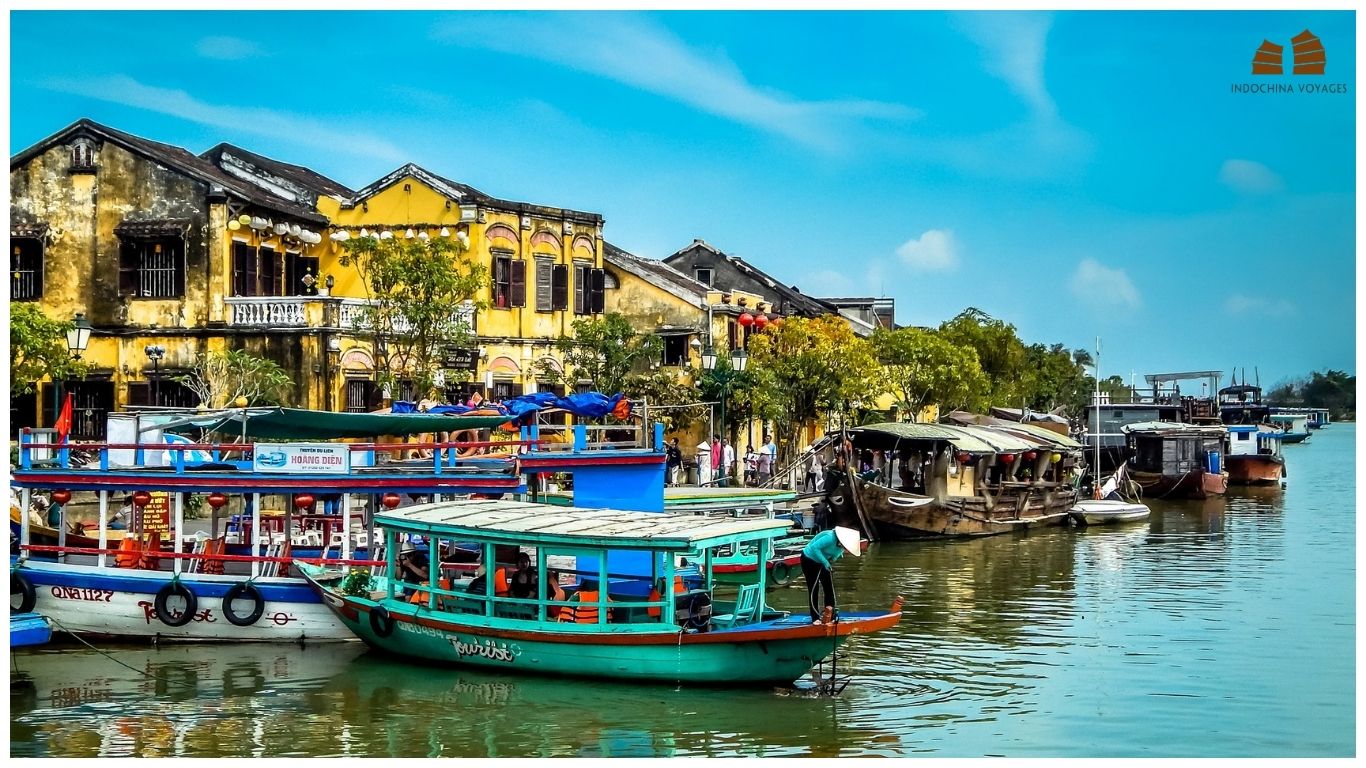
The Short Answer: February to April Is the Best Time to Visit Hoi An, Vietnam
If you’re short on time: February to April is the best time to visit Hoi An, Vietnam. Temperatures sit between 22-27°C, skies are mostly clear, Hoi An beaches are swimmable, and Cham Island boat trips run without disruption. It’s the only window where every part of Hoi An: ancient town, coastline, and offshore islands, works in your favour simultaneously.
| Month | Temp | Rain | Best For | Watch Out For |
|---|---|---|---|---|
| Feb-Apr | 22-27°C | Low | All-round travel, first-timers | Book early for Feb (Tet crowds) |
| May-Aug | 28-35°C | Low-Medium | Cham Island, beaches | Heat, peak tourist season |
| Sep-Nov | 24-29°C | High | Lantern Festival, off-peak prices | Flooding (Oct-Nov) |
| Dec-Jan | 18-24°C | Medium | Quiet exploration, low crowds | Cham Island closed, cooler swimming |
Hoi An Vietnam Weather: What Actually Changes Month by Month
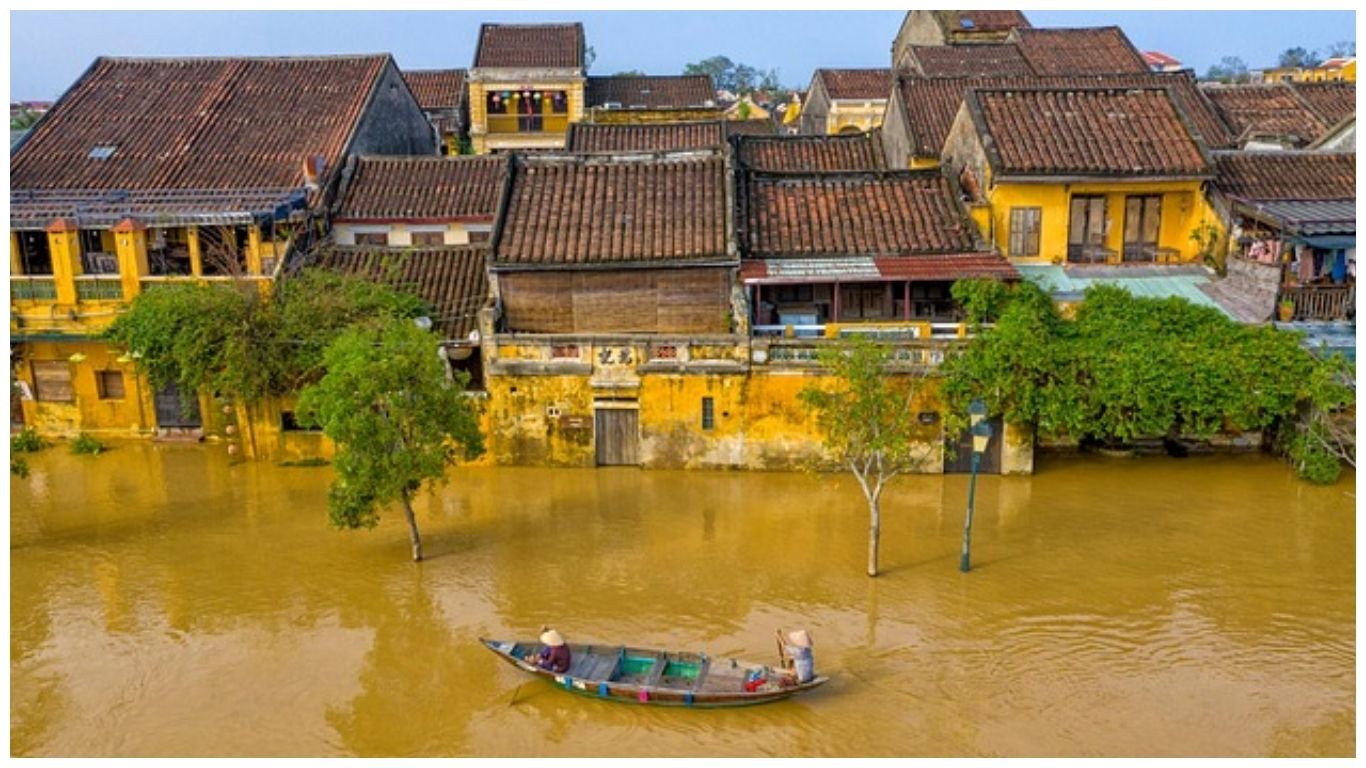
Understanding Hoi An Vietnam weather means understanding one key fact: the town sits on the Thu Bon River floodplain. Unlike Da Nang or Hue, heavy rains here don’t just mean wet streets, they mean the Ancient Town itself can flood 20 to 50 centimetres in October and November.
Beyond that, two seasons define the year:
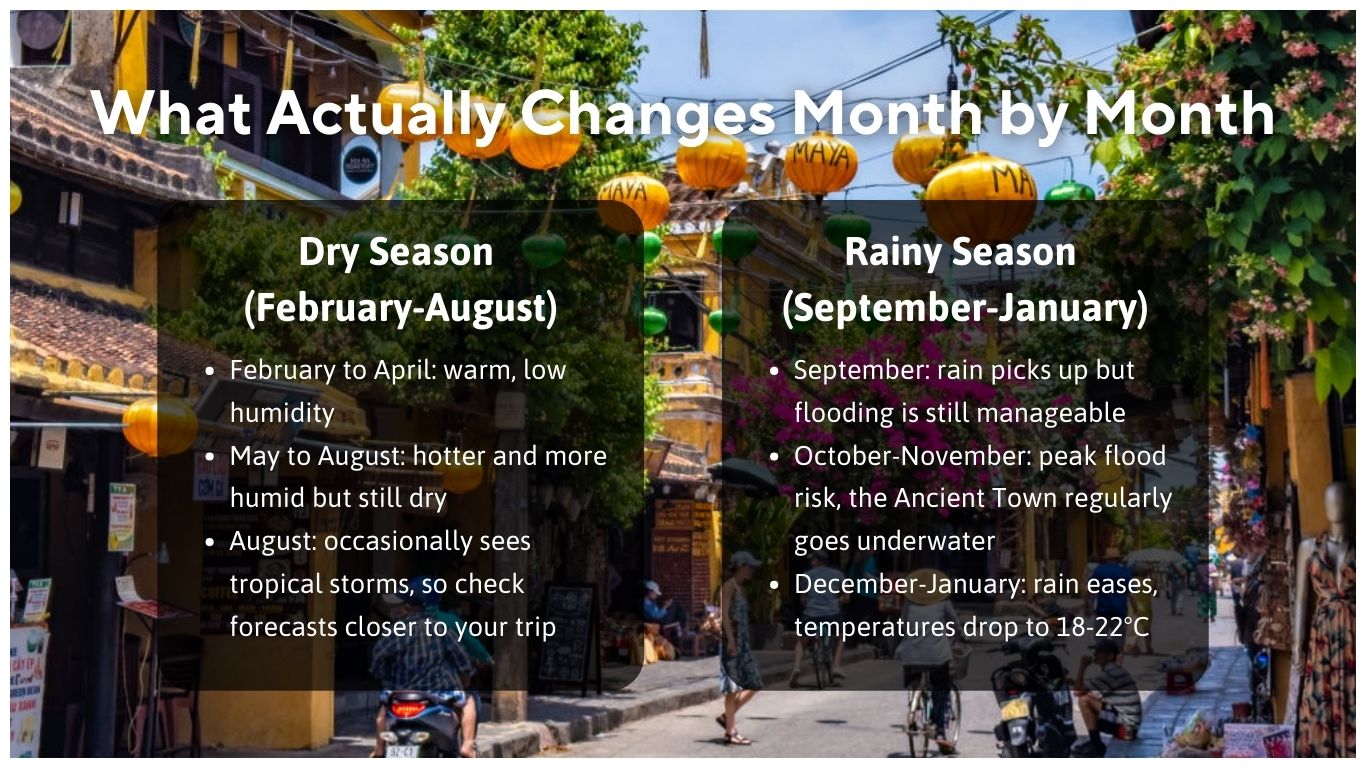
Dry Season (February-August)
- February to April: warm, low humidity, comfortable for walking the old town all day
- May to August: hotter and more humid but still dry, ideal if beaches and Cham Island are your priority
- August: occasionally sees tropical storms, so check forecasts closer to your trip
Rainy Season (September-January)
- September: rain picks up but flooding is still manageable
- October-November: peak flood risk, the Ancient Town regularly goes underwater; some years it’s 10cm, some years it’s knee-deep
- December-January: rain eases, temperatures drop to 18-22°C, crowds thin out significantly
Best Time to Visit Hoi An for Beaches and Cham Island
If Hoi An beaches and a trip to Cham Island (Cu Lao Cham) are on your list, the window is May to August, with May and June being the sweet spot before the summer peak.
Why Cham Island timing matters:
- Cham Island is a UNESCO Biosphere Reserve roughly 15km offshore from Hoi An
- Boat trips from An Hoi Pier take about 1 hour each way
- The island officially closes to tourists from September to April due to rough seas
- Snorkelling conditions: visibility, water temperature, wave height, are best in May and June before the July-August crowds arrive
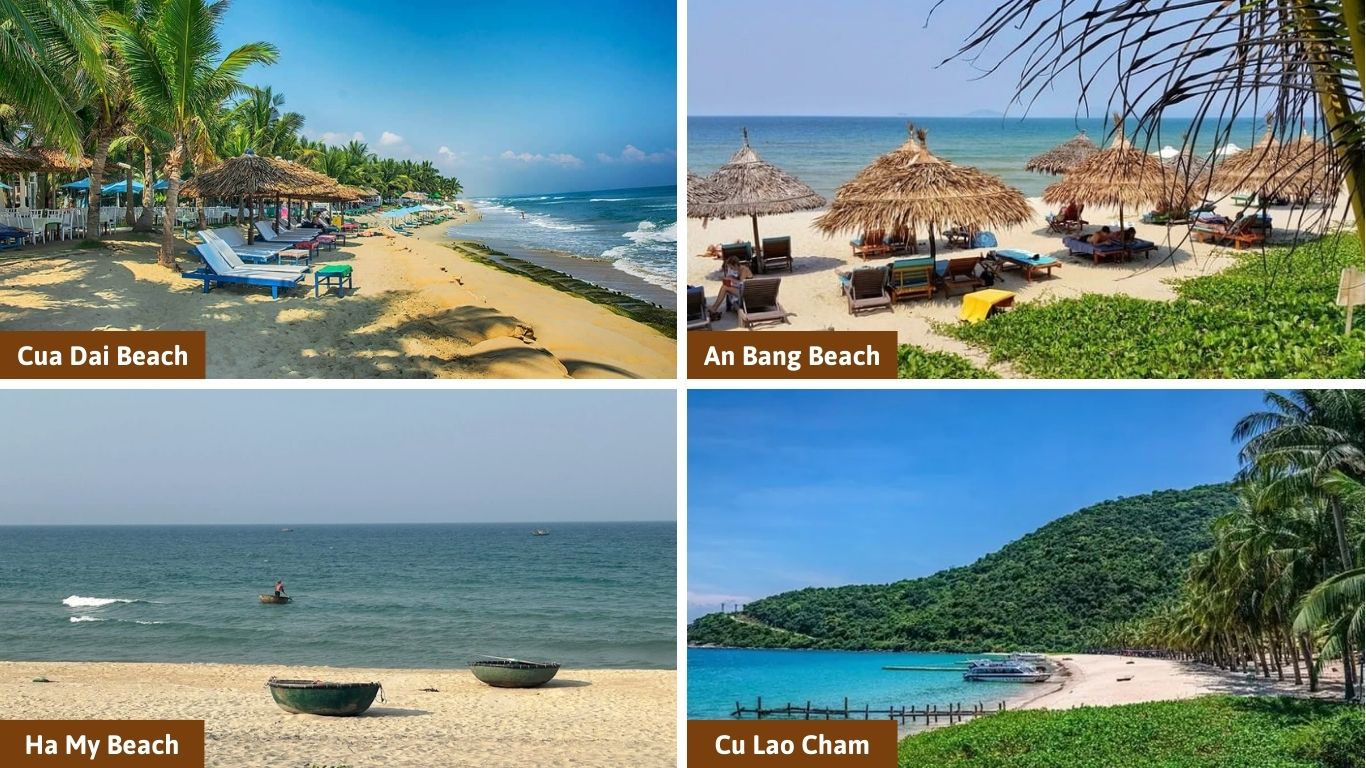
Hoi An’s main beaches:
| Beach | Distance from Old Town | Best Months | Vibe |
|---|---|---|---|
| An Bang Beach | 4km | Mar-Aug | Local favourite, less commercial |
| Cua Dai Beach | 5km | Mar-Jul | Wider stretch, more facilities |
| Ha My Beach | 10km | Apr-Aug | Quieter, less developed |
If you’re combining a beach stay with the Ancient Town, consider staying near An Bang in summer and moving closer to the old town if you visit in the cooler months.
Hoi An Lantern Festival: What Month to Come For It
The Full Moon Lantern Festival happens every month in Hoi An: electric lights are switched off across the Ancient Town, and the streets fill with silk lanterns, candles, and traditional performances. But not all months are equal.
Best months for the Lantern Festival experience:
- January and February (around Tet): biggest celebrations of the year, though very crowded
- February to April: ideal combination – good weather plus the monthly lantern festival without flood risk
- October and November: the atmosphere is arguably the most dramatic, but you’re gambling with the weather
If you visit during the best time to visit Hoi An Vietnam (February-April), you’ll catch at least one Full Moon night in excellent conditions. The festival falls on the 14th day of each lunar month, check the lunar calendar before booking to time your stay around it.
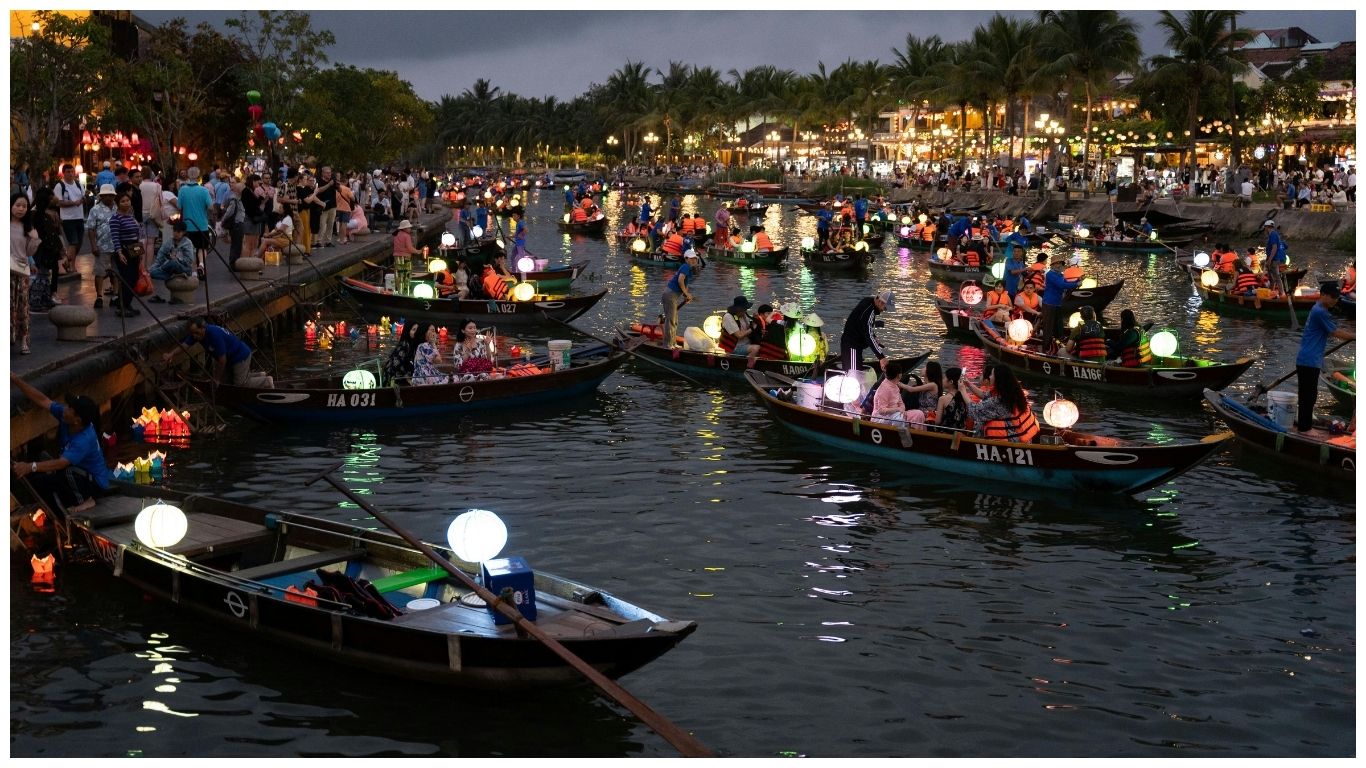
Practical tips for Lantern Festival night:
- Arrive in the Ancient Town by 6pm, it gets packed quickly
- Buy paper lanterns at the riverside to float on the Thu Bon River
- Most restaurants along Nguyen Thai Hoc Street fill up by 7pm, book ahead or eat before the festival starts
- The atmosphere peaks between 7pm and 9pm
Related reading: Hoi An’s Lantern-Lit Streets & Beyond: The Best Things to Do in Hoi An for Every Type of Traveler
Where to Stay in Hoi An: How Your Travel Dates Should Shape Your Choice
Where to stay in Hoi An isn’t just about budget or style, your travel month should influence your decision.
If you’re visiting February to April: Stay in or close to the Ancient Town. The weather is good enough to cycle to the beach daily, and you’ll want to be walking distance from the old town for evening lantern festival nights.
If you’re visiting May to August: Consider staying near An Bang Beach. It’s cooler in the evenings, and you’ll be closer to the pier for Cham Island departures. The old town is 15-20 minutes by bicycle.
If you’re visiting October to November: Avoid accommodation directly on the Thu Bon River or in the lowest-lying parts of the Ancient Town if flooding is forecast. Check with your hotel about their flood history, reputable guesthouses will be transparent about it.
Three main areas at a glance:
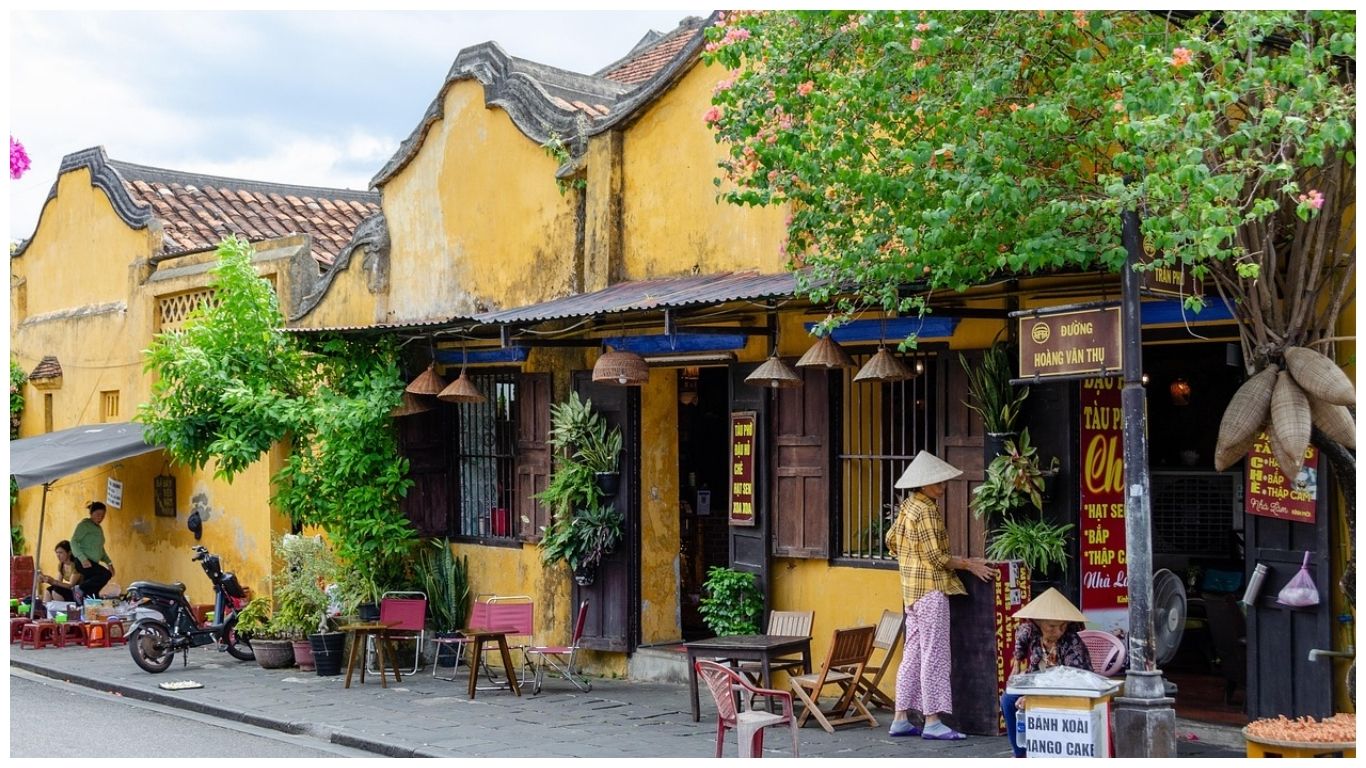
- Ancient Town: Best for culture, festivals, walkability; some flood risk Oct-Nov
- An Bang Beach area: Best for beach access, quieter evenings, May-Aug visitors
- Cua Dai Road corridor: Middle ground between old town and beach; good for cyclists
If you’re building a longer central Vietnam trip around Hoi An, pairing it with Hue and Da Nang is the most logical route, our Central Vietnam itinerary guide breaks down exactly how many days to allocate to each stop.
Practical Tips: No Matter When You Visit
- Tailors: Hoi An is famous for custom clothing. If you want something made, allow at least 3 days and go to your fitting on day one.
- Bicycle rental: The best way to get between the old town and the beach. Costs around 50,000-80,000 VND per day.
- Cooking classes: Book morning sessions (starting 8-9am) to avoid the afternoon heat, especially in summer.
- Crowds: July and August bring the most visitors. If you want the Ancient Town to yourself, early mornings before 8am are magical year-round.
- Waterproof footwear: Essential if visiting October to November. Light sandals that dry quickly are better than sneakers.
- Sun protection: Even in the “cooler” months of February and March, UV levels in central Vietnam are high, bring SPF 50.
Related reading: How to find the Best Tailors in Hoi An Vietnam? Ultimate guide for your best suits
Plan Your Hoi An Trip Around the Right Month
The best time to visit Hoi An, Vietnam is February to April for most travellers: reliable weather, open beaches, and a full lantern festival experience without flood risk. But if Cham Island snorkelling is your priority, push into May or June. If you’re drawn to dramatic atmosphere and lower prices, October and November deliver that – with a caveat about the weather.
Hoi An is a destination that changes its character with the seasons. Knowing which version you’re going to meet is half the planning done.
At Indochina Voyages, we design private Vietnam tours built around your travel dates, not generic departure schedules. Whether you have one week or three, our specialists will match your itinerary to the best conditions for what you want to see. Explore our Vietnam tours or speak with our travel specialist here or drop us an offline message on the screen to start planning.