
If Angkor shows you the monumental side of Khmer civilization, the Silver Pagoda gives you a closer look at Cambodia’s royal Buddhist traditions and national treasures. Known officially as Wat Preah Keo Morakot, it sits in the southern part of the Royal Palace complex in central Phnom Penh. It is famous for its silver-tiled floor and its collection of royal and religious treasures, and most visitors see it together with the Royal Palace.
In this guide, Indochina Voyages covers the history, highlights, and practical tips you need to plan your visit.
What Is the Silver Pagoda in Phnom Penh?
The Silver Pagoda is the royal temple of Cambodia, used for Buddhist ceremonies connected with the king and royal family.
- Official name: Wat Preah Keo Morakot, also known as the Temple of the Emerald Buddha.
- Not a typical monastery: it is commonly described as having no resident monks.
- Location: inside the Royal Palace compound, so you reach it through the palace grounds.
Why is it called the Silver Pagoda? The floor is laid with 5,329 silver tiles, each weighing about a kilogram, which together weigh around five tonnes. Many guides round this to 5,000, but 5,329 is the figure used throughout this guide.

History of Silver Pagoda Phnom Penh
From King Norodom to the early 20th century
- Built under King Norodom between 1892 and around 1902, originally in wood and brick.
- Served as a place of royal worship and Buddhist ceremony.
- A consecration ceremony was held in February 1903.
The 1960s reconstruction
- Rebuilt in 1962 under Norodom Sihanouk, on the same site.
- The new structure used reinforced concrete and marble.
- The silver floor and Italian marble staircase became the building’s signature features.
The Khmer Rouge period and restoration
- The pagoda survived the Khmer Rouge years, and some accounts say the regime preserved it to project an image of caring for Cambodian heritage.
- Many treasures were still lost, stolen or destroyed in the turmoil of the following years.
- Today it stands as a symbol of Cambodia’s royal heritage and Buddhist traditions.
What to See Inside the Silver Pagoda
Beyond its name, the Silver Pagoda is really a treasure house. These are the highlights worth slowing down for.
1. The silver-tiled floor
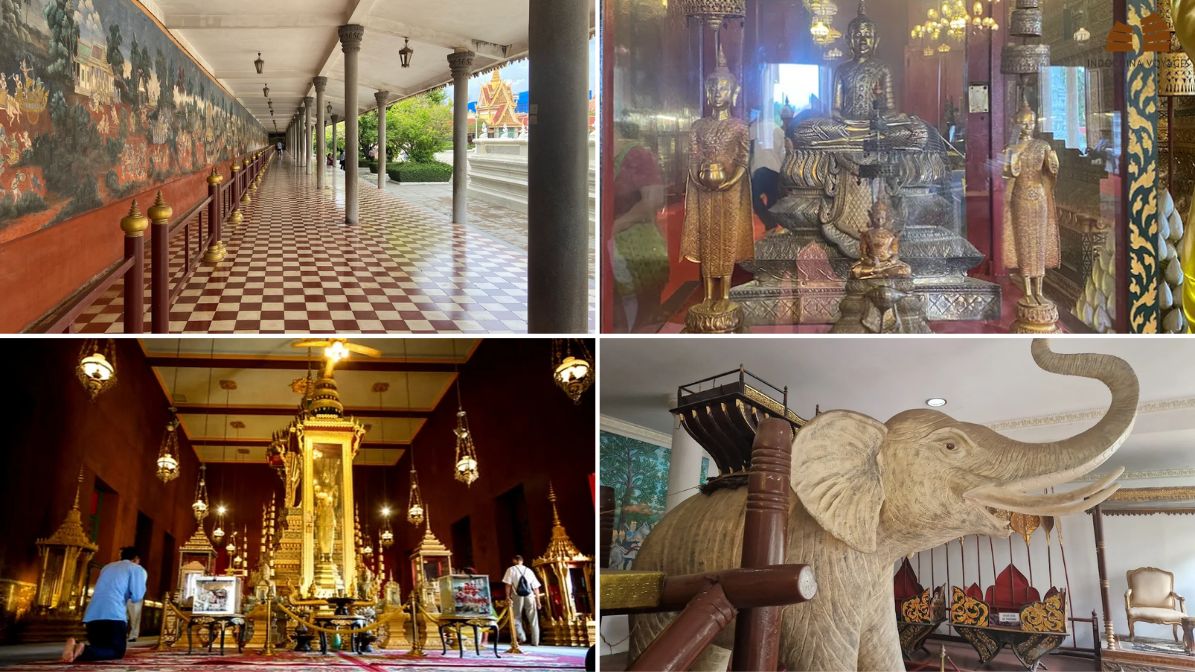
The 5,329 tiles gave the pagoda its English name and reflect its royal status. Don’t expect to walk across and admire every tile, though. Most of the floor is carpeted to protect it, and only a small area near the entrance is uncovered for visitors.
2. The Emerald Buddha
The revered image that gives the temple its other name is a small green crystal Buddha, not a true emerald. It is often described as Baccarat crystal, although that attribution is debated. It sits on a gilded pedestal at the center of the temple.
3. The life-sized gold Buddha
One of the strongest highlights, this gold Maitreya Buddha stands in front of the main altar. It was made in the palace workshops in 1906-1907 and weighs about 90 kg. It was originally set with 9,584 diamonds, the largest weighing 25 carats, and around 2,086 are commonly cited as remaining today after losses during decades of conflict.
4. Royal and Buddhist treasures
Instead of a single artifact, think of a collection of about 1,650 objects:
- Gold, silver and bronze Buddha images
- Royal ceremonial objects and classical dance masks
- Gifts presented to Cambodia’s royal family by foreign leaders
- Religious artifacts and decorative pieces
5. The Reamker murals
Painted in 1903-1904 by about 40 Cambodian artists, the gallery walls around the compound tell the Reamker, Cambodia’s version of the Ramayana, in one continuous story. The mural is about 642 meters long and starts at the south of the eastern gallery, so you follow it by walking the enclosure in order. Weather and time have faded some sections, but the surviving parts remain vivid.
6. Royal stupas and memorials
The grounds hold memorial stupas connected with Cambodian royalty, including that of Princess Norodom Kantha Bopha, where the remains of King Norodom Sihanouk are interred. They add another layer of royal history to the visit.
Silver Pagoda and Royal Palace: Are They the Same Attraction?
Not quite. The Silver Pagoda is one part of the Royal Palace complex, and visitors don’t buy a separate ticket. One entry covers both, at around US$10 for foreign visitors.
Besides the pagoda, the complex includes:
- The Throne Hall
- The palace grounds and gardens
- Royal pavilions
- Royal memorial structures
This is worth knowing before you go, so you arrive expecting a palace-and-temple visit rather than a standalone pagoda.

More Highlights to Explore at the Royal Palace After the Silver Pagoda
Once you’ve seen the pagoda, the rest of the eastern courtyard is worth another 30-45 minutes. These are the four stops most visitors enjoy.
1. The Throne Hall
The centerpiece of the palace, topped with golden spires and a tall central tower. It was rebuilt in the 1910s and is still used for coronations, royal ceremonies and receptions for foreign diplomats. Expect to admire it mainly from the outside, since access to the interior varies and photography isn’t permitted inside. The hall can also close during official ceremonies.
2. The Moonlight Pavilion (Chan Chhaya)
An open-sided Khmer pavilion topped with a golden spire, used for royal dance performances, banquets and receptions. It is also where the king addresses the public. It faces the riverfront and is one of the most photogenic spots in the compound.
3. The Napoleon III Pavilion
An unusual cast-iron building given to the Cambodian royal family by France in the 1870s. It looks out of place next to the Khmer architecture around it, which is part of its charm. It now serves as a small museum with a photographic exhibition, though check whether it is open or under restoration on the day.
4. The Phochani Pavilion and palace gardens
The Phochani Pavilion is a large hall used for banquets and royal receptions, and it sits opposite the Throne Hall. The surrounding gardens and courtyards are good for an unhurried walk and for photos, since photography is allowed outdoors.
How to Visit the Silver Pagoda Phnom Penh
Opening hours
Recent sources commonly list two sessions:
- 8:00 AM to 11:00 AM
- 2:00 PM to 5:00 PM
Some sources report slightly different hours, and the palace can close without notice for royal functions, so check locally or with your hotel before you go.
Entrance fee
| Visitor information | Current guidance |
|---|---|
| Silver Pagoda ticket | Included with Royal Palace admission |
| Foreign visitor admission | Around US$10 |
| Separate Silver Pagoda ticket | No |
| Payment | Bring cash, as cards are reportedly not accepted |
| Possible closure | Royal ceremonies or official functions |
Prices can change, so treat the figure as a guide and confirm before you go.
How Long Do You Need at the Silver Pagoda?
- Silver Pagoda alone: around 30-60 minutes.
- Royal Palace plus Silver Pagoda: around 1.5-2 hours.
Travelers who love history, architecture or photography may want longer, especially to walk the full mural gallery and the palace courtyard.
Best Time to Visit the Silver Pagoda
Time of day: Go in the morning, ideally around opening time. Phnom Penh gets hot quickly, and the visit involves a lot of outdoor walking.
Time of year: You can visit year-round, but the cooler, drier months make walking around the city more comfortable.
Choosing dates for a wider trip? Browse Indochina travel packages to match your dates to the right season.

How to Get to the Silver Pagoda
The Royal Palace complex is on Samdech Sothearos Boulevard, between Streets 184 and 240, with the main entrance on the boulevard. From central Phnom Penh you can use:
- A tuk-tuk
- A ride-hailing app
- A taxi or private transfer
- Your own feet, if you’re staying around the Riverside
Prefer not to haggle over transfers? We can arrange a private vehicle and an English-speaking guide for your palace visit.
Silver Pagoda Dress Code and Visitor Rules
- Cover your shoulders and knees. Avoid revealing clothing.
- Wear comfortable footwear, since you’ll walk around the compound.
- Shoes come off before entering the pagoda.
- No photography inside the Silver Pagoda, although it is allowed in the grounds.
- If you arrive underdressed, you may be able to buy a sarong or T-shirt at the entrance, but don’t count on it.
What to See Near the Silver Pagoda
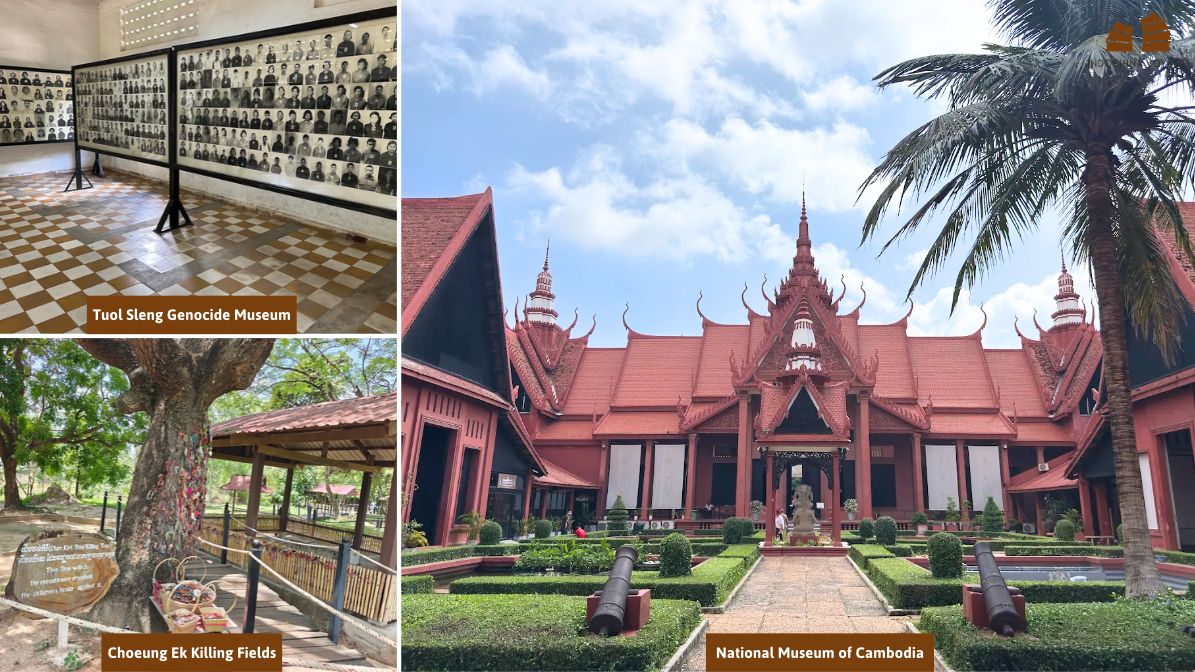
The National Museum of Cambodia is a good pairing for Khmer art and history. Wat Ounalom, a short distance away, is an important Buddhist center in the city. The Phnom Penh Riverside is ideal for a relaxed walk after the palace, and Central Market is the place for shopping and everyday city atmosphere.
For a more somber historical experience, the Tuol Sleng Genocide Museum and the Choeung Ek Killing Fields are separate visits rather than quick add-ons, as neither is next door.
>>>>Looking for lesser-known stops? Read more about unusual things to do in Phnom Penh.
Is the Silver Pagoda Worth Visiting?
It suits travelers interested in:
- Cambodian royal history
- Buddhism
- Khmer architecture
- Religious art and national treasures
- Phnom Penh’s royal heritage
If you’re mainly after Angkor-style monumental temples, expect something different. The Silver Pagoda is about royal treasures, sacred objects, murals and the living history of Cambodia’s monarchy, and that distinction is exactly what makes it worthwhile. Paired with our Indochina tours of Angkor, it gives you both sides of Cambodia in one journey.
Suggested Phnom Penh Route Including the Silver Pagoda
Option 1: Royal heritage route
Royal Palace → Silver Pagoda → National Museum → Riverside. Best for history, art and architecture.
Option 2: Phnom Penh highlights
Royal Palace and Silver Pagoda → Wat Ounalom → Central Market → Wat Phnom. A good first introduction to the city.
Option 3: History-focused day
Royal Palace and Silver Pagoda → Tuol Sleng → Choeung Ek. Do the palace in the morning since it closes at midday, and pace yourself, as the day moves from royal Cambodia into its 20th-century history.
Want these routes planned for you? You can see sample itineraries here.
Extend Your Trip Beyond Phnom Penh
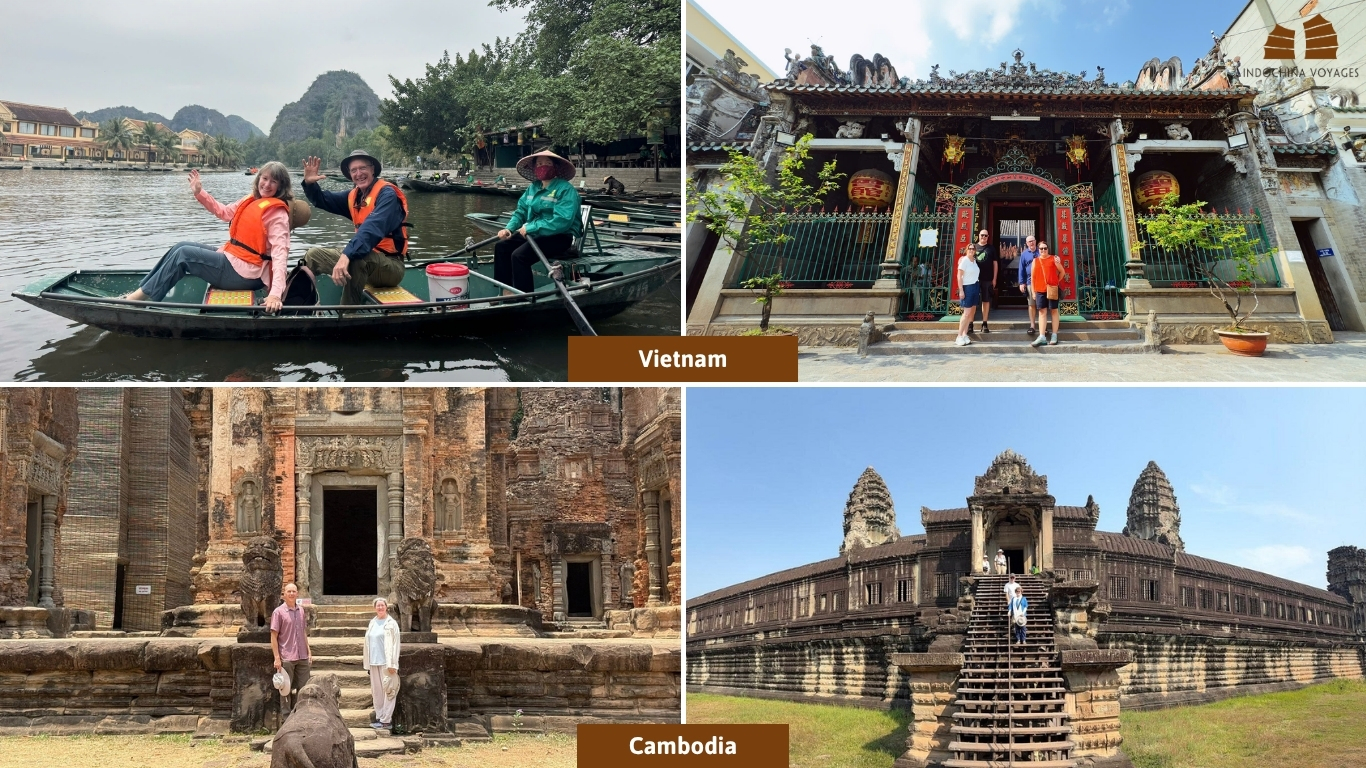
The Silver Pagoda is usually a half-day stop, so most travelers build it into a longer journey. Whether you want a single city day, a full Cambodia tour or a Vietnam and Cambodia combination, these are the routes that include Phnom Penh:
- Far East Discovery 22 Days
- Phnom Penh City Highlights Tour
- Cambodia Discovery 8 Days
- 8 Days Cruise From Siem Reap To Saigon
- Cambodia Highlights 11 Days
- Grand Cambodia 16 Days
- Splendors of Vietnam and Cambodia 17 Days
Heading between Vietnam and Cambodia? Skip the flight and drift along the Delta on a Mekong River cruise. If none of these fit, custom Indochina packages can combine the places you want most.
Planning a longer route or packing for the trip? These two guides help:
FAQs
Where is the Silver Pagoda in Phnom Penh?
Inside the Royal Palace complex in central Phnom Penh.
What is the Silver Pagoda officially called?
Wat Preah Keo Morakot, also known as the Temple of the Emerald Buddha.
Why is it called the Silver Pagoda?
Its floor is made of 5,329 silver tiles, although most are covered by carpet today.
How much is the Silver Pagoda entrance fee?
It is included in the Royal Palace admission, which is currently around US$10 for foreign visitors.
Can you take photos inside the Silver Pagoda?
No. Photography is allowed on the palace grounds but not inside the pagoda.
What should I wear to the Silver Pagoda?
Cover your shoulders and knees, and dress more formally than for casual sightseeing.
How long should I spend at the Silver Pagoda?
Around 30-60 minutes for the pagoda itself, with more time if you explore the wider Royal Palace complex.
The Silver Pagoda is one of the best ways to understand Cambodia’s royal and Buddhist heritage, and it fits easily into a wider journey. Whether you want a single day in Phnom Penh or a multi-country trip, Indochina Voyages can design it around you. You can also email us at info@indochinavoyages.com.
From Indochina Voyages Travel Consultants