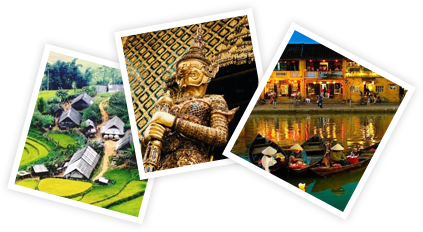

Choosing between Thailand or Vietnam for your Southeast Asia adventure? Both destinations offer incredible experiences, but they cater to different travel styles and budgets. While Thailand dazzles with golden temples and party islands, Vietnam captivates with raw authenticity and better value. This comprehensive comparison breaks down costs, culture, food, beaches, and ideal itineraries to help you decide which Southeast Asian gem should you visit first in 2026.
Thailand or Vietnam: Which Is Right for You? (Quick Answer)
The 30-Second Verdict
| What Matters to You | Vietnam | Thailand |
| Best Value (20–25% cheaper) | ⭐⭐⭐⭐⭐ | ⭐⭐⭐ |
| World-Class Island Infrastructure | ⭐⭐⭐ | ⭐⭐⭐⭐⭐ |
| Raw Cultural Authenticity | ⭐⭐⭐⭐⭐ | ⭐⭐⭐⭐⭐ |
| Easiest First-Time Asia Trip | ⭐⭐⭐⭐⭐ | ⭐⭐⭐⭐⭐ |
| War History & French Colonial Charm | ⭐⭐⭐⭐⭐ | ⭐⭐⭐ |
| Wellness & Spa Retreats | ⭐⭐⭐ | ⭐⭐⭐⭐⭐ |
| Fewer Crowds, More Discovery | ⭐⭐⭐⭐⭐ | ⭐⭐⭐ |
| Family Travel with Kids | ⭐⭐⭐⭐⭐ | ⭐⭐⭐⭐⭐ |
The Smart Choice?
2-3 weeks available? Visit both countries in one trip, experience Thailand’s polished comfort and Vietnam’s authentic discovery for the complete Southeast Asian journey.
Only 7-10 days? Pick based on your priority: Thailand for ease and islands, Vietnam for culture and value.
Read on for detailed comparisons on weather, costs, beaches, culture, and sample itineraries…
>>> Start a free consultation here to discuss your preferences, and we’ll recommend the perfect Southeast Asian adventure, whether one country or both.
Quick Comparison Overview: Thailand or Vietnam at a Glance
When planning your Southeast Asian journey, the Thailand or Vietnam question tops many travelers’ lists. Both rank among the region’s most beloved destinations, yet each excels in distinctly different areas. Understanding these differences helps you make an informed choice aligned with your travel preferences.
| Factor | Thailand | Vietnam |
|---|---|---|
| Budget | Moderate | Lower (15-25% cheaper) |
| Tourism Development | Highly developed | Rapidly developing |
| Highlights | Temple culture, wellness retreats, island hopping | Beaches, history, cultural immersion |
| Language Barrier | Lower | Higher |
| Food | Spicy, curry-based | Fresh, herb-focused |
| Infrastructure | Excellent | Good and improving |
| Crowds | Heavy year-round in popular areas | Seasonal; less touristy overall |
Budget: Vietnam vs Thailand – Which Is More Affordable?
Vietnam is consistently 15-25% cheaper than Thailand across most spending categories. A comfortable mid-range day in Vietnam including accommodation, meals, transport, and entrance fees, typically runs $60-$100 per person, while a comparable day in Thailand averages $80-$130.
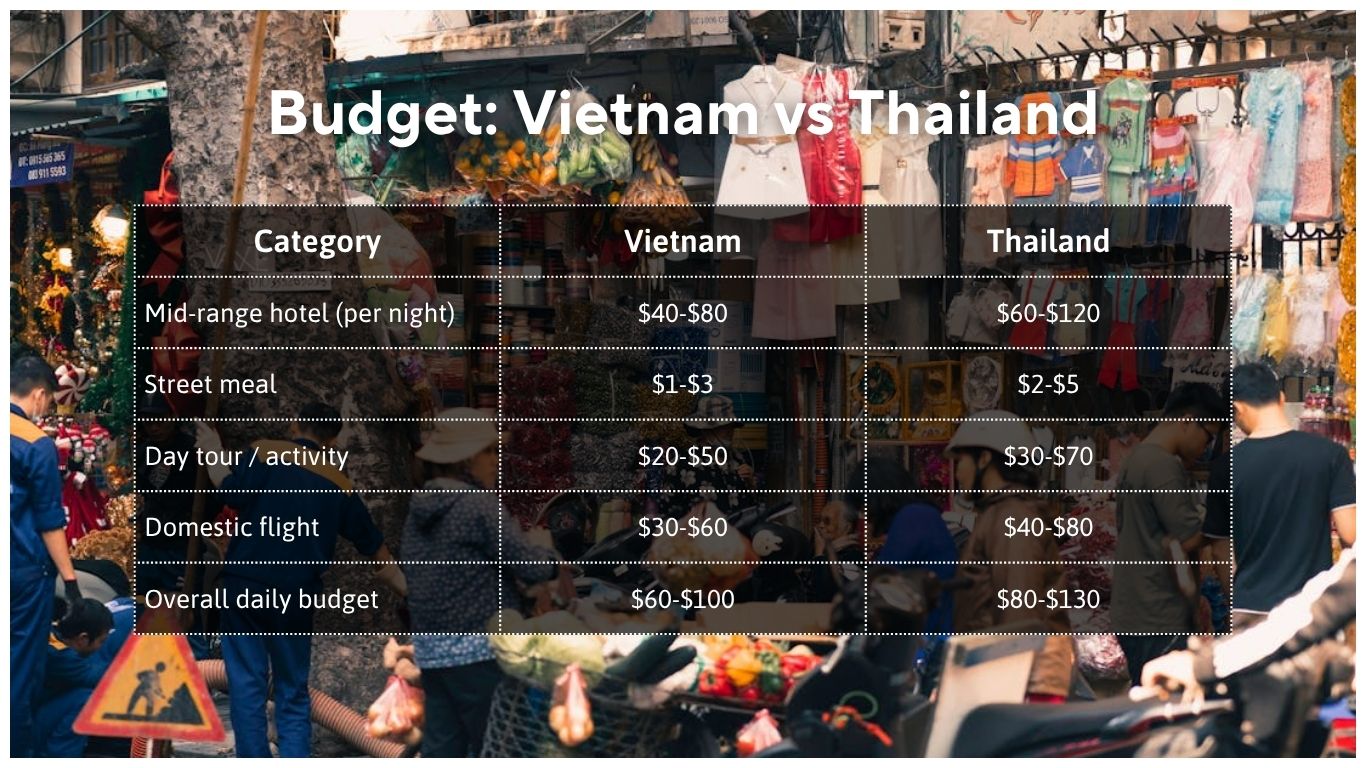
Vietnam offers better value without sacrificing quality, particularly for travelers on longer trips where savings compound quickly. That said, Thailand’s slightly higher price point reflects its more developed tourism infrastructure, wider range of luxury options, and world-class island resorts.
→ Browse our Vietnam tour packages with transparent pricing!
Tourism Development & Crowds: What to Expect
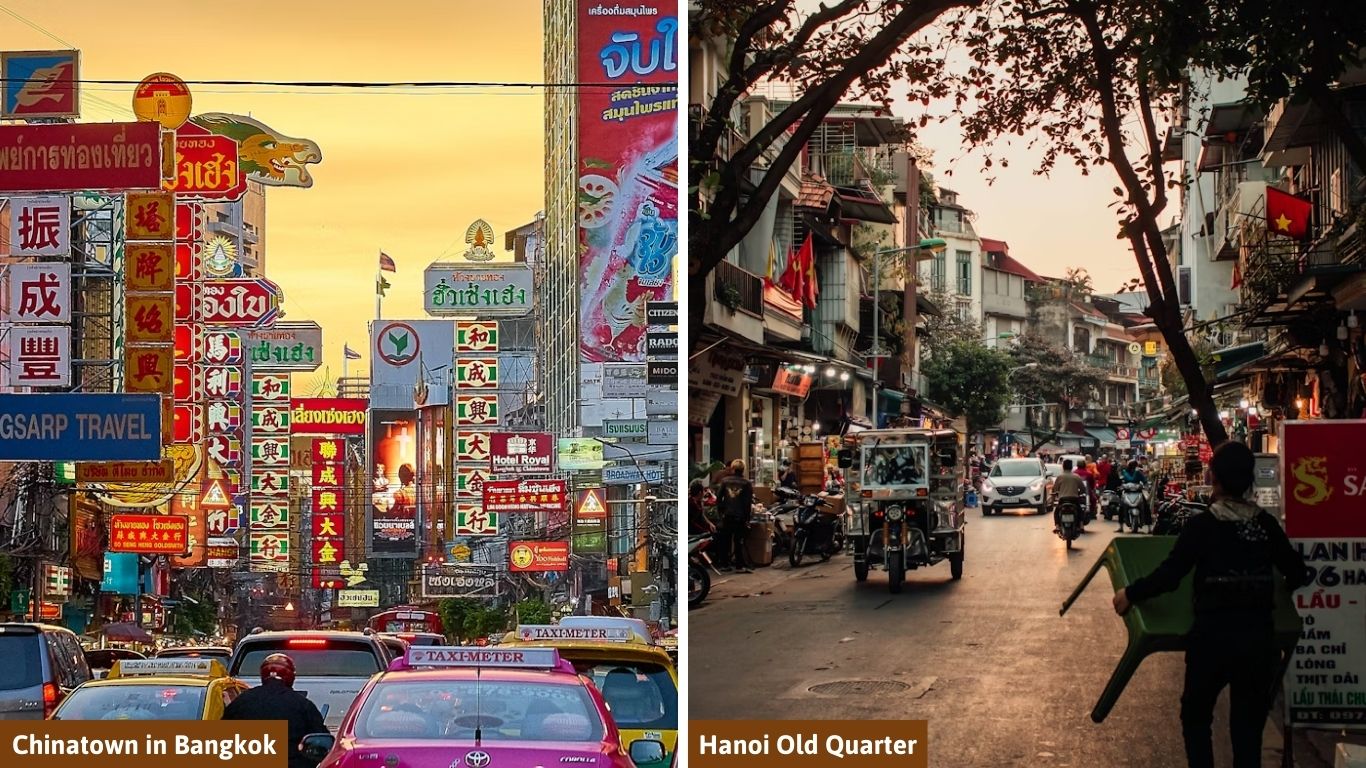
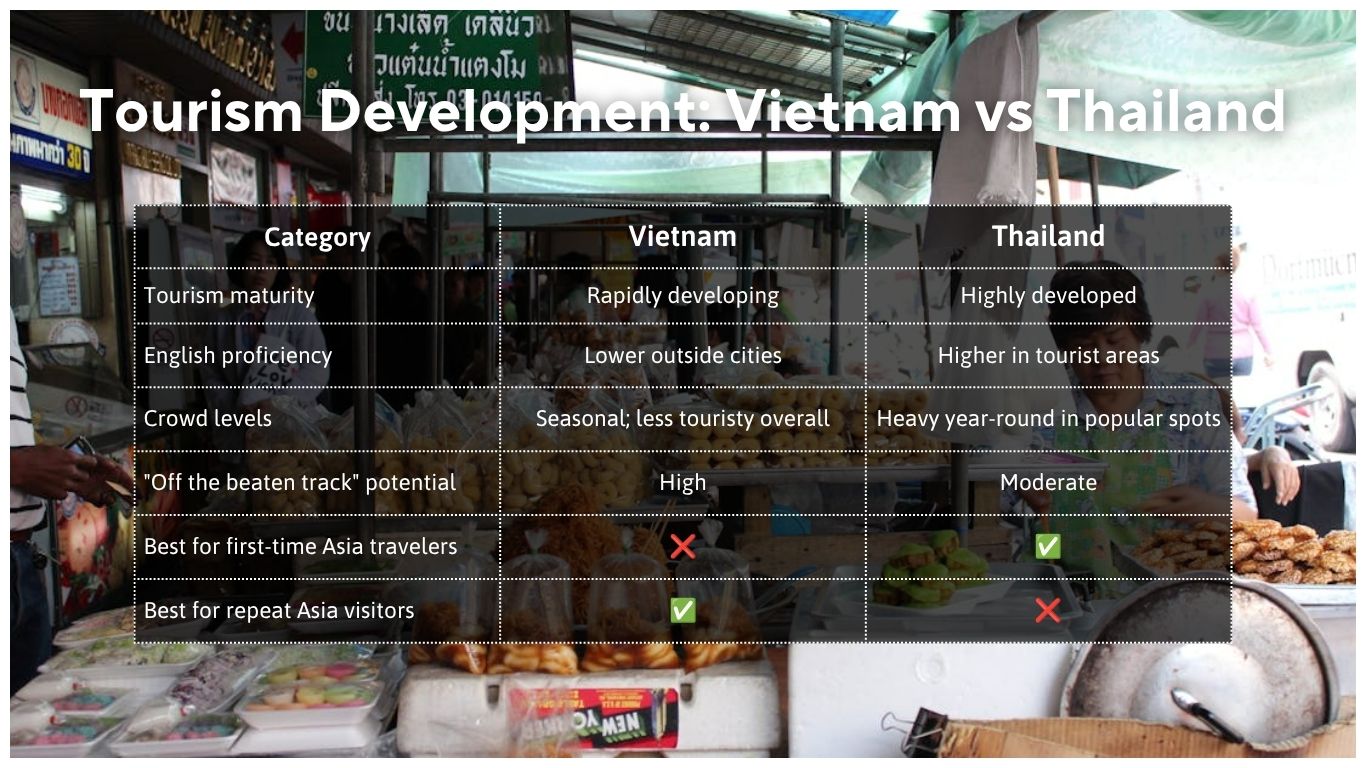
Thailand has been a major international destination for over four decades. Its tourism infrastructure is polished and efficient: well-signed attractions, English-speaking staff almost everywhere, easy inter-city transport, and a huge variety of accommodation at every price point. The trade-off: popular areas like Bangkok’s temple district, Chiang Mai’s Old City, and Phuket’s Patong Beach can feel crowded year-round.
Vietnam is developing rapidly but retains a more raw, unfiltered character. Outside of peak spots like Ha Long Bay and Hoi An’s Ancient Town, travelers regularly encounter places that feel genuinely undiscovered. English proficiency is lower outside major cities, which requires more flexibility, but often leads to more authentic local interactions.
Culture & Heritage: Differences Between Vietnam and Thailand
Historical Influences and Authenticity
The difference between Vietnam and Thailand becomes most apparent when exploring their distinct cultural identities.
- Vietnam’s history is marked by visible war heritage: Cu Chi Tunnels, the War Remnants Museum, and the DMZ offer profound historical insights unavailable elsewhere in Southeast Asia.
- French colonial influence adds unique architectural charm to cities like Hanoi and Ho Chi Minh City, creating a distinctive East-meets-West atmosphere.
- Vietnam’s UNESCO World Heritage sites: Hoi An Ancient Town, Hue Imperial City, Ha Long Bay, and My Son Sanctuary – remain refreshingly less commercialized than many tourist attractions across the region.
- The country’s coffee culture thrives in heritage cafes, while traditional ao dai dresses add elegance to daily life.
Thailand’s cultural landscape showcases a different kind of preservation.
- As the only Southeast Asian nation never colonized, it maintains a unique cultural continuity. The well-preserved ancient capitals of Ayutthaya and Sukhothai display impressive temple complexes spanning centuries.
- Bangkok’s Grand Palace, Wat Pho, and traditional dance performances demonstrate Thailand’s refined approach to cultural tourism.
- Tourism infrastructure developed over four decades, Thailand has mastered the art of presenting its culture to international visitors. T
- Tourist-oriented experiences that sacrifice some raw authenticity for accessibility and comfort.
Daily Life and Local Interactions
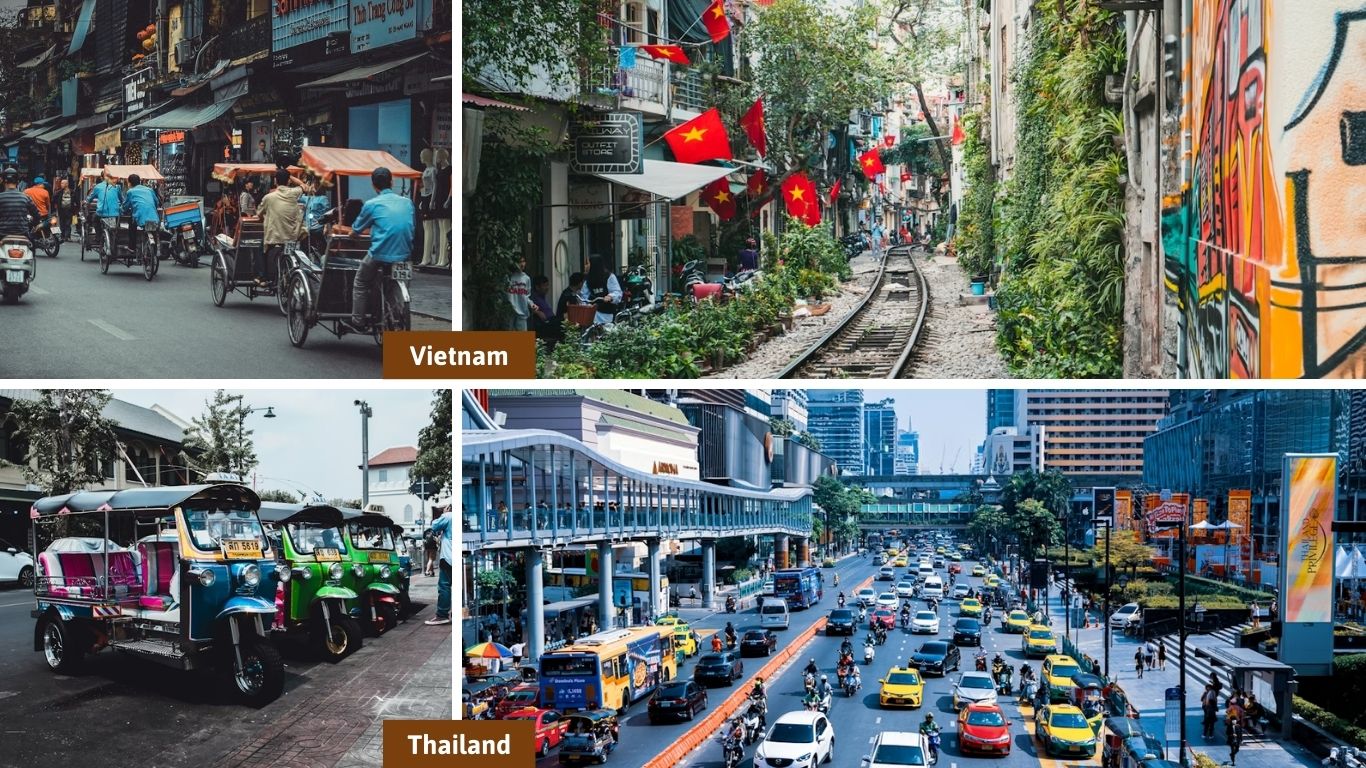
Vietnam’s streets pulse with entrepreneurial energy, especially in Hanoi’s Old Quarter where motorbikes dominate 80% of transport.
- The bustling street life creates an immersive atmosphere where travelers witness authentic daily routines.
- Lower English proficiency outside major cities requires more effort to communicate, but this often leads to more genuine local interactions through gestures, translation apps, and shared laughter.
Thailand earns its “Land of Smiles” reputation through decades of welcoming international visitors.
- Higher English proficiency in tourism areas smooths communication, while the highly developed street food culture creates easy entry points for cultural exploration.
- First-time Asia travelers often find Thailand’s established tourism infrastructure less intimidating than Vietnam’s raw energy.
Urban vs Rural Experiences
Vietnam presents dramatic contrasts between the chaotic energy of Hanoi and Ho Chi Minh City versus the peaceful countryside of Sapa’s terraced rice fields or Ninh Binh’s limestone landscapes. This sharp transition rewards travelers seeking both urban excitement and rural tranquility.
Thailand offers a more gradual shift from Bangkok’s bustling metropolis to the northern mountains around Chiang Mai or the southern islands’ tropical paradise. Both countries provide authentic village experiences, but Vietnam retains a more “undiscovered” character despite rapid tourism growth.
The difference between Vietnam and Thailand centers on cultural accessibility. Vietnam rewards curious travelers with authentic, less-filtered experiences, while Thailand offers easier cultural immersion with better English communication. Your preference for raw authenticity versus polished accessibility should guide your choice.
Food: Street Eats, Flavors & Culinary Culture
Both countries are world-class food destinations but the flavors, formats, and eating experiences are quite different.
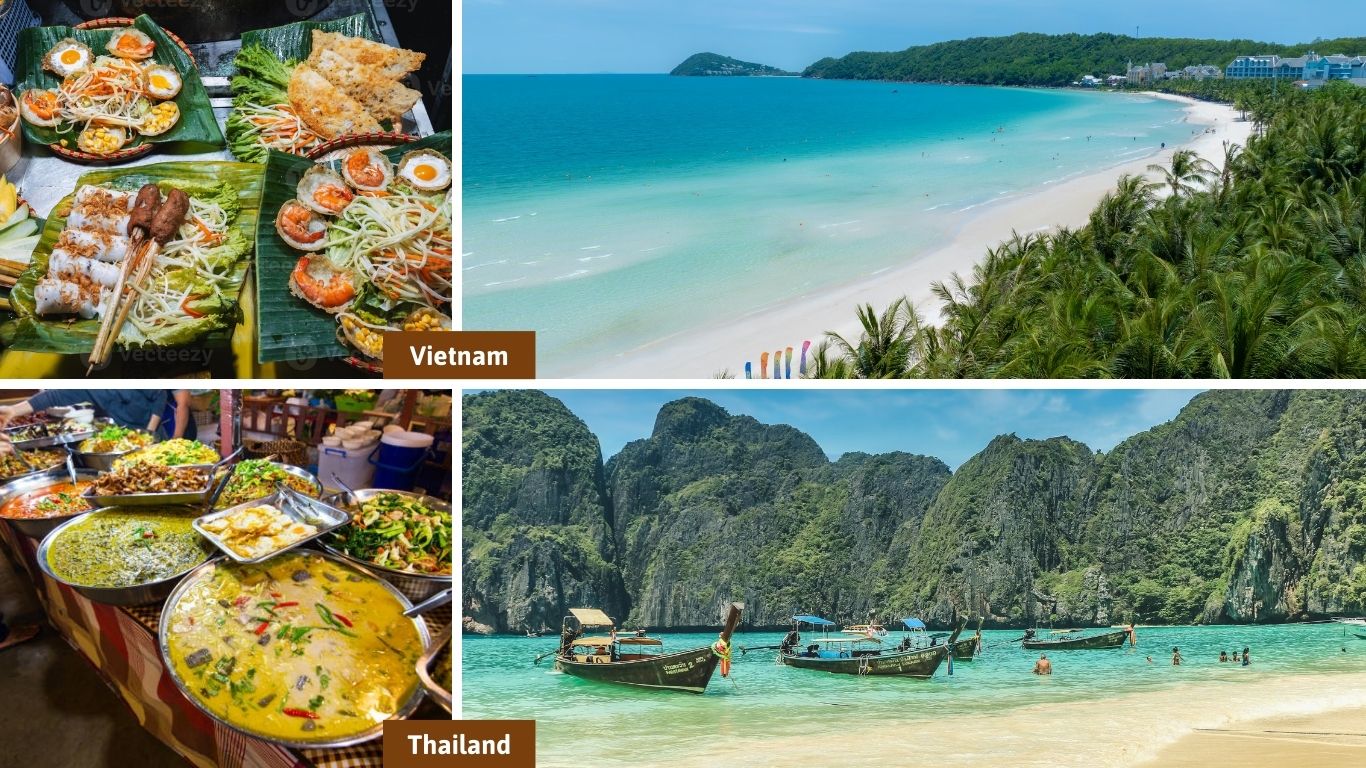
Vietnamese food is fresh, herb-forward, and light. Signature dishes like phở, bánh mì, bún bò Huế, and bánh xèo are built around balance: broth, herbs, rice noodles, and minimal oil. Meals are typically eaten at tiny plastic stools on the street, and regional variation is significant: northern food is subtler, central food is spicier, southern food is sweeter.
Thai food is bolder and more aromatic: coconut milk curries, galangal, lemongrass, and chillies define the palette. Dishes like pad thai, green curry, som tum (papaya salad), and khao pad are globally recognized. Street food culture is deeply embedded, especially in Bangkok’s night markets and Chiang Mai’s Sunday Walking Street.
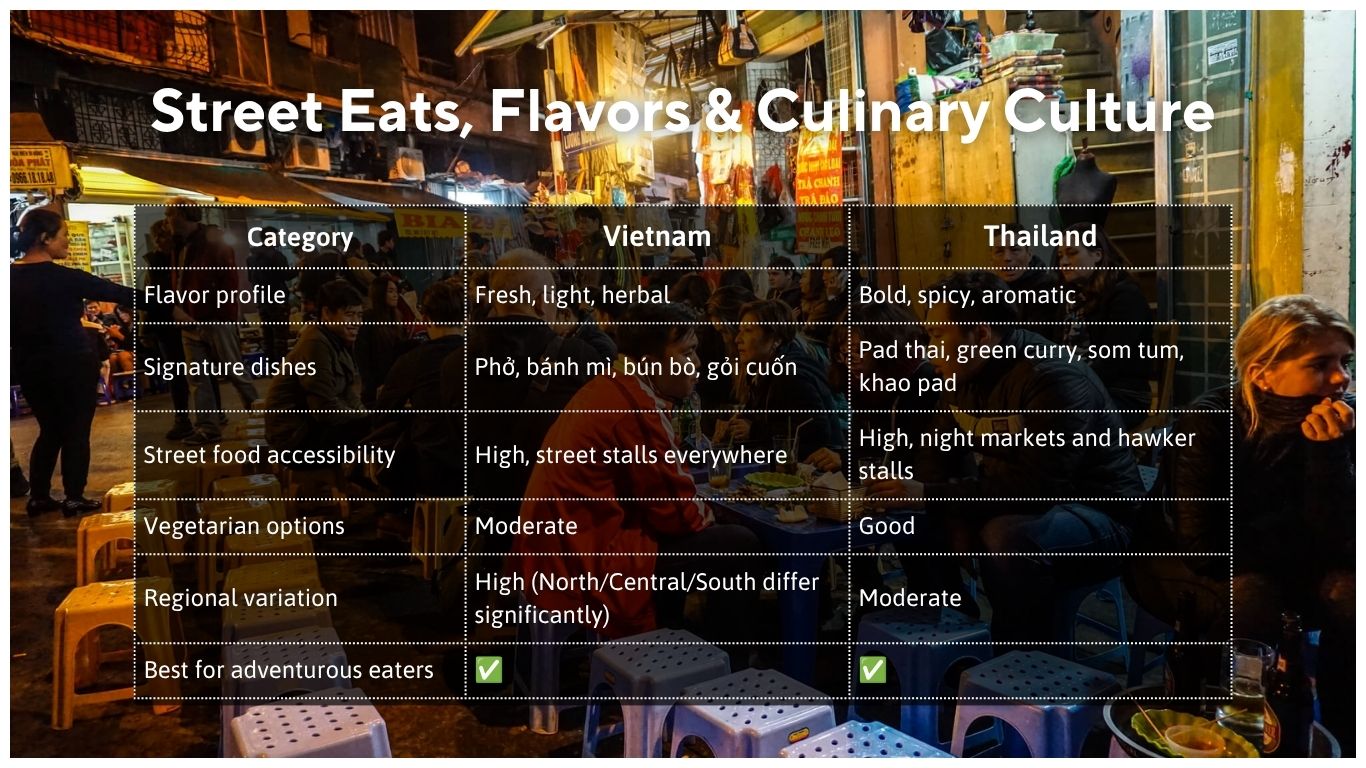
Both countries are outstanding for food lovers. Vietnam edges ahead for travelers who prefer lighter, fresher cuisine and want to discover lesser-known regional specialties. Thailand is the stronger choice if you love bold, fragrant flavors and want the convenience of dishes you already recognize.
Infrastructure: Getting Around Thailand vs Vietnam
Thailand has a more developed travel infrastructure overall. Domestic flights are frequent and affordable, inter-city buses and trains run on schedule, and tourist transport between major hubs (Bangkok – Chiang Mai – Phuket) is seamless. Ride-hailing apps (Grab) work reliably in cities. Hotels, hospitals, and services in tourist areas meet high international standards.
Vietnam has improved significantly in recent years. Domestic flights connect all major cities efficiently, and the coastal route from Hanoi to Ho Chi Minh City is well-trodden. However, road quality varies outside cities, English signage is less consistent, and some rural areas require a local guide to navigate comfortably. This is changing fast: new highways, expanded airports, and growing hospitality investment are raising the bar year on year.
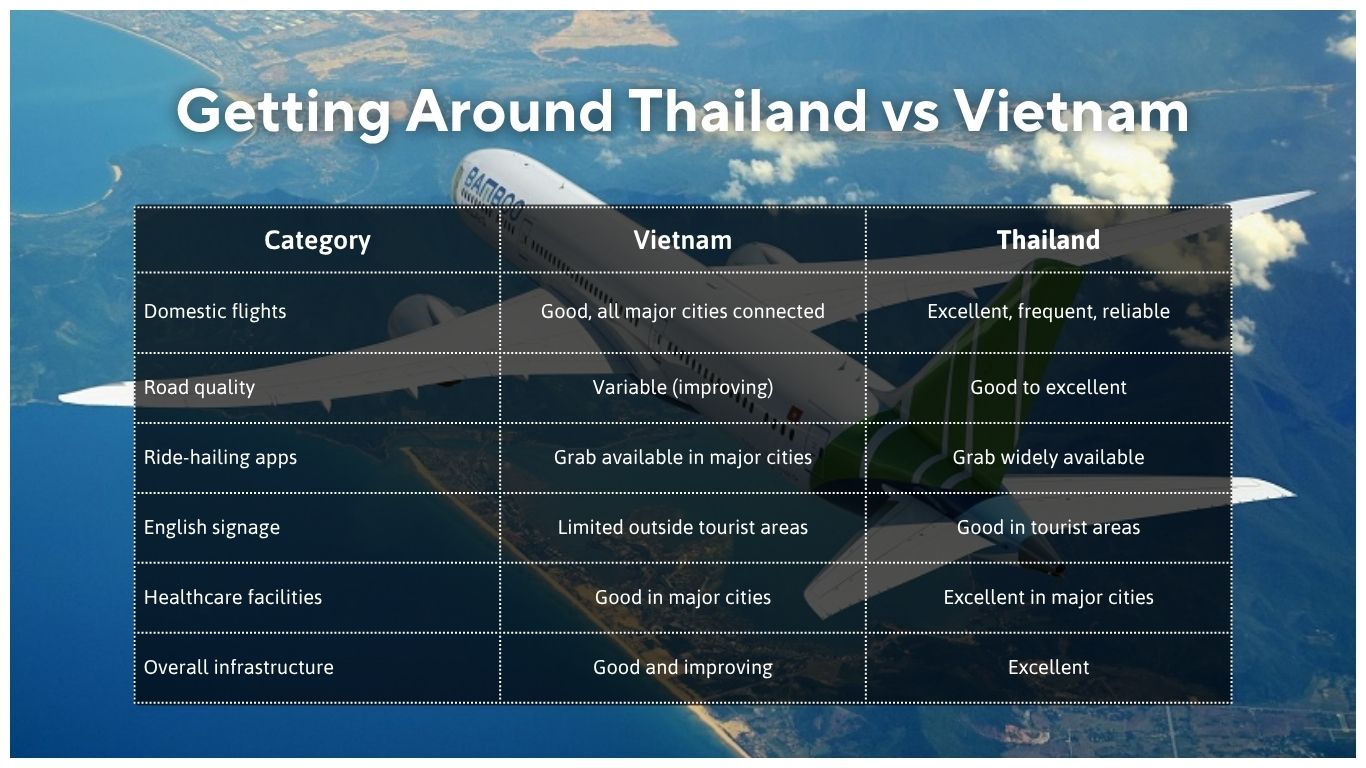
For independent travelers, Thailand is the easier country to navigate solo. For guided tours where logistics are handled for you, both countries are equally manageable, and Vietnam’s rough edges are part of what makes it special.
When Is The Best Time To Visit Thailand And Vietnam?
Quick Answer: November to March
The best window to visit either country or both is November through March: dry weather, manageable temperatures, and the most enjoyable conditions across most regions.
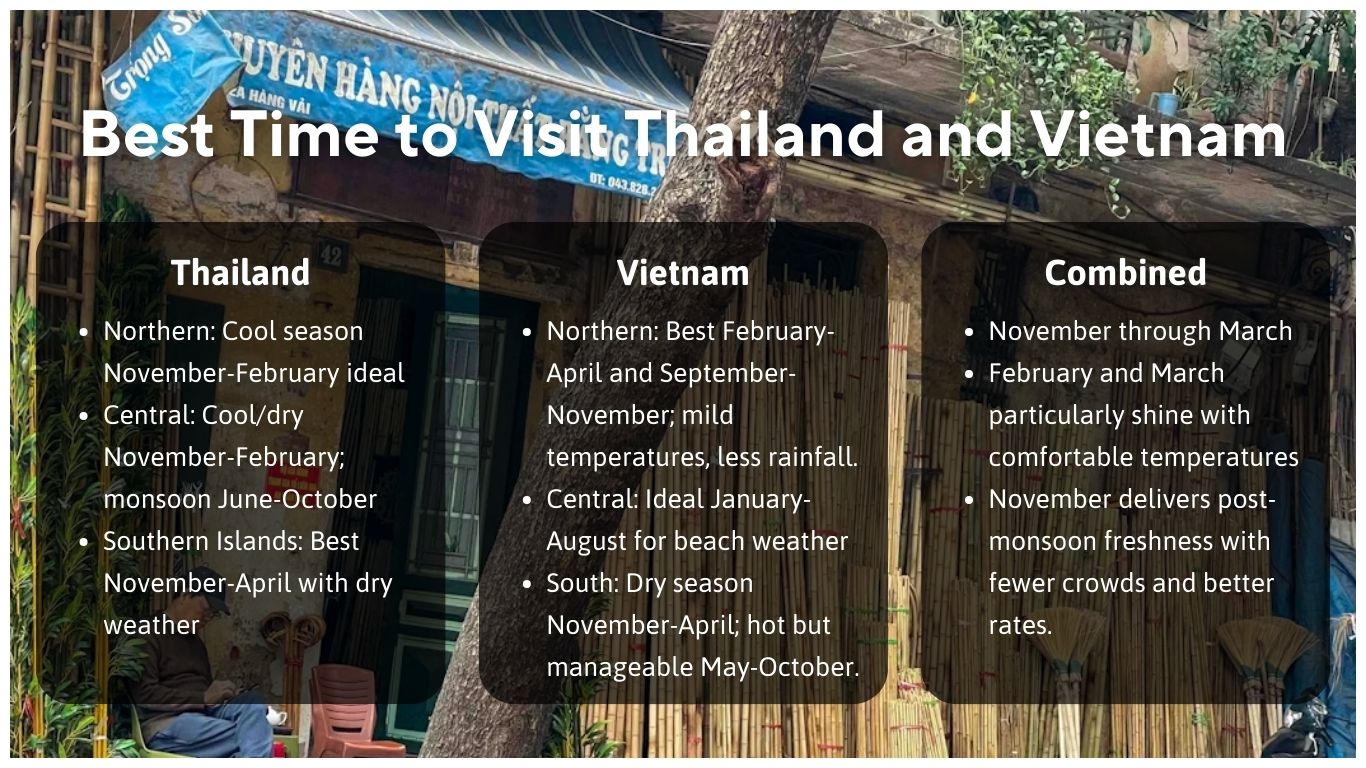
Thailand’s weather by region:
- North (Chiang Mai, Chiang Rai): Nov–Feb cool and ideal; Mar–May hot; Jun–Oct rainy
- Central (Bangkok, Ayutthaya): Nov–Feb dry; Mar–May very hot (35–40°C); Jun–Oct monsoon
- South (Phuket, Koh Samui): Nov–Apr dry on the Andaman coast; note that the Andaman and Gulf coasts have slightly offset wet seasons
Vietnam’s weather by region:
- North (Hanoi, Ha Long Bay): Feb–Apr and Sep–Nov ideal; Dec–Jan cool and slightly drizzly
- Central (Hoi An, Hue, Da Nang): Jan–Aug for beach weather; Oct–Dec heavy rain — avoid
- South (Ho Chi Minh City, Mekong Delta): Nov–Apr dry season; May–Oct wet but manageable
Festival timing to consider:
- Thailand: Loy Krathong (November) – lantern ceremonies at peak season; Songkran (April) – water festival, lively but hot
- Vietnam: Tet/Lunar New Year (Jan/Feb) – some closures, but a uniquely authentic cultural experience
Book 4-6 months ahead for December–January travel to secure your preferred guides and accommodations.
>>> Read more:
When Is the Best Time to Visit Thailand?
When Is the Best Time to Travel to Vietnam?
Sample Itineraries: Vietnam and Thailand Tour Planning
14-Day Combined Thailand and Vietnam Itinerary
Experience the best of both countries with this carefully crafted two-week journey combining Vietnam and Thailand:
Week 1: Vietnam North to South
- Days 1-3: Hanoi → Ha Long Bay → Hanoi
- Days 4-5: Fly to Da Nang → Hoi An (taxi 30km)
- Days 6-7: Fly to Ho Chi Minh City → Cu Chi Tunnels
Week 2: Thailand Bangkok to Islands
- Day 8: Fly HCMC to Bangkok (2 hours)
- Days 9-10: Bangkok temples, markets, nightlife
- Days 11-12: Fly to Chiang Mai (northern culture)
- Days 13-14: Fly to Phuket/Krabi (beach finale)
This Vietnam and Thailand itinerary creates a comprehensive Southeast Asian adventure, combining Vietnam’s authentic culture with Thailand’s polished tourism experiences. Alternative routes work equally well: starting in Thailand and ending in Vietnam provides a reverse flow from familiar comfort to authentic discovery.
Whether you choose a single-country deep dive or combine both destinations, each approach delivers unforgettable experiences. First-time Southeast Asia travelers with limited time benefit from focusing on one country, while returning visitors should absolutely combine both for the ultimate regional adventure.
Explore our curated tour: Indochina Ultimate Journey 23 Days
Conclusion
The choice between Thailand or Vietnam ultimately reflects what you value most in travel. Thailand delivers polished tourism experiences with world-class beaches, sophisticated infrastructure, and an easier learning curve for first-time Asia visitors. Vietnam counters with raw authenticity, compelling history, exceptional value, and landscapes that feel genuinely undiscovered despite growing popularity.
Ready to transform your Southeast Asian dreams into reality? Customize your perfect itinerary with Indochina Voyages hereor email at info@indochinavoyages.com. Our travel expert will get back to you with quotation within 24 hours!
Let Us Help You Plan Your Trip
Still unsure? The smartest move for travelers with 2+ weeks is to combine both. You get Thailand’s comfort and Vietnam’s soul – the complete Southeast Asian experience.
Our travel specialists respond within 24 hours with a personalized, no-obligation itinerary proposal.