

Phong Nha Cave lies within Phong Nha-Ke Bang National Park in central Vietnam and can be entered only by boat along the Son River. Visitors therefore travel first to Phong Nha town, where the boat pier is located. The nearest major transport hub is Dong Hoi, which has an airport and a railway station, about an hour away by road.
Several routes lead to Phong Nha, and the most suitable one depends on where you begin. From Hanoi, travelers can take an overnight sleeper bus directly to Phong Nha, an overnight train to Dong Hoi, or a short flight. From Hue and Da Nang, the choices are a direct bus, a train with a connecting transfer, or a private car. This guide sets out each route, compares the options, and covers tickets, boat fees, seasonal conditions and practical planning points.
Where is exactly Phong Nha Cave?
Phong Nha Cave is located in Phong Nha-Ke Bang National Park, a UNESCO World Heritage Site in central Vietnam. Following the provincial mergers of July 2025, the area now falls within Quang Tri province, although “Phong Nha-Ke Bang” remains the name used on signage and by most visitors.
>>>> Want more background on the park first? Read our Phong Nha-Ke Bang National Park guide.
The road distance between Dong Hoi and Phong Nha town is about 45 to 50 km, and the drive usually takes around an hour by car.
The two places serve different purposes:
- Phong Nha town is a small riverside town with guesthouses, restaurants and the boat pier where the cave trip begins.
- Dong Hoi is the city with the airport and the train station. Most long-distance travelers arrive here.

What can you expect in Phong Nha Cave?
- Awe-inspiring limestone formations sculpted over 400 million years
- A working underground river – the world’s longest of its kind
- Ancient Cham altars and rock inscriptions inside the cave
- Historical significance: the cave was used as a secret field hospital and ammunition depot during the Vietnam War
- Accessible only by traditional wooden boat – the only cave entrance of its kind in Vietnam
- Cool year-round interior temperature (~18-22°C), a refreshing break from central Vietnam’s tropical heat
How to Get to Phong Nha Cave from Different Cities
The best route depends on where you are starting, how much time you have, and whether you prefer a direct journey or a connection through Dong Hoi. Timetables and prices change, so treat the times below as a guide and confirm them close to your travel date.

Dong Hoi to Phong Nha
If you arrive in Dong Hoi by train or plane, the final stretch is a road transfer of about 45 to 50 km. You have three main options:
- Taxi or private car: The most convenient choice, particularly with luggage, children or a late arrival. The journey takes about one hour, and a one-way trip in a 7-seater car costs roughly VND 650,000.
- Local bus: A lower-cost option for arrivals during daytime operating hours. The journey takes about 1.5 hours. Services and pickup points change, so confirm the current schedule in advance; luggage space can be limited.
- Motorbike: Suitable for experienced riders who are comfortable with local traffic and road conditions. It offers flexibility and scenic views but is not advisable for first-time riders or in wet weather.
Hanoi to Phong Nha
From the capital, you can choose between three main routes.
Overnight sleeper bus (direct). Several operators run overnight buses from Hanoi to Phong Nha, typically departing in the evening and arriving around 5:00 to 6:00 AM. This is the simplest option, as it takes you directly to town.
Overnight train to Dong Hoi. The overnight service departs Hanoi in the evening and reaches Dong Hoi in the early morning. From the station, arrange a taxi or private transfer to Phong Nha.
Flight to Dong Hoi. The flight takes around 1 hour 25 minutes. It is the fastest option in the air, but airport check-in and the road transfer to Phong Nha reduce the overall time advantage over the train.
Because sleeper buses and trains often arrive very early, ask your accommodation about early check-in or luggage storage before you travel, and confirm the drop-off point with the bus company.
Tip: If you plan to return to Hanoi by train, arrange a private transfer from Phong Nha to Dong Hoi in advance. An evening overnight bus is another convenient way back.
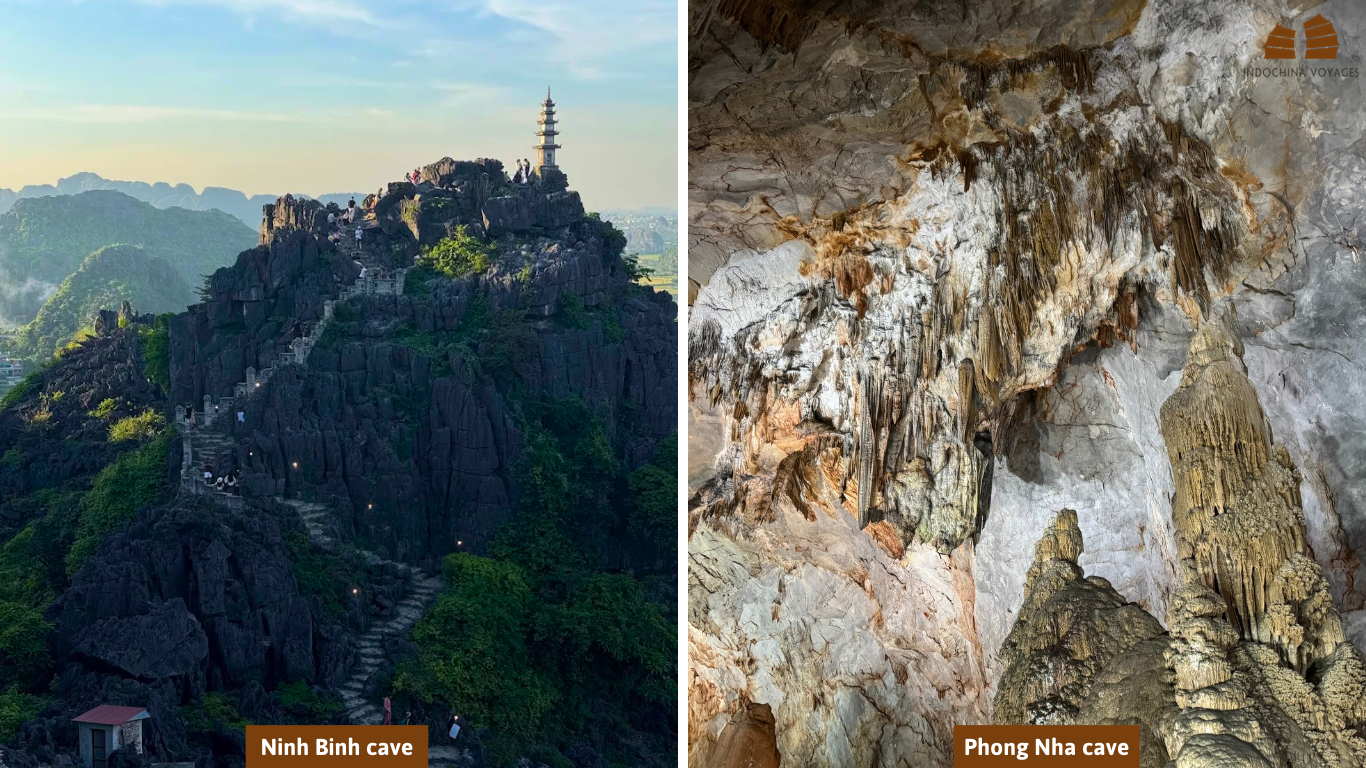
Ninh Binh to Phong Nha
From Ninh Binh, the main choices are overnight buses and overnight trains to Dong Hoi.
- Direct bus: Simpler, because it drops you in Phong Nha without a change. Departures are typically in the evening, arriving early the next morning.
- Train plus transfer: Often more comfortable for travelers who prefer a berth, but you will need to arrange the onward transfer from Dong Hoi.
Departure times change, so check the current timetable before you travel.
>>>> For travelers planning time in Ninh Binh, these guides provide further detail:
Hue to Phong Nha
Hue is a practical starting point if you are traveling north along the coast.
- Direct bus: Some operators run an afternoon service that reaches Phong Nha in the evening. Confirm the current operator and times before booking.
- Train plus transfer: Possible, but train times to Dong Hoi can be inconvenient, and a transfer to Phong Nha is still required.
- Private car: A comfortable choice that allows flexible departure times and stops along the way. A 7-seater car costs roughly VND 2,800,000.
A private transfer is worth the extra cost when you are traveling as a family or group, want to avoid fixed departure times, or are combining Hue with other stops.
Da Nang and Hoi An to Phong Nha
- Direct bus: Some services run from Da Nang with morning and afternoon departures. Travelers from Hoi An should allow time to reach Da Nang first or arrange pickup from Hoi An.
- Train plus transfer: Take a train from Da Nang to Dong Hoi, then continue by road.
- Private car: The most direct option, at roughly VND 3,700,000 from Da Nang and VND 4,400,000 from Hoi An per car, one way.
>>>> For a combined Hue, Hoi An and Phong Nha itinerary, see our Indochina tours.
Ho Chi Minh City to Phong Nha
For most travelers, the best choice is to fly to Dong Hoi where suitable flights are available, then continue by road. A longer rail journey is possible but takes considerably more time. Budget travelers can also fly to Da Nang or Hue and continue by bus or train.
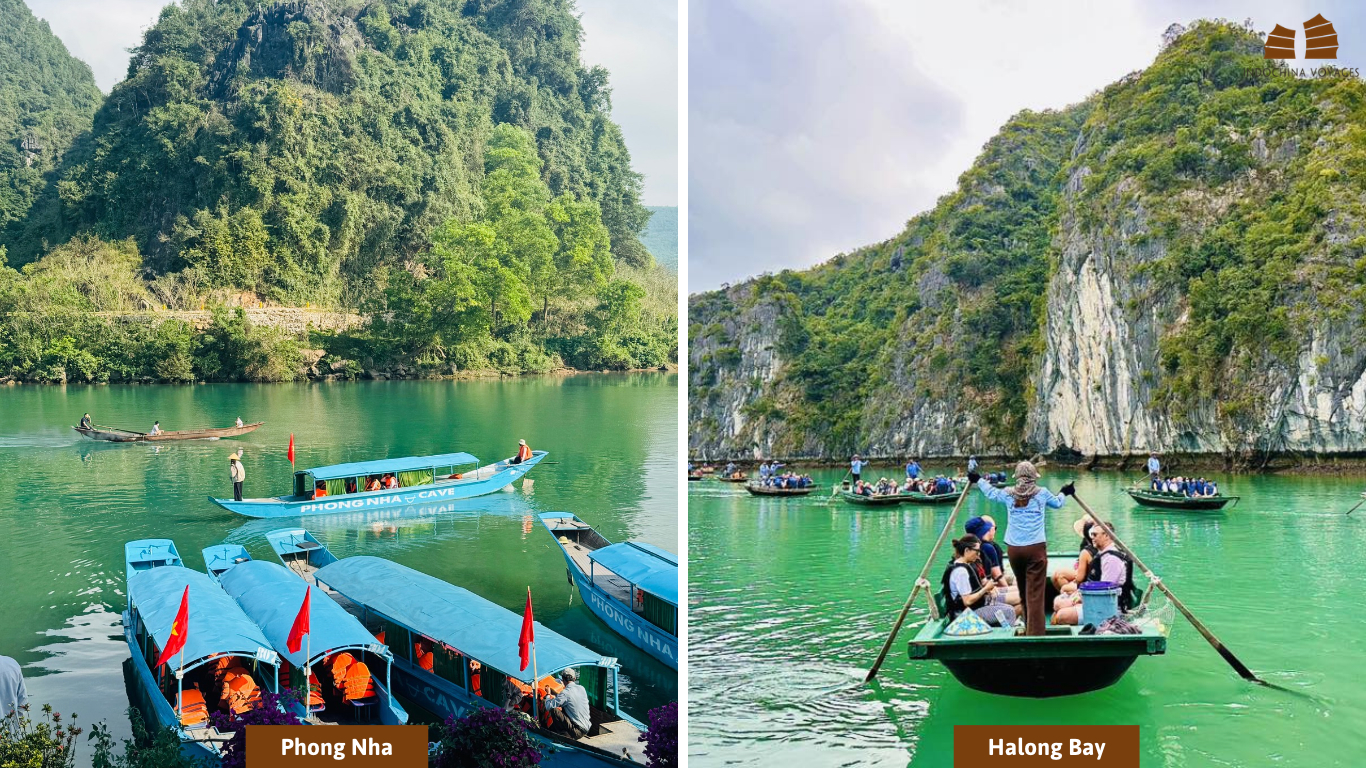
Ha Long Bay to Phong Nha
There is no direct connection. Travel from Ha Long Bay to Hanoi first, then follow the Hanoi to Phong Nha options above by train or flight. Allow extra time for the Ha Long to Hanoi transfer, especially if you are connecting to an evening train or a flight the same day.
>>>> For travelers combining Ha Long Bay with Phong Nha, these pages help with planning the first leg:
Should You Book a Private Transfer?
A private transfer takes you from your hotel to Phong Nha without connections, and often makes the most sense on routes where public transport is limited or inconvenient. The main advantages are:
- Door-to-door pickup with no need to navigate stations or bus stops
- Help with luggage, which matters with large bags or children
- Flexible departure times that fit around your itinerary
- Easy connections between Hue, Da Nang, Hoi An, Dong Hoi and Phong Nha
Whether it is worth the cost depends on group size, budget and itinerary. A bus is usually cheaper for a solo traveler, while a family or a group of three or more can share the cost of a car, which often narrows the gap considerably and saves hours.
>>>> We can arrange this in advance and build custom Indochina packages around your dates and route.
Getting from Phong Nha Town to the Cave Boat Pier
All cave tours begin at the boat landing on the Son River in Phong Nha town. For visitors staying in town, the pier is a short walk, bicycle ride or motorbike ride away, and many guesthouses lend bicycles at no charge. The ticket office is near the landing. Confirm departure arrangements and opening hours on the day, as these can change with weather and water levels.
Phong Nha Cave Tickets and Boat Fees
There are two separate costs to understand:
- The entrance ticket, charged per person (about VND 150,000).
- The boat fee, charged per boat rather than per person. It covers up to about 12 passengers and is around VND 700,000 per boat. Confirm the current rate at the ticket office.
Because the boat fee is shared, the cost per person depends on group size. The table below gives an indication:
| Group size | Entrance fees | Boat fee | Total | Approx. per person |
|---|---|---|---|---|
| 1 traveler | VND 150,000 | VND 700,000 | VND 850,000 | VND 850,000 |
| 2 travelers | VND 300,000 | VND 700,000 | VND 1,000,000 | VND 500,000 |
| 4 travelers | VND 600,000 | VND 700,000 | VND 1,300,000 | VND 325,000 |
| 12 travelers | VND 1,800,000 | VND 700,000 | VND 2,500,000 | about VND 208,000 |
Solo travelers and couples can often reduce the cost by sharing a boat with other visitors at the pier. Carry cash, as ticket counters may not accept cards. Visitors who wish to add the neighboring Tien Son Cave pay a small additional fee, and access is by stairs rather than by boat.
What to Expect During the Cave Visit
The visit combines a river journey with a short walk inside the cave:
- Boat along the Son River: A traditional wooden boat takes you along the river with views of limestone karst and green hillsides.
- Into the cave: The boat enters through the cave mouth and travels about 1.5 km inside, with the formations lit along the way.
- On foot: At a sandbank you can step off and walk a few hundred meters to see more stalactites, stalagmites and the ancient Cham altars.
- Return: You board again for the trip back to the pier.
Allow about 1.5 to 2 hours for the visit, depending on conditions. The interior is cool, at around 18 to 22°C, which offers relief from the heat outside. Lighting is subdued, so a phone or camera is useful for photographs.
Can You Visit Phong Nha Cave Without a Tour?
Yes. You can arrange your own transport, buy your tickets at the official ticket office and take the authorized boat into the main cave without joining a tour. Independent travel works well here: the town is small, easy to navigate, and has many guesthouses and restaurants.
The main cave still requires the authorized boat service, so you cannot enter on your own by other means. Deeper expedition caves in the national park are different: they have separate booking arrangements and require licensed guides.
When Is the Best Time to Visit Phong Nha Cave?
Weather affects both your journey and whether the cave can open, so timing matters more here than at many Vietnamese sights.
February to August: Generally Better Conditions
This period is generally warmer and drier, with better road conditions and more reliable boat access. Spring, roughly March to May, is often the most comfortable time to visit, with moderate temperatures and fewer crowds than midsummer. June to August is hot and busier, so book transport and accommodation early. Even in the drier months conditions can change, so check before you go rather than assuming the cave will be open.
September to January: Check for Rain and Flooding
Heavy rain, typhoon activity and flooding can interrupt transport and temporarily close the cave, with the highest risk typically from October to December. If you travel in this period, check local conditions close to departure and keep your itinerary flexible.
What to Do If the Cave Is Closed
If the water level is too high, ask your accommodation or the ticket office which other sites are open that day. Paradise Cave, a dry cave in the same national park, can be an alternative, but confirm its access and operating status before changing your plans.
For help timing a central Vietnam trip around the weather, speak with a local specialist.
Practical Tips Before You Go
The following points address the most common planning issues:
- Book ahead for busy dates: reserve sleeper buses, train berths and private transfers early for weekends and holidays.
- Leave a buffer: allow time between a train or flight arrival and any separate onward booking.
- Confirm late or early arrivals: tell your accommodation when you will arrive so check-in or luggage storage is ready.
- Carry some cash: ATMs are limited in Phong Nha and ticket counters often prefer cash.
- Pack for the cave: wear shoes with a good grip and bring a waterproof bag for electronics.
- Check before you travel: look at flood warnings, transport schedules and cave operating status close to departure.
For tours booked with us, our booking guide is the best place to start.
For general trip preparation, read more in our Vietnam travel hints.
Plan Your Phong Nha Trip with Indochina Voyages
Phong Nha is best experienced as part of a wider central Vietnam journey that links the imperial city of Hue, the heritage town of Hoi An and the caves and forests of Phong Nha-Ke Bang.
These itineraries show how Phong Nha can fit into a wider trip:
Indochina Voyages arranges private transfers and coordinates travel between cities, with local specialists available to tailor each itinerary.
>>>> To design a route around your own interests, start on this page. For any questions, email info@indochinavoyages.com.
Frequently Asked Questions About Getting to Phong Nha Cave
Thuy Dang – From Indochina Voyages