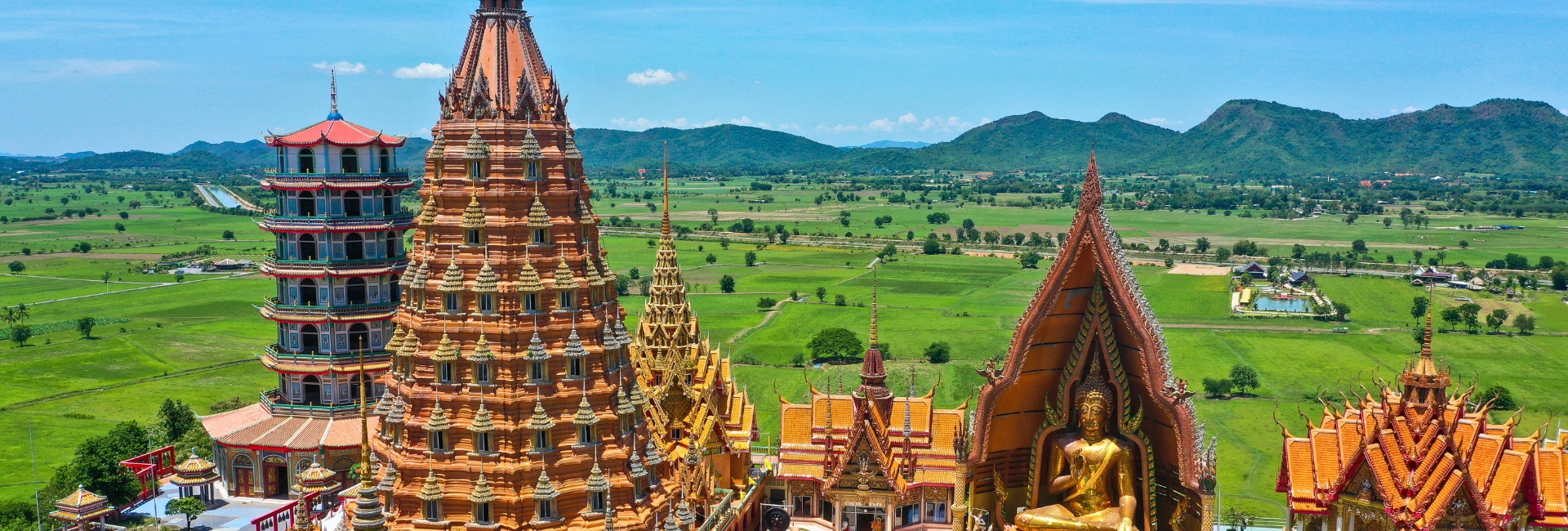
Just two hours west of Bangkok’s traffic and skyscrapers sits a destination that feels like an entirely different country. Kanchanaburi blends heavy history- the Bridge over the River Kwai and the Death Railway- with a gentler side made of waterfalls, quiet countryside, and riverside stays that turn a simple day trip into something far more memorable.
There is no single correct way to visit. A traveler can see the highlights in a single day, or slow the pace down to four days and let the province reveal its quieter corners. What matters most is matching the trip length and the way of getting there to what the traveler actually wants out of the visit, which is exactly what this guide is built to help decide.
How Far Is Kanchanaburi from Bangkok?
Before choosing a way to travel, it helps to know what the journey actually involves. Kanchanaburi sits close enough to Bangkok for a comfortable day trip, yet far enough to feel like a genuine escape once the city fades from the rearview mirror. Timing the trip well, especially for travelers with only one day to spare, starts with understanding these numbers.
Bangkok to Kanchanaburi at a Glance
Kanchanaburi is roughly 130 kilometers from central Bangkok. By road, that usually means around one and a half to two hours in light traffic, though weekend mornings and public holidays can stretch this closer to three hours. By train, the ride takes about two and a half hours to reach Kanchanaburi station, or closer to five hours for travelers continuing along the full line to Nam Tok.
| Transport | Travel Time | Comfort | Best For |
|---|---|---|---|
| Private car | 1.5 to 3 hours | High | Comfort and flexibility |
| Train | 2.5 to 5 hours | Basic | The journey itself |
| Minivan | 2.5 to 3 hours | Moderate | Budget and convenience |
| Bus | 2.5 to 3.5 hours | Moderate | Budget with more luggage |
Exact schedules and fares shift from season to season, so each option below is covered in more detail further down the page.
How Many Ways to Get from Bangkok to Kanchanaburi?
Every traveler weighs this decision differently. Some want the shortest possible transfer, others want the experience of getting there to be part of the story, and plenty simply want the most comfortable option available. The four sections below break down exactly what to expect from each choice, along with private alternatives worth considering if convenience matters more than saving a few dollars.
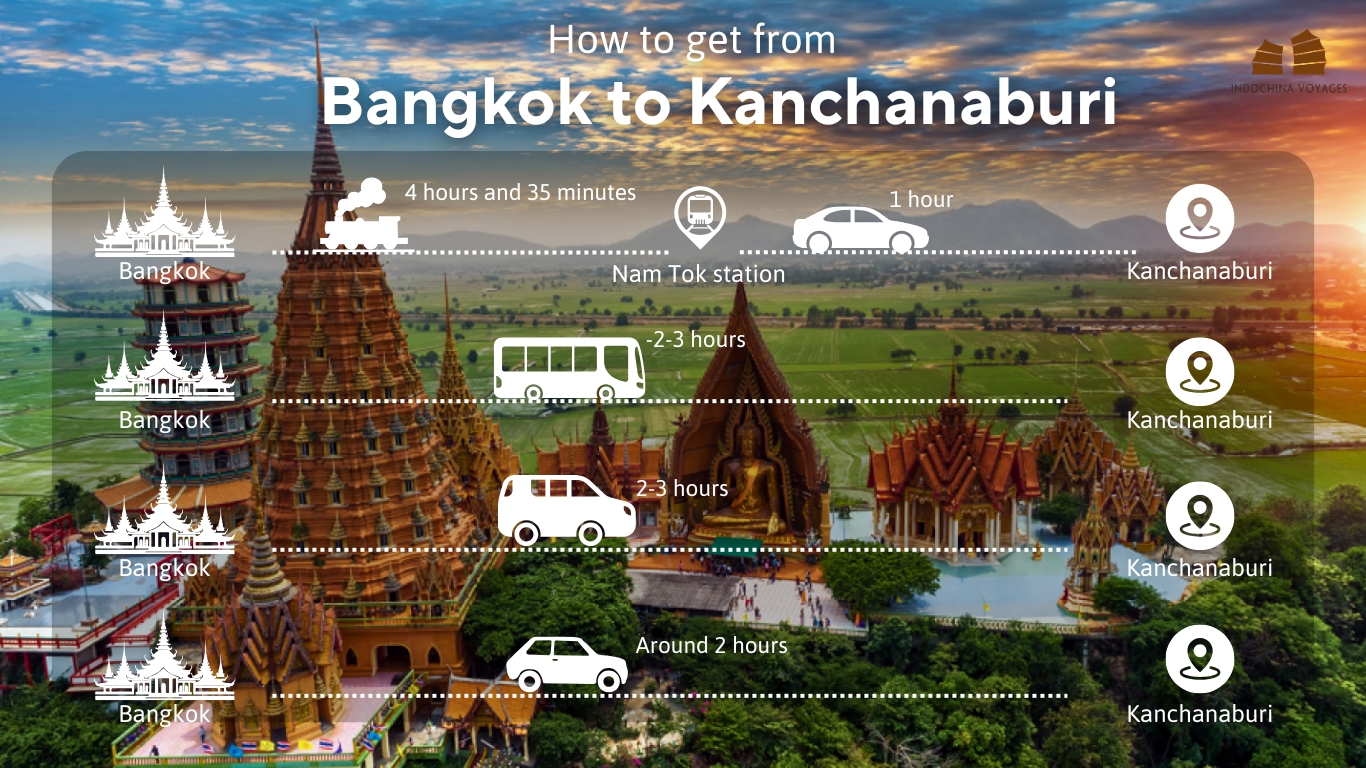
There are 2 main ways to get from Bangkok to Kanchanaburi with 4 options for different transportation, which are by road and by railway. However, with several transportation options to suit different preferences, budgets, and travel styles, each method offers its own unique experience, allowing you to choose the perfect journey that matches your travel needs. Let’s go for details in each option below:
By Private Car
- Travel time: around 1.5–2 hours, door to door
- Comfort: highest of all options, fully flexible schedule
- Best for: couples, families, older travelers, comfort over cost
For travelers who want the smoothest possible start to their Kanchanaburi trip, a private car is hard to beat. Door-to-door pickup from a Bangkok hotel means no station to navigate, no luggage to haul across a platform, and no fixed departure time to chase. The driver sets off when the traveler is ready, and the route can be shaped around personal interests rather than a fixed timetable.
This flexibility becomes especially valuable when combining the trip with a stop along the way. Maeklong Railway Market, Nakhon Pathom, and Damnoen Saduak Floating Market all sit reasonably close to the route, and a private driver can weave one or two of them into the day without disrupting the schedule. That said, cramming in too many detours tends to backfire, turning a relaxed short trip into a long day spent mostly inside a car. Choosing one meaningful stop usually beats trying to see everything.
For travelers who would rather skip the planning altogether, arranging a private transfer through Indochina Voyages makes it simple to build the whole route, stops included, around personal preferences from the very first morning.
Train from Bangkok to Kanchanaburi, Thailand
- Departures: 07:45 and 13:55 daily, from Thon Buri Railway Station
- Fare: around 100 baht flat, regardless of stop
- Travel time: roughly 2.5 hours to Kanchanaburi station
- Best for: travelers who want the journey to be part of the experience
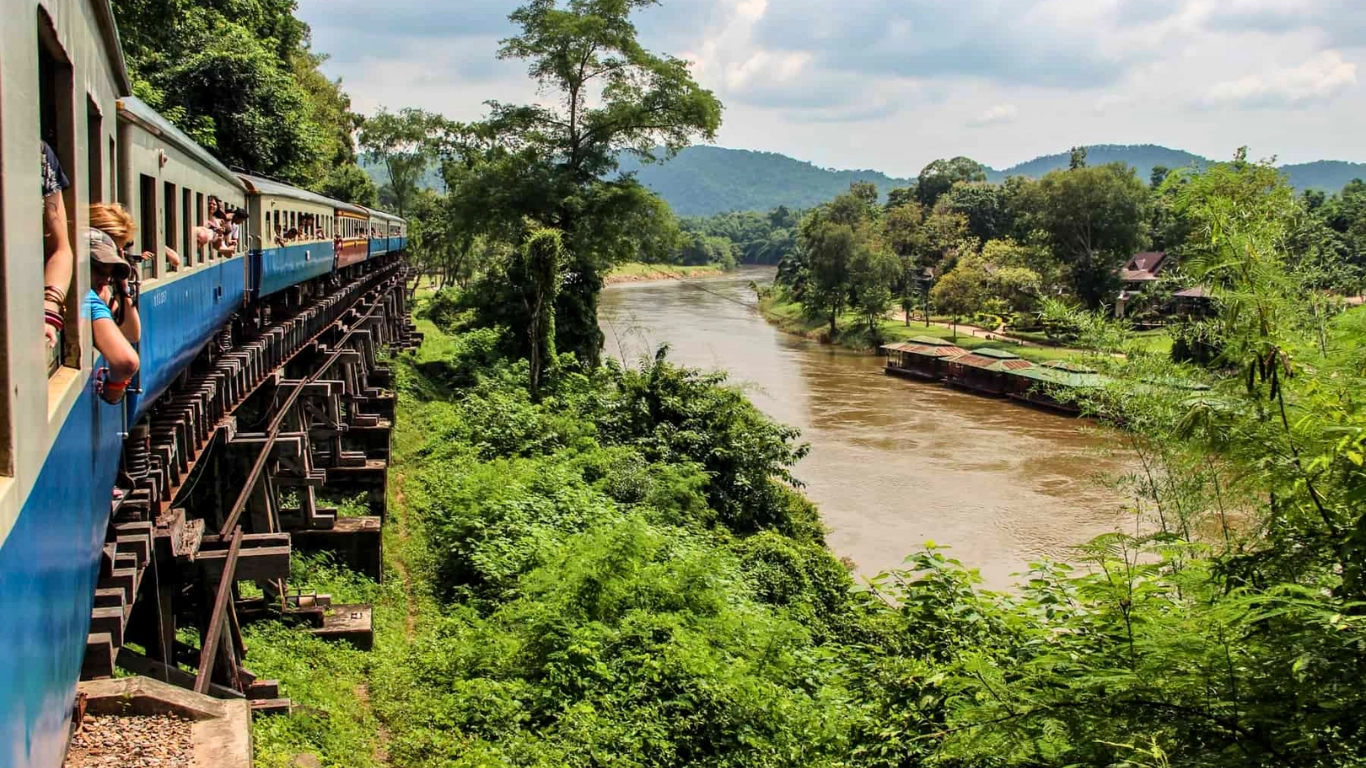
Few journeys in Thailand carry as much history as the ride from Bangkok to Kanchanaburi. Trains depart from Thon Buri Railway Station, also known locally as Bangkok Noi, and follow the same line built during the Second World War, stopping at Kanchanaburi Station and River Kwai Bridge Station before continuing toward Nam Tok.
Seating is third class only, with open windows, ceiling fans, and wooden or vinyl benches rather than air conditioning. The slower pace and the rush of countryside air through an open window give the ride a character that faster transport simply cannot match.
Travelers who want this experience without worrying about station logistics or exact timing can combine it with a private guide for the day, who can handle the practical side while the traveler focuses on the ride itself. For those spending extra time in the capital first, a quick look at Bangkok’s lesser-known corners is worth reading before heading west.
By Minivan
- Departure point: Mochit New Van Terminal, northern Bangkok
- Travel time: 2.5–3 hours
- Fare: roughly 130–240 baht
- Best for: budget travelers packing light
Minivans offer one of the quickest and most affordable ways to reach Kanchanaburi, with the most frequent departures running from Mochit New Van Terminal, a short taxi ride from Mo Chit BTS station. Some services also depart from the Southern Bus Terminal, though Mochit tends to have better frequency throughout the day.
Vans are air-conditioned and reasonably comfortable, though seating is tighter than a full-sized bus and luggage space is limited. It remains a popular choice among both locals and visitors precisely because it strikes a fair balance between speed and price.
Travelers heading north instead of west might also enjoy comparing routes, including this guide on getting from Bangkok to Chiang Mai, which covers a similarly popular overland journey. For those who would rather skip the shared van altogether, a private vehicle booked in advance offers the same speed with none of the shared seating.
By Public Bus
- Departure point: Southern Bus Terminal, Thonburi side
- Travel time: 2.5–3.5 hours
- Fare: similar range to minivans
- Best for: larger luggage, tighter budgets
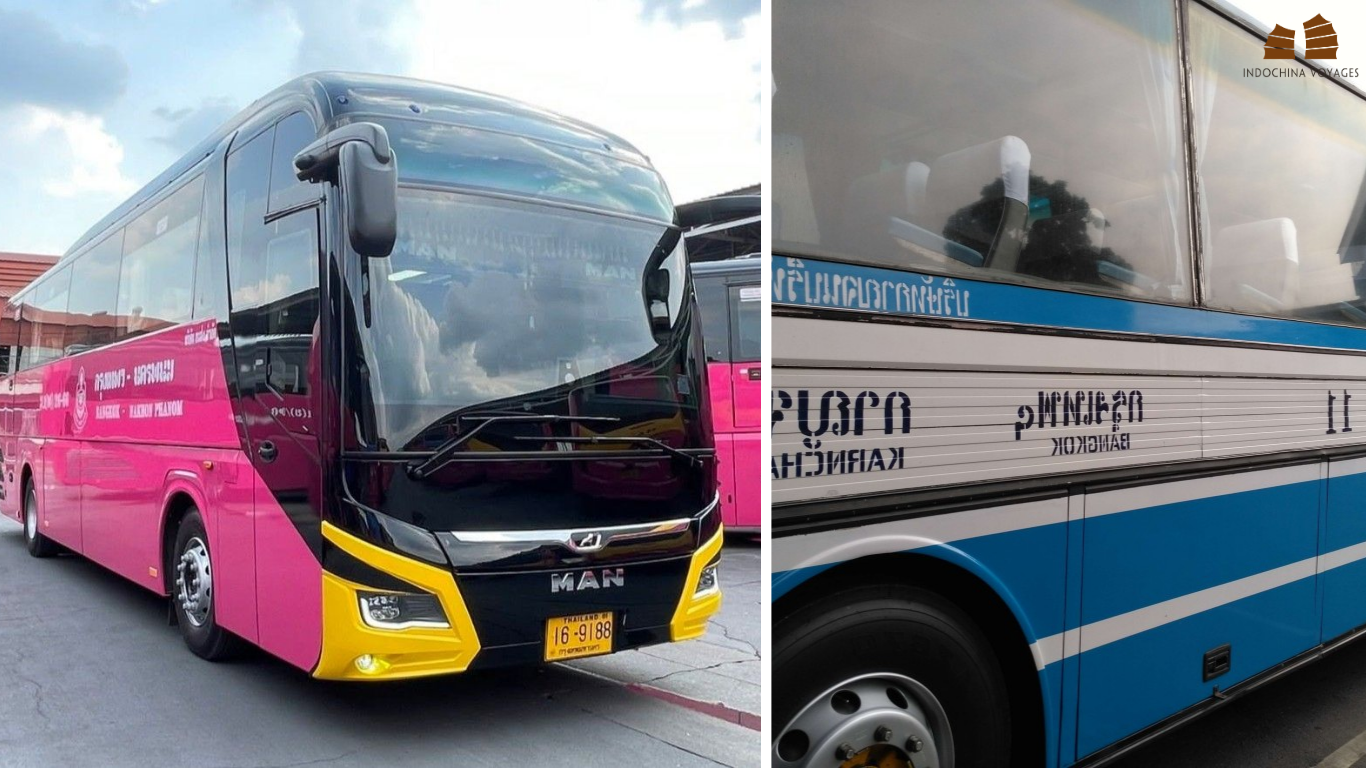
The bus departs from Bangkok’s Southern Bus Terminal and arrives directly at Kanchanaburi’s bus terminal after roughly two and a half to three and a half hours on the road. Fares sit in a similar range to minivans, making this one of the most budget-friendly ways to make the trip.
The main advantage over a minivan comes down to space. Buses offer more legroom and proper underfloor luggage storage, which matters for travelers carrying more than a single backpack. Departures are less frequent than minivans, so checking the schedule before heading to the terminal saves unnecessary waiting around.
Which Transport Option Fits Your Trip?
Comfort and flexibility point toward a private car, while the Death Railway experience itself makes the train worth the basic seating. Budget travelers who want a direct, no-fuss journey tend to prefer a minivan, and anyone prioritizing affordability alongside more luggage space usually leans toward the bus. Whichever option fits best, our team can help arrange the private version of nearly any of these routes.
What to See and Experience in Kanchanaburi
Kanchanaburi rewards travelers who understand that its two sides, weighty history and unhurried nature, are meant to be experienced together rather than rushed through separately. The sections below cover what makes each part of the province worth the trip.
The River Kwai and Death Railway
The Bridge over the River Kwai, the Death Railway line itself, the Kanchanaburi War Cemetery, and the region’s WWII museums all tell one continuous story rather than standing as separate stops on a checklist. Walking the bridge, then tracing the railway’s path, then pausing at the cemetery gives visitors a far deeper understanding of what happened here than visiting any single site on its own ever could.
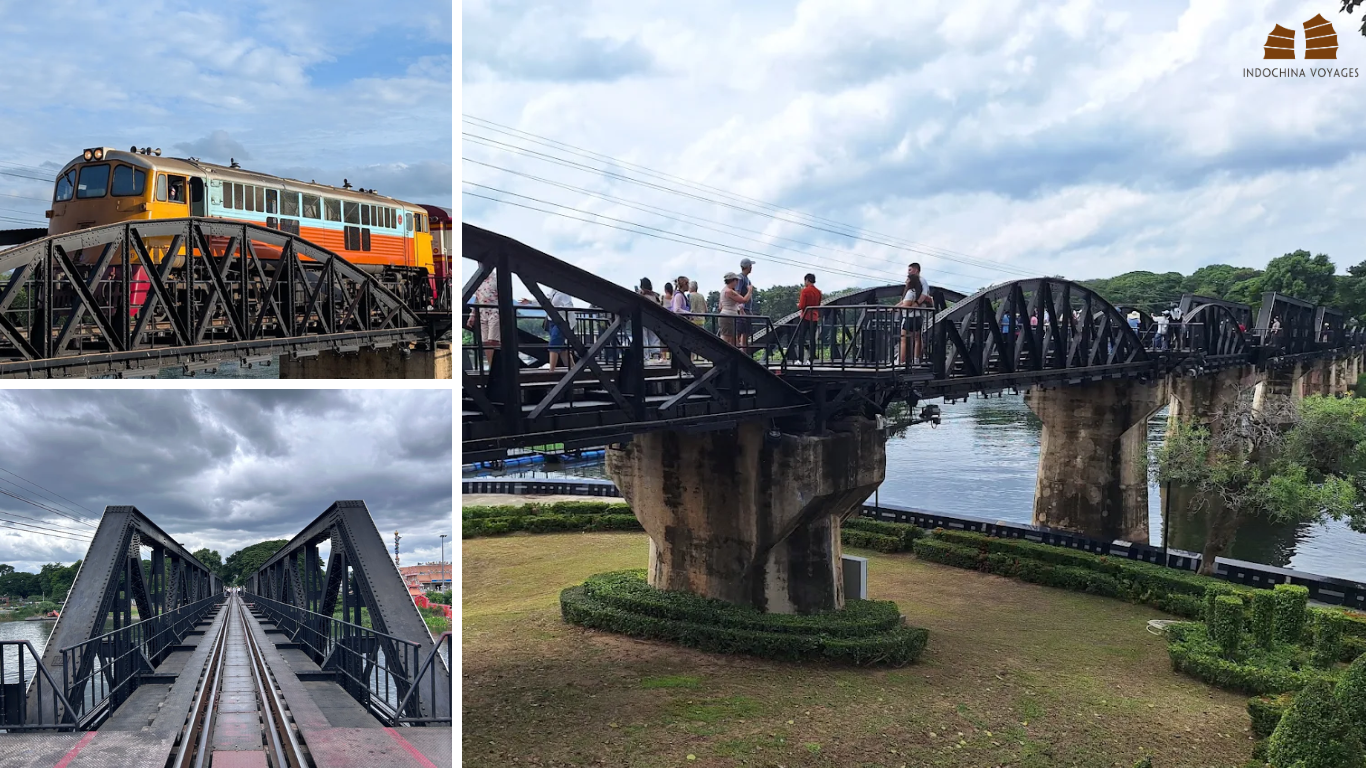
Local guides who know the history in detail can bring these sites to life in a way that reading a plaque simply cannot, connecting personal stories to the landscape as travelers move through it. A private guided day exploring these sites tends to leave a far stronger impression than a rushed self-guided visit.
Erawan Waterfalls and the Natural Side of Kanchanaburi
Erawan National Park’s seven-tiered waterfalls represent the softer, greener half of a Kanchanaburi trip. Turquoise pools connect via forest trails and stone steps, with swimming possible at several of the tiers along the way. Reaching the upper levels takes real walking, so travelers should budget more time here than they might expect from a typical waterfall stop.
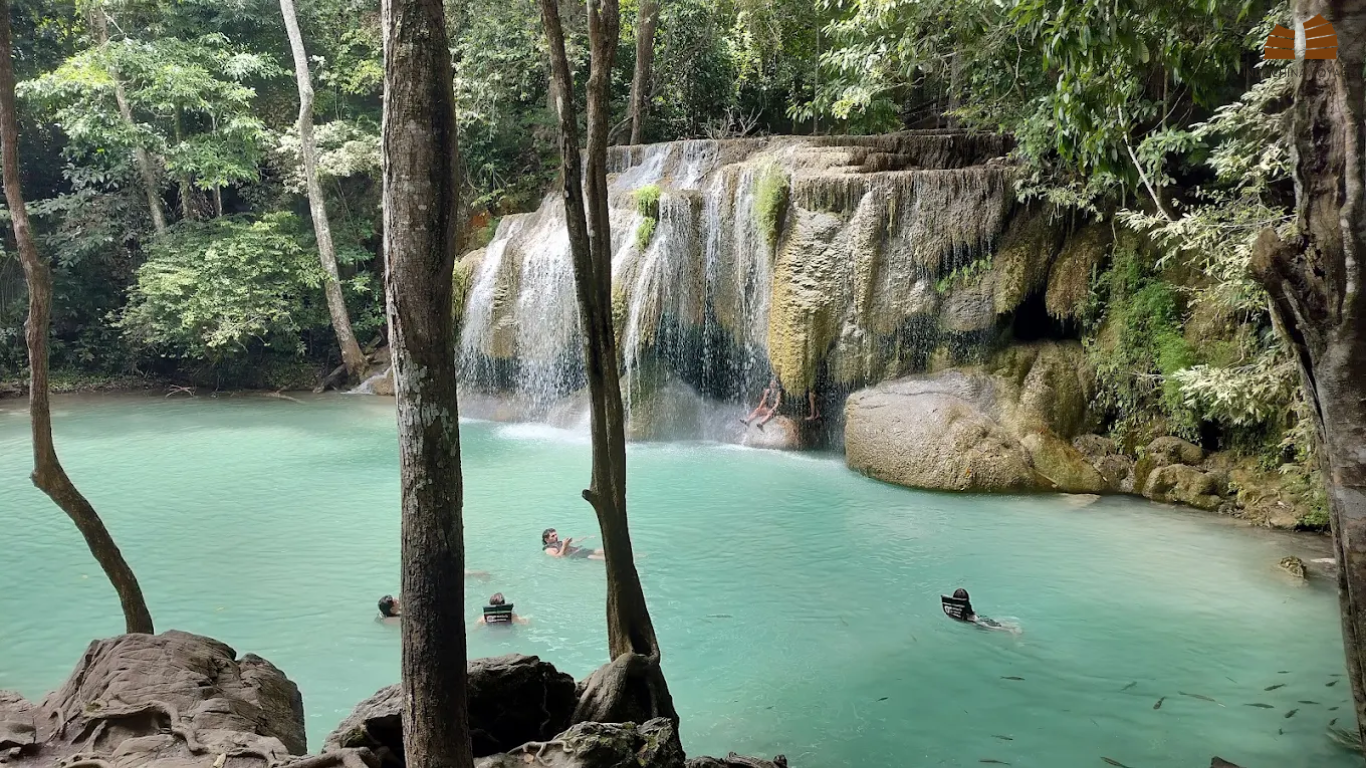
Arriving early makes a genuine difference, since the park fills up by midday and the light through the forest canopy is at its best in the morning hours. Between the waterfalls and the drier heat of the afternoon, an early start is one of the simplest ways to improve the entire experience.
Riverside Life and Countryside
Beyond the historic sites and the waterfalls, Kanchanaburi’s real character shows up in its pace. Life along the Khwae Noi River moves slowly, with bamboo rafting, quiet countryside roads, and evenings that stretch out rather than rush past. This side of the province rarely fits into a single day trip, which is exactly why staying overnight tends to change how travelers remember the visit.
It naturally sets up the next question worth asking, which is where to actually spend that night.
Where to Stay in Kanchanaburi
Choosing where to sleep in Kanchanaburi shapes the entire feel of the trip, sometimes even more than the sightseeing itself. The two sections below cover the main decision points worth weighing.
Riverside and Floating Raft Accommodation
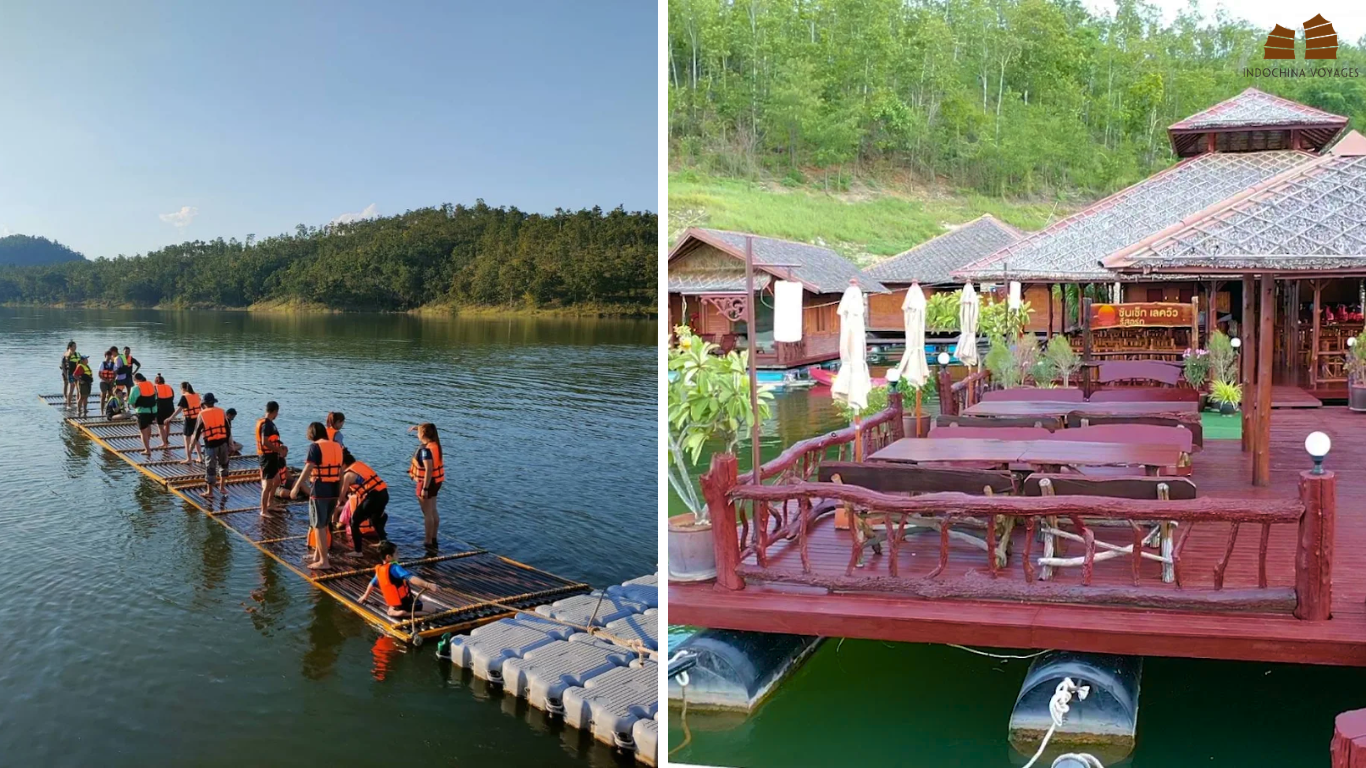
Kanchanaburi is one of the few places in Thailand where sleeping directly on the water is a normal, easily arranged option rather than a rare novelty. Choices range from simple, rustic raft houses to considerably more comfortable floating resorts built along the Khwae Noi River, with properties like FloatHouse River Kwai representing the higher comfort end of that spectrum.
Falling asleep to the sound of the river instead of city traffic is genuinely different from any hotel stay in Bangkok, and it tends to be the detail travelers mention most once they return home. Private travelers who want help matching the right raft or riverside property to their comfort level and budget can reach out through private hotel booking with Indochina Voyages rather than guessing from listings alone.
Kanchanaburi Town or Riverside?
Staying in town makes practical sense for travelers who want easy access to restaurants, shops, and straightforward transport connections, particularly on a one-night visit. Riverside stays, on the other hand, trade some of that convenience for atmosphere, offering quieter evenings and a stronger sense of nature just outside the door.
For a short getaway, the riverside option tends to make the trip feel like a genuine escape rather than simply a day trip with an overnight attached.
Suggested Itinerary: How Many Days in Kanchanaburi?
There is no universally correct length of stay. A single day comfortably covers the main historical sights, while two to four days allow travelers to slow down and fold in nature, countryside, and riverside time as well.
1 Day in Kanchanaburi: Essential Highlights
- Morning: depart Bangkok for Kanchanaburi
- Late morning: visit the Bridge over the River Kwai
- Afternoon: War Cemetery, key WWII sites, and a Death Railway experience
- Evening: return to Bangkok
This pace suits travelers with limited holiday time, first-time visitors to Bangkok, and anyone who mainly wants the historical highlights without committing extra nights. It is worth being honest that this is a long day, and not the right choice for travelers hoping to fit in the waterfalls or a relaxed riverside evening as well.
2 Days in Kanchanaburi: History and Nature
Day one covers the journey from Bangkok to the Bridge over the River Kwai, followed by the main WWII sites and a night in riverside accommodation. Day two shifts the pace entirely, spending the morning at Erawan Waterfalls before a relaxed afternoon and the return trip to Bangkok.
This structure suits first-time visitors, couples, and anyone with limited time who still wants a genuine taste of both the history and the nature side of the province. For many travelers, this two-day balance ends up being the sweet spot for a classic short Kanchanaburi trip, enough time to actually slow down without needing to give up several days of a wider Thailand itinerary.
3 Days in Kanchanaburi: A More Relaxed Escape
- Day one: Bangkok to the Bridge over the River Kwai, the historical sites, and a riverside stay for the night
- Following morning: Erawan Waterfalls and a relaxed pace through the afternoon
- Final day: Hellfire Pass, then the return journey. Travelers taking the train back can time it around the 07:45 departure from Kanchanaburi or River Kwai Bridge station, which passes the scenic Wang Pho Viaduct on its way toward Bangkok rather than away from it
This pace fits couples, families, mature travelers, and anyone who prefers breathing room between sights rather than rushing from one stop to the next. The extra day mostly buys time to actually enjoy the riverside setting instead of treating it as a place to sleep between activities.
4. Beyond Thailand: Combine with Vietnam, Laos, or Cambodia
This short adventure can seamlessly fit into a larger Thailand tour, allowing you to explore even more of the country, or extend further across the region. Two weeks is enough to pair Kanchanaburi’s history and nature with the temples of Cambodia or the river life of southern Vietnam.
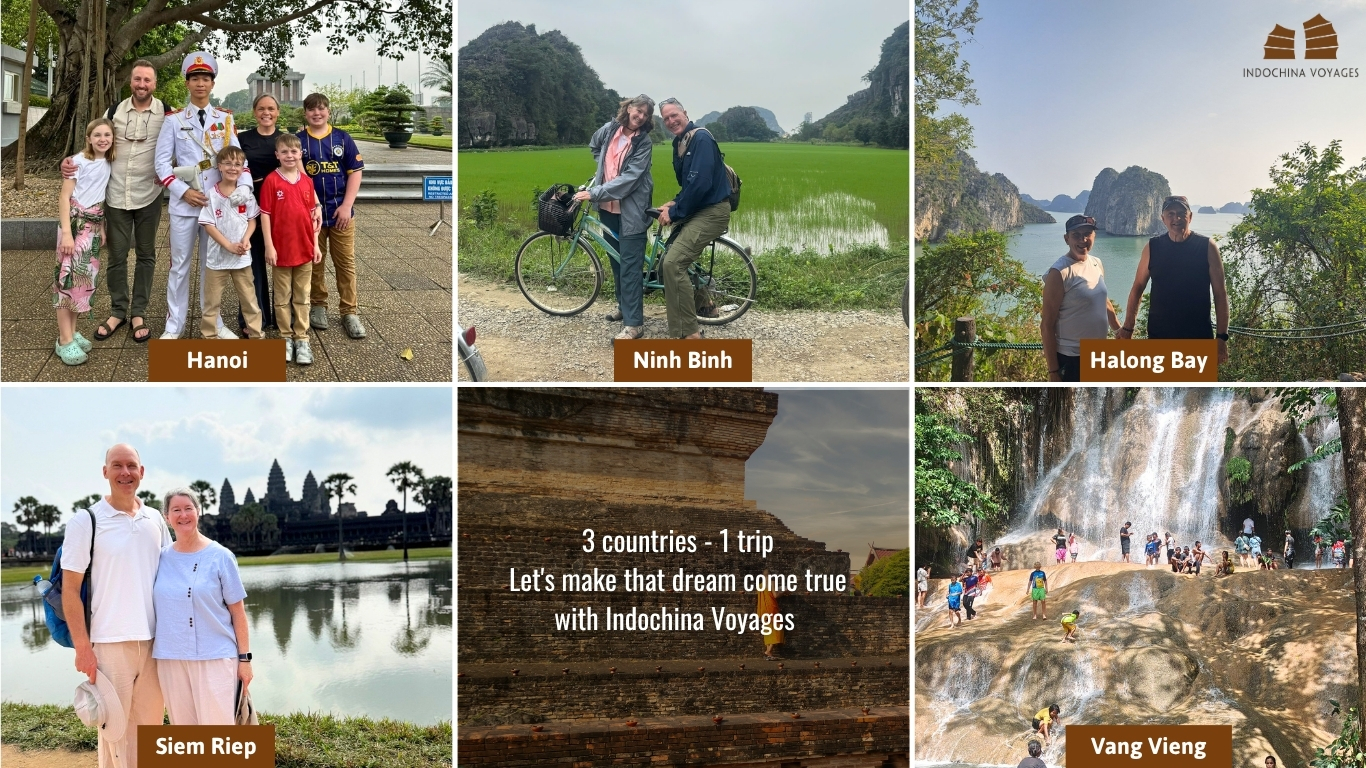
Explore More of Thailand with Private Journeys from Indochina Voyages
However many days a traveler spends in Kanchanaburi, it works beautifully either as a standalone short break from Bangkok or as one chapter within a longer Thailand journey. Our team builds private, flexible itineraries around each traveler’s own pace, combining Bangkok and Kanchanaburi with the rest of Thailand, or extending further into Vietnam, Cambodia, or Laos for a broader Southeast Asia experience.
Travelers looking for genuinely tailored Indochina travel packages will find that a private itinerary, shaped around personal interests rather than a fixed group schedule, tends to deliver a far richer trip than a standard tour. Custom Indochina packages can be built from scratch or adjusted from an existing sample, whichever suits your planning style best. Reach out directly at info@indochinavoyages.com to start planning.
Practical Tips for a Bangkok to Kanchanaburi Trip
A little local knowledge goes a long way toward making this trip smoother, especially for travelers visiting Thailand for the first time.
Best Time to Visit
November through February brings cool, dry weather and is generally considered the most comfortable window for both the waterfalls and outdoor sightseeing. March through May turns considerably hotter, which can make the walking trails at Erawan uncomfortable by midday. The rainy season, roughly June through October, fills the waterfalls beautifully and gives the countryside a deep green color, though trails can turn slippery and some river activities become weather-dependent.
Each season offers a slightly different version of Kanchanaburi, so matching the timing to the traveler’s priorities, comfort versus dramatic scenery, makes a real difference to how the trip feels.
Getting Around Kanchanaburi
Songthaews, the shared pickup trucks common across provincial Thailand, and local taxis cover most short trips around town, while Grab offers limited but growing coverage in the area. Once heading further out toward Erawan, Hellfire Pass, or the quieter countryside, a private driver stops being a luxury and becomes genuinely useful, since public transport options thin out considerably outside the town center.
Travelers who prefer not to negotiate songthaew fares or wait on shared transport can arrange a private driver for the full day, moving between sites on their own schedule rather than someone else’s.
A few more essentials worth keeping in mind:
- Leave Bangkok early to beat both traffic and the midday crowds at Erawan
- Pack comfortable walking shoes, sun protection, and insect repellent
- Bring swimwear and water-friendly footwear for the waterfalls
- Carry temple-appropriate clothing that covers shoulders and knees
- Add light rain protection if visiting during the wetter months
- Choose fewer stops rather than trying to see everything, since Kanchanaburi’s attractions are spread out and a shorter, well-paced route usually beats a packed one spent mostly in a vehicle
FAQs
How far is Kanchanaburi from Bangkok?
About 130 kilometers, roughly 1.5 to 2 hours by road in light traffic, or around 2.5 hours by train to Kanchanaburi station.
What is the best way to get from Bangkok to Kanchanaburi?
It depends on priorities. A private car suits comfort and flexibility, the train suits travelers chasing the Death Railway experience, and a minivan or bus suits those traveling on a tighter budget.
Is the Bangkok to Kanchanaburi train worth taking?
Yes, particularly for travelers who value the journey itself. It is a basic, third-class ride, but a genuinely scenic and historically meaningful one.
Can Kanchanaburi be visited as a day trip from Bangkok?
Yes. A single day comfortably covers the Bridge over the River Kwai, the War Cemetery, and a Death Railway experience, though it leaves no time for the waterfalls.
How many days should be spent in Kanchanaburi?
One day works for the highlights, two days balance history and nature well, three days allow a more relaxed pace, and four or more suit slow, countryside-focused travel.
Is Kanchanaburi good for slow travel?
Yes. Riverside stays, waterfalls, and countryside excursions like Sangkhlaburi reward travelers willing to spend three days or more rather than rushing through in one.