
Tonle Sap is Southeast Asia’s largest freshwater lake, and one of the few places on earth where a river reverses direction with the seasons. Every rainy season the lake swells several times over, flooding forests and lifting the stilt-house and floating communities that depend on it; every dry season it shrinks back to a shallow basin. It sits a short trip from Siem Reap and shows a side of Cambodia that the Angkor temples do not. This guide explains how the lake works, compares the main floating villages, and covers when to go, how to get there and what it costs.
Where is Tonle Sap Lake Located?
Tonle Sap Lake lies in central-northwest Cambodia, in the lower Mekong basin. It connects to the Mekong through the Tonle Sap River, a channel of roughly 120 km that meets the Mekong at Phnom Penh. Siem Reap sits near the lake’s northern end, which is why most visitors reach it from there.

It helps to know that “visiting the lake” can mean three different things:
- The shoreline: the lake edge changes with the season, so there is no single fixed shore.
- A boat pier: the point where your boat leaves, such as Chong Kneas or the landing for Kampong Phluk.
- A particular village: the community you actually want to see, which may be a boat ride beyond the pier.
Distances and journey times depend on which of these you mean. The villages covered below range from about 10 km to more than 50 km from central Siem Reap.
Why Does Tonle Sap Lake Change Size With the Seasons?
How the Tonle Sap River Reverses Its Flow
For much of the year, the Tonle Sap River drains the lake southward into the Mekong. When the monsoon arrives, usually from May to June, the Mekong rises and its floodwater pushes back up the Tonle Sap River and into the lake. The lake then spreads across the surrounding floodplain and forest. Water levels peak around September and October. As the Mekong falls from roughly October to November, the current turns again and the lake drains back out. Cambodia marks this turning of the current each November with the Bon Om Touk water festival.
This pulse is the engine of the whole system. The flooded forest becomes a nursery for fish, which is why the lake supports one of the most productive inland fisheries in the world.
Dry-Season vs Wet-Season Size and Depth
| Dry season (about November to April) | Wet season (peak around September to October) | |
|---|---|---|
| Surface area | About 2,500–3,000 km² | About 10,000–16,000 km² |
| Typical depth | About 1–2 m | About 8–10 m, up to 14 m in some sources |
| What you see | Brown, shallow water; tall stilt houses on dry ground in some villages | Open water to the horizon; flooded forest; houses near the waterline |
Why is Tonle Sap Lake Important for Cambodia?
Food and livelihoods. Fishing is the economic heart of the lake. Large numbers of families around the shore and on the water depend on its fish for income and food, and fish products such as prahok (fermented fish paste) are a staple of Khmer cooking. Fishing communities time their work to the water cycle.
Wildlife and habitats. The lake and its flooded forests shelter fish, reptiles and a large number of waterbirds. Survey counts of fish species vary widely depending on the study, with figures from around 150 to well over 300 quoted, and the Mekong giant catfish is among the best-known residents. Prek Toal, in the lake’s northwest, holds one of Southeast Asia’s most important waterbird breeding colonies, including spot-billed pelican, greater and lesser adjutant, milky stork, painted stork, black-headed ibis and oriental darter.
Culture and conservation. UNESCO recognised the lake as a Biosphere Reserve in 1997, and Cambodia formally established the Tonle Sap Biosphere Reserve by royal decree in 2001. Many communities live on the lake year-round, in houses that float or stand on stilts, and their way of life follows the water. Dams on the Mekong, overfishing and a changing climate are all pressures on the system, which is one reason to choose responsible operators when you visit.
Which Tonle Sap Floating Village Should You Visit?
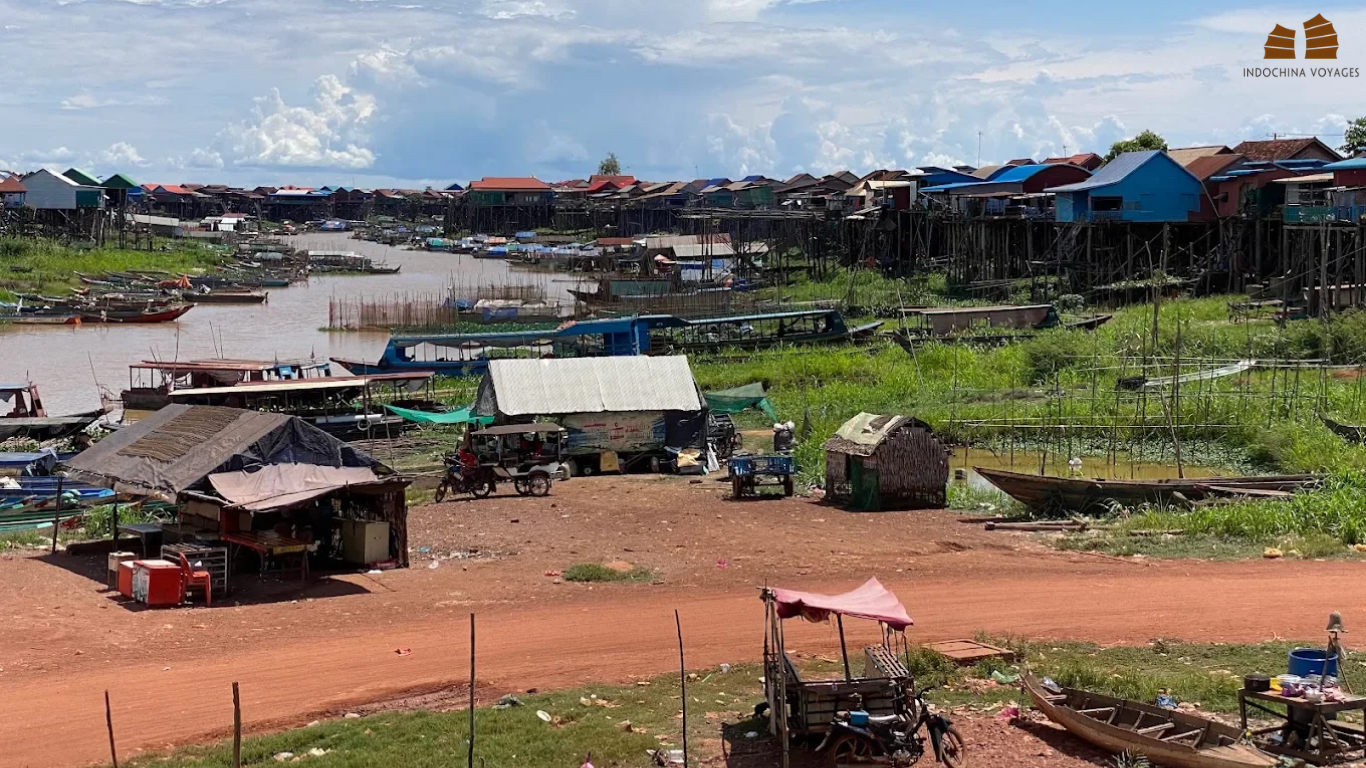
Not every boat tour on the lake is the same. The main visitor villages differ in distance, scenery and atmosphere, so choosing the right one matters more than choosing a date. Strictly speaking, only some of these places truly float: Chong Kneas has floating houses, while Kampong Phluk is mostly built on very tall stilts.
| Village | Distance from central Siem Reap | What you see | Best season | Best for |
|---|---|---|---|---|
| Chong Kneas | About 10–15 km, short drive | Floating houses, floating shops, busy pier | Year-round; easiest in the wet season | Short stays and tight schedules |
| Kampong Phluk | About 30 km by road, around 45–60 minutes | Tall stilt houses, flooded forest | Wet season for flooded forest; dry season for stilts | First-timers wanting scenery |
| Kampong Khleang | About 50–55 km, around 1–1.5 hours by road | Large fishing community, floating and stilt houses | Wet season for the water; dry season is quieter | Travellers wanting a longer, less crowded trip |
| Prek Toal | About a 2-hour boat ride from Chong Kneas; a full-day trip | Waterbird colonies, flooded forest | December to February peak | Birdwatchers and photographers |
Chong Kneas: The Closest Option
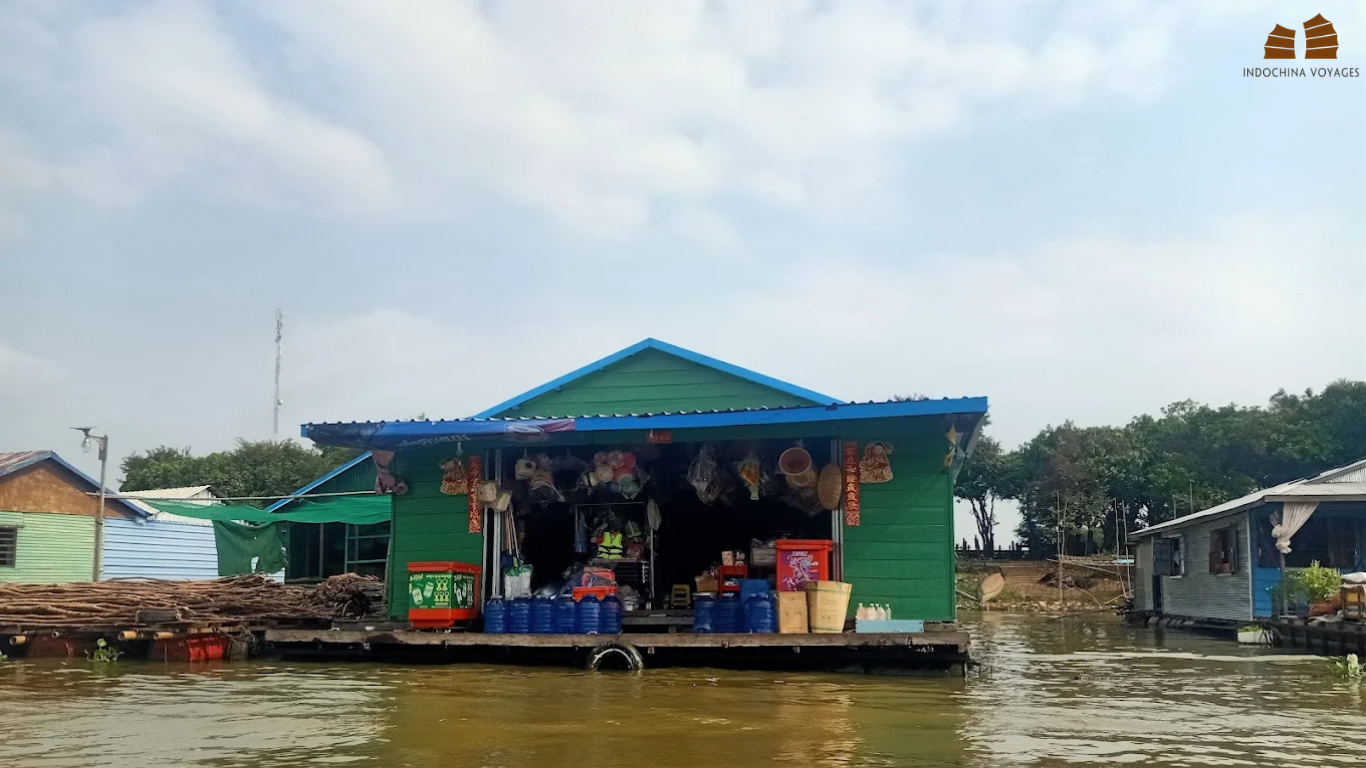
Chong Kneas is the quickest lake experience from Siem Reap and is the easiest to fit into a short stay. Boats leave from the pier throughout the day, and you pass floating houses, shops and school buildings. It is also the most commercialised of the villages, and traveller reviews often mention crowded boats and add-on stops. Before booking, ask exactly what the itinerary includes, what the boat fee covers, and whether stops such as floating shops or crocodile farms are optional.
Kampong Phluk: Stilt Houses and Flooded Forest
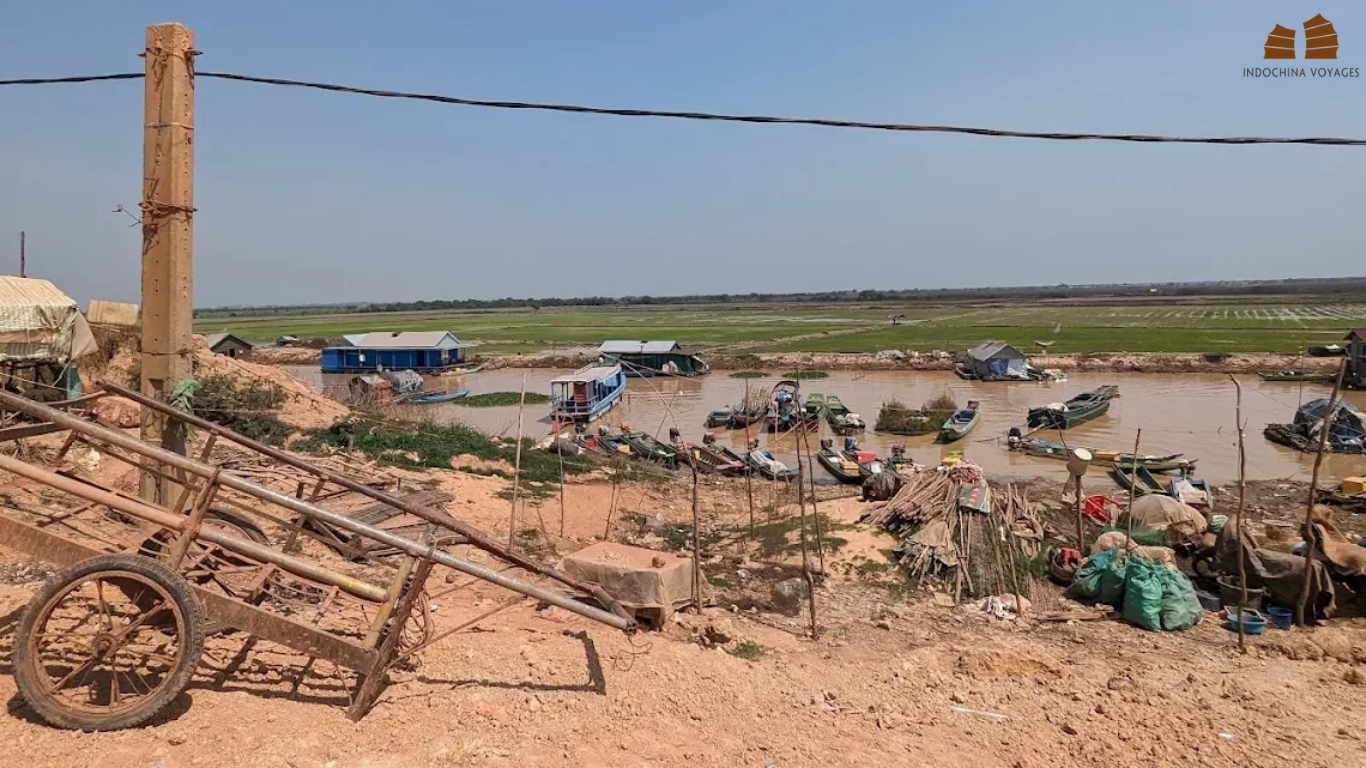
Kampong Phluk is a cluster of three villages built within the lake’s floodplain, about 16 km southeast of Siem Reap in a straight line. Its houses stand on stilts several metres tall. In the dry season they rise high above bare ground; in the wet season the water climbs almost to the floor level. When the water is high enough, small rowing boats take visitors into the flooded forest, a mangrove-like stand where only the treetops show above the surface. A local boat ticket is around $20 per person, plus a small community fee of about $2. Many visitors find it the best balance between access and atmosphere.
Kampong Khleang: A Larger, Quieter Community
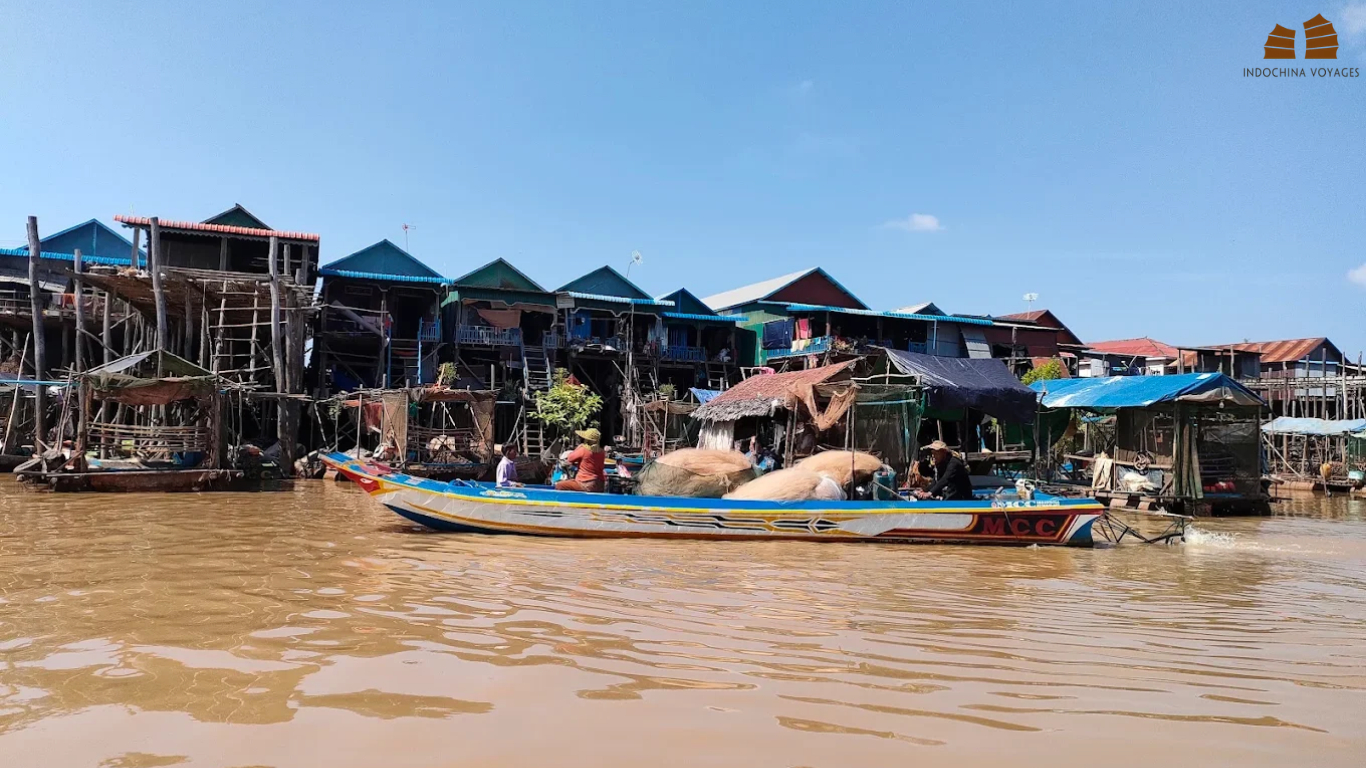
Kampong Khleang lies roughly 50–55 km east of Siem Reap and is one of the largest settlements on the lake. It has both floating houses and tall-stilt houses, and visitors often see fish-smoking and fish-paste production along the way. Because it is farther, it usually sees fewer tour groups than Chong Kneas. Expect about an hour or more by road and a boat portion of roughly $20–30 per person. It suits travellers who prefer a longer excursion over a quick stop.
Prek Toal: Birdwatching in the Biosphere Reserve
Prek Toal is the gateway to the waterbird colonies in the core of the Tonle Sap Biosphere Reserve. Trips usually involve an early start, a boat journey of about two hours from the Chong Kneas area, and a visit to the bird colonies by smaller boat and viewing platforms. The colonies are busiest from December to April, with peak numbers around December to February. Low water can limit access later in the dry season. Specialist birdwatching tours from Siem Reap commonly cost about $50–90 per person for a full day. No operator can promise sightings, but this is the lake’s best-known wildlife trip.
How to Choose the Right Floating Village
- Short on time: Chong Kneas, with a clear itinerary.
- First lake visit and scenery: Kampong Phluk.
- Quieter and more local: Kampong Khleang.
- Birds and nature: Prek Toal in the dry season.
Season also changes what each place offers; see the Best Time to Visit section below.
What to See and Do at Tonle Sap Lake
Take a Boat Tour Through the Floating Villages
Most visits centre on a one- to two-hour boat ride. Depending on the village, you may pass homes, schools, places of worship, floating shops and families going about their day. Wooden longtail boats and larger tour boats are both used; ask which you will be on.
Explore the Flooded Forest by Small Boat
At Kampong Phluk, rowing boats can enter the flooded forest when the water is deep enough, typically in the weeks after the peak, around October to January. Whether the trip runs depends on the water level and the operator on the day. A small extra fee, around $5 per person, is common.
Discover Local Fishing Life and Wetland Wildlife
You may see fishers setting nets, fish being smoked and dried, and fish-paste makers at work. Birds are present year-round, but the large colonies at Prek Toal are the real draw. Treat sightings as a bonus rather than a promise.
Enjoy the Lake Around Sunset
Late-afternoon departures give softer light for photography and a cooler boat ride. The best timing depends on the operator, the weather and the season, so check the return time and the lighting at the pier before you book a sunset tour.
Best Time to Visit Tonle Sap Lake
| Period | What to expect |
|---|---|
| June to September | The lake rises as the monsoon builds. Rain showers are common and water levels climb steadily, so access to more areas improves through the season. |
| October to November | Water is often at or near its highest, with flooded forest scenery. Flooded-forest rowing trips at Kampong Phluk are most likely from about October. |
| December to February | The lake recedes. Weather is drier and cooler, stilt houses begin to stand clear of the water, and Prek Toal bird numbers peak. |
| March to May | Hot weather and low water. Some boat routes become shallow or unavailable, and scenery is more muted. |
These are broad seasonal patterns, not guaranteed water levels or fixed access dates. Conditions vary from year to year and from village to village, so confirm with your operator before you travel.
Is Tonle Sap Lake Better in the Wet or Dry Season?
It depends on what you want to see.
- Flooded forest and a full lake: go in the wet season, especially around October to November.
- Tall stilt houses at their most dramatic: go in the dry season, from roughly December onward.
- Birdwatching at Prek Toal: go from December to February.
- Comfort and easy travel: the drier, cooler months are the most pleasant, though they are also the busiest across Siem Reap.
- Short visit with a fixed date: the lake is worth seeing in any season, as long as you choose a village that suits the water level.
>>>> Planning around the temples too? Read our guide to the best time to visit Angkor Wat. To check conditions for your travel dates, use this page to get in touch.
How to Get to Tonle Sap Lake From Siem Reap
The route depends on which village and pier you choose. The lake is not one single tourist entrance, so a figure such as “15 km from Siem Reap” applies only to the nearest piers. Ask your driver or operator for the exact departure point and journey time.
Private Car or Taxi
A private car gives you air conditioning, flexible departure times and a driver who can wait. It is the easiest option for families and small groups, and the most comfortable for the longer drives to Kampong Khleang.
Tuk-Tuk
A tuk-tuk is affordable and lets you see the countryside on the way. It is open to sun, dust and rain, and it is slower on longer routes. Agree the waiting time and the return trip before you set off.

Organised Tour With Transport and Boat Included
A coordinated excursion bundles hotel transfers, boat tickets and a guide, so you do not have to arrange each piece yourself. Check what is included, how many people share each boat, and how long you spend on the water.
>>>> Indochina Voyages can arrange the transfers, boat and guide together as part of a longer Cambodia trip. For half-day options, see these Siem Reap day tours.
How Much Does a Tonle Sap Lake Tour Cost?
Prices vary by village, group size and season. The figures below are approximate and need local confirmation before publication.
| Option | Transport | Boat fee | Guide | Approximate total | What to check |
|---|---|---|---|---|---|
| Shared tour to Kampong Phluk | Included | Included | Usually included | From about $19–23 per person | Group size, stops, how long on the water |
| Independent trip to Kampong Phluk | Tuk-tuk or car | About $20 plus a small community fee | Optional | Transport plus about $22 per person | Return arrangement, waiting time |
| Independent trip to Kampong Khleang | Car or tuk-tuk, longer drive | About $20–30 | Optional | Transport plus about $20–30 per person | Water level at the landing |
| Chong Kneas boat tour | Short drive | Varies by operator | Varies | Varies; check what is included | What the ticket covers, optional stops |
| Prek Toal bird tour | Boat and transfers | Included | Specialist guide | About $50–90 per person | Season, early start time, reserve fees |
>>>> Want the lake added to a longer trip? Explore our Indochina tours
Practical and Responsible Travel Tips
- Confirm the basics: village, departure pier, boat duration and return transfer.
- Check conditions: seasonal water levels and the weather before departure.
- Pack: drinking water, sunscreen, sunglasses, a hat and some small cash.
- Stay safe on the boat: follow the crew’s instructions and wear the life jacket provided.
- Ask before you photograph: people live and work here, so ask permission before taking close-up photos.
- Choose responsible operators: avoid tours that pressure you to buy goods, donate, or visit stops that feel intrusive. Be cautious with unusually cheap tickets, which can add costs or stops later.
- Support the community: where possible, buy from local vendors and use boats operated by village communities.
>>>> Questions about timing or water levels? Talk to our team or email info@indochinavoyages.com.
Fitting Tonle Sap Into Your Cambodia Itinerary
A Half-Day Trip From Siem Reap
A simple plan: leave your hotel in the morning or early afternoon, drive to your chosen pier, take a one- to two-hour boat ride, and return to Siem Reap. Kampong Phluk and Chong Kneas fit comfortably in half a day, including road time. Kampong Khleang and Prek Toal need longer.
Combine Tonle Sap Lake With Angkor Wat
The lake works well as a lighter day between temple days. Plan the temples first, then add the lake on a separate afternoon. Trying to fit a sunrise at Angkor, a full temple circuit and a village boat trip into one day is rarely realistic.
For temple planning, start with these guides and tours:
- Discovering the beauty of Angkor Wat
- Top 3 magnificent Angkor temples
- Full-day Angkor Wat private tour
Should You Visit Tonle Sap Lake on a Short Siem Reap Stay?
If you only have two or three days, prioritise the temples first, then add a half-day lake trip if you are interested in local life, nature and landscapes beyond Angkor.

These ready-made routes include Cambodia:
- Classic Glimpse of Siem Reap in 4 days
- Grand Cambodia in 16 days
- Southern Vietnam and Cambodia Discovery in 13 days
- Splendors of Vietnam and Cambodia in 17 days
- Far East Discovery in 22 days
>>>>Combining Cambodia with Vietnam? Browse our Vietnam tours.
What Else to Explore Near Tonle Sap Lake and Across Cambodia
Tonle Sap pairs easily with other Siem Reap highlights, and it also sits on the route to Battambang and Phnom Penh. Use this section to help readers build a longer trip around the lake.
Nearby Day Trips From Siem Reap
| Place | Distance and time from Siem Reap | Why go |
|---|---|---|
| Angkor Wat and the Angkor temples | Short tuk-tuk ride from town | Cambodia’s headline sight and the main reason most visitors come |
| Banteay Srei | About 30–40 minutes beyond the main temple area | Small temple known for fine carving in red sandstone |
| Beng Mealea | About 70 km, over an hour by tuk-tuk | Jungle-covered temple that sees far fewer visitors |
| Phnom Kulen National Park | About 2 hours by road | Cooler hills, waterfalls and a popular local picnic spot; foreign visitors pay an entrance fee |
| Cambodian Landmine Museum | Roughly on the way back from Banteay Srei | Short, powerful stop on recent Cambodian history |
| Siem Reap countryside | Half-day outing | Ox-cart rides, village markets and rice-field scenery |
>>>> For more ideas that go beyond the temples, see our 15 things to do in Siem Reap.
Beyond Siem Reap: Where to Go Next in Cambodia
Battambang. Prek Toal and the western side of the lake lie closer to Battambang province than to Siem Reap, so a lake trip can fit a route between the two cities. Battambang is known for its relaxed pace, colonial-era buildings and countryside.
Phnom Penh. The capital is where the Tonle Sap River meets the Mekong, so it completes the story of the lake’s flow. Highlights include the Royal Palace, the National Museum and the riverfront.
Cambodia’s south coast. Beach and island stops such as Kampot, Kep and Sihanoukville make a natural end to a trip after the lake and temples.
Angkor Borei. History lovers heading south of Phnom Penh can add Angkor Borei, an ancient site in Takeo province.
A simple way to think about it: temples and the lake in Siem Reap, history and city life in Phnom Penh, and a few slower days on the coast.
>>>> For complete routes, browse our Indochina travel packages. Read more in our Cambodia travel guide.
Frequently Asked Questions About Tonle Sap Lake
Thuy Dang – From Indochina Voyages Team