

Vietnam’s coastline runs for more than 3,000 kilometers, and no two stretches of it behave alike. The best beach cities in Vietnam range from urban strips such as Da Nang to remote island groups such as Con Dao, and each one balances beach quality, sea conditions, services and access in its own way. Choosing well matters more than choosing the most famous name.
This guide compares eight destinations by what each does best, then sets out season, crowd levels and cost so you can match a place to your dates and your style of travel. It draws on the experience of the planners at Indochina Voyages, who build Vietnam beach holidays around cultural itineraries across the country.
Vietnam Beach Destinations Compared: Where Each One Fits Best
Read this table for the character of each place rather than for weather, which is covered further down. The gateway column shows the usual way in.
| Destination | Region | Best for | Defining feature | Usual gateway | Ideal stay |
|---|---|---|---|---|---|
| Da Nang | Central | City-and-beach holiday | Urban beachfront with day trips | Da Nang airport | 3 to 4 nights |
| Nha Trang | Central | Active coastal stay | Island boat trips | Cam Ranh airport | 3 to 4 nights |
| Phu Quoc | South | Resort island escape | Sunset coast and marine excursions | Phu Quoc airport | 4 to 6 nights |
| Mui Ne | South | Wind sports and landscapes | Kitesurfing, dunes, fishing harbor | Road from Ho Chi Minh City | 2 to 3 nights |
| Hoi An | Central | Beach time with heritage | An Bang and the Ancient Town | Da Nang airport | 3 to 4 nights |
| Quy Nhon | Central | A quieter coast | Scenic bays and a local pace | Phu Cat airport | 2 to 3 nights |
| Con Dao | South | Nature and seclusion | Protected islands and marine life | Flight or ferry | 3 to 4 nights |
| Cat Ba | North | Limestone scenery and kayaking | Bays near Lan Ha and Ha Long | Hai Phong, then ferry | 2 nights |
How Vietnam’s Coastline Works: Regions, Monsoons and Beach Types
Weather along the coast does not move as a single block. The central coast enjoys its best beach weather in the first half of the year and takes the brunt of rain and storms later, while the southern coast and its islands favor the opposite end of the calendar. The north has a cooler, more variable climate that suits bay excursions better than long days on the sand.
Beach types matter as much as regions. City beaches such as My Khe put hotels, restaurants and sightseeing within minutes. Resort strips, found on Phu Quoc and parts of Mui Ne, concentrate services along one stretch. Protected islands like Con Dao trade convenience for space and wildlife.
Water clarity and sea state depend on local conditions too. Rainfall, tides, sediment and wind can change the same beach from one week to the next, so any promise of year-round calm, in any region, deserves caution.
1. Da Nang: The Easiest Pairing of Beach and City
Da Nang is the most practical choice for travelers who want sand and a working city in the same stay. My Khe runs for several kilometers along the urban edge, with hotels, cafes and equipment rentals close at hand, and the airport sits a short drive from the water. Non Nuoc, to the south beside the Marble Mountains, feels more resort-oriented, although the atmosphere changes from one section to another.
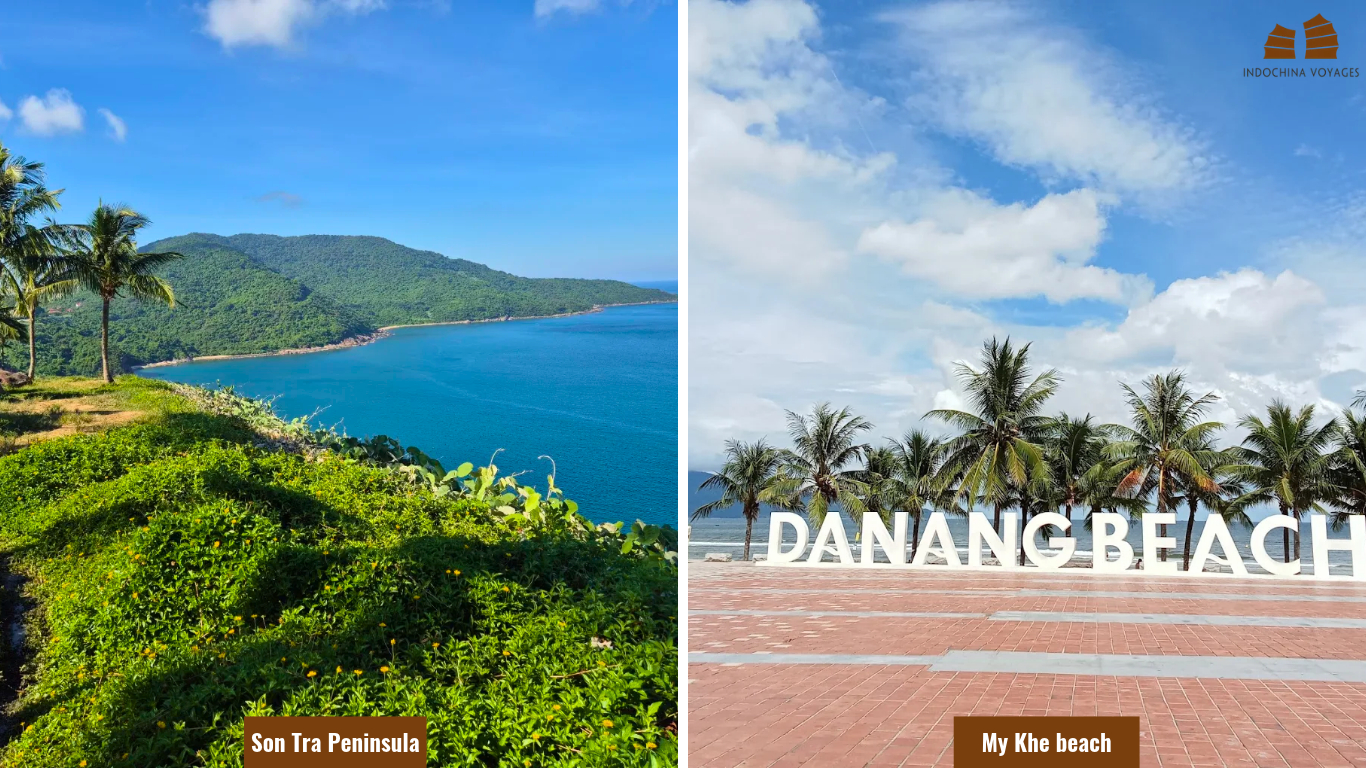
Son Tra Peninsula adds a quieter, greener side, and the city doubles as a base for Hoi An, Ba Na Hills and the Hai Van Pass. Surf is seasonal rather than constant, so anyone planning lessons should check conditions for their travel month. The main decision is where to sleep: central hotels put restaurants on the doorstep, while beachfront resorts offer calm at the cost of longer trips to dining areas.
Quick facts:
- Best months: roughly February to August
- Approach with care: September to December, when rain and storms become more likely
- Crowds: heaviest during the summer school holidays
- Budget: mid-range overall, with a wide spread from city hotels to luxury resorts
Tours that include Da Nang:
2. Nha Trang: Island Trips and an Established Resort Scene
Nha Trang makes the clearest case for an active coastal stay. The city beach, about six kilometers long, keeps hotels, restaurants and activity operators within walking distance, while boats leave for nearby islands and the Hon Mun marine protected area, a draw for snorkeling and diving. Underwater visibility and swimming conditions shift with the season and the site, so the quality of any given day is never guaranteed.
Doc Let, a long beach roughly 35 kilometers north of the city, suits visitors who prefer a quieter setting and accept the transfer. Bai Dai, on the Cam Ranh side near the airport, has a resort-oriented feel and should not be confused with other beaches that share its name. On days when weather rules out the water, seafood restaurants, spas and city sights fill the gap.
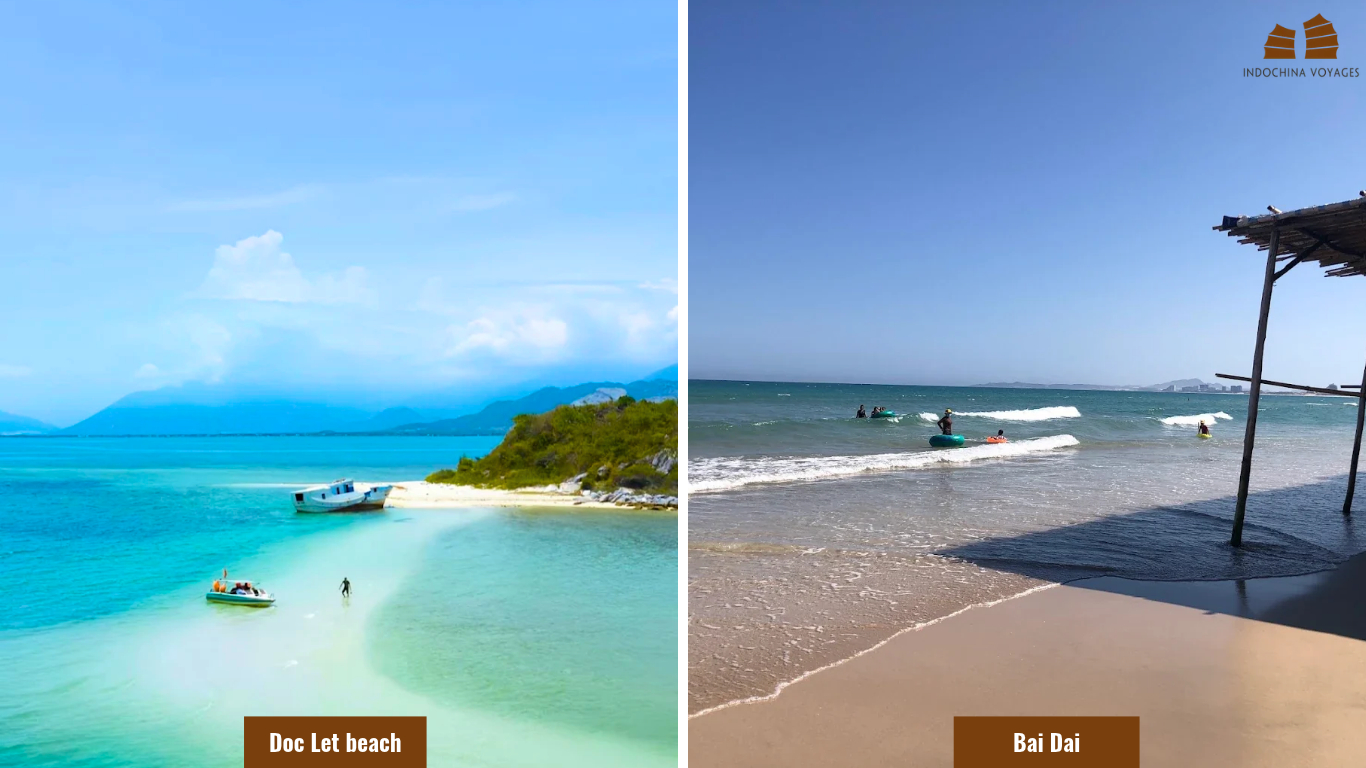
Compared with Da Nang, the emphasis here falls on island excursions and long-established holiday infrastructure rather than on cultural day trips.
Quick facts:
- Best months: January to August
- Wetter months: September to December
- Crowds: busiest during Vietnamese summer and public holidays
- Budget: mid-range, with options at both ends of the scale
Nha Trang features on the Grand Sensational Vietnam 20 Days, which pairs the coast with Hoi An, Da Nang and Dalat.
3. Phu Quoc: Resort Island with Sunset Beaches
Phu Quoc works best as a dedicated island stay of several nights. Long Beach is the practical base, with accommodation, dining and sunset views along a single strip. Ong Lang offers a more relaxed pace, though development varies along its length, and Sao Beach in the south is known for pale sand and a scenic setting. Visitor numbers and facilities at Sao change with the season.
Where you stay shapes the trip. Full-service resorts concentrate spa, dining and activities on site, whereas smaller properties in quieter areas mean longer rides to night markets and tour departure points. Sea conditions also vary by season and by coast, so calm water across the whole island should never be assumed. Snorkeling trips, island-hopping and seafood round out most itineraries.
Quick facts:
- Best months: November to April
- Wetter months: May to October, with rougher seas and some disrupted boat trips
- Crowds: strongest in the dry-season peak from December to February
- Budget: mid to high, with dry-season premiums

Tours built around Phu Quoc:
4. Mui Ne: Wind Sports, Dunes and Fishing-Village Scenery
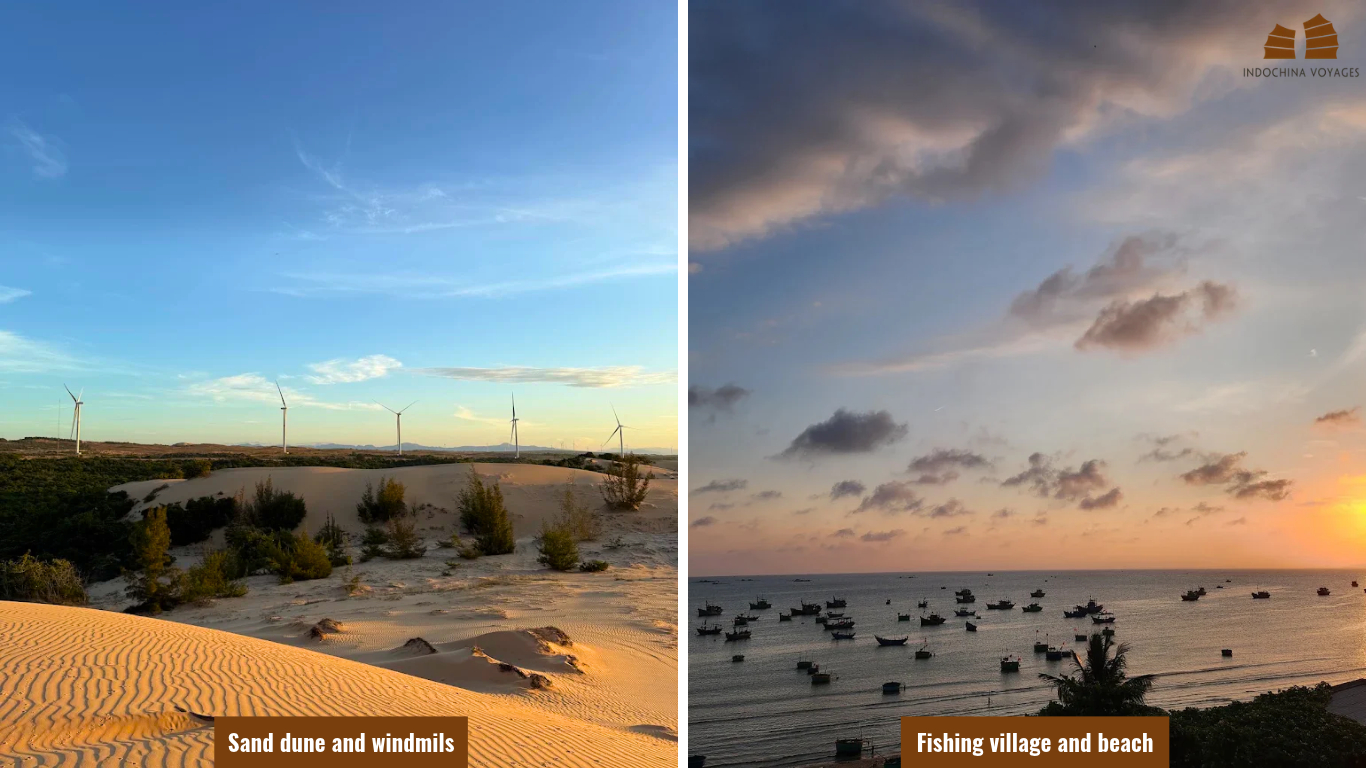
Mui Ne stands apart for its wind. Kitesurfers and windsurfers arrive for the steady breeze of the dry season, and the setting, a resort strip beside a working fishing harbor with red and white dunes inland, is unlike anywhere else on this list. Dune excursions, local seafood and coastal drives add variety between sessions.
Expectations need adjusting for two reasons. Wind and waves that please kitesurfers can make casual swimming less comfortable, which matters for families with young children. Erosion has also thinned parts of the beach, and overdevelopment has dulled some of the village atmosphere, so choosing the right resort section makes a real difference.
The area is one of the drier stretches of the south-central coast, and the journey from Ho Chi Minh City takes roughly four to five hours by road. The strongest wind season still runs from November to April.
Quick facts:
- Best months: November to April for wind sports
- Quieter months: May to October, with more rain and less reliable wind
- Crowds: peak in the dry season
- Budget: good value, from guesthouses to resorts
5. Hoi An: Beach Days Between Heritage Streets
Hoi An is a cultural destination with beach access rather than a conventional beach city, and it is best planned that way. An Bang Beach, a short bike ride or taxi from the Ancient Town, offers beachfront dining and a relaxed atmosphere. It is no longer undeveloped, and it fills at weekends and in peak months. Cua Dai has resort areas, but erosion and coastal protection works have changed parts of its shoreline.

The practical choice is between a beachfront stay, which suits long days on the sand, and a base near the historic center, which keeps lantern-lit evenings, cycling routes and local restaurants within walking range. Many travelers split the difference with a night or two in each. The Cham Islands make a worthwhile boat day when conditions allow.
Quick facts:
- Best months: February to August
- Wetter months: September to December
- Crowds: the Ancient Town stays busy year-round, while beaches peak in summer
- Budget: broad range, with mid-range hotels the norm
6. Quy Nhon: Quiet Bays and a Local Pace
Quy Nhon appeals to travelers who find Da Nang or Nha Trang too urban. The city beach is convenient, with restaurants and shops close by, though weekends draw local crowds. Ky Co, roughly 25 kilometers out, rewards the journey with pale sand against turquoise water, and Eo Gio is better understood as a coastal viewpoint with dramatic rock formations than as a swimming beach.

Accessibility is part of the decision. The most scenic spots need a car, a scooter or an organized transfer, and services thin out away from the center. In return, the pace is slower, regional seafood is a highlight and nearby excursions stay uncrowded compared with larger resort cities.
Quick facts:
- Best months: January to August, with March and April the strongest
- Wetter months: September to December
- Crowds: lighter than Da Nang or Nha Trang outside summer weekends
- Budget: modest to mid-range
7. Con Dao: Protected Islands, Turtles and Seclusion
Con Dao is an archipelago, not a beach city, and its logistics are both part of the appeal and part of the planning. Dam Trau and other accessible beaches lie in a landscape of forest, coral and protected marine life, though not every beach is empty, so complete seclusion should not be expected. The islands also carry a heavy history through the former prison complex and museum, which gives a stay a depth that pure resort islands lack.
Timing depends on what you want. Seas are generally calmest from March to September, the driest weather falls roughly between November and March, and turtle nesting runs from about April into autumn, with hatchling activity later in that window. Rain is more frequent from May and September is often the wettest month, so calm seas do not always mean dry days. Turtle observation is controlled, so book through licensed park programs and follow ranger guidance.
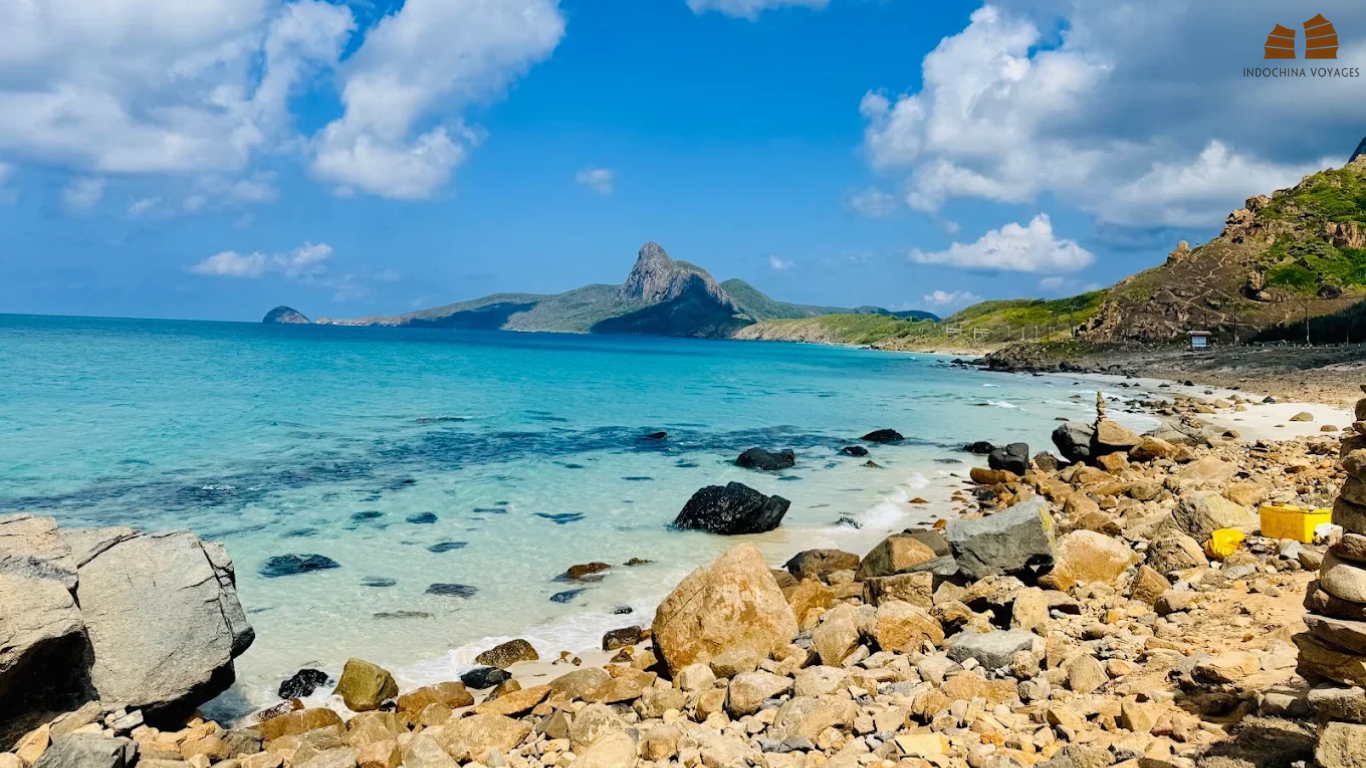
Reaching the islands means a flight from Ho Chi Minh City or a ferry from mainland ports such as Vung Tau, and both can be disrupted by weather, particularly in the second half of the year. Build in spare days, arrange excursions in advance and expect a limited choice of accommodation.
Quick facts:
- Best months: March to September for calm seas, November to March for the driest weather
- Turtle season: roughly April to October
- Crowds: low year-round, busier at weekends and holidays
- Budget: higher than the mainland coast because of transport and limited supply
8. Cat Ba: Limestone Bays and Kayaking
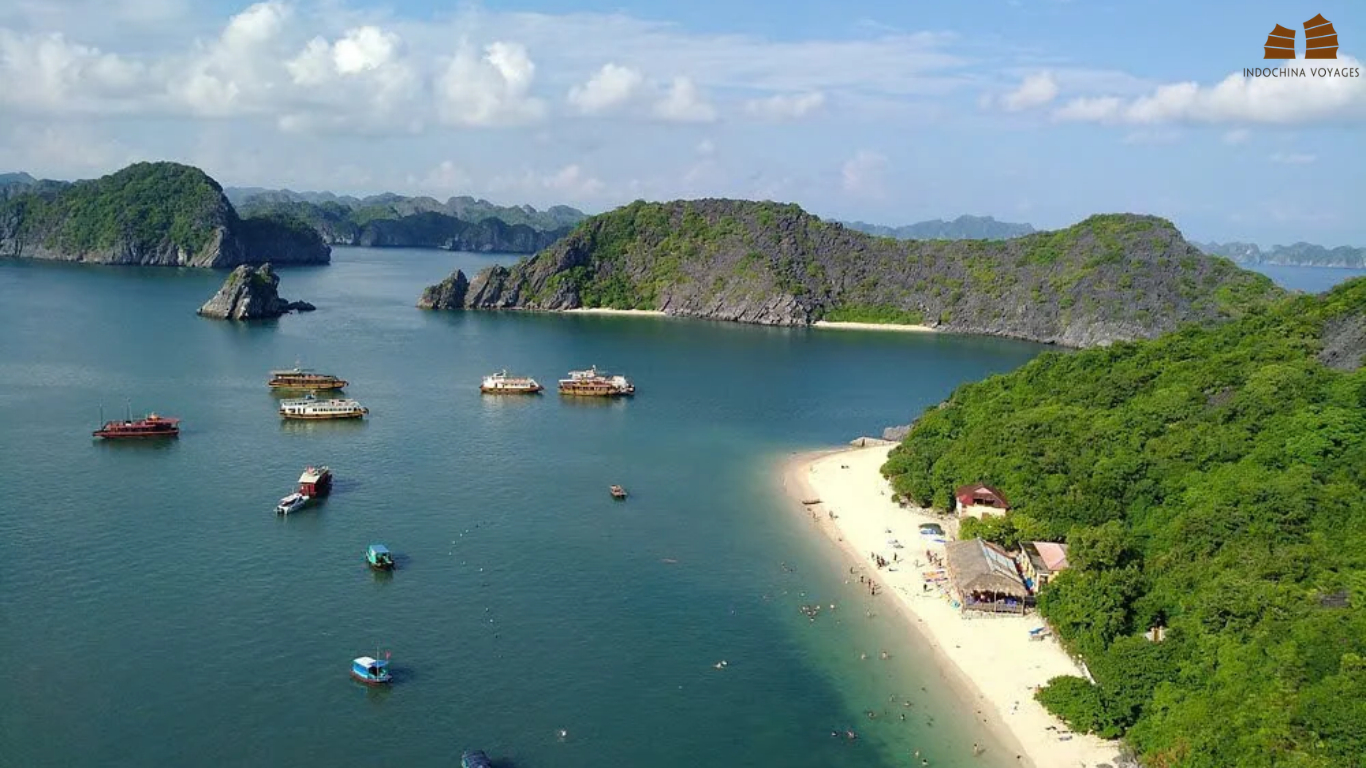
Cat Ba trades long sandy beaches for scenery. Its small beaches, including the Cat Co group, sit in sheltered coves, and the real attraction is the surrounding water: Lan Ha Bay and its limestone islands, reachable by kayak and boat. It is a poor substitute for Phu Quoc if the aim is a swimming holiday, but a strong coastal extension for travelers already in the north.
The island also fits neatly beside a Ha Long Bay cruise, and the two are often combined. Hai Phong serves as the gateway, with a ferry onward, so the trip from Hanoi takes roughly half a day. Boat schedules depend on weather, and winters are cold, which pushes the practical season to April through October.
Quick facts:
- Best months: April to October
- Cooler months: November to March, with cold and windy days
- Crowds: summer weekends and holidays are busiest
- Budget: good value, from hostels to eco-lodges
Each of these places can be woven into a wider journey, and our Indochina tours show how beach stays fit between cities, rivers and heritage sites.
Other Beach Towns Worth a Detour
Three further names come up often. Vung Tau is the standard weekend escape from Ho Chi Minh City and draws a largely local crowd. Phan Thiet shares Mui Ne’s coastline and wind season. Lang Co, between Hue and Da Nang, makes a scenic stop on the coastal road. None offers the depth of the eight destinations above, but each is useful when a route calls for a short sea break.
Da Nang vs Nha Trang vs Phu Quoc: Head-to-Head
These three draw the most comparisons, so the table sets them side by side.
| Criteria | Da Nang | Nha Trang | Phu Quoc |
|---|---|---|---|
| Setting | City on the coast | Established beach city | Resort island |
| Beach feel | Long urban strip, quieter pockets to the south | City beach plus out-of-town options | Varied beaches, sunset coast |
| Sightseeing | Strong: Hoi An, Marble Mountains, Ba Na Hills | Moderate: island trips and city sights | Limited: night markets and island tours |
| Island trips | Limited, mainly the Cham Islands | Strong | Strong |
| Main season | February to August | January to August | November to April |
| Getting there | Direct airport | Cam Ranh airport, then a transfer | Direct airport on the island |
| Budget feel | Mid-range, flexible | Mid-range, flexible | Mid to high, resort-led |
| Best suited to | Beach and culture combined | Active, organized stays | Pure relaxation |
Da Nang suits travelers who want culture and beach in one trip, Nha Trang suits those who prefer organized marine activity, and Phu Quoc suits visitors happy to spend several nights doing little beyond the beach. Da Nang and Nha Trang share a similar season and combine easily, whereas Phu Quoc peaks when the central coast is at its wettest. To see how stays can be linked, see sample itineraries here.
Choosing by Travel Style
- Families with Children
Families usually do best in Da Nang, Nha Trang or Phu Quoc, where accommodation, dining and activities cluster close together and transfers stay short. Whichever beach you pick, check access points, surf, currents and lifeguard cover on the day, since conditions change. More ideas for traveling with children are collected under family holidays.
- Couples and Honeymooners
Phu Quoc resorts offer full service and sunset views. Con Dao suits couples who prefer remoteness over facilities, and Hoi An works for those who want evenings in heritage streets with beach time by day.
- Water Sports and Active Travelers
Mui Ne leads for kitesurfing and windsurfing in the dry season. Nha Trang organizes diving and snorkeling trips when seas allow, and Cat Ba delivers kayaking among limestone islands.
- Travelers Who Want Space and Quiet
Quy Nhon and Con Dao offer the most room, at the price of transport planning and fewer services. Quieter sections of larger destinations, such as Non Nuoc near Da Nang, can also work, with the trade-off falling between fewer visitors and fewer immediate amenities.
- Culture-Led Itineraries with Beach Days
Hoi An and Da Nang allow sightseeing in the morning and swimming in the afternoon without a change of hotel. For a beach holiday in Vietnam that also covers the cities, this pairing is the lowest-friction option. Travelers who want the sequencing handled can ask for custom Indochina packages built around their dates.

Best Time for Vietnam’s Beaches: Season by Coast
- Central Coast
The central coast, covering Da Nang, Hoi An, Nha Trang and Quy Nhon, generally enjoys its best beach weather from around February to August. Rain, heavy swell and storms become more frequent from September, and conditions can differ noticeably between neighboring towns.
- Southern Coast and Islands
Phu Quoc and Mui Ne are most attractive from November to April, when rainfall drops and seas settle for swimming and boat trips, and Mui Ne’s wind sports peak in the same window. This period overlaps with peak demand, so prices rise and good rooms go early. Con Dao follows its own logic, as described above.
- Northern Coast
Cat Ba and the northern bays suit the warmer months, roughly April to October, and are better judged by the quality of excursions than by swimming. Winter temperatures drop sharply and summer storms can disrupt boat schedules, so flexibility helps.
Month-by-Month Planner
The table applies those patterns to each month. It is a planning guide, not a guarantee, and local forecasts should have the final word.
| Month | Strongest options | Main watch-out | Crowds and prices |
|---|---|---|---|
| January | Phu Quoc, Mui Ne, Nha Trang | Da Nang and Hoi An can be cool and unsettled | Moderate to high in the south |
| February | Phu Quoc, Mui Ne, Nha Trang | Tet holiday disruption; central coast still warming up | High around Tet, otherwise moderate |
| March | Da Nang, Hoi An, Nha Trang, Quy Nhon, Con Dao | Few; generally a strong month | Moderate |
| April | Da Nang, Hoi An, Quy Nhon, Con Dao, Cat Ba | Heat builds; holiday crowds around 30 April and 1 May | Moderate to high near the holiday |
| May | Da Nang, Quy Nhon, Nha Trang, Con Dao, Cat Ba | Phu Quoc’s wet season begins | Moderate |
| June | Da Nang, Nha Trang, Quy Nhon, Con Dao | Heat and school holidays; check local sea conditions | High on the central coast |
| July | Da Nang, Nha Trang, Quy Nhon, Con Dao | Stronger waves; storm risk in the north | High |
| August | Da Nang, Hoi An, Quy Nhon, Con Dao | Central season nears its end; storm risk in the north | Moderate to high |
| September | Con Dao, Cat Ba (early in the month, subject to forecasts) | Rain and storms increase on the central coast; Con Dao is at its wettest | Low |
| October | Con Dao, Cat Ba (subject to forecasts) | Storms and flooding possible in central Vietnam; Phu Quoc is wet | Low |
| November | Phu Quoc, Mui Ne | Central coast at its wettest | Rising as the dry season begins |
| December | Phu Quoc, Mui Ne | Central coast unsettled | High, especially late in the month |
The wider picture across the country is covered in our guide to the best time to travel to Vietnam.
What a Beach Stay Costs and What Drives the Price
Exact rates change with the season, so this section compares relative cost rather than quoting prices that date quickly.
| Destination | Typical price level | Main cost drivers |
|---|---|---|
| Da Nang | Mid-range | Wide hotel choice; summer peaks |
| Nha Trang | Mid-range | Boat tours and dive trips add up; summer peaks |
| Phu Quoc | Mid to high | Resort-led pricing; dry-season premiums; flights |
| Mui Ne | Lower to mid | Value guesthouses and resorts; kitesurf lessons extra |
| Hoi An | Mid-range | Beachfront versus Ancient Town location; peak months |
| Quy Nhon | Lower to mid | Fewer luxury options; transfers to outlying beaches |
| Con Dao | Higher | Flights or ferries; limited rooms |
| Cat Ba | Lower to mid | Cruise and kayak excursions |
Four factors move the bill more than any others:
- Accommodation category and location
- Domestic flights, ferries and private transfers
- Boat excursions, snorkeling and other activities
- Seasonal demand, especially around public holidays
Traveling in shoulder months, staying mid-week and bundling transfers all reduce spend. For a stay priced against exact dates, our team can prepare a quote with transfers and excursions included.
Building Beach Time into a Vietnam Itinerary
Length of stay depends on purpose. A beach extension at the end of a cultural trip works in two or three nights, while a dedicated island holiday needs four or more once transfers and weather margins are counted. No single duration suits every destination.
Three patterns cover most trips:
- Central Vietnam: Da Nang and Hoi An, pairing beach stays with sightseeing
- Southern Vietnam: Ho Chi Minh City and the Mekong Delta, followed by Phu Quoc or Mui Ne
- Northern Vietnam: Hanoi and Cat Ba, built around bay excursions
A typical 10 to 12 day route might run through Hanoi, Hue, Hoi An and Da Nang, then close with three or four beach nights so the final days are free of long transfers. Southbound itineraries can end on Phu Quoc after the Mekong, and a Mekong cruise is one way to travel the delta before heading to the coast. In the north, Cat Ba pairs with Ha Long Bay cruises for a fuller coastal stay.
These routes appear, with accommodation and transfers, across our Vietnam tours, and the same itineraries can be extended into neighboring countries through our Indochina tours.
More Tours That Bring the Coast into a Wider Trip
The beach-first tours for Da Nang, Phu Quoc and Nha Trang already sit in their own sections above, so these four take a different angle. Each places the coast inside a longer route through central Vietnam, the south or neighboring Cambodia and Laos, which suits travelers who see beach nights as one chapter of a bigger journey.
- Classic Central Vietnam 5 Days
- Vietnam Cultural Highlights 14 Days
- Vietnam & Cambodia Family Holiday 15 Days
- Far East Discovery 22 Days
The specialists at Indochina Voyages can reshape any of these routes around your dates, hotel level and pace.

Sea Safety, Conservation and Booking Practicalities
- Check swimming flags, current warnings and lifeguard presence before entering the water
- Confirm ferry schedules and boat-trip cancellation policies when staying on an island
- Weigh walking distance to the beach, shade and nearby facilities when choosing a hotel
- Book popular resorts and domestic flights well ahead of major Vietnamese public holidays
- Follow local guidance around coral reefs, sea turtles and other wildlife
Advice on entry, money and local etiquette is collected in our travel hints, so read more before you fly.
Planning Your Vietnam Beach Stay
Vietnam’s best beach cities reward matching rather than ranking. Da Nang, Nha Trang and Phu Quoc offer the most services, Mui Ne and Cat Ba specialize in activities, and Quy Nhon and Con Dao favor space. Season decides the rest.
Timing, transfers and sequencing determine how smooth a stay feels, and our Vietnam tour packages place beach nights where the weather is strongest. The full range is on this page, and questions are welcome at info@indochinavoyages.com.