
Ninh Binh is a year-round destination, but the most comfortable months are March to April and October to November, when it’s mild enough for boat trips, cycling and climbing Mua Cave. Late May to early June and October are best for golden rice fields. July and August are hotter, wetter and quieter, which suits flexible travelers.

So, When Is the Best Time to Visit Ninh Binh?
Ninh Binh has a northern Vietnam monsoon climate, so each season looks and feels different. Here’s the quick answer before we go into detail.
| Travel period | What to expect | Best for |
|---|---|---|
| March to April | Mild, comfortable, increasingly sunny; green countryside | First-time visitors, sightseeing, cycling |
| May to early June | Hotter, with a higher chance of rain; rice ripening around Tam Coc | Golden rice photography, landscapes |
| Late June to August | Hot, humid, frequent showers and occasional storms | Flexible travelers, lush scenery, quieter visits |
| September | Warm, still wet, with a storm risk that eases toward the end of the month | Green landscapes, early harvest scenery |
| October to November | Comfortable temperatures, clearer skies, harvest landscapes | Photography, sightseeing, couples, older travelers |
| December to February | Cool, sometimes misty or cloudy | Temples, culture, slower sightseeing |
If you only have one shot, aim for March to April or October to November. Want the famous golden Tam Coc view? Plan for late May to early June, and check local updates before you book, as the harvest window shifts from year to year.
Best Time to Visit Ninh Binh by Travel Goal
For the Most Comfortable Weather: March to April and October to November
These months are the safest all-round choice. Temperatures are moderate, humidity is lower than in summer, and long days outdoors feel pleasant rather than draining. Boat rides at Trang An and Tam Coc, cycling between villages and the climb up Mua Cave are all at their most enjoyable. Ninh Binh is also easy to pair with Hanoi at these times of year, and it features in many of our Vietnam tours.
For Golden Rice Fields and Photography
There are two distinct windows, and they feel different:
- Late May to early June: the classic golden rice scene around Tam Coc and the Ngo Dong River. It’s hotter, and rain is more likely than in spring. For more on this time of year, see our guide on where to go in June.
- Late September to October: harvest-season scenery with more comfortable temperatures. September can still be wet, so October is the safer bet.
Rice timing depends on the year, the field, and the weather, and the harvest can move quickly. Check recent photos or ask your hotel or guide before locking in dates.

For Fewer Visitors
July and August are usually quieter, with more room at popular spots. The trade-off is heat, humidity, sudden downpours and some storm risk. Weekdays are calmer than weekends in any season, and going early in the day helps everywhere.
For Families and Older Travelers
March to April and October to November are easiest: comfortable temperatures, manageable outdoor activities and less risk of heat exhaustion. In summer, plan short, early outings and keep afternoons free.
For Travelers Watching Their Budget
May to August can offer potentially better value on accommodation and tours, though prices vary by property and date, so compare rather than assume. Just build in flexibility for weather. You can browse our Indochina tours to compare options and durations.
Ninh Binh Weather by Season

Spring (March to May)
Spring starts mild and gets progressively warmer. March and April are roughly 18-28°C, with green rice fields and comfortable conditions for boat trips and cycling. May climbs into the low 30s°C, with more humidity and afternoon showers. Late May can overlap with the golden rice season around Tam Coc.
Summer (June to August)
Summer is hot and humid, often 27-35°C, with frequent afternoon rain. The countryside is at its lushest, and visitor numbers are typically lower. This isn’t “bad weather”, it’s a trade-off. Heavy rain can disrupt boat trips and outdoor plans, and this is also the main storm season for northern Vietnam. Check forecasts and keep your schedule flexible.

Autumn (September to November)
September is still warm and wet, and storms can occur early in the month, but conditions improve as it goes on. October is often the sweet spot, with mild temperatures around 22-29°C, harvest colors and good visibility. November is cooler and drier, roughly 18-25°C, and great for relaxed sightseeing.

Winter (December to February)
Winter is cool, roughly 13-20°C, and can be cloudy or misty. It’s less ideal if bright green or golden scenery is your priority, but it suits temples, historical sites, and slower sightseeing. Bring a light layer, and don’t assume every winter day will be sunny. Lunar New Year (Tet) can bring extra domestic travel and activity.
Month-by-month Breakdown
| Month | Weather (approx.) | Landscape | Best for |
|---|---|---|---|
| January | Cool, 13-19°C, sometimes misty | Muted green | Temples, quiet sightseeing |
| February | Cool to mild, 14-21°C | Spring greenery starts | Culture and festivals |
| March | Mild, 17-24°C, increasingly dry | Fresh green | Outdoor activities |
| April | Warm, 21-28°C, generally comfortable | Green countryside | First-time visits |
| May | Hot, 25-33°C, occasional rain | Rice ripening begins | Tam Coc scenery |
| June | Hot and humid, 27-34°C | Golden and green landscapes | Photography, quieter travel |
| July | Hot and wet, 27-35°C | Very lush | Flexible travelers |
| August | Hot and wet, 26-34°C | Lush countryside | Fewer visitors |
| September | Warm, 25-32°C, rain easing | Green to turning rice fields | Nature, quieter travel |
| October | Mild, 22-29°C | Harvest scenery | Photography, sightseeing |
| November | Cooler and drier, 18-25°C | Autumn landscapes | Comfortable exploring |
| December | Cool, 14-21°C, sometimes misty | Winter countryside | Culture, slower travel |
Holidays and Busy Periods
Public holidays affect your trip more than the season does. Expect busier roads, attractions and hotels around:
- Tet (Lunar New Year), January or February: some local businesses close for several days, while popular places fill with domestic visitors.
- 30 April to 1 May: a long holiday weekend and one of the busiest travel periods.
- 2 September (National Day): another popular holiday break.
- Weekends year-round: busier than weekdays, especially at Trang An, Tam Coc and Bai Dinh.
Book accommodation and tours earlier for these dates, and consider visiting on a weekday. If you’re unsure which dates suit you, our team can check availability around the holidays.
How Weather Affects Ninh Binh’s Main Activities
| Activity | Most suitable period | Weather consideration |
|---|---|---|
| Trang An boat trip | March-May, October-November | Rain affects comfort; boats can be suspended in heavy rain or flooding |
| Tam Coc boat trip | Late May-early June, October-November | Rice scenery changes seasonally |
| Cycling | March-April, October-November | Avoid the hottest and rainiest periods |
| Mua Cave viewpoint | Cooler months | Heat makes the climb harder; the steps get slippery when wet |
| Hoa Lu | Most of the year | Less weather-dependent |
| Bai Dinh Pagoda | Most of the year | Cooler days are more comfortable for walking |
| Van Long Nature Reserve | Cooler, drier periods | Better for relaxed nature viewing |
Want to see all of these in one day? Take a look at our Trang An private day tour. Looking for more ideas? See our guide to the Top 10 things to do in Ninh Binh about each attraction.
How to Plan Around the Weather
Cool and Dry Months (November to March)
- Start outdoor activities earlier in the day.
- Bring a light layer, especially December to February.
- Don’t assume every winter day will be sunny or clear.
- Book popular accommodation ahead for holiday periods.
- Pack: light jacket, comfortable walking shoes, camera.
Hot Months (May to August)
- Schedule boat trips and climbs for the morning.
- Carry water and sun protection.
- Allow flexibility for afternoon showers.
- Avoid packing every activity tightly together.
- Pack: sun hat, sunscreen, quick-dry clothing, refillable water bottle.
Rainy and Storm Periods (July to September)
- Keep some flexibility in your itinerary.
- Check the local forecast shortly before outdoor activities, and follow local advice if storms are forecast.
- Rain doesn’t usually mean a whole day is lost, as showers often pass.
- Pack: light rain jacket or poncho, waterproof or quick-dry footwear, a dry bag for electronics.
Want a plan with built-in flexibility? Our custom Indochina packages can be adjusted around the season and the forecast.
Is There a Bad Time to Visit Ninh Binh?
Not really. Each season changes what Ninh Binh looks and feels like, so the right time depends on what you want:
- Comfortable sightseeing? Choose spring (March-April) or autumn (October-November).
- Golden rice? Choose late May to early June, or October.
- Fewer visitors? Consider summer, but expect heat and rain.
- Cooler weather and cultural sightseeing? Choose winter.
- Lush green scenery and you don’t mind showers? Summer works well.
Whichever season you choose, Indochina Voyages can match your dates to the experience you want.
How Long Should You Stay in Ninh Binh?
2 days is the sweet spot for most travelers. It’s enough to see the main highlights without rushing.
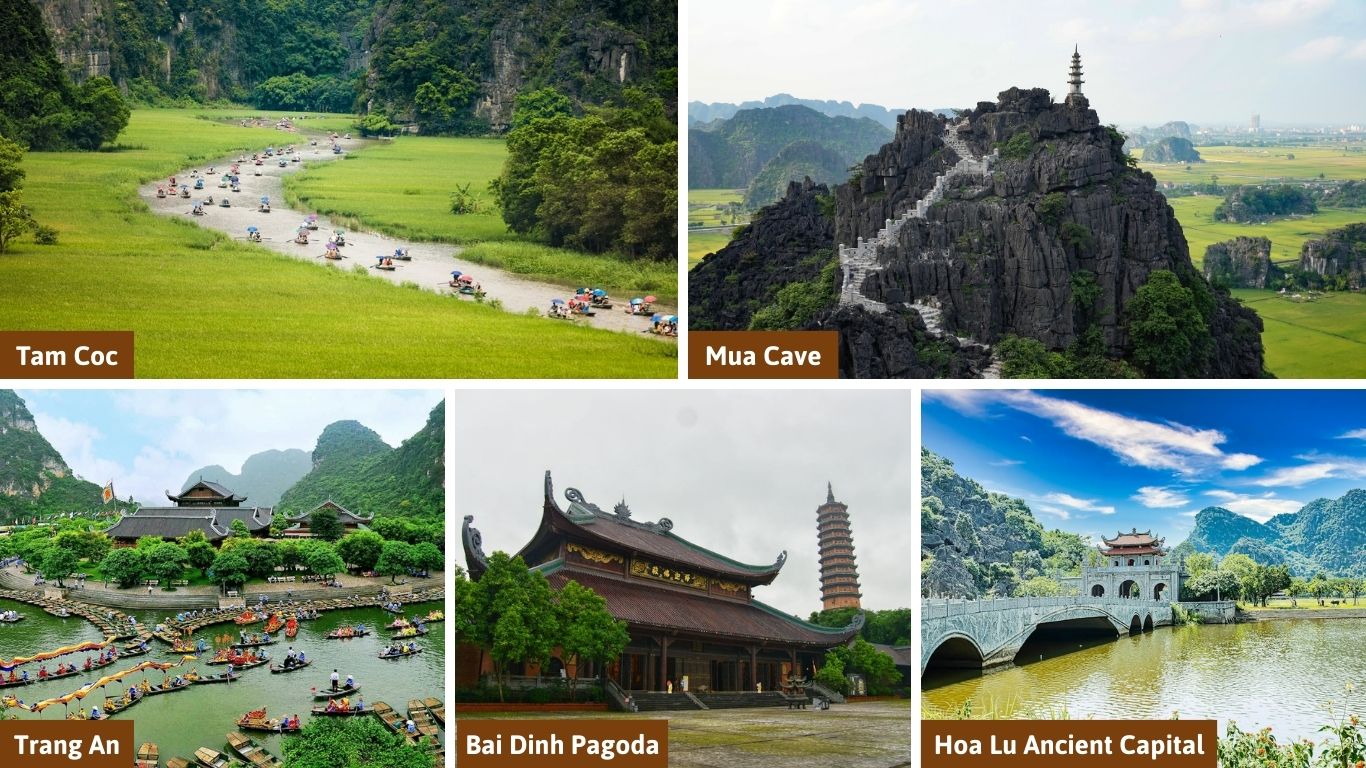
Day 1: Tam Coc, Mua Cave and the countryside
- Morning: Tam Coc boat trip along the Ngo Dong River
- Midday: Mua Cave viewpoint climb
- Afternoon: Cycling through the rice fields and villages
Day 2: Trang An, Hoa Lu and Bai Dinh
- Morning: Trang An boat trip through caves and limestone karsts
- Midday: Hoa Lu Ancient Capital
- Afternoon: Bai Dinh Pagoda
Tip: put the boat trips and the Mua Cave climb in the morning during hot or rainy months.
Want more time or a different route? Here are the other options:
- Pu Luong to Ninh Binh 4-day trip
- Ninh Binh and Ha Long 3-day tour
- Grand Sensational Vietnam 20-day tour
Ninh Binh is about two hours from Hanoi, so it also pairs easily with a Hanoi stay. For more day-by-day plans, browse our Indochina travel packages, then contact Indochina Voyages or email info@indochinavoyages.com to build a Ninh Binh experience around the season you choose.
Tips for Choosing Your Travel Dates
- Check the forecast shortly before departure.
- Expect weather variation rather than guaranteed sunshine.
- Book earlier around Tet, 30/4-1/5, 2/9, and weekends.
- Leave flexibility for boat and outdoor activities in rainy months.
- Check local updates if golden rice is your priority.
- Choose dates based on scenery and comfort, not weather alone.
FAQ
What is the best month to visit Ninh Binh?
March, April and October are among the most comfortable choices, while late May to early June is especially attractive for Tam Coc’s golden rice scenery.
Is Ninh Binh worth visiting in summer?
Yes. July and August are hot and wetter, but the countryside is lush and visitor numbers are often lower. Plan morning activities and keep your schedule flexible. Our Indochina tours can be arranged with summer-friendly timing.
When can you see golden rice fields in Ninh Binh?
Late May to early June is a major golden rice period around Tam Coc, and late September to October offers harvest-season landscapes. Timing varies by year, so check local updates before you go.
Is December or January a good time to visit Ninh Binh?
Yes, if you prefer cooler weather and cultural sightseeing. Expect possible mist or cloud, and bring a light layer. Tet can be busy, and some businesses close briefly.
Is there a typhoon or rainy season, and does it cancel boat tours?
Heavy rain and storms are most likely from roughly July to September, sometimes into early October. Boat trips can be paused in heavy rain or flooding, so check conditions close to your date and allow a buffer day if you can.
Is Tam Coc or Trang An better in each season?
Both work year-round. Tam Coc is the classic choice for rice scenery in late May to early June and October, while Trang An suits comfortable spring and autumn days and offers more cave and temple stops. Doing both is easy in two days, and you can learn more on this page about Trang An.
How many days should you spend in Ninh Binh?
Two days works well for the main highlights, while three days gives you more time at a slower pace.