
Yes, August is monsoon season in Thailand, but that’s exactly what makes it worth considering. Crowds are thin, prices drop 30–50%, landscapes turn emerald green, and waterfalls hit their peak. The rain typically arrives in short afternoon bursts, leaving mornings wide open for sightseeing. This guide gives you everything you need to travel smart in August: honest weather data by region, the best (and worst) destinations to pick, what to pack, and the cultural experiences you’ll only find this time of year.
Is August a Good Time to Visit Thailand?
August falls squarely in Thailand’s low season, but that doesn’t mean it’s a bad time to visit. The monsoon brings afternoon showers, yet mornings often remain clear and pleasant. For travelers who value authentic experiences over perfect weather, August in Thailand presents compelling advantages.
The benefits are significant:
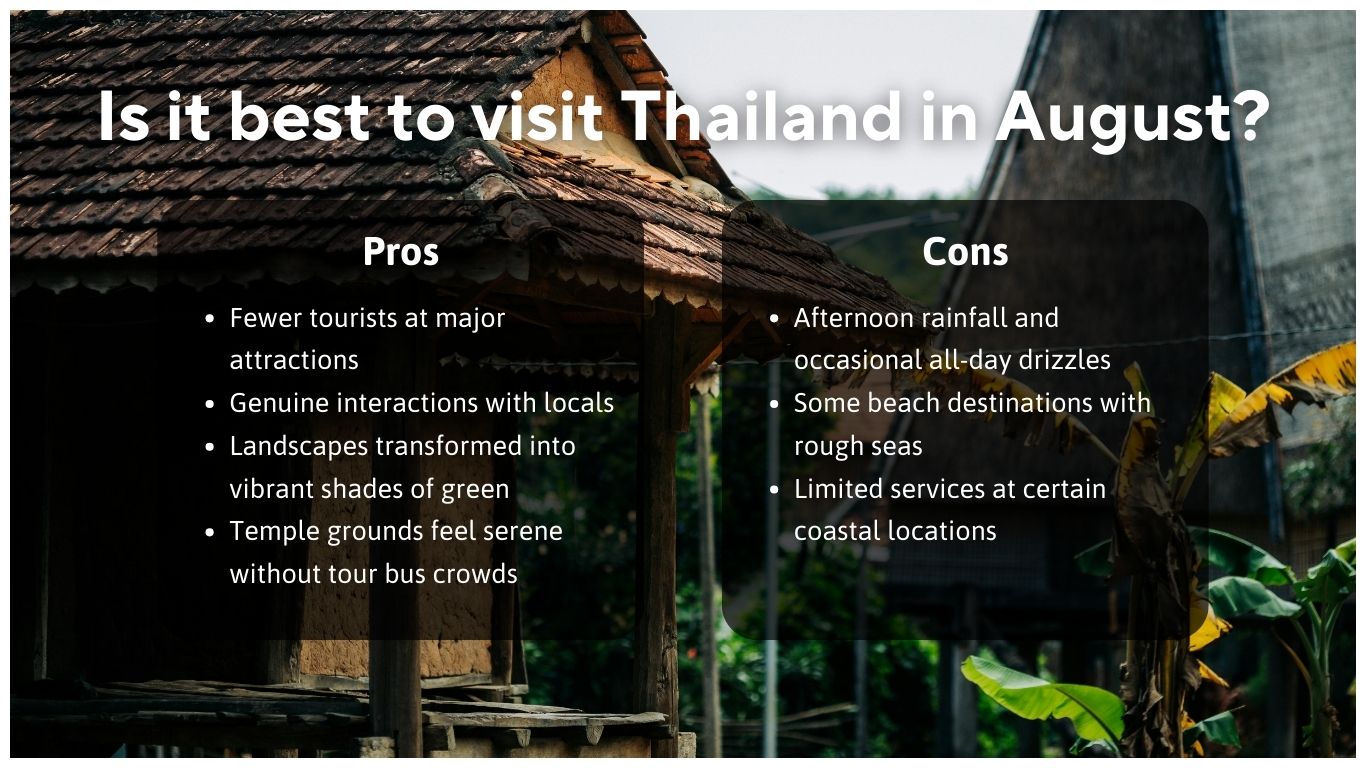
- Dramatically fewer tourists at major attractions
- Genuine interactions with locals
- Landscapes transformed into vibrant shades of green
- Rice paddies shimmer and waterfalls reach peak flow
- Temple grounds feel serene without tour bus crowds
However, expect:
- Afternoon rainfall and occasional all-day drizzles
- Some beach destinations with rough seas
- Limited services at certain coastal locations
August suits culture seekers, nature lovers, and flexible travelers who can adapt plans around weather. Those requiring guaranteed sunshine for beach holidays might reconsider, but visitors prioritizing cultural immersion, culinary experiences, and natural beauty will find August rewarding.
Planning tip: Book accommodations with flexible cancellation policies and build itinerary cushions for weather-related adjustments.
>>> Read more: When Is the Best Time to Visit Thailand? A Complete Seasonal Guide for 2026
Understanding Thailand’s Weather in August
What to Expect from August Weather in Thailand
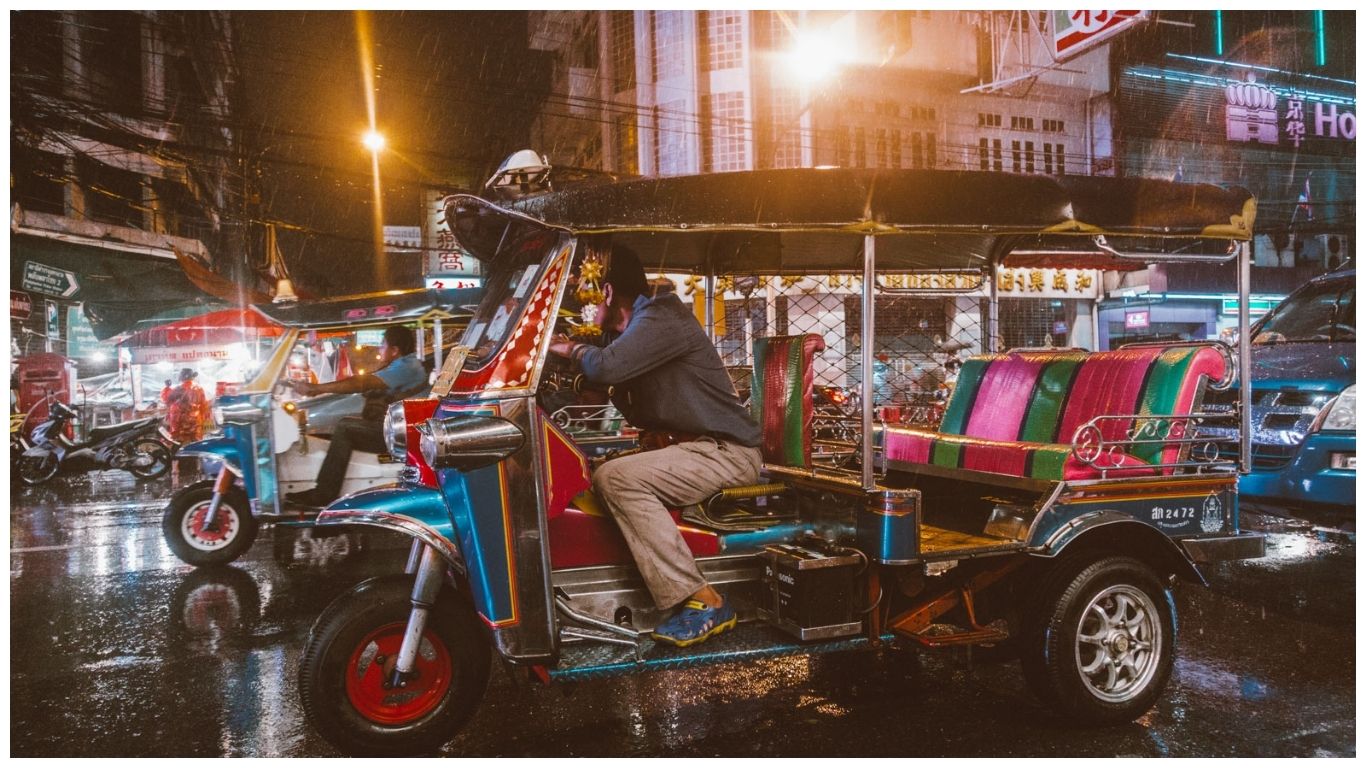
Monsoon season doesn’t mean constant downpours. Typical patterns involve humid mornings, building clouds by midday, and thunderstorms in late afternoon or evening. These tropical showers can be intense but usually pass within 1-3 hours, leaving fresh, cooler air behind.
Temperature in Thailand in August ranges from 27-32°C (81-90°F), with high humidity making it feel warmer. The practical takeaway? Plan outdoor activities for morning hours when weather typically cooperates.
Best timing strategy:
- 7 AM – 1 PM: Temple visits, market exploration, sightseeing
- Afternoons: Indoor cultural activities, shopping, spa treatments
- Evenings: Dining, entertainment, night markets (often rain-free)
Regional Weather Variations Across Thailand
| Destination | Average Temp | Monthly Rainfall | Weather Characteristics | Best For |
|---|---|---|---|---|
| Bangkok | 28-32°C (82-90°F) | ~200mm | Hot, humid with afternoon thunderstorms; urban infrastructure handles rain well | Indoor attractions, shopping, food tours |
| Phuket (Andaman Coast) | 26-31°C (79-88°F) | 280-300mm | Heavy rainfall, rough seas, strong currents; reduced beach activities | Cultural attractions, inland activities |
| Chiang Mai | 24-30°C (75-86°F) | ~230mm | Cooler mountain temps, consistent rain, mystical fog; lush landscapes | Temple circuits, jungle treks, cultural immersion |
| Koh Samui (Gulf Coast) | 26-32°C (79-90°F) | ~120mm | 30-40% less rain than Andaman coast; calmer seas | Beach time, wellness retreats, water activities |
| Krabi/Railay | 26-31°C (79-88°F) | ~240mm | Better than Phuket; morning activities possible | Rock climbing, caves, sheltered beaches |
Regional planning insights:
Weather in Bangkok Thailand in August brings dramatic afternoon thunderstorms, but the BTS/MRT systems keep you dry between destinations. The capital’s extensive indoor offerings make it ideal for rainy days.
August weather in Phuket Thailand experiences the heaviest rainfall with rougher Andaman seas. Some beach clubs operate on reduced schedules, though cultural sites remain accessible.
Weather in Chiang Mai Thailand in August offers cooler temperatures that create mystical fog-shrouded landscapes. The rain enhances the northern region’s appeal, making jungle treks atmospheric and waterfalls spectacular.
Strategic tip: Split time between northern cultural centers and Gulf coast beaches for optimal weather diversity. Koh Samui’s Gulf location means significantly better beach weather than Phuket during August Thailand weather patterns.
Best Places to Visit in Thailand During August
Bangkok: Urban Adventures Rain or Shine
Top indoor attractions:
- Grand Palace complex with covered pavilions and galleries
- Jim Thompson House for fascinating silk history
- National Museum showcasing Thai art across air-conditioned galleries
- Shopping malls: Siam Paragon, CentralWorld, MBK Center
Food and markets:
- Covered sections of Chatuchak Weekend Market
- Or Tor Kor Market (considered Thailand’s best fresh market)
- Street food vendors under permanent awnings
- Food courts in every mall serving exceptional Thai cuisine
Cultural performances, Thai dance shows, and Muay Thai matches at Rajadamnern or Lumpinee stadiums proceed regardless of weather. Book morning walking tours before afternoon rains arrive, then transition to cooking classes or massage courses.
What to bring: Comfortable shoes with good grip for wet pavements, and carry a lightweight rain jacket rather than an umbrella for mobility.
>>> Read more: Bangkok Hidden Gems: Discover the City Beyond the Temples

Chiang Mai: Cultural Heart of Northern Thailand
Temple highlights:
- Wat Phra That Doi Suthep (mountain-top golden temple)
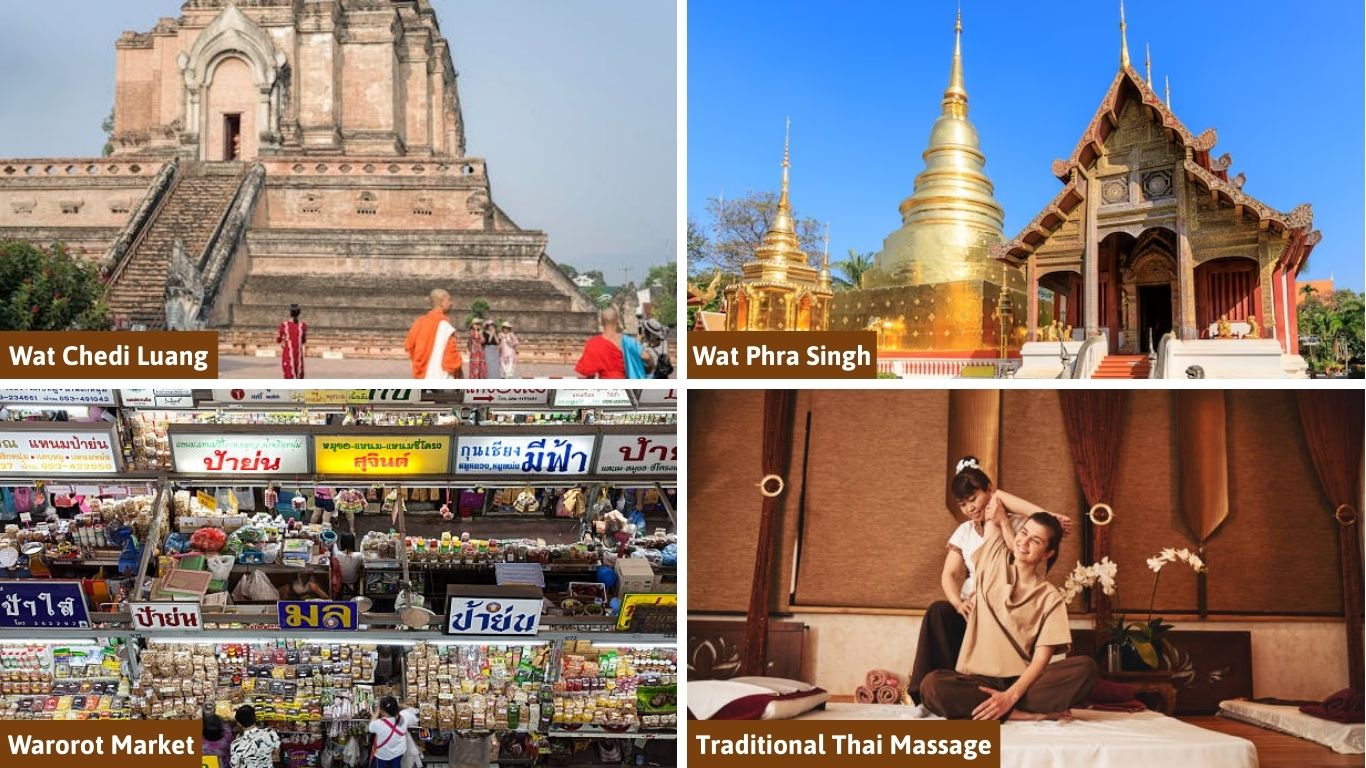
- Wat Chedi Luang (massive ancient ruins in city center)
- Wat Phra Singh (classic Lanna architecture)
- Photography tip: Overcast skies create perfect lighting without harsh shadows
Indoor cultural experiences:
- Thai cooking classes in covered pavilions teaching regional specialties
- Traditional massage schools offering multi-day courses
- Coffee culture in cozy cafes perfect for rainy afternoons
- Warorot Market’s covered sections and evening night bazaars
The cooler mountain temperatures make August in Thailand more comfortable here than in Bangkok or southern regions. Visit temples in morning when rain is less likely, then schedule afternoon cooking classes or spa treatments.
Unlike March-April when crop burning creates hazardous smog, August air quality in Chiang Mai is among the clearest of the year. The monsoon rains wash particulates from the air, making outdoor activity safer for those with respiratory sensitivities.
>>> Read more: Chiang Mai Ultimate Travel Guide for First-Time Visitors
Krabi & Railay: Adventure Awaits
Adventure activities:
- Rock climbing in covered areas and caves
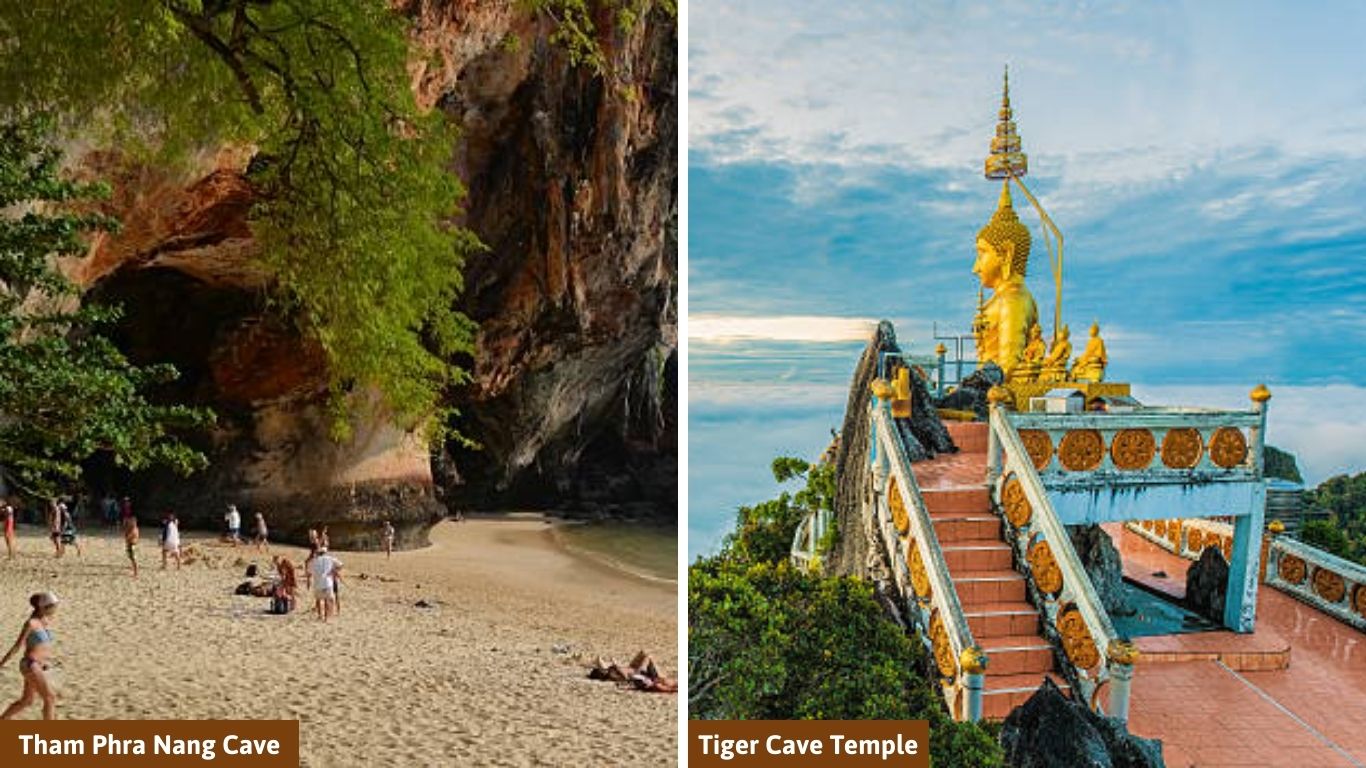
- Tham Phra Nang Cave exploration
- Tiger Cave Temple (1,237 steps to panoramic views)
- Kayaking during calmer morning hours
- Ao Nang Beach for sheltered swimming conditions
Smart planning: Choose accommodations with strong activity programs and indoor facilities for rainy day alternatives.
Koh Samui: Gulf Coast Advantage
Koh Samui represents the smartest beach choice for visiting Thailand in August. Gulf of Thailand weather patterns mean substantially less rainfall than Andaman destinations – a game-changer for beach lovers.
Natural attractions:
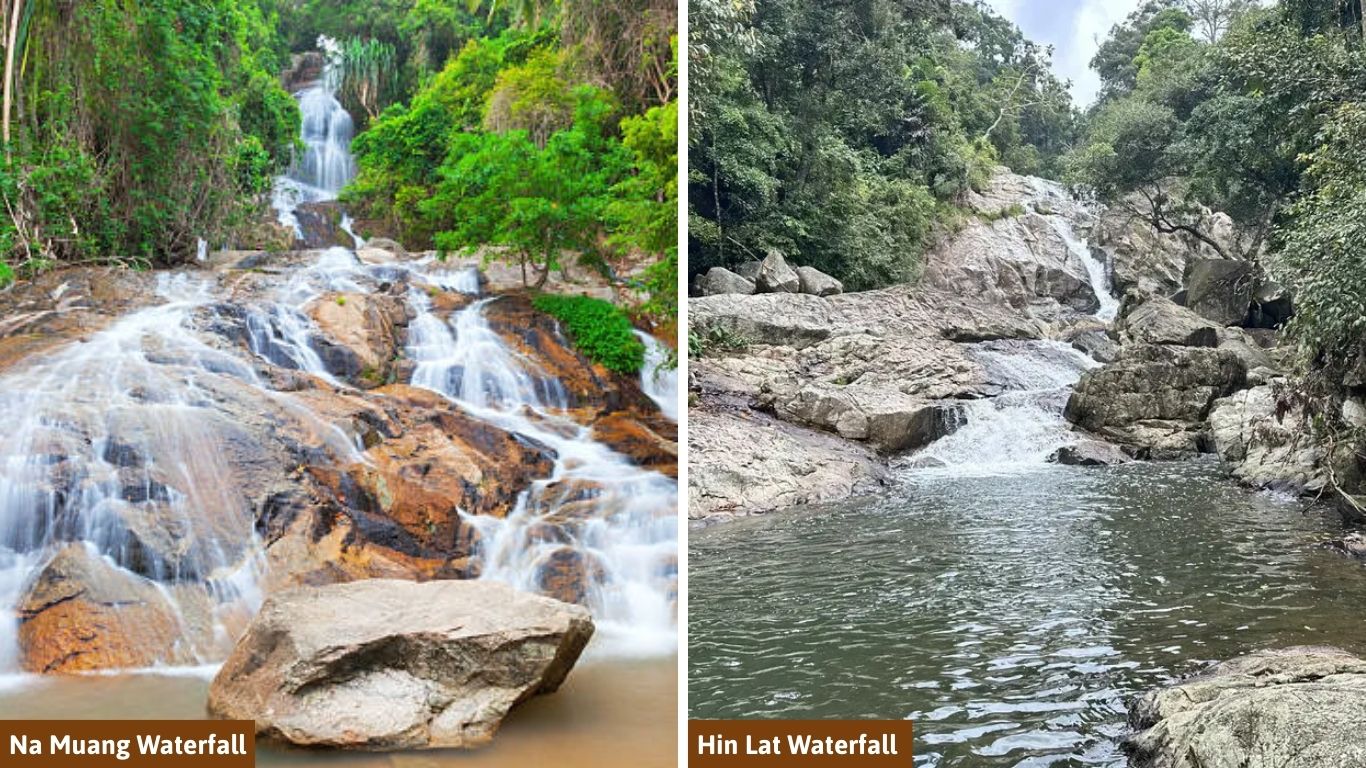
- Na Muang Waterfall (two-tiered cascade at peak flow)
- Hin Lat Waterfall (jungle setting, natural pools)
- Wat Plai Laem (colorful temple with lake)
- Big Buddha (12-meter golden statue)
Wellness and activities:
- Yoga retreats and detox programs
- Spa resorts offering meditation courses
- Cooking schools and cultural workshops
- Beach time viable between showers
Resort amenities keep families entertained during downpours, while the quieter August atmosphere allows for genuine relaxation.
Places to Avoid in August
Skip these locations:
- Similan Islands: Officially closed for marine conservation (mid-May through October)
- Phi Phi Islands: Rough seas, limited ferry service, reduced business operations
- Exposed Andaman beaches: Strong currents make swimming dangerous
- Destinations lacking indoor alternatives: Become problematic when rain persists
Cultural Festivals and Seasonal Highlights in August
Queen Sirikit’s Birthday (August 12th)
This national celebration transforms Thailand into a display of reverence for National Mother’s Day.
What to experience:
- Blue decorations adorning buildings nationwide
- Special temple ceremonies and merit-making activities
- Cultural performances in major cities
- Public celebrations showcasing Thai traditions
Natural Phenomena at Peak Beauty
Waterfalls reach maximum volume:
- Erawan Falls near Kanchanaburi (seven-tiered wonder)
- Sticky Falls near Chiang Mai (limestone cascade you can climb)
- Mae Sa Falls (multiple levels, easy accessibility)
Landscapes transform:
- Jungle vegetation achieves maximum lushness
- Rice paddies glow vibrant green
- Mountain mist creates ethereal photography conditions
The overcast lighting during weather in Thailand August eliminates harsh shadows, creating ideal conditions for temple and landscape photography.

Conclusion
August in Thailand offers a unique perspective on this beloved destination: lush landscapes, authentic cultural experiences, and the advantage of fewer tourists. While monsoon season brings rain, proper planning transforms potential challenges into opportunities. From Bangkok’s covered markets to Chiang Mai’s misty mountains and Koh Samui’s gulf-side beaches, Thailand in August rewards travelers who embrace flexibility and adventure. The combination of dramatic natural scenery, peak waterfall season, and immersive cultural activities makes this month ideal for those seeking genuine Thai experiences beyond typical tourist patterns.
Ready to experience August in Thailand? Contact Indochina Voyages here or drop us an offline message on the screen to start planning your personalized journey with expert insights and local knowledge!