
If you are mapping out your route through Laos, chances are this question has already come up: is the train from Vientiane to Luang Prabang actually worth building a schedule around? The short answer is yes, especially if your time in the country is limited. What used to take an entire day by road now takes roughly two hours by rail, freeing up hours you could be spending at temples, waterfalls, and quiet riverside towns instead of sitting in traffic. That said, ticket windows open only a few days ahead, both stations sit outside the city centers, and picking the wrong departure time can quietly eat into your sightseeing plans. This guide walks through everything worth knowing before you book, right through to how a private transfer can take the guesswork off your plate entirely.
Why the Train Is Worth Considering
The shift from a full day on winding mountain roads to a smooth two-hour glide through the countryside explains why this train has become the top choice for travelers heading north.
- Saves most of a travel day: 6 to 9 hours by road down to roughly 2 hours by rail
- Smoother ride: air conditioning, assigned seating, no switchback mountain turns
- Connects northern Laos easily: Vientiane through Vang Vieng and further north
- Real trade offs: stations outside both cities, fixed departure times, tight ticket window
How long is the train ride from Vientiane to Luang Prabang?
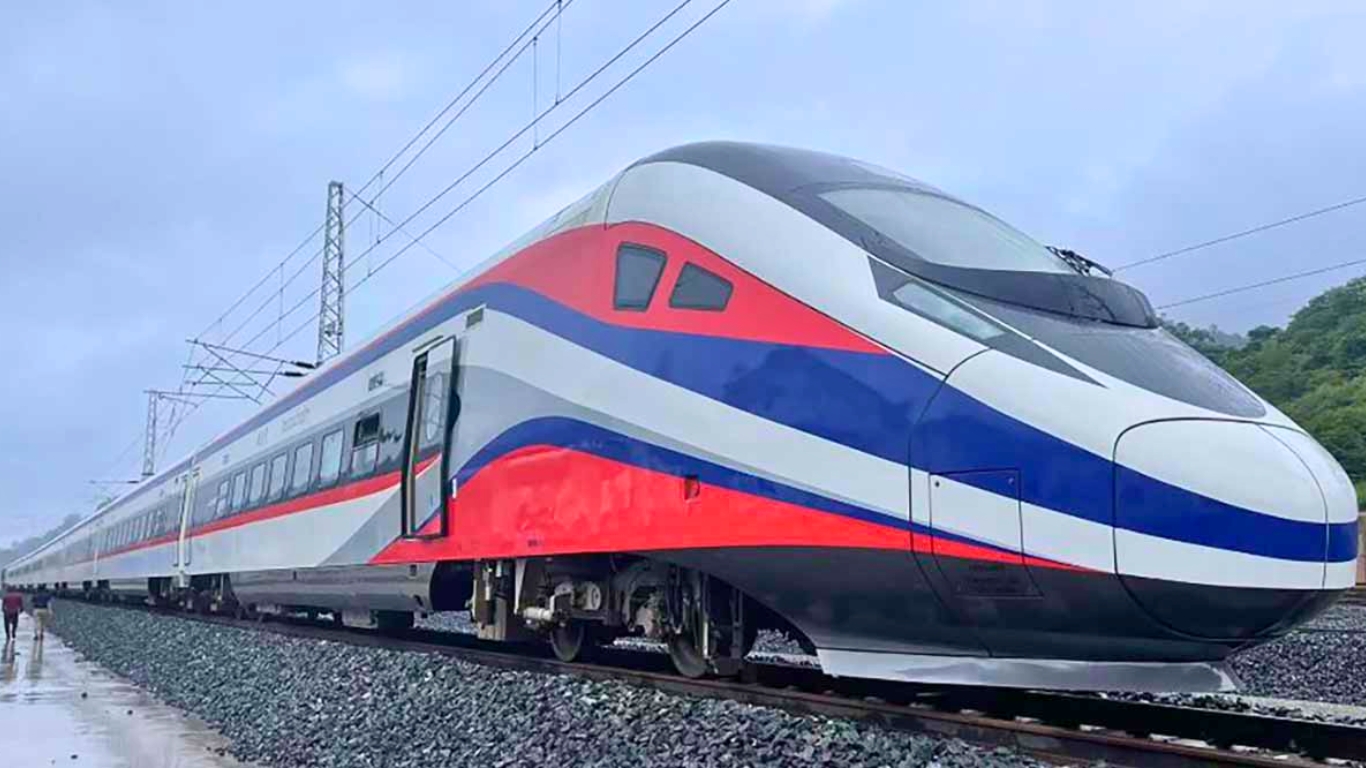
The high speed train covers the 311 kilometer route in about two hours, a dramatic drop from the 6 to 7 hour road journey most travelers used to dread. Two service types run this line, and knowing the difference helps you book the one that fits your plans.
- High speed EMU train: ~2 hours, air conditioned, assigned seating, most tourists choose this
- Ordinary train: ~6 hours, used mainly by locals, more basic facilities
What many guides leave out is that the advertised two hour ride is only part of the story. Your full door to door journey typically looks like this:
- Hotel to Vientiane station: 30 to 45 minutes
- Arrival, security, and boarding: 45 to 60 minutes before departure
- Train ride itself: about 2 hours
- Luang Prabang station to your hotel: 30 to 40 minutes
Add it up and you are looking at closer to four hours total, still far faster than the road, just worth knowing so your first afternoon plans stay realistic.
How to get the ticket?
Booking a seat sounds simple until you actually try it as a foreign traveler. Tickets release only three to four days before departure, so travelers who wait until the last minute often find their preferred train already sold out, particularly between November and April when demand peaks.
- Ticket window: opens only 3 to 4 days before departure
- Peak risk: trains sell out fast November to April
- Book through your hotel or a travel agency: smoothest for foreigners, often bundled with a transfer
- 12Go.asia: accepts foreign bookings, last minute availability can be limited
- LCR official app: cheapest, but requires a Thai, Lao, or Chinese phone number
- In person at the station: possible, but cards and foreign cash are not always accepted
If your preferred train sells out, a different time, class, or slightly adjusted date usually solves it. To skip the guesswork entirely, your team at Indochina Voyages can secure train tickets and station transfers as part of a private itinerary. Feel free to reach out to our team and let us handle the logistics for you.
Vientiane and Luang Prabang Stations: What to Know Before You Arrive
Getting the ticket is only half the job. Knowing exactly which station to head to, and what waits on the other end, matters just as much for a smooth journey.
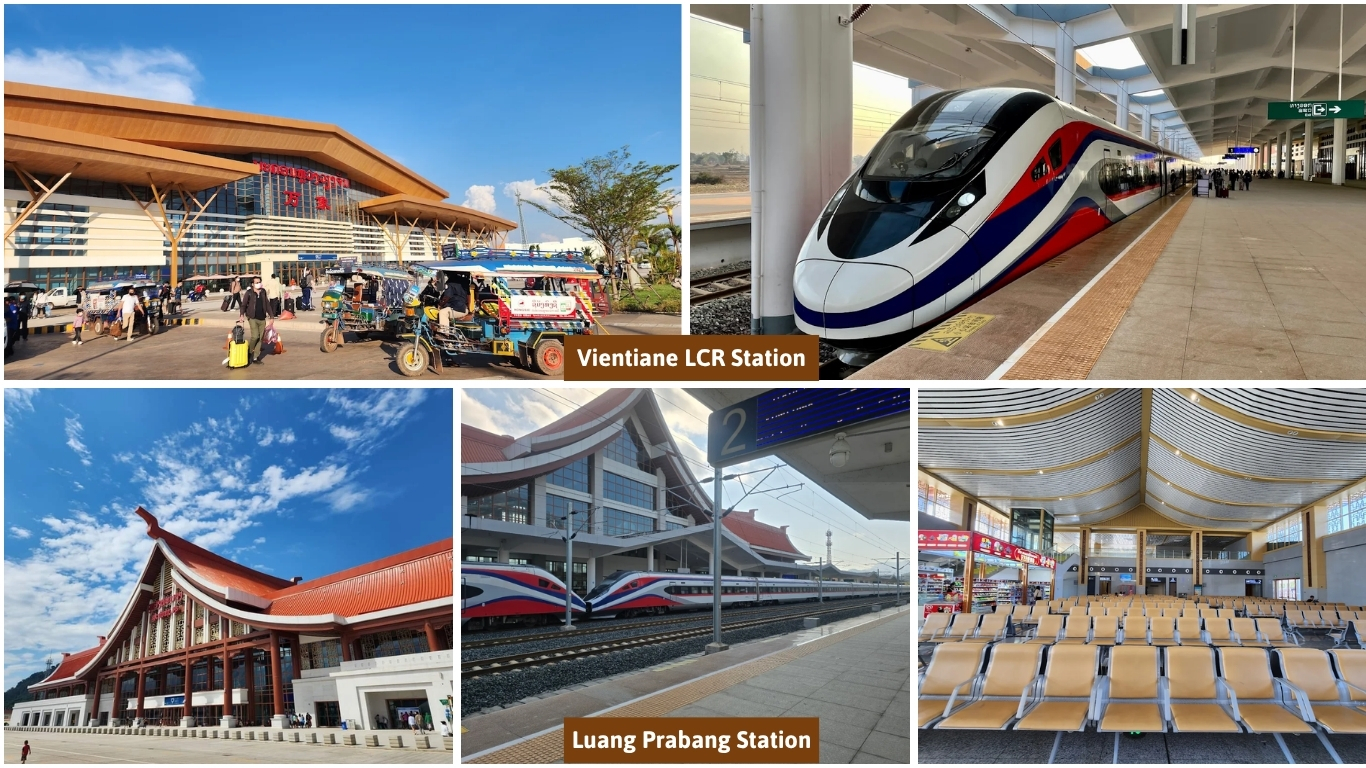
Vientiane LCR Station
- Location: Xaythany district, about 15 km northeast of downtown
- Not the same as Khamsavath Station, which only serves the Thailand to Bangkok connection
- Getting there: hotel transfer, taxi/Grab, or tuk tuk
- Arrive: 45 to 60 minutes before departure for security screening
If you have time before your train, downtown Vientiane rewards a short detour, with sights like Buddha Park and Pha That Luang close enough to fit into a morning, especially with a private driver managing your timing.
Luang Prabang Station
- Distance from Old Town: about 15 km
- Transfer time: 30 to 40 minutes
- Transfer cost: 5 to 10 US dollars
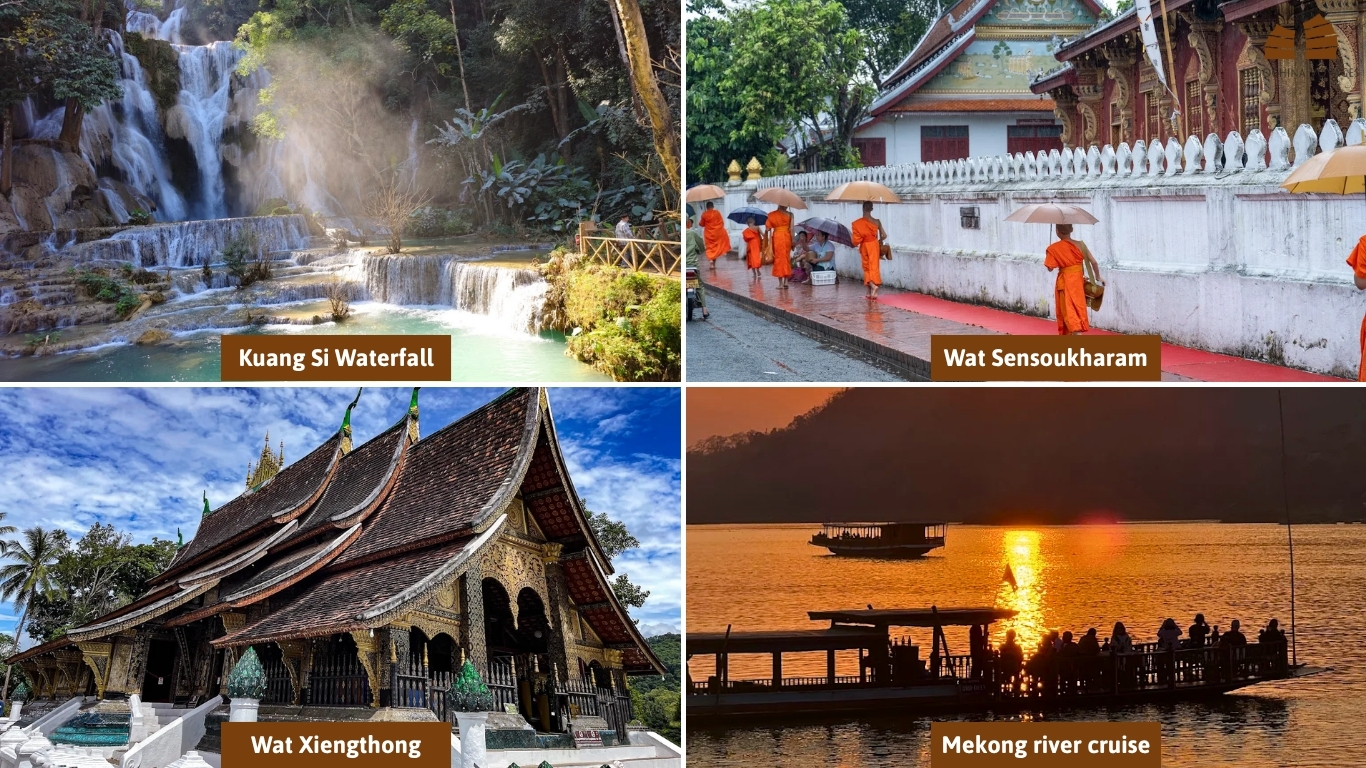
Arranging your transfer ahead of time is especially worth it if you are arriving late in the day, traveling with family, carrying heavier luggage, or working around a fixed check-in. Once settled into town, Luang Prabang has a way of slowing you down, from the morning alms ceremony to the lantern lit night market. A look at things to do in Luang Prabang is a great starting point once you have dropped your bags.
Which Train Departure Should You Choose?
Matching your departure time to what you actually want out of the day makes the difference between a relaxed arrival and a rushed one.
- Morning train: most of the afternoon free in Luang Prabang, time to catch sunset over the Mekong
- Midday train: a relaxed morning in Vientiane first, breakfast or a temple visit before heading out
- Later train: a fuller day in Vientiane, shorter window in Luang Prabang on arrival
Weigh your hotel checkout time, any sightseeing beforehand, the station transfer, and your check in time at the other end. A private guide or driver familiar with both cities can build this timing around your specific plans rather than a generic schedule.
Classes, Prices, and Luggage
Choosing the right class matters more than you might expect, especially if you are traveling with extra bags or want more room.
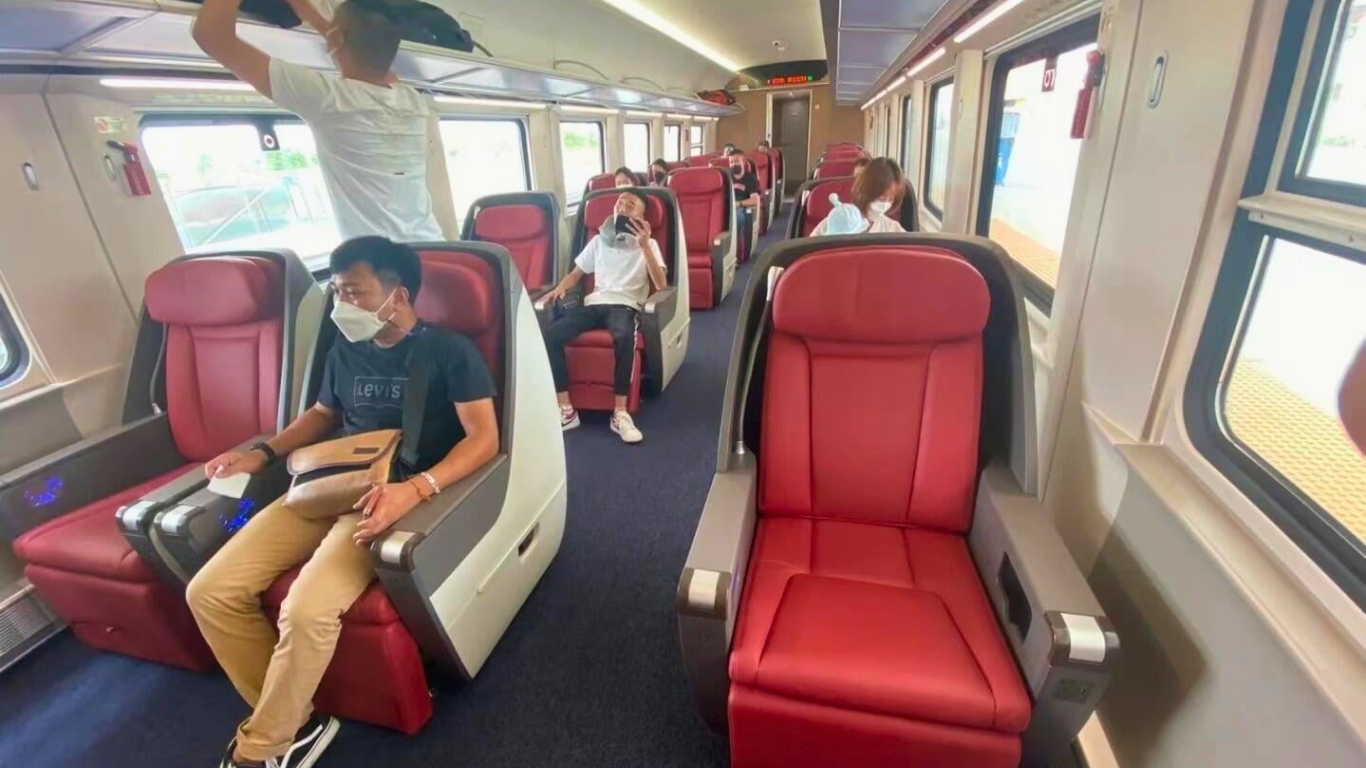
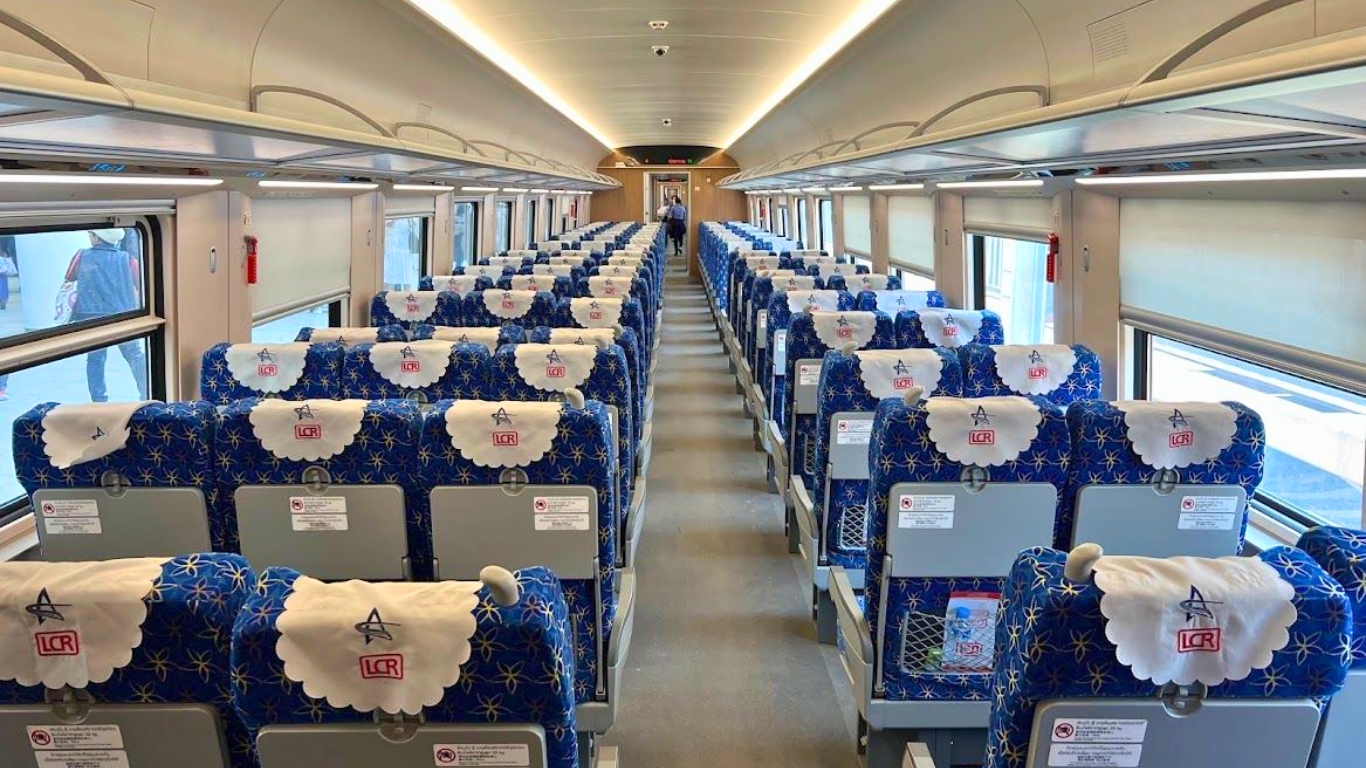
- First Class: 2+2 seating, more legroom
- Second Class: 3+2 seating, still comfortable for a 2 hour trip
- First Class price (2026 est.): $18–25 USD
- Second Class price (2026 est.): $15–20 USD
- Luggage: suitcases and backpacks fit in designated storage; keep valuables and essentials with you rather than overhead
Fares are always worth confirming at the time of booking, since rates can shift with demand.
What Is the Journey Actually Like Onboard?
This is the part that turns a transport guide into something worth reading before you go, a real sense of what the two hours actually feels like once you are onboard.
Seats and Cabin Comfort
Seats come with assigned numbers, so there is no scrambling for a spot once you board. First Class runs a 2 plus 2 layout with wider seats and noticeably more legroom, while Second Class uses a 3 plus 2 configuration that still feels comfortable for a ride this short. Trays fold down for drinks or a laptop, and overhead racks handle smaller bags easily, though larger suitcases go into designated storage areas near the carriage doors.
Air Conditioning
Every carriage on the high speed service runs air conditioning throughout the journey, keeping the cabin cool and pleasant regardless of how hot it gets outside. It stays consistent for the full two hours, a welcome change from the heat and dust of a long road trip.
Food and Drinks
- A snack cart passes through occasionally, though options are limited
- Bringing your own water and a few snacks is the safer bet
- Eating a proper meal before boarding is worth it if you have a specific diet or simply prefer not to rely on cart offerings
Toilets and Facilities
Toilets are available onboard and generally kept clean throughout the journey, a small but appreciated detail on a route where basic facilities were not always guaranteed in the past.
Mobile Signal and Wi-Fi
Signal drops in and out through the mountain tunnels, and there is no reliable onboard Wi-Fi on this route. Downloading maps, tickets, or anything else you might need offline before boarding saves any frustration later.
What Can You See from the Window?
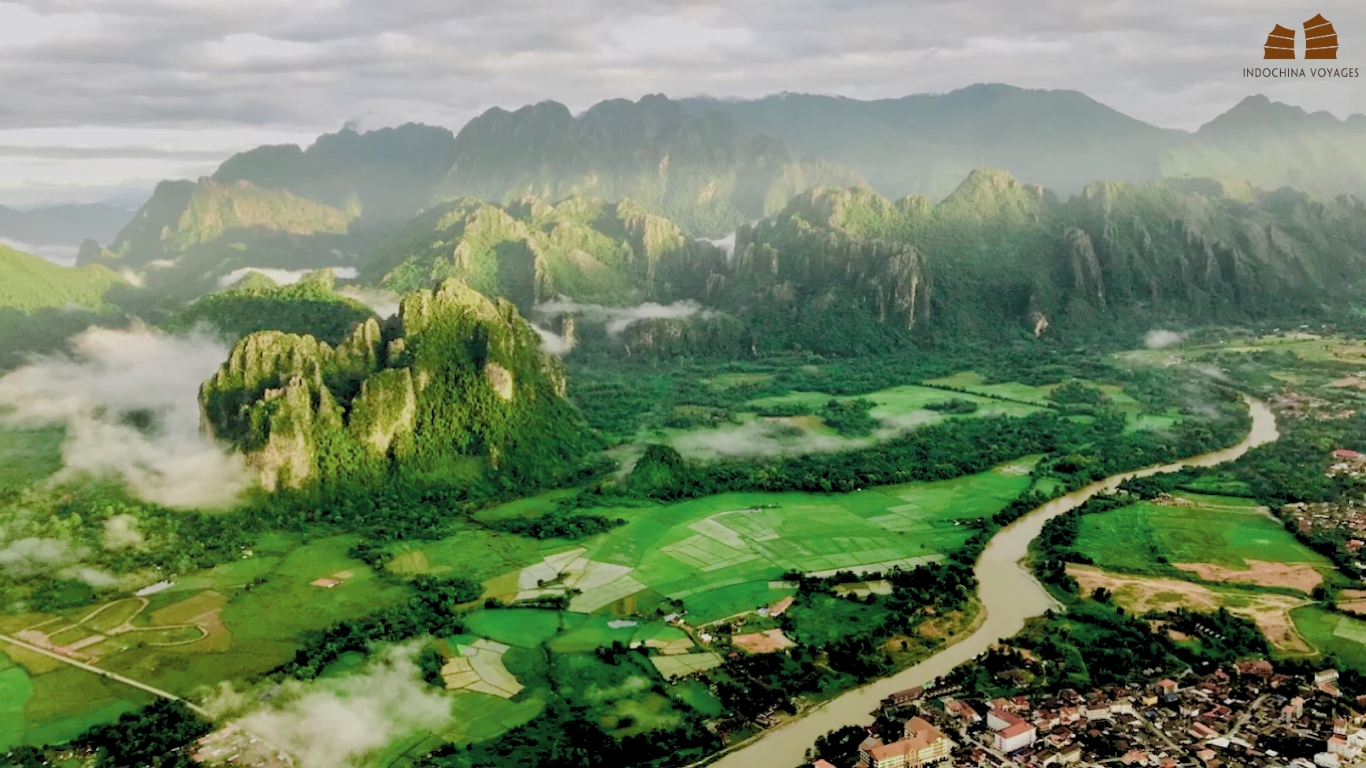
Setting expectations here matters, since a significant portion of this route runs through mountain tunnels, so this is not a dedicated scenic railway in the way some road trips are. What you do get, in the stretches between tunnels, are genuine glimpses of rural Laos: rice paddies and grazing water buffalo closer to Vientiane, dramatic karst mountains and steep valleys rising near Vang Vieng, and small villages blurring past the window. It is less a continuous panorama and more a series of quick, rewarding reveals.
What Are the Downsides of Taking the Train?
Every honest guide should cover the trade offs too, and this train is no exception. Knowing these upfront helps you decide if it truly fits your trip.
- The stations sit outside the city centers. Both the Vientiane and Luang Prabang stations sit roughly 15 kilometers from their respective downtowns, which means every journey includes a transfer on either end, adding time and a small extra cost most travelers do not factor in.
- Tickets can be less straightforward than expected. The three to four day booking window catches a lot of first time visitors off guard, and the official app’s phone number requirement rules out most foreign travelers from the cheapest booking route entirely.
- You lose flexibility. Once you are on the train, you are committed to its schedule and its stops. You cannot pull over at a viewpoint, detour to a village, or linger somewhere that catches your eye along the way, something a private car allows freely.
- The train is not a substitute for a scenic road trip. The train is excellent for getting there efficiently, cutting hours off your travel time and delivering you to your destination in comfort. A private car, on the other hand, is what you want if experiencing the journey itself, not just reaching the endpoint, is part of what you are after.
Are there any options from Vientiane to Luang Prabang beside by train?
The train is not the only way to make this journey, and depending on what you want out of your trip, one of the road options might actually suit you better. Here is how all three stack up side by side.
| Transport | Best For | Main Advantage | Main Limitation |
|---|---|---|---|
| Train | Most travelers | Speed | Fixed schedule |
| Private car | Families / slow travelers | Flexibility | Much longer |
| Bus | Budget travelers | Simple overland option | Longer, less comfortable |
Bus
- Duration: 7 to 9 hours
- Price: $12–20 USD depending on bus quality
- VIP buses: air conditioning, reclining seats, best for daytime views
- Local buses: cheaper, more frequent stops
- Overnight sleepers: save a hotel night, skip the scenery
Road conditions can turn rough in sections, and the rainy season between July and September brings a real risk of landslide delays, so daytime travel in the dry months is worth prioritizing.
Private Car
- Duration: 6 to 7 hours
- Price: $150–250 USD for the whole vehicle
- Best for: small groups of 3–4, flexible stops
- Popular stops: Vang Vieng, mountain viewpoints, Nam Ngum Lake
Confirm whether the quoted price includes fuel and the driver’s meals before booking. A private driver arranged through your team at Indochina Voyages comes familiar with the route and the best stopping points, and your private tours can be built around exactly this kind of flexible routing
In short, the train wins on speed and comfort, a private car wins on flexibility and stops along the way, and the bus wins on budget and scenery for travelers who don’t mind a longer day.
Should You Stop in Vang Vieng Before Luang Prabang?
This might actually be a more important question than choosing between train, car, or bus, since it is not just about getting from one city to the other but whether your route should include a third stop in between.
The train stops directly in Vang Vieng, and it is easy to underestimate this small town as just a dot on the map. In recent years, Vang Vieng has quietly reshaped itself from its old backpacker party reputation into something calmer, with dramatic karst scenery, blue lagoons, and a noticeably slower pace that makes it a genuinely worthwhile midpoint.
- 1 night: enough to get a feel for the town
- 2 nights: time to enjoy the lagoons or a hike without rushing
- Preferred direction: Vientiane to Vang Vieng to Luang Prabang, front loading the capital before heading into the mountains
If you would rather not plan this stopover on your own, a private Laos tour can weave Vang Vieng into your route seamlessly, with transport, accommodation, and timing handled for you from start to finish.
Which Direction Works Better?
Most travelers go Vientiane to Vang Vieng to Luang Prabang, and there is good reason for it: front-loading the capital lets you save your best days for Luang Prabang, arriving relaxed rather than rushing through your final stretch. Reversing the order works just as well logistically, so the real deciding factor usually comes down to which city you are flying into or out of.
Building the Train into Your Laos Itinerary
Once you know how the train fits into the bigger picture, designing a Laos itinerary becomes far easier than working it out from scratch.
– 3 to 4 days: Vientiane and Luang Prabang connected directly by train
– 5 to 6 days: add Vang Vieng as a stopover for a fuller picture of northern Laos
– 7 to 10 days: slow down rather than add destinations; extra time in Luang Prabang or Vang Vieng pays off more than a new stop
Luang Prabang alone can fill several days once you factor in trips to the Kuang Si Waterfall and the Pak Ou Caves. And before heading north, this guide to tourist attractions in Vientiane is worth a look while you plan. Your team at Indochina Voyages builds custom itineraries around exactly this kind of route, train tickets, transfers, and stopovers included. Explore the full range of Laos tours to see how it comes together.
Practical Tips for a Smooth Train Journey
- Keep your passport accessible, not buried in checked luggage
- Download or save your ticket details in case of spotty signal
- Allow extra time for station transfers on both ends
- Check your hotel location before choosing your train time
- Avoid planning anything important immediately after arrival
- Keep valuables in your day bag rather than overhead storage
- Bring water and a few snacks along for the ride
FAQs
Is the train from Vientiane to Luang Prabang worth it?
Yes, for most travelers it saves the better part of a day and offers a far more comfortable ride than the road options.
How long is the train ride?
About two hours on the high speed service, or closer to six hours on the slower ordinary train.
How much does the train cost?
Roughly $15–20 USD for Second Class and $18–25 USD for First Class, worth confirming at booking.
How far is Luang Prabang station from the Old Town?
Around 15 km, with transfers usually taking 30 to 40 minutes.
How early should I arrive at Vientiane station?
Aim for 45 to 60 minutes before departure to allow time for security screening.
Can I bring large luggage on the train?
Yes, standard suitcases and backpacks fit comfortably in the onboard storage areas.
Is the train ride scenic?
Partly. Long tunnel sections limit the view, but the gaps between them reveal genuine glimpses of karst mountains and countryside.
Should I stop in Vang Vieng on the way?
If your schedule allows, yes. One to two nights is enough to enjoy the scenery before continuing on.
The train from Vientiane to Luang Prabang has genuinely reshaped how people move through Laos, turning a long, tiring haul into a comfortable couple of hours. Between the tight booking window, two stations sitting outside town, and a route that rewards local knowledge, there is a fair amount to plan around before stepping onto the platform.
That is exactly where your team at Indochina Voyages comes in. From securing train tickets and private transfers to building an entire Laos itinerary around Vang Vieng and Luang Prabang, our team takes care of the details so your trip runs the way it should. Visit Indochina Voyages to start planning, or reach out at info@indochinavoyages.com.