Choosing between Ha Giang and Sapa? This guide covers everything you need: the real Ha Giang Loop route, whether it’s safe for kids and seniors, and a day-by-day itinerary from 3 to 7 days.
Quick answer: Yes, the Ha Giang Loop is worth it, it’s the least-crowded, most dramatic mountain scenery in northern Vietnam, and unlike Sapa it hasn’t been fully built up for mass tourism yet. It’s also genuinely doable with kids, teens, or seniors, as long as you go by private car with a driver instead of self-riding a motorbike. Below, we break down exactly how it compares to Sapa, whether it’s safe for your family, how long you need, and a day-by-day route.
Ha Giang vs. Sapa: The Honest Comparison
Both are stunning northern Vietnam mountain regions with terraced rice fields and ethnic minority culture. The real difference is how developed and how crowded each one is.
| Comparison | Ha Giang | Sapa |
| Crowd level | Low – still feels remote | High – cable cars, tour buses, built-up town center |
| Scenery | Dramatic karst mountains, deep canyons, winding passes | Terraced rice valleys, Fansipan peak |
| Access from Hanoi | ~300 km, 6-8 hrs by road (no train/flight) | ~315 km, 5-6 hrs by train or car |
| Best for | Travelers who want an off-the-beaten-path, culturally rich experience | First-timers wanting an easier, more infrastructure-ready trip |
| Family/senior friendliness | Very good with a private car and driver; harder if self-riding motorbikes | Easier logistically, hotels, cable car, less winding driving |
| Typical trip length | 3-5 days | 2-3 days |
Bottom line: If your family has already “done” Sapa, or wants something quieter and more culturally immersive without the tour-bus crowds, Ha Giang is the better pick. You just need the right setup (private vehicle, not a rented motorbike) to make it comfortable for kids or older travelers.
Is this worth going to Ha Giang?
Yes, it is definitely worth going to Ha Giang, and indeed it should be on the top list for those who are interested in beautiful nature, diverse culture, and want a little bit of adventure.
Ha Giang – home to many ethnic minorities including Hmong, Dao, Tay, Giay, etc. is a remote area, closer to the neighboring country of China than it is to Hanoi. Since it is far away from city center and the transportation was not very good, tourism left it behind the development. Thus, everything remains untouched on this beautiful land with breathtaking karst mountains, steep mountain pass, winding roads and colorful villages of many ethnic people of Vietnam. Recently, Ha Giang loop is becoming a popular destination for many travelers. I myself do believe that Ha Giang never makes any of these disappointed.
Is the Ha Giang Loop Safe? (And Is It Right for Kids or Seniors?)
Short answer: The Ha Giang Loop is safe for families and seniors if you travel by private car with an experienced local driver instead of self-riding a motorbike. The main risk on this route isn’t the region itself, it’s inexperienced travelers renting motorbikes and riding narrow, steep, foggy mountain roads they’re not prepared for.
What actually makes the roads risky:
- Roads are narrow, winding, and often unpaved or uneven in sections
- Weather can turn quickly as fog, rain, and landslide risk in wet season
- Many independent travelers are riding a motorbike for the first time in a mountainous country
Why a private car changes the equation:
- You get an experienced local driver who knows every pass, viewpoint, and weather pattern
- No one in your group needs riding experience or an international driving permit
- You can stop as often as you like for motion sickness, bathroom breaks, or photos – genuinely useful if you’re traveling with young kids or grandparents
- Seatbelts and an enclosed vehicle remove the single biggest risk factor on this route
Is it good for kids? Yes, especially ages 6+. The biggest consideration is car sickness on the switchbacks, bring motion sickness bands or medication, and build in stops. Most of the marquee stops (Quan Ba Pass viewpoint, Vuong Palace, Meo Vac market) require only light walking.
Is it good for seniors? Yes, with a private car. Skip the multi-hour treks to Ha Thanh or Khuoi My villages if mobility is a concern, but the core loop like Quan Ba, Dong Van, Ma Pi Leng, Meo Vac is almost entirely viewable from short, easy walks at each stop.
Is it good for teens? Very much so, it’s the more “adventurous” and photogenic alternative to Sapa, which teens tend to find more exciting, especially the Ma Pi Leng Pass viewpoints and the Nho Que River boat ride.
Traveling with kids, teens, or older parents? This is exactly why we build our Ha Giang tours around a private car and driver rather than motorbike rental, everyone in the group travels at a comfortable pace, with stops built in where you need them. Get a custom itinerary and quote!
How Far Is Ha Giang From Hanoi and How Do You Get There?
Ha Giang city is about 300 km (185 miles) from Hanoi, and there are no flights or trains – it’s road travel only. Depending on how you go, expect:
| Option | Time | Notes |
| Overnight sleeper bus | 6–8 hrs | Budget-friendly, but not ideal with young kids |
| Daytime limousine van | 6–7 hrs | More comfortable, fixed schedule |
| Private car with driver | 6–7 hrs | Flexible stops, most comfortable for families/seniors, door-to-door |
| Self-drive motorbike | 8–9 hrs | Not recommended for families; experienced riders only |
For families or anyone traveling with kids or seniors, a private car is the most comfortable option, you can leave on your own schedule, take breaks whenever needed, and skip the crowded bus terminal altogether. Contact us here or email at info@indochinavoyages.com to get your own quotation and itinerary.
Getting From Sapa to Ha Giang
If you’re combining both destinations, Sapa to Ha Giang city is roughly 230-240 km, taking 5–7 hours depending on transport. There’s no direct fast route, the road winds through Lao Cai and the northern mountains, so a private car is again the most comfortable way to make the transfer, especially since it lets you stop at towns like Bac Ha along the way rather than sitting through a long, fixed-schedule bus ride.
8 Authentic things to do in Ha Giang Loop
Thon Tha Village or Ha Thanh Village – Phuong Do commune
As Ha Giang is recently considered as an alternative to Sapa in North Vietnam, Thon Tha Village which is 6 km from Ha Giang city can be the first stop in this tour. Those two villages offer opportunity for you to stay with Tay ethnic minority and enjoy beautiful and peaceful landscape.
If the homestay is not one of your favors, there are hotels located in Ha Giang city, though, they are not luxurious one.
Special event in April: If you come here in this month, you will have chance to join in one of the most famous festival “Lau then”, in which people offer things for the God of Heaven to pray for a safe and fruitful year.
Best for: Easy stop, all ages | Walking: Minimal at the village itself; optional trek to Ha Thanh (14 km) or Khuoi My (19 km) for more active travelers
Quan Ba Pass
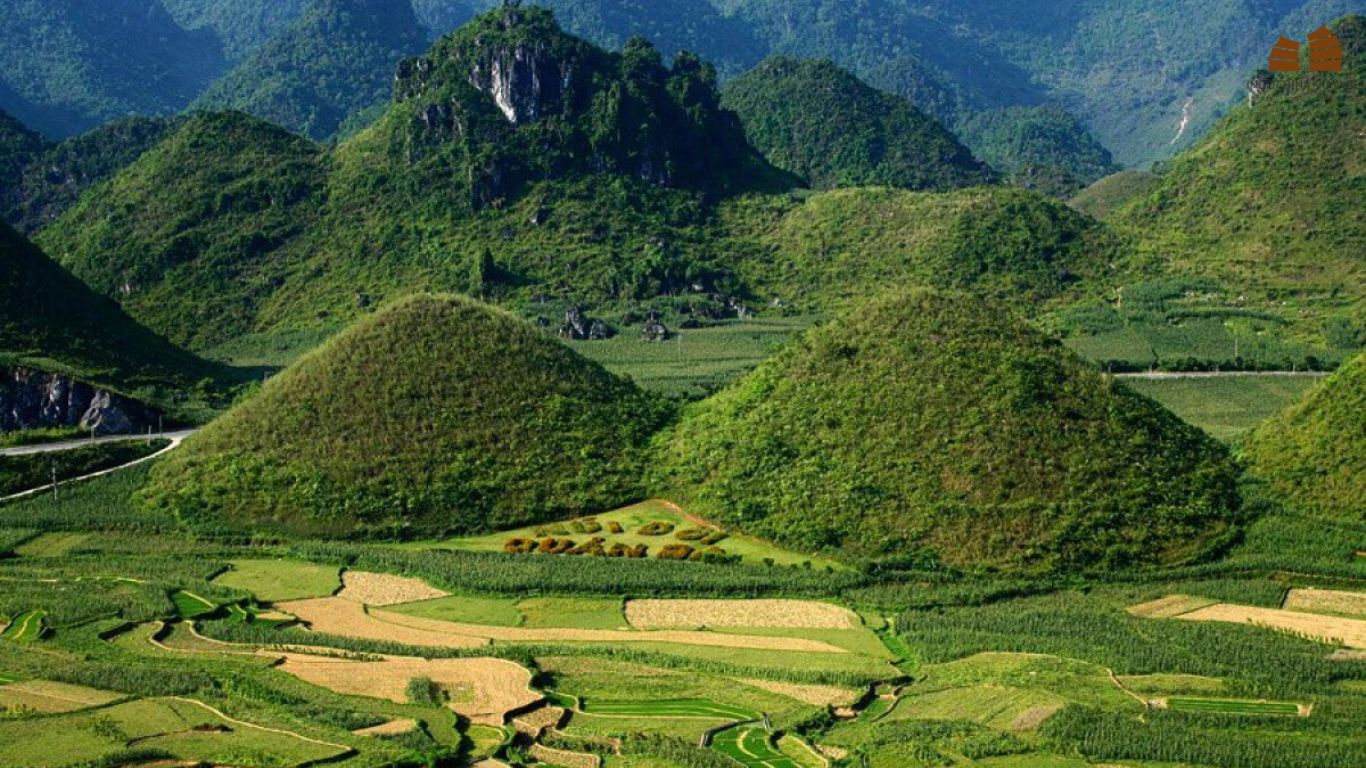
Located 40km north of Ha Giang City, Heaven Gate of Quan Ba pass should be a stop in your list. At the top of the pass, about 1500 meters to sea level, you will have amazing view down to Tam Son valley with Impressive Twin Mountain, often called Fairy Breast by local people.
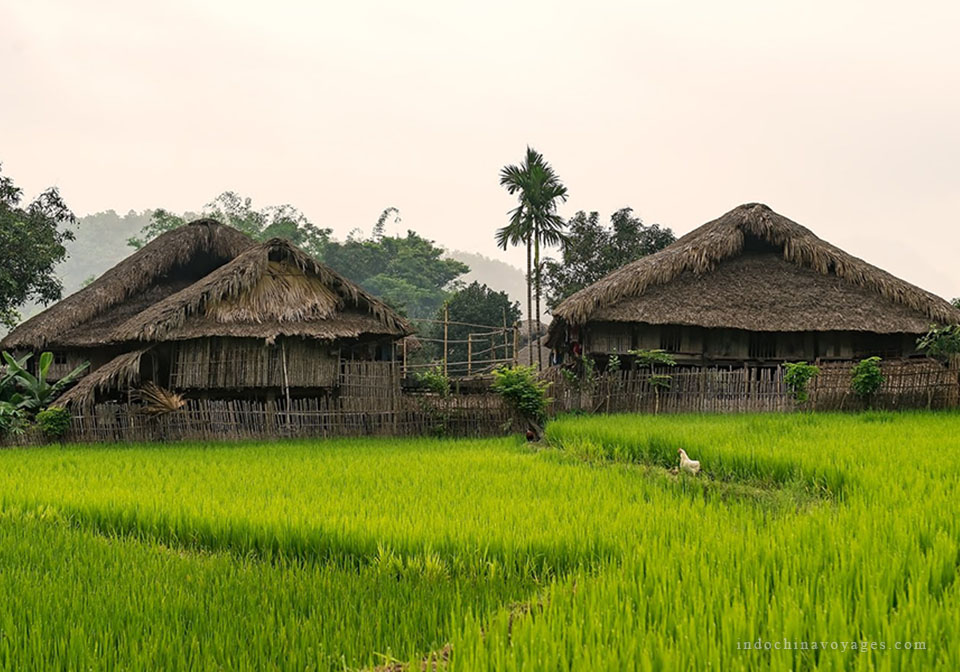
Quan Ba Pass is also the gate to Dong Van Karst Plateau – a UNESCO recognized Geopark in Vietnam. If you would like to experience more local life and stay at traditional homestay, there are some of Red Dzao people available in this area. Dao houses here are mainly built from local materials like wood, bamboo, cork, leaves, clay. For me, this is one of the most exceptional experiences I have made since staying in straw-thatched house reminds me of my childhood.
Best for: Easy viewpoint stop, great for seniors and kids | Walking: Minimal — mostly a scenic overlook | Tip: Bring a light jacket; it’s noticeably cooler at elevation
Dong Van & Meo Vac – Ma Pi Leng Pass
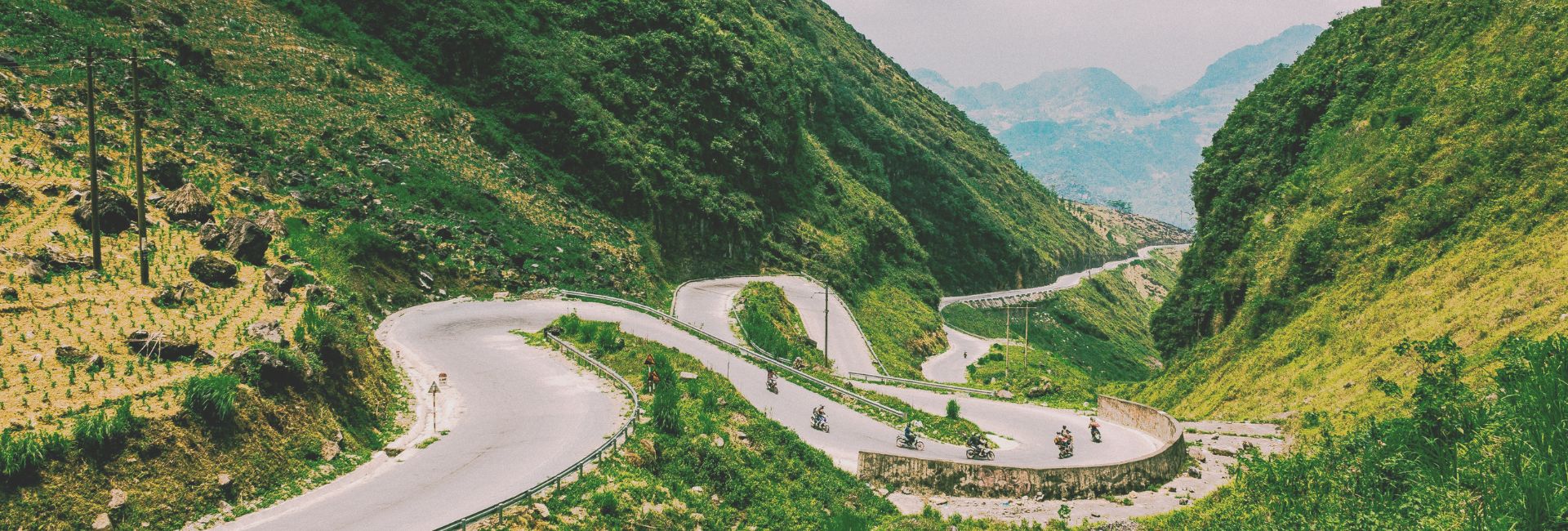
Ma Pi Leng Pass that connects Dong Van and Meo Vac can be considered as the most exciting part of Ha Giang, Vietnam. The road offers such a grand view with deep valley and amazing scenery. This road is the place where most of motorbike travelers in Vietnam want to conquer.
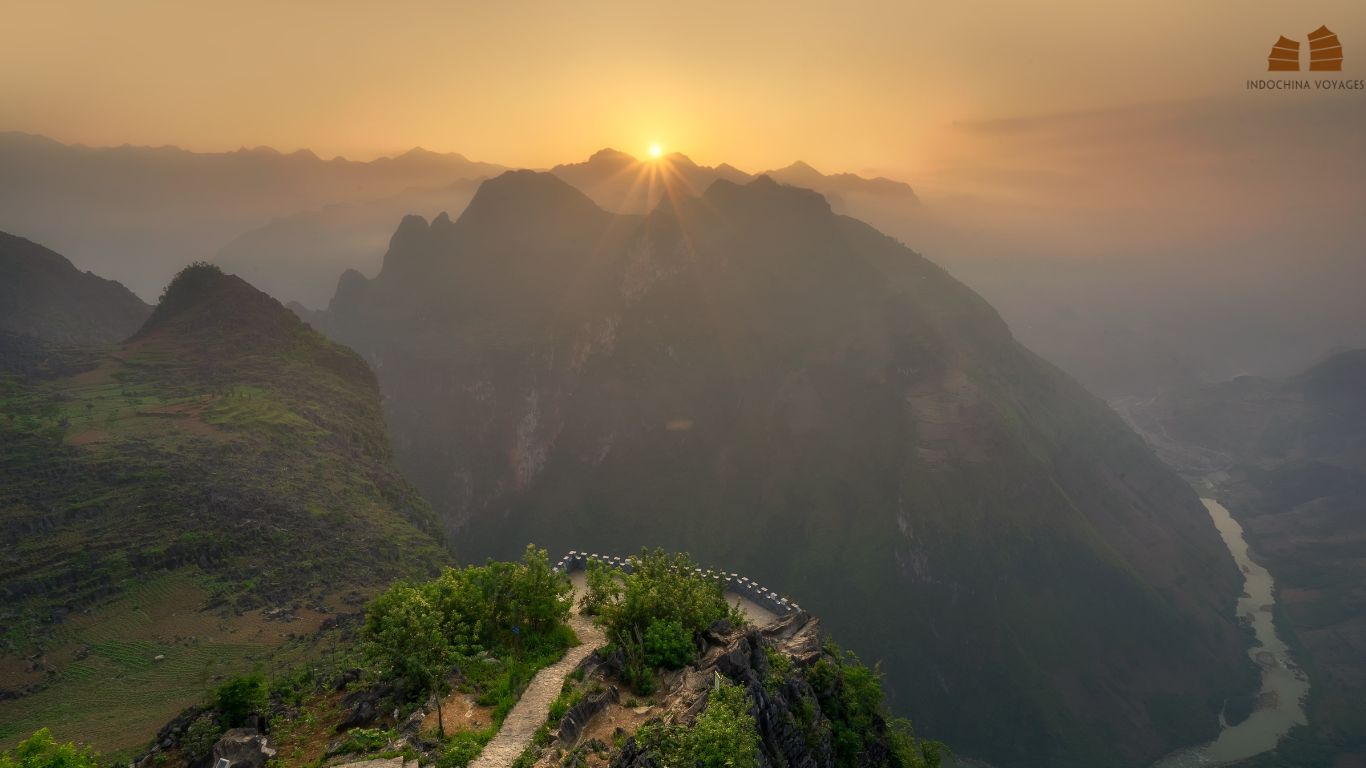
Whether you stay in Dong Van Town or Meo Vac Town, there is a way to go up to the top of mountain and have the best view to the area.
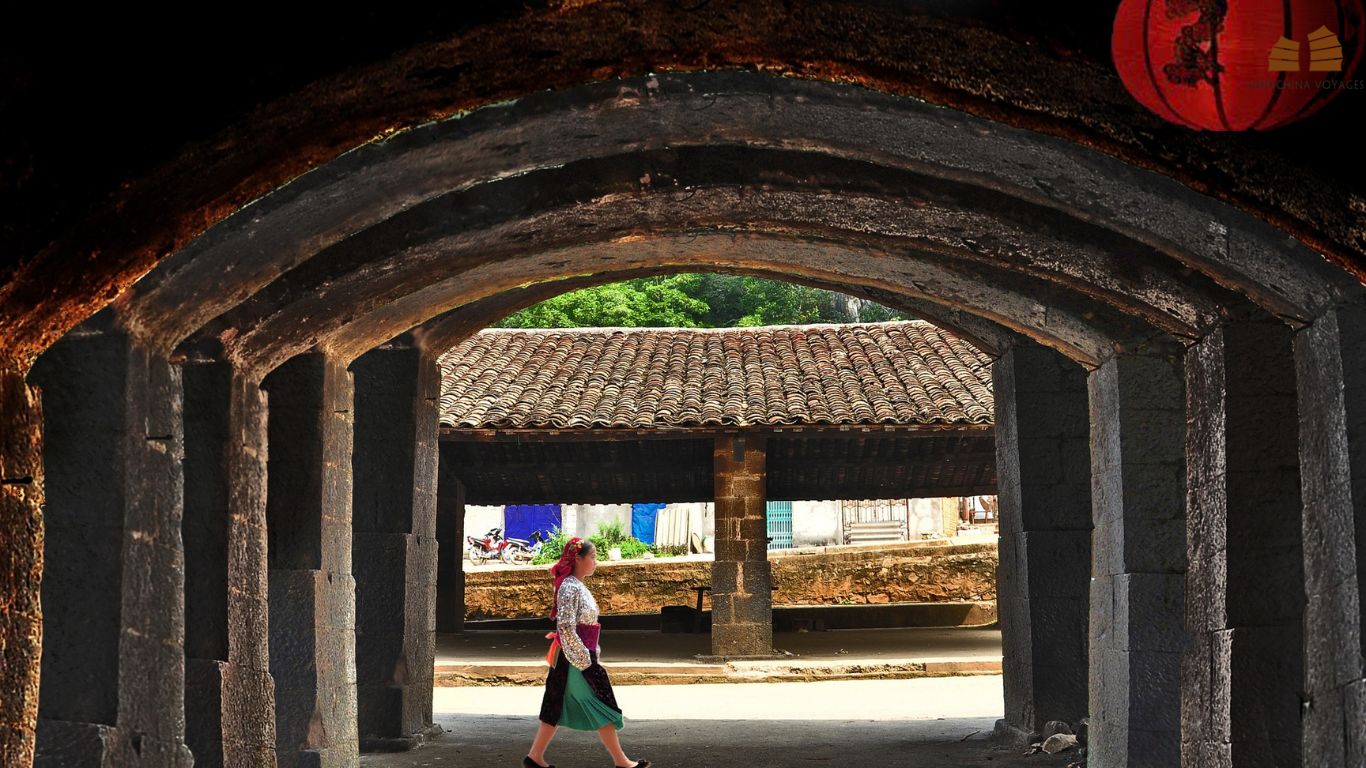
Important for families: We strongly recommend riding this stretch by private car with a driver rather than motorbike, even for experienced riders. It lets everyone enjoy the views without the physical demands of navigating the pass yourself.
Best for: All ages, by private car | Walking: Short walks to viewpoints in both Dong Van and Meo Vac towns
The number 6 Waterfall
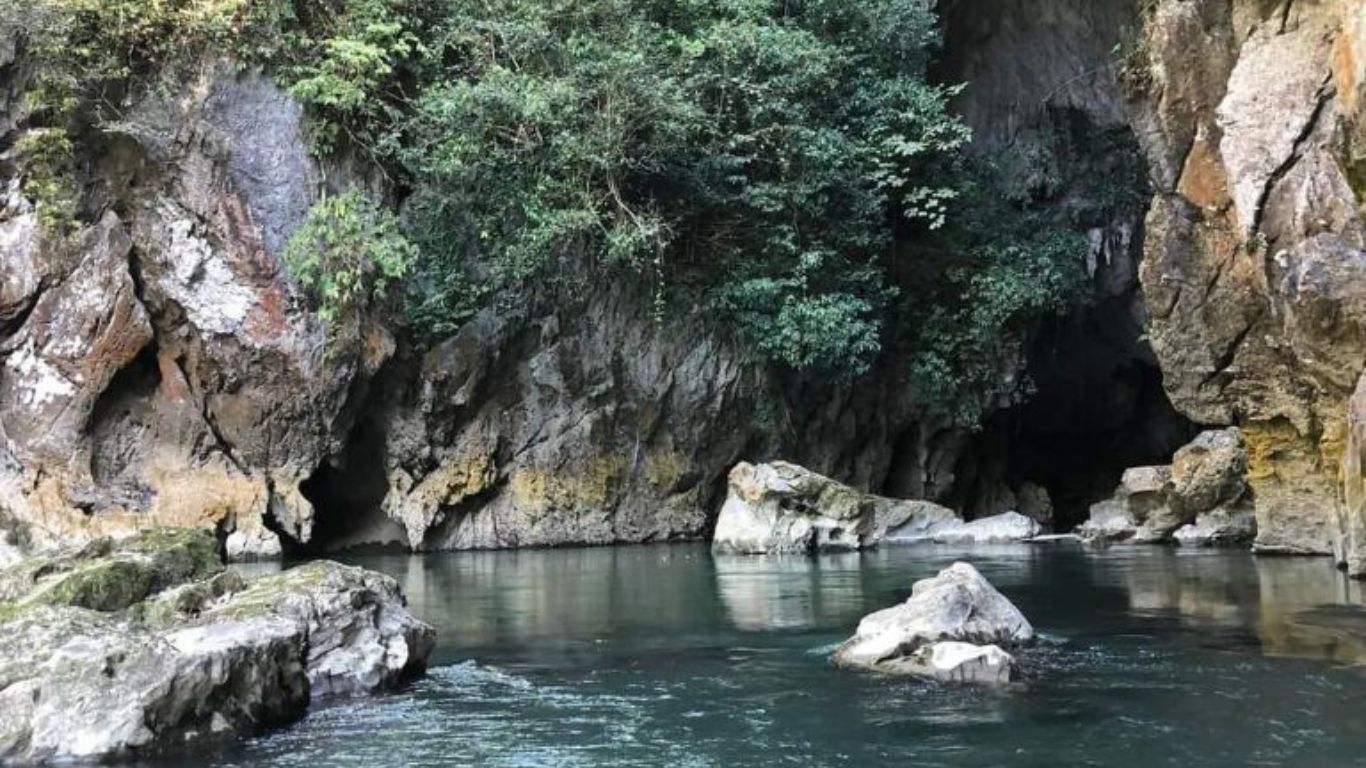
You may hear about Du Gia waterfall, which is also an amazing waterfall. But it’s more popular than the number 6. If you want to experience immersing yourself in natural without too much crowd, then the number 6 will be the best choice. It’s located in Ha Thanh Village, 8km away from city center. Nestled amidst the unspoiled beauty of Ha Giang’s landscapes, this hidden gem offers an enchanting experience that will leave you in awe.
Best for: Travelers wanting a quieter nature stop | Walking: Moderate, unpaved paths
Meo Vac Cattle Market (Sundays)
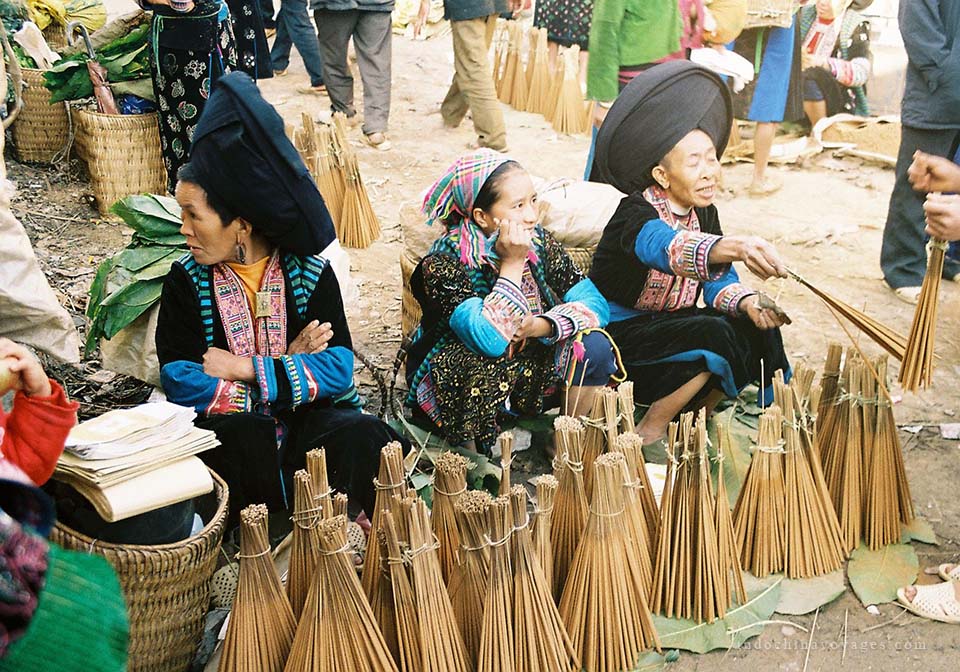
Meo Vac Cattle Market, also held on Sunday, gives you the chance to explore the H’mong culture and meet the local people. Here you can see their traditional outfits; the men dressed in their simple black attire, and the women dressed in their beautifully embroidered ensembles and colourful head scarfs. Many of the villagers bring their finest animals either to sell or simply to show off their hard work. The usual market rhythm of bartering and chit-chat is accompanied by an orchestra of animal noises and the sound of children playing.
Best for: Great cultural experience for teens and adults; can be crowded and loud for very young kids
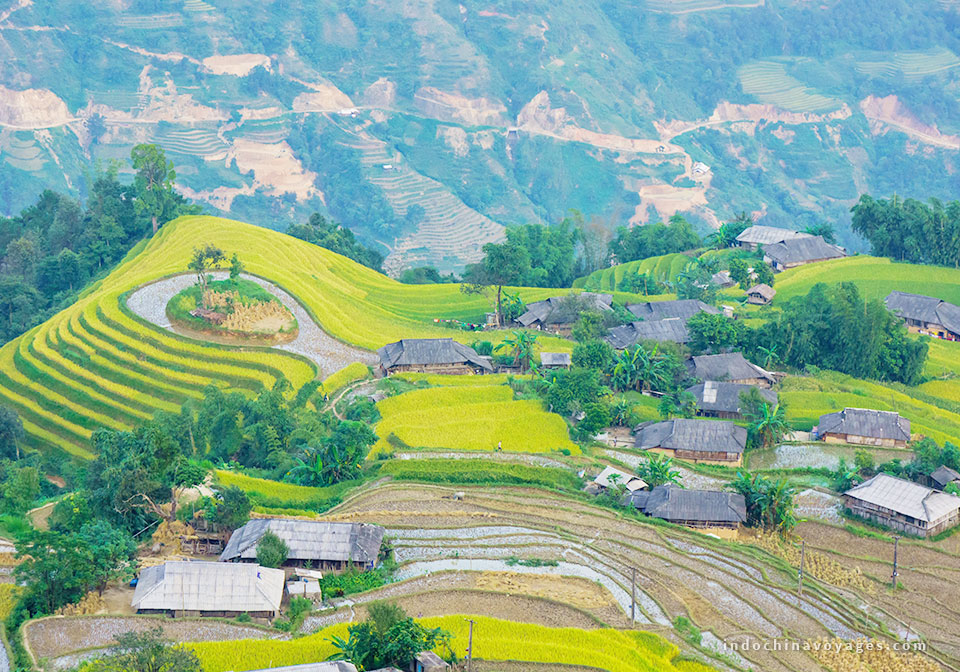
Hoang Su Phi Rice Terrace
About 350 km from Hanoi (roughly 8 hours by road), Hoang Su Phi’s grandiose rice terraces are worth the detour, especially in September-October when the fields turn golden. Phung Village, home to the La Chi people, offers some of the best homestay experiences in the region.
Best for: Photography-focused families; best paired with an overnight in Ha Giang city or Phuong Do commune beforehand | Tip: Most travelers combine this with Bac Ha, then continue on to Quan Ba, Dong Van, and Meo Vac – a route we can plan for you as a full private itinerary
Boat trip on Nho Que river
At the base of Ma Pi Leng Pass, the Nho Que River winds through the dramatic Tu San Abyss. The 30-minute boat ride is one of the most relaxing (and photogenic) parts of the whole trip.
Best for: All ages, a relaxing, low-effort highlight | Cost: Around 120,000 VND (~$5 USD) per person including pier transfer (prices can change seasonally – we’ll confirm current rates when planning your trip)

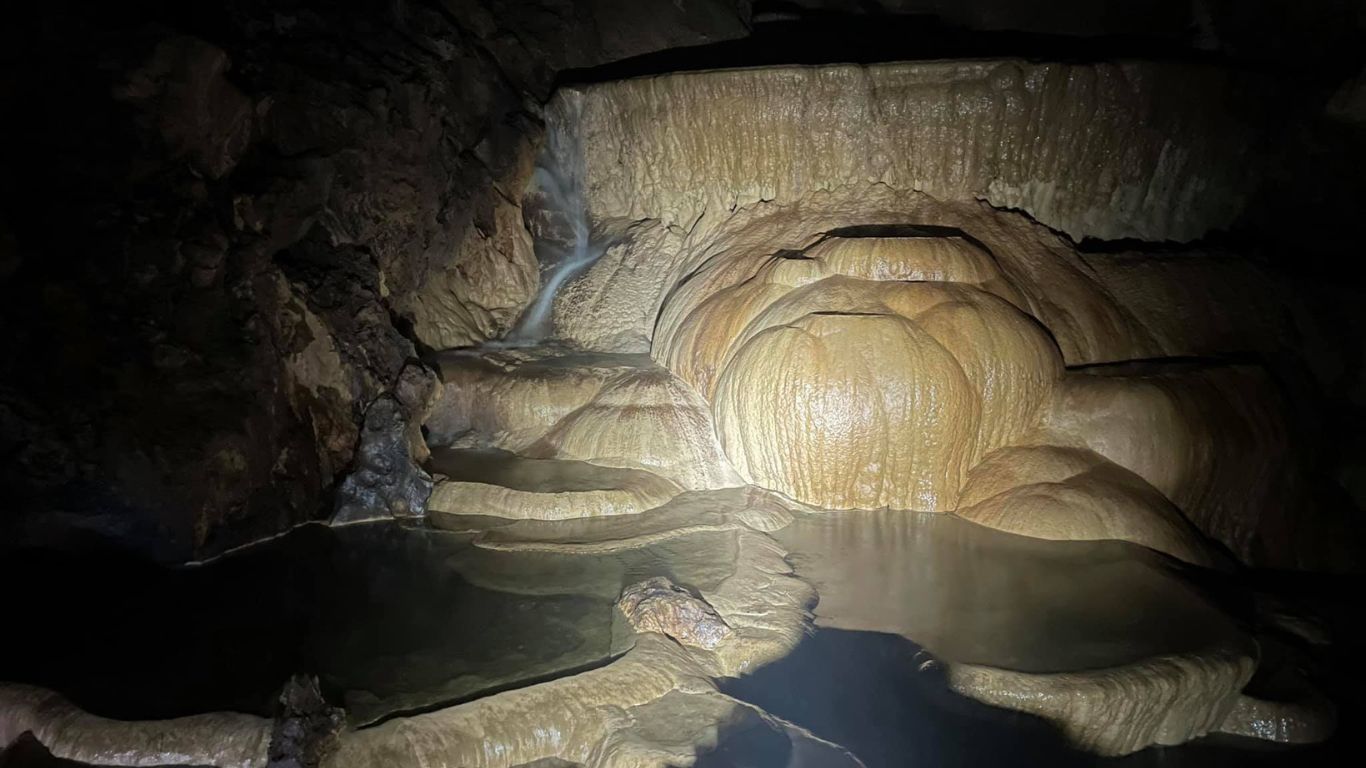
Nam Tan Cave
A true off-the-beaten-path spot, “Nam Tan” means “flowing water” in the local language, referring to the underground stream inside. It’s about 100 km from Ha Giang city (30 km from Bac Quang), followed by a rough 2.5 km off-road stretch and a 2 km jungle walk.
Best for: Adventurous travelers and older teens only | Walking: Moderate-to-strenuous, not recommended for young kids, seniors, or anyone with mobility concerns
Best time to visit Ha Giang
Short answer: September-October for golden rice terraces, or February–April for spring festivals and flower blooms. Avoid the peak of rainy season (June–August) if you’re concerned about slippery mountain roads.
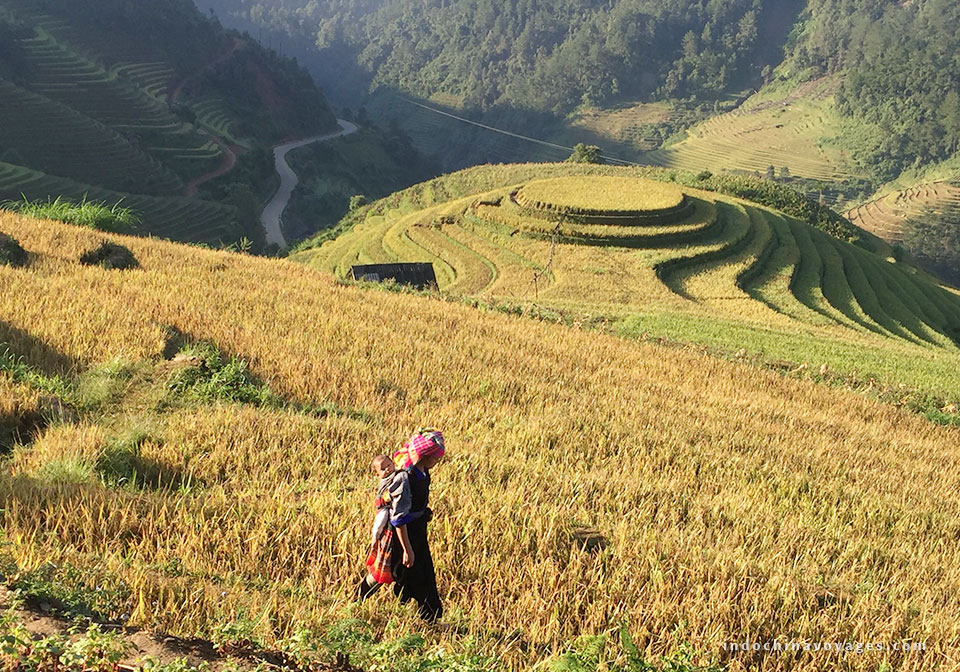
For me, the time I like most about Ha Giang is September and October when the color of rice changing into golden yellow creates a gorgeous picture.
Also, spring (from January to March) is the season of New Year and festival, ethnic minorities get dressed with their most beautiful custom; they sing, drink and dance with their traditional folk song.
Summer (May–August) is the time local people prepare for their planting rice. All rice terraces covered with water creates a spectacular view look like slow-moving waterfall in May. The fields are fully green and fluorescent green during June, July, August, which makes everyone feel refresh and peaceful.
The Ha Giang Loop Route & How Long It Actually Takes
The Ha Giang Loop is a circular route starting and ending in Ha Giang city, typically covering roughly 300-400 km total, depending on which detours (Lung Cu, Du Gia, Hoang Su Phi) you include.
Here’s the thing most guides don’t tell you: kilometers are a misleading way to think about this trip. A 100 km stretch in Ha Giang can mean hours of switchbacks, village traffic, and photo stops, nothing like a 100 km highway drive. It’s more useful to think in days and riding hours than in raw distance:
- 3-day loop: ~320–350 km total, faster pace, fewer breaks
- 4-day loop: ~350–400 km total, more relaxed, includes stops like Du Gia and Lung Cu
Ha Giang Loop Itineraries: 3, 4, 5, and 7 Days
3 Days vs. 4 Days: Which Should You Choose?
| 3-Day Loop | 4-Day Loop | |
| Total distance | ~320–350 km | ~350–400 km |
| Daily riding | Longer days, fewer breaks | ~4–5 hrs/day, more relaxed |
| Includes | Dong Van, Ma Pi Leng, Meo Vac, Quan Ba | Same as 3-day, plus Du Gia waterfall, Lung Cu Flag Tower, more village time |
| Best for | Tight schedules, travelers combining Ha Giang with Sapa or Ninh Binh in one trip | Families, seniors, and anyone who wants a genuinely unrushed pace |
Our recommendation for families: Go with 4 days if your schedule allows it. The extra day isn’t just “more sightseeing” – it directly reduces daily driving time, which matters most for kids prone to motion sickness or seniors who tire on long car days.
Ha Giang Loop in 4 Days (Well Pace)
- Day 1: Hanoi – Ha Giang – Thon Tha Village
- Day 2: Thon Tha – Quan Ba Pass – Yen Minh – Dong Van
- Day 3: Dong Van – Ma Pi Leng Pass – Nho Que River boat trip – Meo Vac
- Day 4: Meo Vac – Du Gia – Ha Giang – Hanoi
Ha Giang Loop in 5 Days
- Day 1: Hanoi – Ha Giang -Thon Tha
- Day 2: Ha Giang – Quan Ba – Dong Van
- Day 3: Dong Van (Ma Pi Leng, Nho Que River, Meo Vac day trip)
- Day 4: Dong Van – Meo Vac – Quan Ba
- Day 5: Quan Ba – Hanoi
Ha Giang Loop in 7 Days (with Hoang Su Phi)
- Day 1: Hanoi – Ha Giang – Thon Tha
- Day 2: Thon Tha – Khuoi My trekking – Ha Giang
- Day 3: Ha Giang – Quan Ba Pass – Dong Van
- Day 4: Dong Van (Lung Cu Flag Tower, local villages)
- Day 5: Dong Van – Ma Pi Leng Pass – Meo Vac
- Day 6: Meo Vac – Yen Minh – Du Gia – Ha Giang
- Day 7: Ha Giang – Hanoi
All itineraries above can be arranged as a private tour with a dedicated car, driver, and English-speaking guide, no motorbike required. If you want to arrange your trip with worry free, feel free to share your travel preference with us to get a customized itinerary and quote here or email at info@indochinavoyages.com.
Where to Go After Ha Giang
After Ha Giang, popular next stops depend on where your loop ends:
- Ending in Meo Vac? Continue to Bao Lac, Cao Bang, or Ba Be National Park.
- Ending in Hoang Su Phi? Head to Bac Ha, then on to Sapa.
Explore our related private tours:
- Spirit of Northeast Vietnam Adventure – 7 Days
- Explore Unfold Ha Giang – 5 Days
- All Vietnam package tours
Frequently Asked Questions

Van Do – Travel Specialist
4 years as a tour guide on the road, 7 years tailoring exotic trips – with extensive knowledge of off-the-beaten-path destinations enable her to craft bespoke itineraries that are full of surprises.
Thinking about explore Ha Giang at your own pace & travel interests? We build every itinerary around a private car, an experienced driver, and a pace that actually works for kids, teens, or grandparents. Get your custom Ha Giang itinerary & quote within 12 hours!