

Planning a northern Vietnam itinerary usually starts with the same shortlist: Hanoi, Halong Bay, Sapa. What most guides skip is how many days that actually takes, what order avoids wasted transfers, and why Ha Giang rarely on the “essentials” list, but ends up being the part travelers remember most.
This guide covers all of it: a full 10-day route, a tighter 7-day version if that’s all you’ve got, best time to visit and rice terrace timing, budget and transport breakdowns, and honest notes on what’s worth your time versus what’s fine to skip, plus answers to the questions we hear most before travelers book.
Quick Answer: North Vietnam Itinerary at a Glance
- Ideal trip length: 7 days (highlights only) to 14 days (highlights + Ha Giang Loop + off-the-beaten-path)
- Minimum realistic length: 5 days (Hanoi, Halong Bay or Ninh Binh, and one mountain stop)
- Best time to go: March – April and September – November (mild, dry, best for rice fields)
- Core route: Hanoi → Halong Bay or Lan Ha Bay → Ninh Binh → Sapa → (Ha Giang Loop) → Hanoi
- Getting between stops: Overnight train or sleeper bus for Sapa; private car for Ninh Binh/Halong; motorbike, jeep, or private van for Ha Giang
- Rough budget: Mid-range travelers: US $80–150/day including guided tours and 3–4 star stays.
- Visa: Many nationalities (UK, most of the EU, South Korea, Japan) get visa-free entry for up to 45 days; most others need an e-visa arranged in advance
This snapshot is a starting point, the full breakdown, including why we sequence it this way, is below.
What Cities Are In North Vietnam?
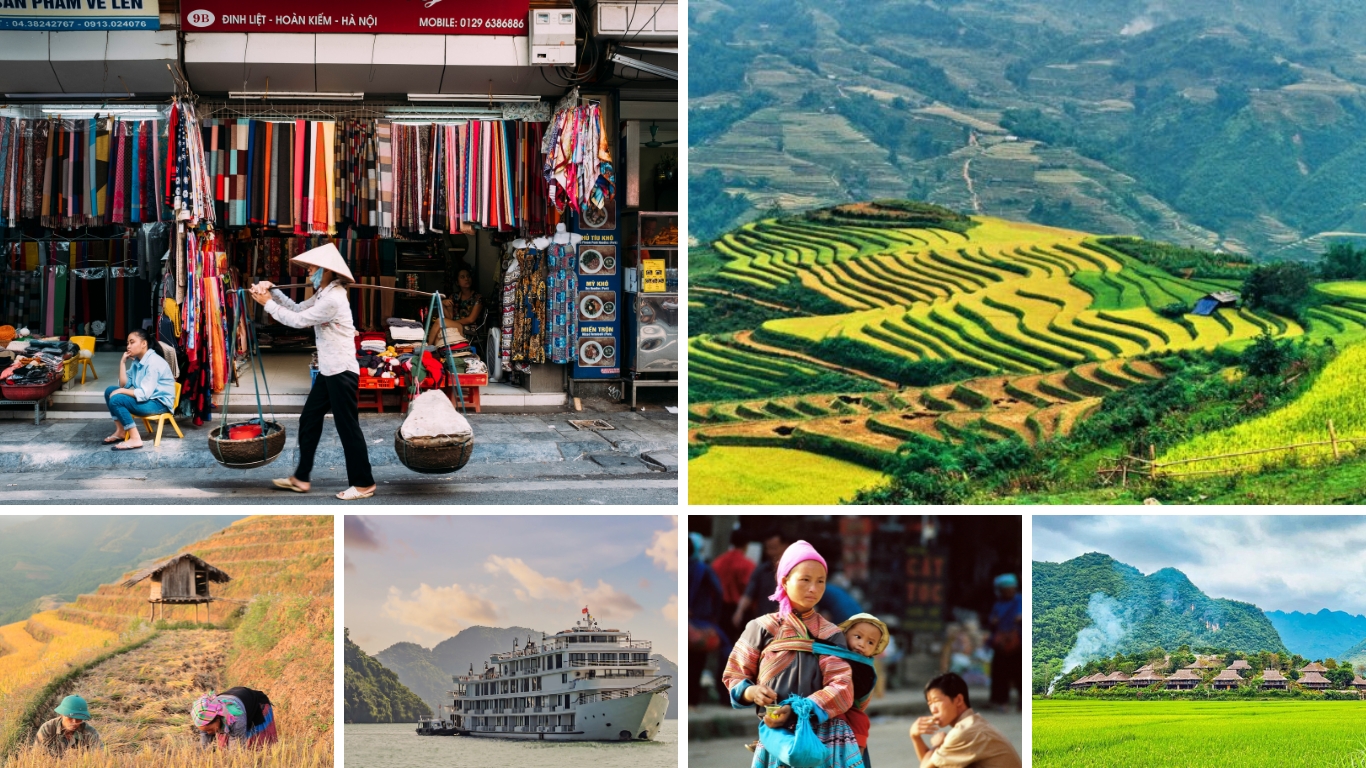
Northern Vietnam covers everything from the Red River Delta around Hanoi up to the mountainous border with China. In practical travel-planning terms, it splits into two zones:
The classic loop (most first-timers)
- Hanoi: The capital, and almost everyone’s starting point
- Halong Bay: The UNESCO-listed limestone bay
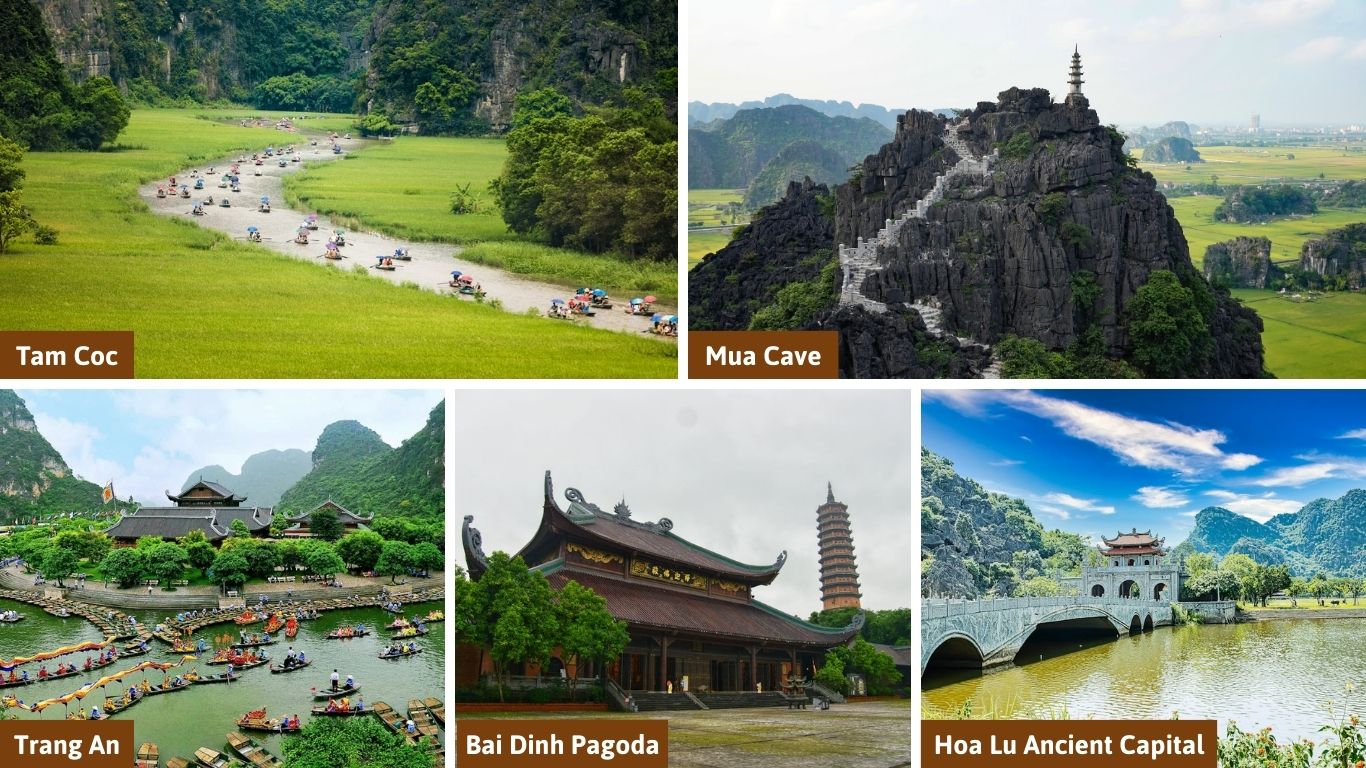
- Ninh Binh: River caves and karst scenery, nicknamed “Halong Bay on land”
- Sapa: Terraced rice fields and hill-tribe villages near the Chinese border
The far north (for travelers with more time or a taste for adventure)
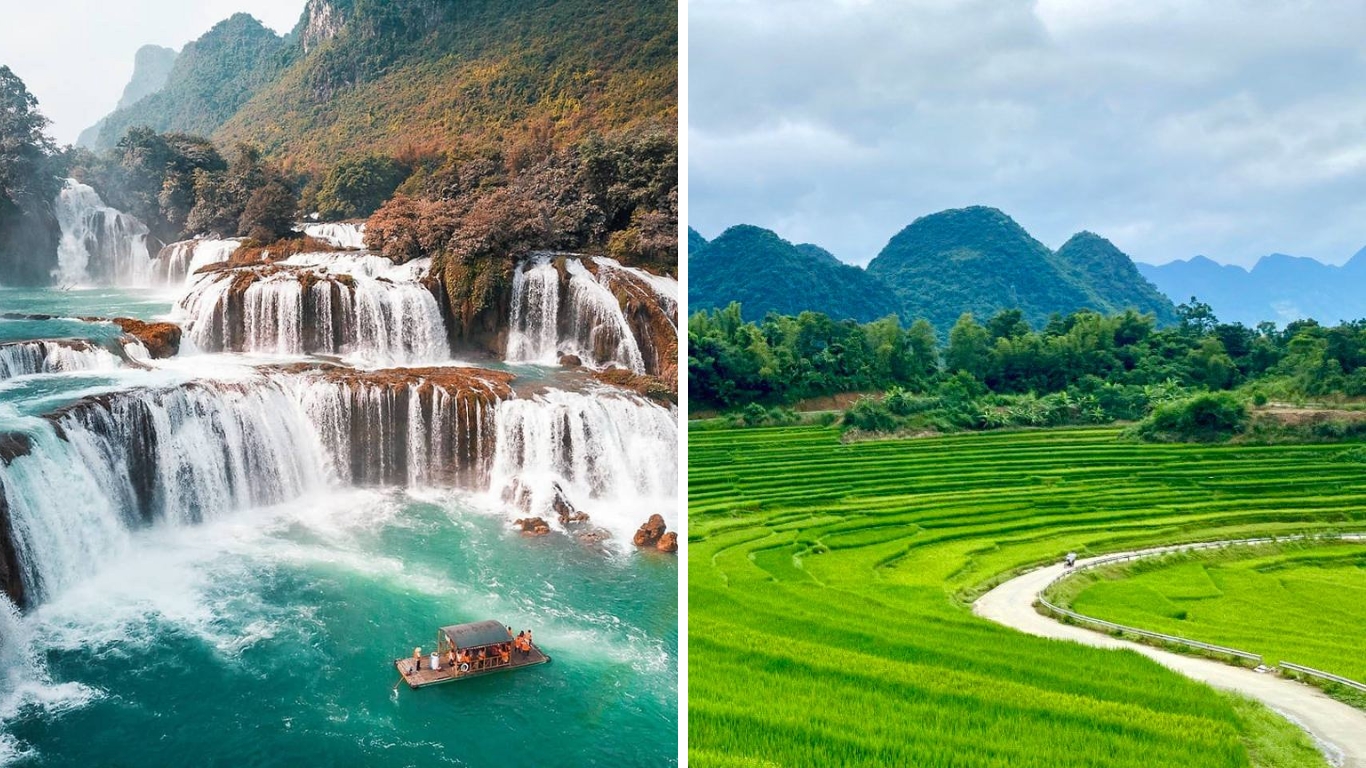
- Ha Giang: Vietnam’s most dramatic mountain scenery, best known for the Ha Giang Loop
- Cao Bang: Home to Ban Gioc Waterfall, one of the largest waterfalls on any international border in the world
- Ba Be Lake: Vietnam’s largest natural freshwater lake, still relatively untouched by tourism
- Mai Chau: A quiet valley of White Thai stilt-house villages, an easy add-on close to Hanoi
- Pu Luong: Technically North Central Vietnam, but usually visited as part of a northern loop.
A realistic rule of thumb: 7 days covers the classic loop. 10–14 days lets you add Ha Giang or the far north without rushing.
How Many Days Do You Need in Northern Vietnam?
This is the question we get asked the most, so here’s a straight answer instead of a vague “it depends.”
| Days | What you can realistically cover | Best for |
| 5 days | Hanoi + Halong Bay (or Ninh Binh) + one short Sapa or Ninh Binh add-on | Travelers combining North Vietnam with the center or south, or a short business-trip extension |
| 7 days | Hanoi + Halong Bay + Ninh Binh + Sapa | First-timers who want the core highlights without long transfers |
| 10 days | The 7-day route + the Ha Giang Loop (or Cao Bang) | Travelers who want mountain scenery and don’t want to feel rushed anywhere |
Want a route sized to your actual dates instead of a generic day-count? Send us your trip length, travel preference here and we’ll adjust this itinerary for you, or email info@indochinavoyages.com. Every trip we plan is private and built around your group only, never joined with other travelers.
When to Visit North Vietnam?
The best time to travel North Vietnam is during the spring (March to April) and autumn (September to November) seasons. The weather is pleasant, with mild temperatures and less rainfall. Meanwhile, these months also offer a beautiful sense of rice fields in many regions.
When to See Rice Fields at Their Best
Rice terraces don’t turn golden everywhere at once, timing depends on the region:
- Ninh Binh: May (golden rice season) or October (harvest)
- Mai Chau: End of May to June.
- Mu Cang Chai: September to October
- Pu Luong: February to May or September to October
- Sapa: Late August to early September (harvest)
- Hoang Su Phi (Ha Giang): September and October
Related read: 9 Most spectacular Vietnam rice fields & Recommended Things to Do
The Complete 10-Day Northern Vietnam Itinerary
This is our go-to route for travelers who want the classic highlights plus real mountain adventure, without feeling like they’re sprinting between buses.
Day 1-2: Hanoi
Arrive, settle in, and let the city do its thing. Hanoi rewards a slow first day more than almost any other capital in Southeast Asia, half the experience is just wandering the Old Quarter’s 36 guild streets and eating whatever smells good.
Don’t miss:
- Ho Chi Minh Complex – The mausoleum, stilt house, and presidential palace
- Temple of Literature – Vietnam’s first national university, built in 1070
- Train Street – A residential alley where the track runs a few feet from front doors (check current access rules locally; it opens and closes on and off)
- Vietnam Museum of Ethnology – Genuinely worth it if you’re heading to Sapa or Ha Giang next, since it explains the ethnic groups you’ll meet there
- An evening food crawl in the Old Quarter – Bun cha, egg coffee, and grilled skewers from a plastic stool are non-negotiable
Tip: Hanoi’s charm is in the details, you should stay two nights if your schedule allows it. One day always feels rushed.
Day 3-4: Halong Bay or Lan Ha Bay
Here’s an honest note most brochures skip: Halong Bay is beautiful, but it’s also busy. We’re not going to pretend otherwise. If seeing the classic limestone karsts matters to you, it’s still worth it – the scenery from the water is genuinely dramatic. But if you want the same geology with far fewer boats, ask about Lan Ha Bay or Bai Tu Long instead, which shares the same karst formations and is significantly calmer.
On your overnight cruise:
- Kayak or visit a floating fishing village
- Explore a limestone cave (Surprise Cave is the classic stop)
- Watch sunset from the top deck
- Wake for an early Tai Chi session before breakfast

Day 5: Ninh Binh
Back to Hanoi by late morning, then straight on to Ninh Binh genuinely one of the most underrated stops in the north. Towering limestone cliffs rise straight out of rice paddies and slow rivers, and it’s far less crowded than Halong Bay.
Highlights:
- Trang An or Tam Coc boat ride – A local rower (sometimes rowing with their feet) takes you through river caves carved into the cliffs
- Hang Mua Viewpoint – 500 steps up for a panoramic shot of the whole valley (worth the climb, go early to beat the heat)
- Bike the countryside – Flat, quiet roads through rice fields make this one of the best places in Vietnam to explore by bicycle
If you only have one extra day to add anywhere in this itinerary, add it here.
Day 6-7: Sapa
Overnight train or sleeper bus to Lao Cai, then on to Sapa. This is where the itinerary shifts from “sightseeing” to genuinely getting outdoors.
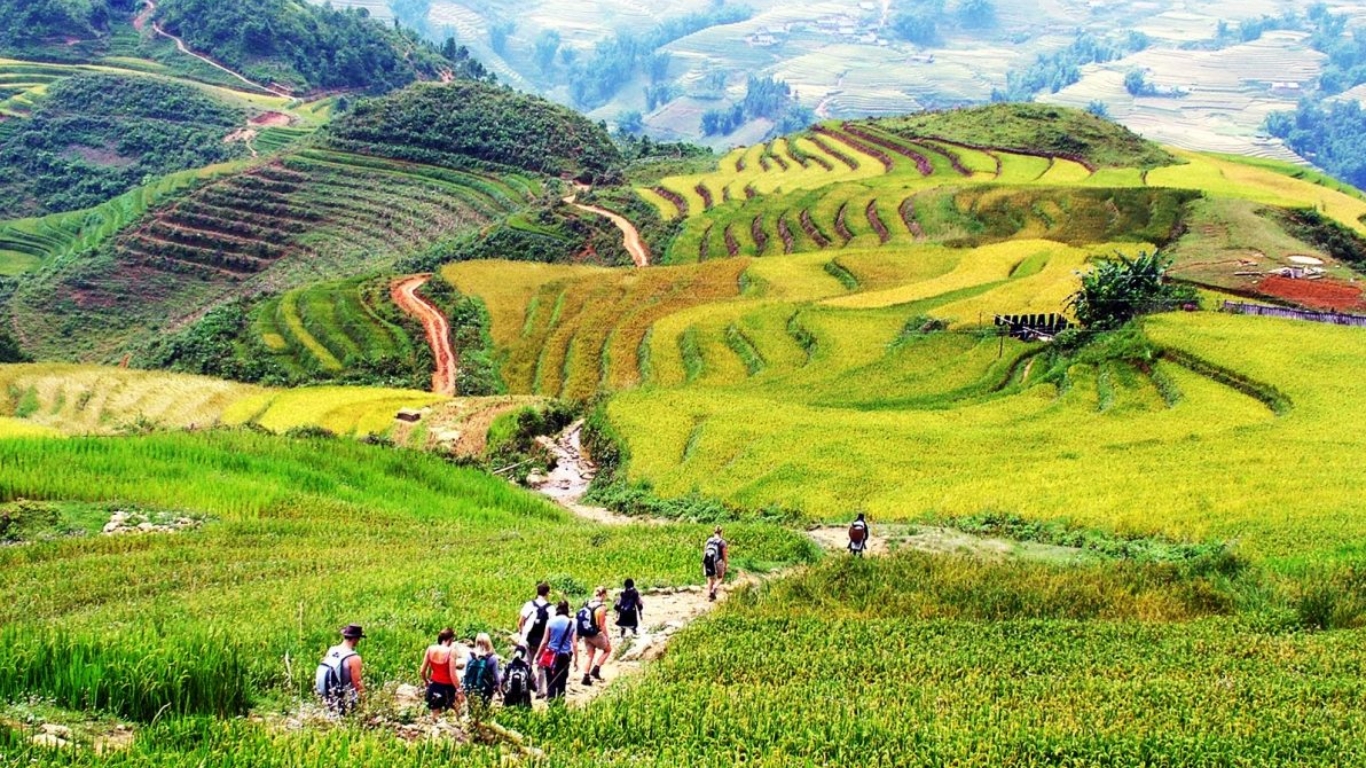
- Day 6 – Lao Chai to Ta Van trek: This route runs through Hmong and Dzay villages with some of the best terraced-field views near Sapa town. It’s a real trek (expect a few hours on foot, with some steep sections), so wear proper shoes, not sandals.
- Day 7 – Ma Tra to Ta Phin: A quieter route through Red Dzao and Black Hmong communities, known for handmade textiles. Cat Cat Village is nearby if you want an easier, more commercial option for souvenirs – just know it’s touristy, and locals will tell you the same.
Honest tip: two days in Sapa is the minimum to actually feel the place rather than just photograph it. If your schedule allows a third day, take it.
Day 8-10: The Ha Giang Loop
This is the part of the itinerary most “7-day” guides skip entirely, and it’s usually the highlight travelers mention afterward. The Ha Giang Loop winds through the Dong Van Karst Plateau Geopark, past the Ma Pi Leng Pass (arguably the most dramatic road view in Vietnam), and through communities where tourism still feels genuinely local rather than staged.
How to do it:
- Self-drive motorbike – The classic version, but only for confident, experienced riders. The roads are stunning and unforgiving in equal measure.
- Ride pillion behind a local driver – Most popular choice for travelers who want the experience without doing the driving themselves.
- Private jeep or van loop – The comfortable option, and what we usually recommend for families or travelers short on time.
Three days is the minimum to see the loop properly. If you only have two, we’ll usually suggest swapping Ha Giang for a closer alternative like Cao Bang and Ban Gioc Waterfall instead.
Return to Hanoi on your final day for departure, or add a rest day if your flight allows it — after three mountain days, most travelers are glad of it.
Want this exact route mapped to your travel dates, with hotels, a private guide and transport already arranged? Get a custom itinerary or email info@indochinavoyages.com we also run this as a ready-made private itinerary.
You can take Tonkin Elegance 8 days as a reference, then we can extend or trim to match the route above. It’s just for you or your group – we don’t organizing join-in tour, so everything is flexible.
The 7-Day Version (If You’re Short on Time)
If 10 days isn’t realistic, here’s the condensed route that still covers the essentials – this is the itinerary most people search for.
- Day 1: Arrive Hanoi
- Day 2: Hanoi city tour by jeep (Ho Chi Minh Complex, Old Quarter) + evening street food experience
- Day 3: Hanoi – Pu Luong Nature Retreat (light trek through terraced rice fields & traditional villages)
- Day 4: Pu Luong – Ninh Binh
- Day 5: Ninh Binh (Trang An or Tam Coc + Hang Mua)
- Day 6: Ninh Binh – Transfer to Halong Bay, board overnight cruise
- Day 7: Free morning in Hanoi, departure
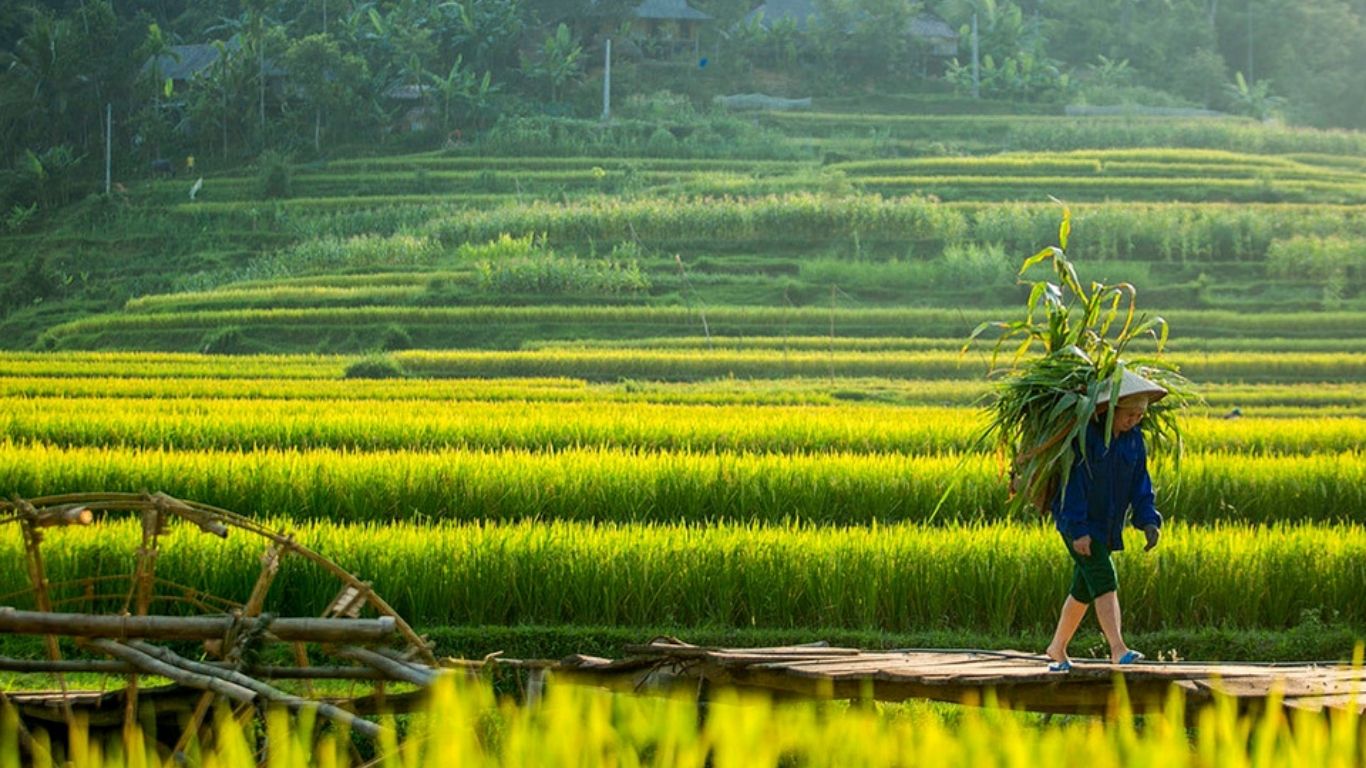
Why Pu Luong instead of Sapa? This route trades Sapa for Pu Luong on purpose, not as a downgrade. Pu Luong doesn’t have Sapa’s dramatic mountain scale, but its rice terraces are just as beautiful, without the crowds, a quieter, more authentic pace. It’s also closer to Hanoi, so you gain travel time instead of losing it, which is what makes this route fit comfortably into 7 days. This is the path we follow in our Vietnam Nature & Highlights 12 Days, which continues south from here if you have more time to spare.
Still want Sapa in 7 days? It’s possible, but it’s tight, a good chunk of your week goes to transport alone, which leaves little room to actually enjoy the place. If Sapa specifically matters to you, we’d suggest one extra day to keep the pace comfortable rather than rushed. Our 8 Days in Northern Vietnam itinerary is a good reference for how that extra day gets used.
Either way, this route is built around your travel preferences, tell us what you’re after here or email info@indochinavoyages.com and our travel consultant help you decide between Sapa and Pu Luong.
Choose Your Own Route: North Vietnam Itineraries by Travel Style
Not everyone wants the same trip. Here are a few of our tour routes built around specific interests – each one customizable to your exact dates:
Best for mountains and ethnic culture: Adventure The Winding Northwest 7 Days (Hanoi – Mai Chau -Son La – Dien Bien Phu – Sapa). Stay in the green valley of Mai Chau, visit the historic Dien Bien Phu battlefield, and meet Northwest Vietnam’s diverse ethnic minority communities away from the main tourist trail.
Best for lakes, waterfalls, and Halong Bay in one trip: Adventure The Northeast Vietnam 6 Days (Ba Be Lake – Cao Bang – Ban Gioc Waterfall – Halong Bay). Cruise Ba Be Lake, trek to a tribal village, spend a night in a homestay, then finish with Halong Bay.
Best for the Ha Giang Loop specifically: Explore Unfold Ha Giang 5 Days (Hanoi – Ha Giang – Quan Ba -Dong Van – Meo Vac). A focused loop through the geopark for travelers who want maximum mountain time without the rest of the classic circuit.
Budget & Practical Planning
How much does a North Vietnam trip cost?
- For luxury travelers (private transport, 4 -5 star hotels, guided day trips) typically spend US $200-300 per day.
- Mid-range travelers (private transport, 3-4 star hotels, guided day trips) typically spend US $100-150 per day.
- Backpackers using local buses, hostels, and street food can get closer to $30–45 per day.
Getting between stops:
- Hanoi ↔ Sapa: Overnight train (comfortable, saves a hotel night) or sleeper bus (cheaper, faster)
- Hanoi ↔ Ninh Binh / Halong Bay: Private car or shared van, 2–3.5 hours each way
- Hanoi ↔ Ha Giang / Cao Bang: Private van, jeep, or motorbike; expect 5–7 hours of mountain road
Visa: Citizens of the UK, most EU countries, South Korea, and Japan currently get visa-free entry for up to 45 days. Most other nationalities, including the US, Canada, and Australia, need an e-visa arranged in advance online. Rules do change, so check Vietnam’s official immigration portal close to your travel date.
Connectivity: A local SIM or eSIM is cheap and widely available at Hanoi’s Noi Bai Airport on arrival – worth grabbing on day one, especially before heading into the mountains where hotel Wi-Fi can be patchy.
>>> Read about Vietnam Electricity Voltage: Don’t Forget These Voltage Essentials!
Frequently Asked Questions
Ready to Turn This Into Your Trip?
Everything above is a starting framework, not a fixed script, the best North Vietnam itineraries are adjusted to your actual dates, pace, and interests, not stamped from a template. That’s genuinely the part we enjoy most: taking a route like this and reshaping it around what you want to see, as a private trip built just for you or your group.
If you’d like a local specialist to build this out for you with real routes, selected hotel, honest advice on what to skip, it costs nothing to ask.
- Get Detailed Proposal For Northern Vietnam Trip!
- Prefer email? Reach us directly at info@indochinavoyages.com.
- Or browse a ready-made private itinerary first: Tonkin Elegance 8 Days or explore all of our Vietnam private tours.
Indochina Voyages stands out as one of the premier Southeast Asia Tour Companies, specializing in crafting personalized private packages for discerning travelers. If you are looking to discover the beauty of Vietnam or further countries through an authentic and respectful lens, we are here to help.
IV Travel Specialist