
Northern Vietnam holds two of the country’s most talked about road trip routes, and travelers planning a mountain adventure often find themselves torn between them. The Ha Giang Loop and the Cao Bang Loop both promise dramatic scenery, welcoming ethnic minority villages, and roads that wind through some of the most striking limestone landscapes in Southeast Asia. Yet the character of each trip differs sharply. Ha Giang draws riders chasing steep passes and sweeping valley views, while Cao Bang appeals to travelers wanting waterfalls, caves, and quieter roads where villages still feel untouched by mass tourism.
This guide breaks down every angle of the comparison, from scenery and adventure level to culture, cost, and the best way to combine both loops for travelers with a week or more. Expect practical, expert level guidance drawn from real experience navigating both regions, along with tips on arranging private transport, guided tours, and comfortable accommodation. For travelers ready to start turning this comparison into an actual trip, browsing custom Indochina packages is a good place to begin.
Ha Giang Loop vs Cao Bang Loop: Side-by-side comparison
Before diving into the finer details, here is a side by side snapshot of how the two loops compare. This table captures the essentials most travelers weigh first, while every section below unpacks each point with far more nuance and firsthand insight.
| Category | Ha Giang Loop | Cao Bang Loop |
|---|---|---|
| Overall experience | Dramatic mountain adventure | Scenic and peaceful road trip |
| Main scenery | High mountains, deep valleys | Karst mountains, rivers, waterfalls |
| Iconic highlight | Ma Pi Leng Pass | Ban Gioc Waterfall |
| Road experience | More dramatic and demanding | Generally more relaxed |
| Tourist level | More popular | Quieter |
| Culture | Strong ethnic minority experiences | Strong rural and ethnic culture |
| Waterfalls | Some | Major highlight |
| Caves | Some | Major highlight |
| Best for | Adventure seekers | Nature and slow travelers |
| Ideal duration | 3 to 5 days | 3 to 5 days |
| Typical cost (3 to 4 days) | Generally lower | Slightly higher for equal comfort |
In short, Ha Giang wins on drama and challenge, while Cao Bang wins on tranquility and natural variety. Travelers who want the postcard mountain pass experience should lean toward Ha Giang, while those craving waterfalls, caves, and a slower rhythm will feel far more at home on the Cao Bang route.
Planning either trip is far easier with the right local support behind it. Our Indochina tours include private transport, experienced local guides, and comfortable accommodation booked in advance, meaning less time spent worrying about logistics and more time enjoying the scenery.
What Do Ha Giang and Cao Bang Have in Common?
Before exploring what sets these two loops apart, it helps to understand why they get compared so often in the first place. Despite their differences, Ha Giang and Cao Bang share a surprising amount of common ground, and that shared foundation is exactly why so many travelers debate between the two rather than dismissing one outright.
Mountain Roads Are the Common Thread
Both loops are built on the same core ingredient: mountain roads that twist through valleys, climb toward high passes, and reveal panoramic viewpoints around nearly every bend. The road itself becomes part of the destination, encouraging frequent stops at viewpoints, roadside villages, and scenic overlooks that rarely appear on a standard map. Travelers curious how Ha Giang stacks up against another well known northern route can find useful context in this look at Ha Giang as an alternative to Sapa.
You’ll Meet the Same Spirit of Ethnic Minority Culture
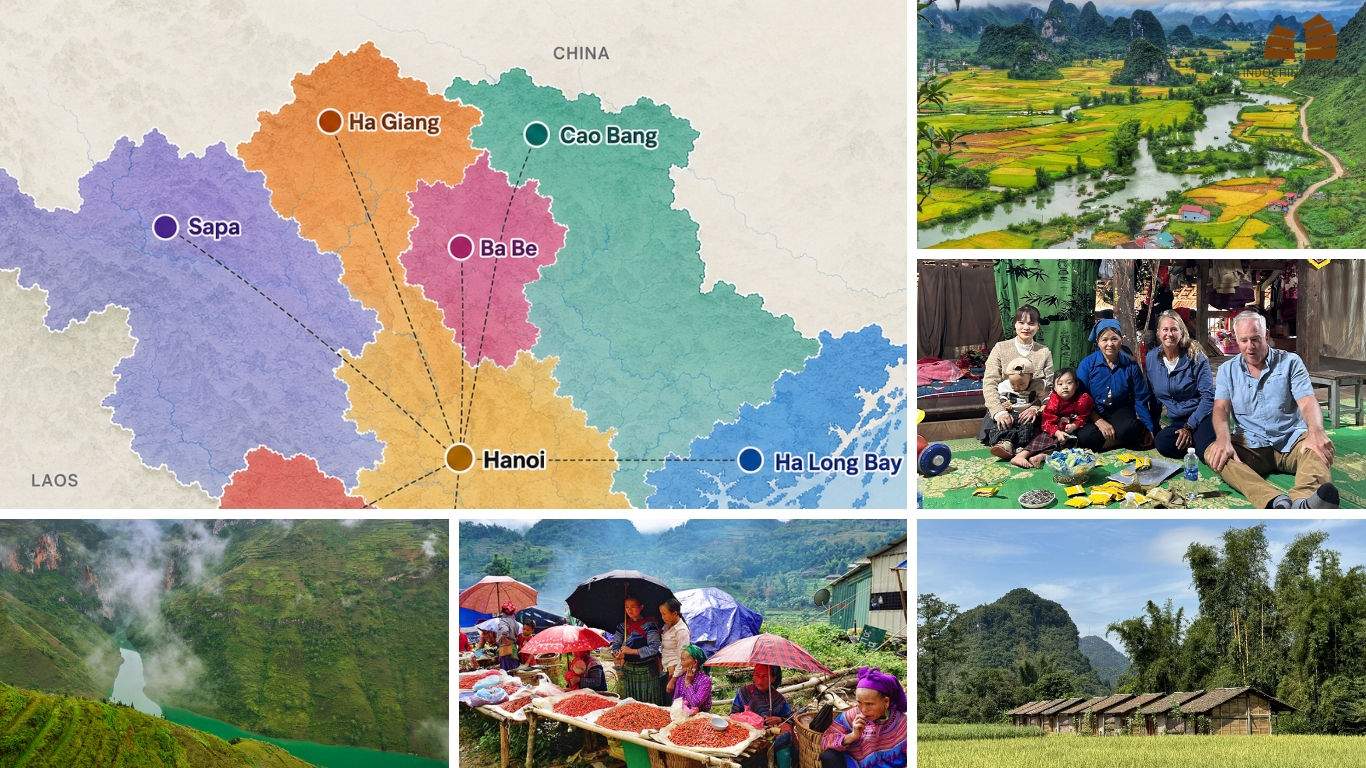
Beyond the scenery, both loops introduce travelers to Vietnam’s rich ethnic minority culture, and this is often the part of the trip that leaves the deepest impression. Communities such as the Hmong, Tay, and Nung populate villages along both routes, each carrying traditions, clothing styles, and agricultural practices shaped by centuries of mountain living. Traditional stilt houses, terraced fields, and small roadside stalls selling handwoven textiles appear regularly on both journeys.
Homestays play a particularly important role here. Spending a night with a local family, sharing a home cooked meal, and waking up to mountain mist rolling through the valley tends to become one of the most memorable parts of either trip, often more than any single viewpoint.
Local markets, often held on a rotating schedule between villages, offer some of the richest cultural immersion available on either loop. Booking a private tour with a knowledgeable guide makes it far easier to catch these market days, since timing and location shift throughout the month and are easy to miss without local insight.
The Journey Matters as Much as the Destination
On both loops, the journey matters as much as the destination itself. Rushing from one viewpoint to the next strips away what makes these trips memorable, since so much of the magic happens in unplanned moments. A private itinerary built around a slower pace makes a real difference, and travelers who linger at villages and stay overnight in smaller towns tend to come away with a far richer impression than those who push straight through:
- Mountain roads take longer to cover safely than flat highway distances suggest.
- Weather and road conditions can add unplanned time to any given day.
- Villages, markets, and viewpoints are easy to miss when moving too quickly.
- Both regions reveal more character the slower travelers move through them.
What Actually Sets Ha Giang and Cao Bang Apart?
The two loops share the same mountain atmosphere, but the moment travelers are actually on the road, the differences begin showing clearly, in distance, terrain, and how each route is shaped.
Ha Giang sits further from Hanoi than Cao Bang, which typically means a longer transfer at the start of the trip, often arranged overnight to save daylight hours for the loop itself. Cao Bang, while still a solid drive from the capital, tends to feel slightly more accessible for travelers with a tighter schedule. Road networks differ too: Ha Giang’s route is built around a continuous loop through high plateau terrain, while Cao Bang’s roads connect a wider spread of attractions across river valleys and karst formations. Arranging private transport for the initial transfer removes much of the guesswork, letting travelers arrive rested rather than spending the first day recovering.
Beyond distance and terrain, each loop leaves its own signature impression:
- Ha Giang is anchored by Ma Pi Leng Pass, the Dong Van Karst Plateau, and Tu San Canyon, delivering deep valleys and high mountain viewpoints that built its mountain adventure reputation. Travelers wanting a fuller look can explore what makes the Ha Giang Loop such an iconic journey.
- Cao Bang trades pure mountain drama for variety, centered on Ban Gioc Waterfall, the Quay Son River, and the Nguom Ngao Cave system, wrapped in rolling limestone mountains and quieter rural valleys.
Ha Giang vs Cao Bang: Which Has Better Scenery?
Scenery tends to be the deciding factor for many travelers, and this is one of the closest calls in the whole comparison. Both regions are stunning, just in noticeably different ways, and the differences reward a closer look.
Ha Giang Scenery on the Road
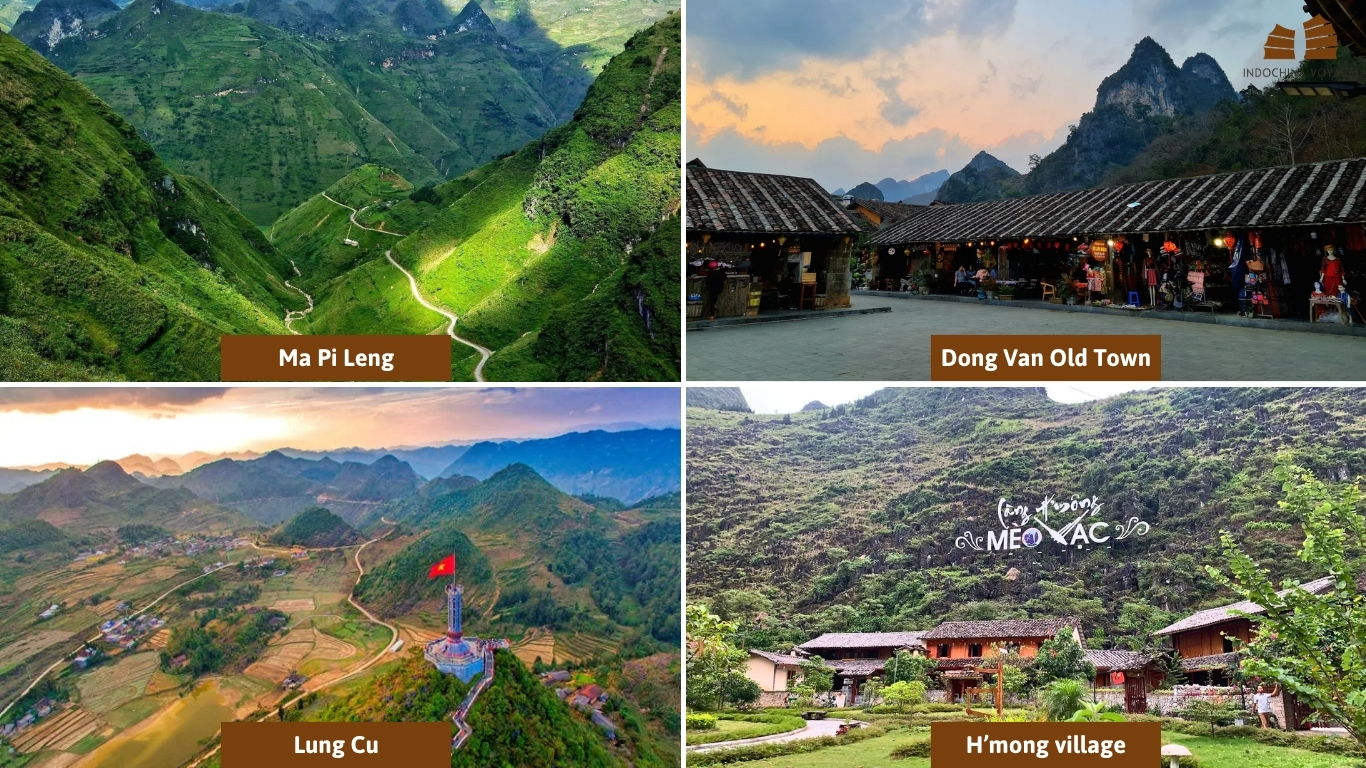
Ha Giang’s scenery is often described as the road itself being the destination. Mountain passes unfold one after another, revealing enormous valleys carved between layered peaks, with viewpoints appearing suddenly around hairpin bends.
The high plateau near Dong Van showcases this best, where the light shifts the mood of the same view between morning and afternoon. This look at conquering Ma Pi Leng Pass captures much of what makes the drive so striking.
A detour to Lung Cu, Vietnam’s northernmost point, adds even more to the view. A private vehicle helps here too, since a fixed group schedule rarely leaves room to chase the best light or take that extra detour.
Cao Bang Scenery on the Road
Cao Bang trades sheer mountain drama for a gentler, greener kind of beauty. Ban Gioc Waterfall provides the region’s most iconic image, its wide curtain of water crossing straight into the wider karst landscape that surrounds it. Rivers, caves, and limestone formations add variety throughout the drive, giving Cao Bang a more layered visual rhythm than Ha Giang’s continuous mountain plateau.
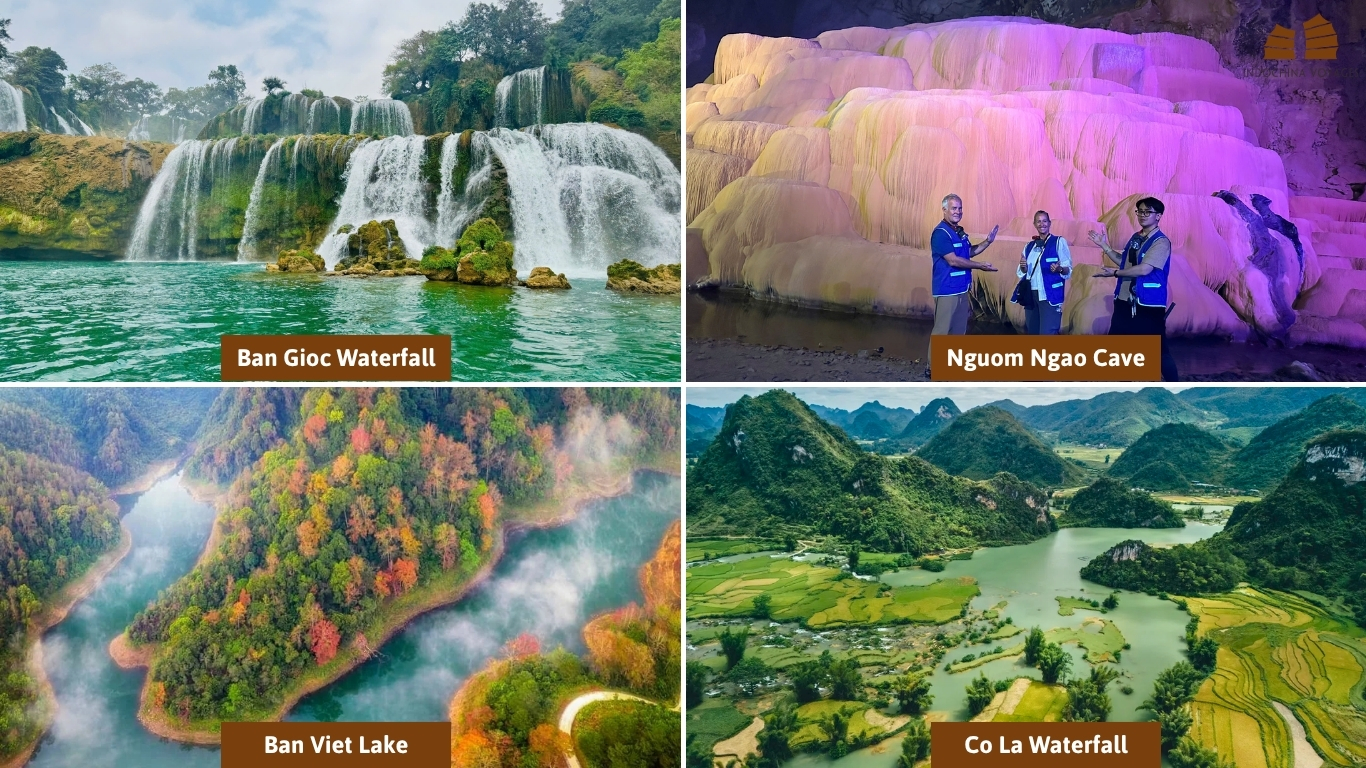
Rural valleys here tend to feel lusher and more cultivated, with rice terraces and quiet farmland softening the karst backdrop. This mix of water, cave, and mountain scenery means the visual experience changes noticeably from one stop to the next. A closer look at Ban Gioc Waterfall shows just how much visual range this region packs into a single loop.
Because the highlights sit further apart than in Ha Giang, a private car or guided tour helps travelers move efficiently between waterfall, cave, and viewpoint without losing daylight to unnecessary backtracking.
Which Loop Is the Bigger Adventure?
For travelers who measure a trip by its adrenaline, this comparison usually settles things quickly, though each loop earns that reputation in a different way.
Riding Ha Giang
Ha Giang delivers constant elevation changes, demanding mountain passes, and sharp hairpin bends that test even experienced riders. Road conditions can shift quickly depending on weather, particularly across the higher plateau sections where fog and rain roll in with little warning. Over the years, the region has built up a genuine motorcycle culture, with famous riding routes drawing enthusiasts from around the world who come specifically for the physical challenge as much as the scenery.
This is Northern Vietnam at its most physically engaging, and travelers who enjoy pushing themselves tend to find real satisfaction in completing the loop. The stretch from Dong Van across the pass into Meo Vac is where that satisfaction peaks, with the town itself worth a proper stop rather than a quick pass-through.
Riders who prefer not to handle the technical sections themselves can still experience every viewpoint by opting for an Easy Rider service or a private car, letting an experienced local driver manage the difficult stretches.
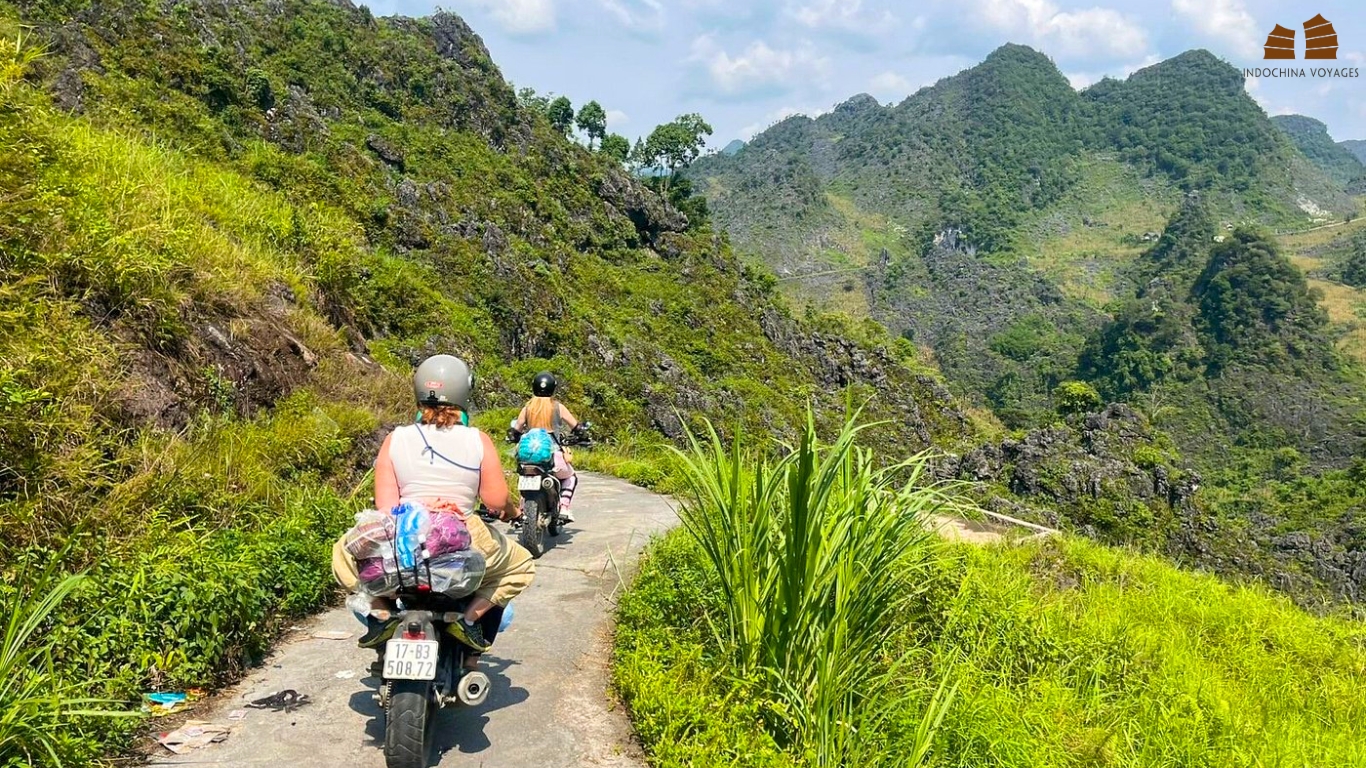
Riding Cao Bang
Cao Bang still involves genuine mountain roads and plenty of scenic driving, but the overall atmosphere feels noticeably calmer than Ha Giang. Travelers spend more time enjoying attractions such as Ban Gioc Waterfall and Nguom Ngao Cave, and less time gritting through technical sections, which makes this loop feel more like a scenic journey than a physical test.
That said, calmer does not mean flat or dull. Winding roads through the karst valleys still deliver plenty of memorable moments, just at a gentler pace that suits travelers who want beautiful mountain scenery without the intensity that defines Ha Giang.
Families and first-time visitors to Vietnam’s mountain regions often find Cao Bang the more comfortable entry point, since it delivers the same sense of adventure without demanding the same level of riding confidence.
Ha Giang vs Cao Bang for Culture and Local Life
Culture runs deep on both loops, and the differences here are less about which is better and more about the texture of the experience.
Meeting Ethnic Minority Communities
Ha Giang and Cao Bang share the same ethnic minority heritage, but not the same day-to-day texture. Ha Giang’s villages sit inside a route tourists have followed for years, while Cao Bang’s still feel a step removed from that traffic, simply because fewer visitors pass through. Even a short stop tends to leave a deeper mark than a viewpoint ever could, and a guide who knows local customs turns that stop into something genuine rather than staged.
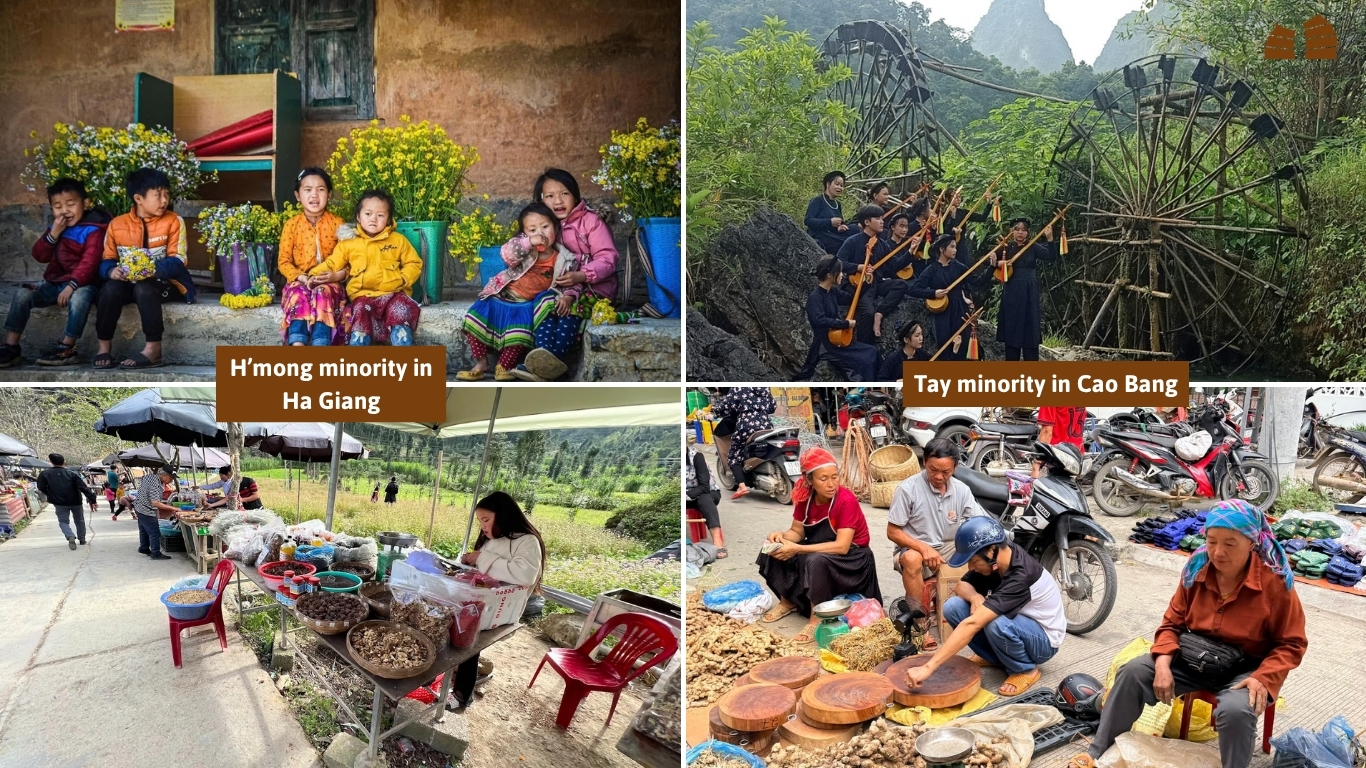
Homestays, Markets, and Overall Feel
Overnight homestays remain one of the best ways to connect with local life on either loop, and local markets add another dimension entirely for travelers who plan their route around market days. Ha Giang carries a stronger road trip, on-the-move energy, while Cao Bang feels slower and more peaceful. This guide to things to do in Cao Bang covers the experience well for anyone leaning toward the quieter option.
A private tour with a knowledgeable local guide makes both experiences far more accessible, since timing a homestay or catching the right market day is far easier with someone who already knows the local calendar.
Which Loop Sees Fewer Tourists?
Crowd levels vary significantly between the two routes, and this often becomes a deciding factor for travelers who value quiet, uncrowded scenery.
Ha Giang’s Popularity
Ha Giang has become internationally famous over the past decade, bringing organized tours, larger motorcycle groups, and busier conditions at popular viewpoints during peak season. Even so, the crowds tend to concentrate around a handful of well known stops, and traveling with a private guide who knows the timing makes it possible to reach those same viewpoints earlier or later in the day, avoiding much of the congestion.
Cao Bang’s Quieter Roads
Cao Bang remains noticeably quieter across the board, with fewer tourists, calmer roads, and villages that retain a more peaceful atmosphere year round. This lower profile also means tourism infrastructure is a little less developed, and arranging a private tour helps fill in those gaps without losing the region’s quieter character. For travelers who value peace and quiet above almost everything else, this alone can settle the decision.
Which Loop Suits Your Kind of Trip?
Every traveler’s situation looks a little different, so here is an honest, practical read on which loop tends to suit which kind of trip.
- Chasing adventure: Ha Giang is the clear pick, thanks to its demanding roads and dramatic scenery.
- New to mountain riding: Neither loop is a beginner friendly motorcycle route, though Cao Bang’s roads are generally the more forgiving of the two, and a private car with driver removes the risk entirely.
- Traveling as a couple: Cao Bang suits a slower, more romantic pace, while Ha Giang suits couples wanting a shared challenge together.
- Traveling with family: Cao Bang is generally the easier recommendation, especially when paired with private transport rather than self riding.
- First trip to Northern Vietnam: Ha Giang tends to deliver the iconic, postcard worthy mountain road experience most travelers picture.
- Experienced riders craving a challenge: Ha Giang offers the stronger test of skill.
- Avoiding crowds: Cao Bang, without much competition.
- Photographers: Genuinely both, just for different kinds of shots.
- Naturally slow travelers: Cao Bang will feel like it was built for exactly this pace.
Whichever style fits best, indochina travel packages can be tailored around riding experience, travel pace, and group size, so the trip matches the traveler rather than the other way around.
How Many Days Do You Need, and Can You Combine Both?
Timing shapes the entire experience on both loops, and getting it right makes a real difference in how relaxed the trip feels.
Planning for the Ha Giang Loop
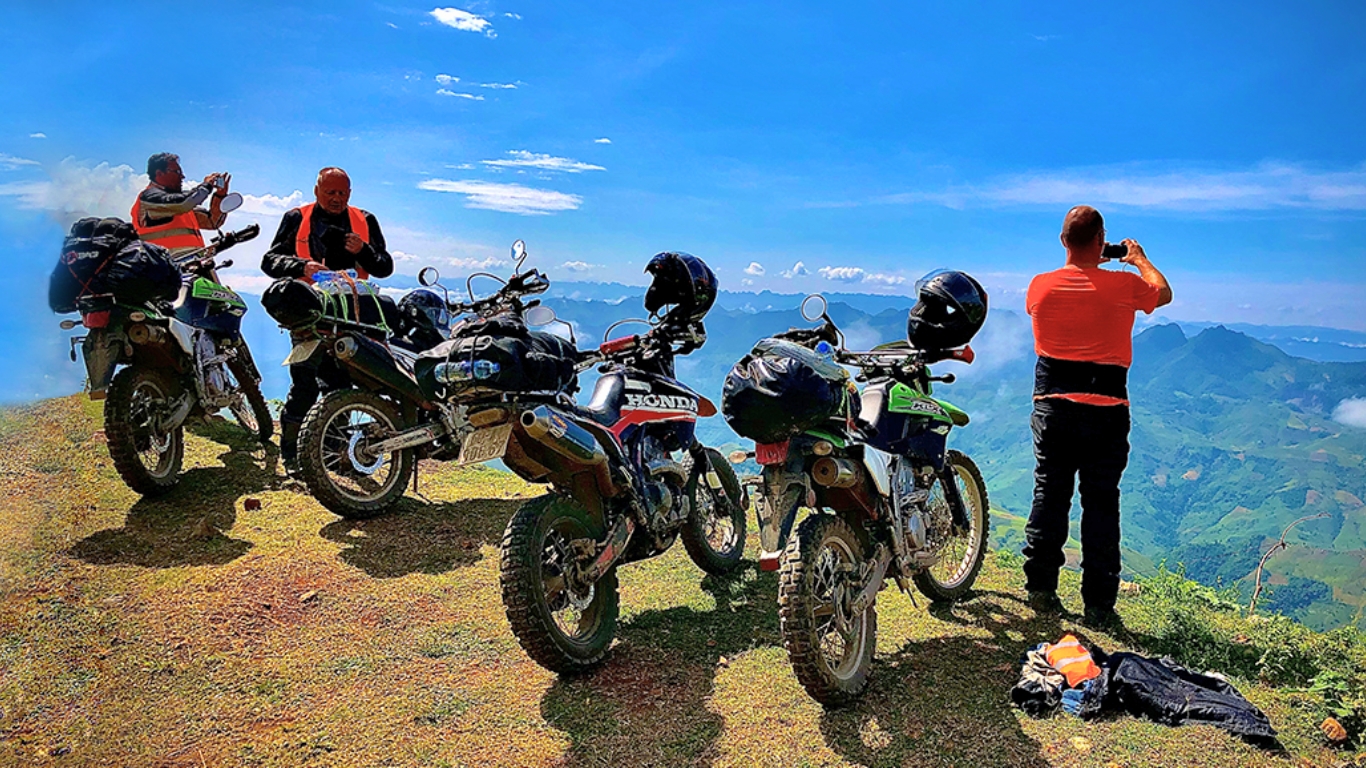
Three days covers the classic, fast version of the loop. Four days gives a better balance between riding and rest. Five days allows a slower, more immersive pace with room for detours and weather delays. Three days tends to suit Ha Giang best, since its continuous loop compresses well into a tighter schedule, and the Explore and Unfold Ha Giang 5 Days itinerary makes the planning effortless either way.
Planning for the Cao Bang Loop
Three days works for a highlights-focused trip centered on Ban Gioc Waterfall and Nguom Ngao Cave. Four days is more comfortable, and five days leaves room for villages and slower exploration across the wider region. Four to five days tends to suit Cao Bang best, since its attractions sit further apart and reward a less rushed schedule.
Combining Ha Giang and Cao Bang
For travelers with enough time on their hands, combining both loops is genuinely one of the most rewarding road trips available in Northern Vietnam. Since each route is its own loop, a combined trip works best as two back-to-back legs rather than one continuous line: finish the Ha Giang loop, transfer across to Cao Bang, then finish that loop before heading back to Hanoi.
A simple way to structure this over a week:
- Days 1–4: Ha Giang loop. This route gives you a good balance of mountain scenery, local villages and iconic passes without making every day feel rushed. After traveling from Hanoi to Ha Giang, continue through Dong Van, cross the spectacular Ma Pi Leng Pass to Meo Vac, then return via the mountain roads, leaving enough time for viewpoints and local stops along the way.
>>>>See a sample itinerary for this leg: Adventure the Northeast Vietnam 6 Days
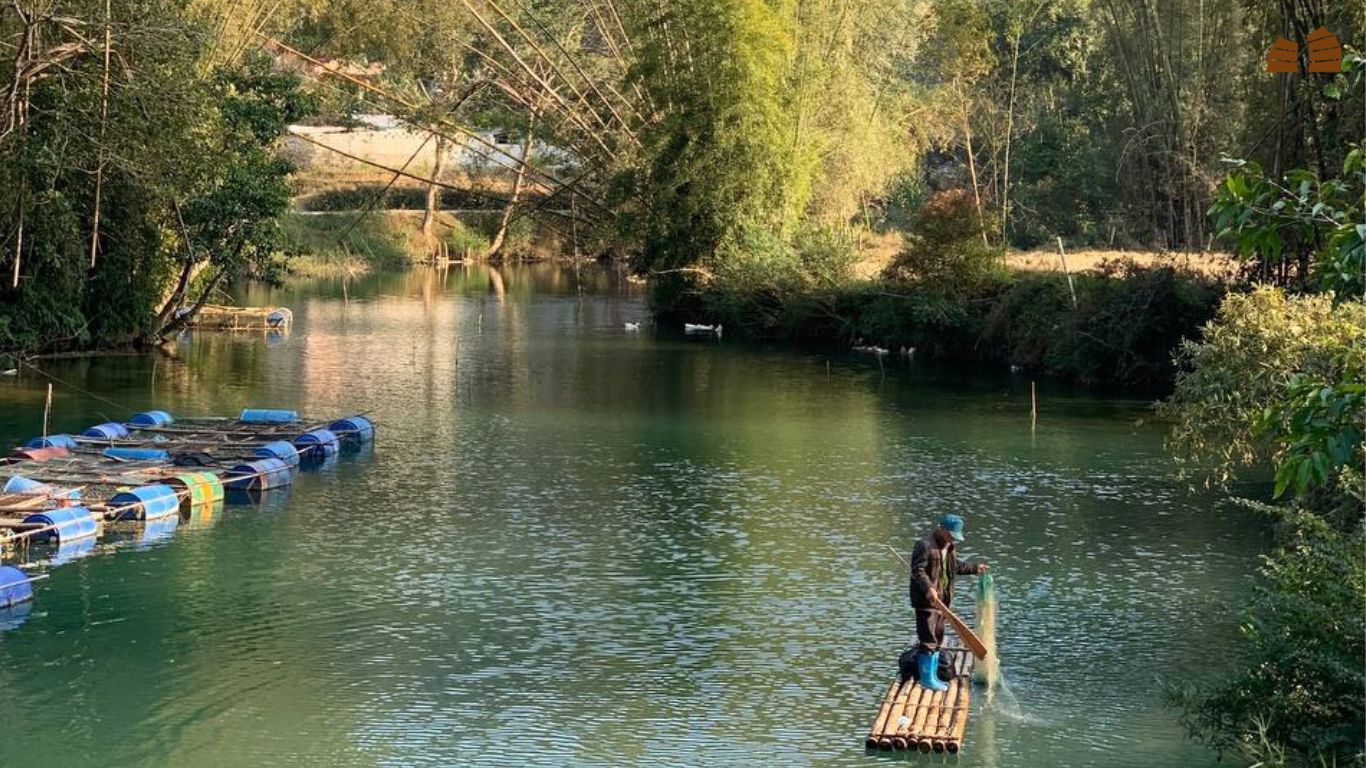
- Days 5–7: Cao Bang loop. Continue east into Cao Bang for a quieter mountain experience, with a change of scenery from Ha Giang’s dramatic passes to limestone landscapes, rivers and waterfalls. The route can include Bao Lac, Cao Bang City, Ban Gioc Waterfall and Nguom Ngao Cave, giving you a more relaxed finish to the northern mountain journey.
>>>>See a sample itinerary for the full combined route: Spirit of Northeast Vietnam Adventure 7 Days
Ready to turn this comparison into a real itinerary? Indochina Voyages builds private, fully customized trips across both regions, complete with experienced guides, comfortable transport, and accommodation suited to any travel style. Reach out to my team directly at info@indochinavoyages.com, or explore Indochina travel packages to start planning today.
Which Loop Costs More?
Cost rarely tops the list of deciding factors, yet it genuinely shapes which loop makes sense for a given trip.
Transport, Accommodation, and Extras
Transport costs cover Hanoi transfers, motorbike rental, Easy Rider services, private car hire, and group tours, all of which vary depending on comfort level and group size. Ha Giang tends to have slightly more transport options available locally, simply due to its popularity, while Cao Bang sometimes requires a little more advance planning to secure the same level of comfort, particularly during peak travel months.
Accommodation and food follow a similar pattern across both regions, with cost tied more to travel style than to which loop is chosen, and entrance fees at major attractions add only modest extra costs on either route.
Which Trip Gives You More for Your Money?
There is no flat winner here. Ha Giang often offers better value for a classic three to four day loop, thanks to its well established infrastructure and the sheer density of iconic stops packed into a shorter timeframe. Cao Bang, meanwhile, can be worth the extra spend for travelers who specifically want the quieter, slower experience, since the value comes from comfort and pace rather than sheer volume of sights.
Working with a private tour operator tends to smooth out cost differences on either loop, since bundled transport, guiding, and accommodation usually work out more efficiently than arranging each piece separately. For a clearer sense of what different budgets and itinerary lengths look like in practice, see sample itineraries here before settling on a final plan.
Practical Tips Before You Choose Your Loop
A little preparation goes a long way toward making either loop enjoyable rather than exhausting.
- Choosing how you’ll travel: options generally fall into four categories: self riding, Easy Rider services, private car hire, or a small group tour. Neither loop is a gentle route for beginners, and weather can change road conditions quickly, so travelers without real riding experience are far better served by a private car or an Easy Rider driver.
- Season, weather, and what to pack: the best travel windows for both regions generally fall in the drier months, when visibility stays clearer and road conditions remain more predictable. Rain and fog can appear with little warning at higher elevations, so checking forecasts before setting out matters. Worth packing: layered clothing, a reliable rain jacket, comfortable footwear, sun protection, a power bank, cash for smaller villages, and a compact day bag.
- Mountain road safety: avoid riding after dark, resist the urge to rush between destinations, and always build in buffer time for unexpected stops or weather delays. Blind corners deserve extra caution on both loops, and mountain roads should never be underestimated.
Travelers who prefer to skip these risks entirely can reach out to our team to arrange a private driver for either route.