Choosing between Ho Chi Minh City or Hanoi is one of the most common dilemmas for Vietnam travelers. While Ho Chi Minh City dazzles with its modern energy, street food paradise, and tropical warmth, Hanoi captivates with its ancient charm, four seasons, and deep cultural heritage. Both cities offer distinct experiences that reflect Vietnam’s diverse character. This guide breaks down climate, culture, attractions, food scenes, and practical considerations to help you decide which Vietnamese city deserves your first visit, or whether you should experience both.
Ho Chi Minh City vs Hanoi Weather: Climate Comparison & Best Time to Visit
When comparing Ho Chi Minh City vs Hanoi weather, you’re looking at two completely different climate zones. This fundamental difference between Ho Chi Minh City and Hanoi affects everything from what to pack to which season you should book your trip.
Ho Chi Minh City Climate
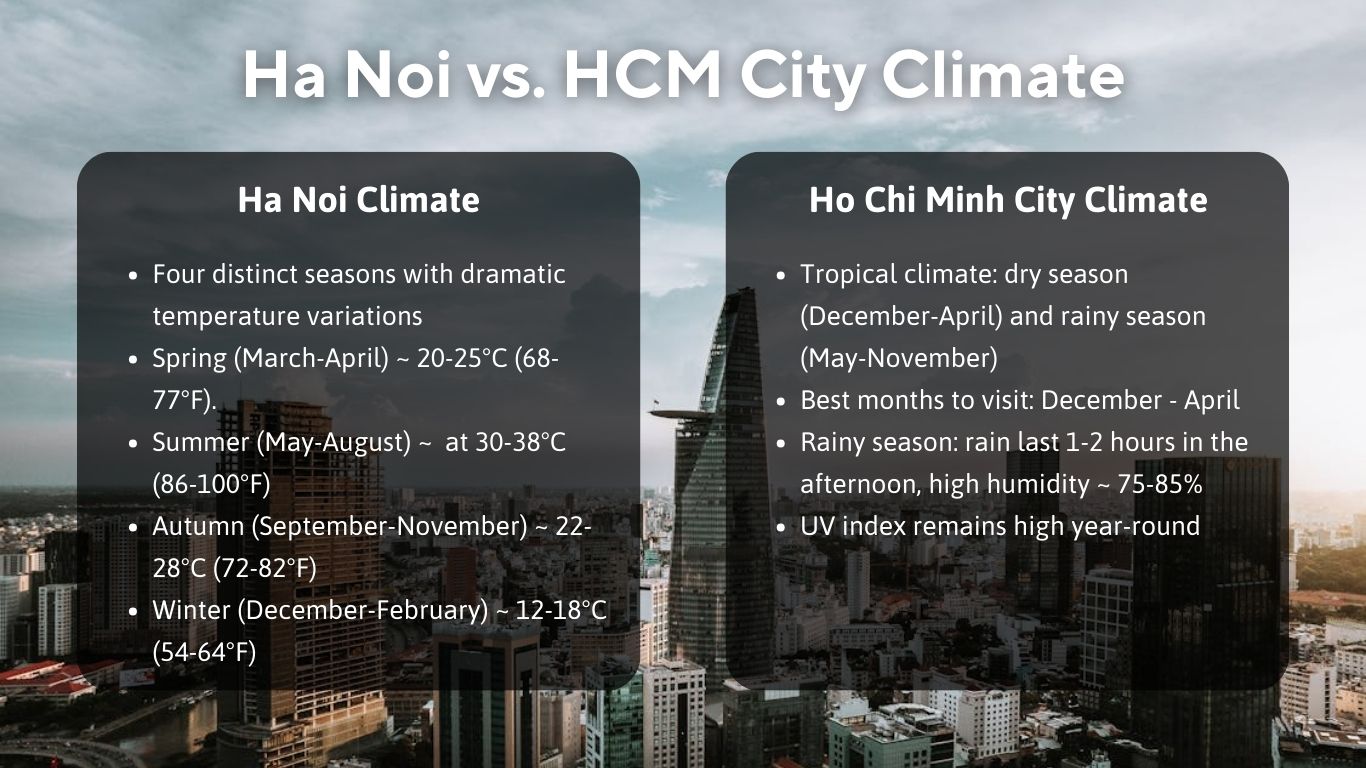
Ho Chi Minh City features a tropical climate with two distinct seasons: dry season (December-April) and rainy season (May-November). Temperatures remain consistently between 25-35°C (77-95°F) year-round, making it predictable for packing purposes. The best months to visit are December through April, offering minimal rainfall and pleasant evenings perfect for rooftop dining and street exploration.
Even during the rainy season, downpours typically arrive as short afternoon showers lasting 1-2 hours rather than all-day rain, so you can still plan activities. Humidity stays high throughout the year at 75-85%, and the UV index remains high year-round, making sunscreen essential. The advantage? No seasonal wardrobe changes needed: pack light summer clothes regardless of when you visit.
Hanoi Climate
Hanoi offers four distinct seasons with dramatic temperature variations that fundamentally change the city’s character. Winter (December-February) brings surprisingly cold weather at 12-18°C (54-64°F) that can feel damp and chilly, with occasional light rain. Many travelers underestimate how cold Hanoi winters can be.
Spring (March-April) warms to comfortable 20-25°C (68-77°F) with occasional drizzle and beautiful blooming flowers throughout the city. Summer (May-August) becomes hot and humid at 30-38°C (86-100°F) with heavy afternoon rains. Autumn (September-November) delivers the most pleasant weather at 22-28°C (72-82°F) with crisp air and the least rainfall of the year.
The best months to visit Hanoi are October-November for dry autumn weather and March-April for spring warmth. Be aware of typhoon risk from August through October. Pack layers for temperature fluctuations, especially if visiting during transitional seasons.
Weather Comparison Verdict
Consider your travel dates carefully when choosing Ho Chi Minh City or Hanoi, if you’re visiting during December-February, Hanoi’s cold might push you toward HCMC’s tropical consistency. For month-by-month breakdowns across the entire country, explore our comprehensive Best time to travel to Vietnam guide to match your schedule with optimal weather conditions.
Cultural Identity: Key Differences Between Ho Chi Minh City and Hanoi
Hanoi’s Cultural Character
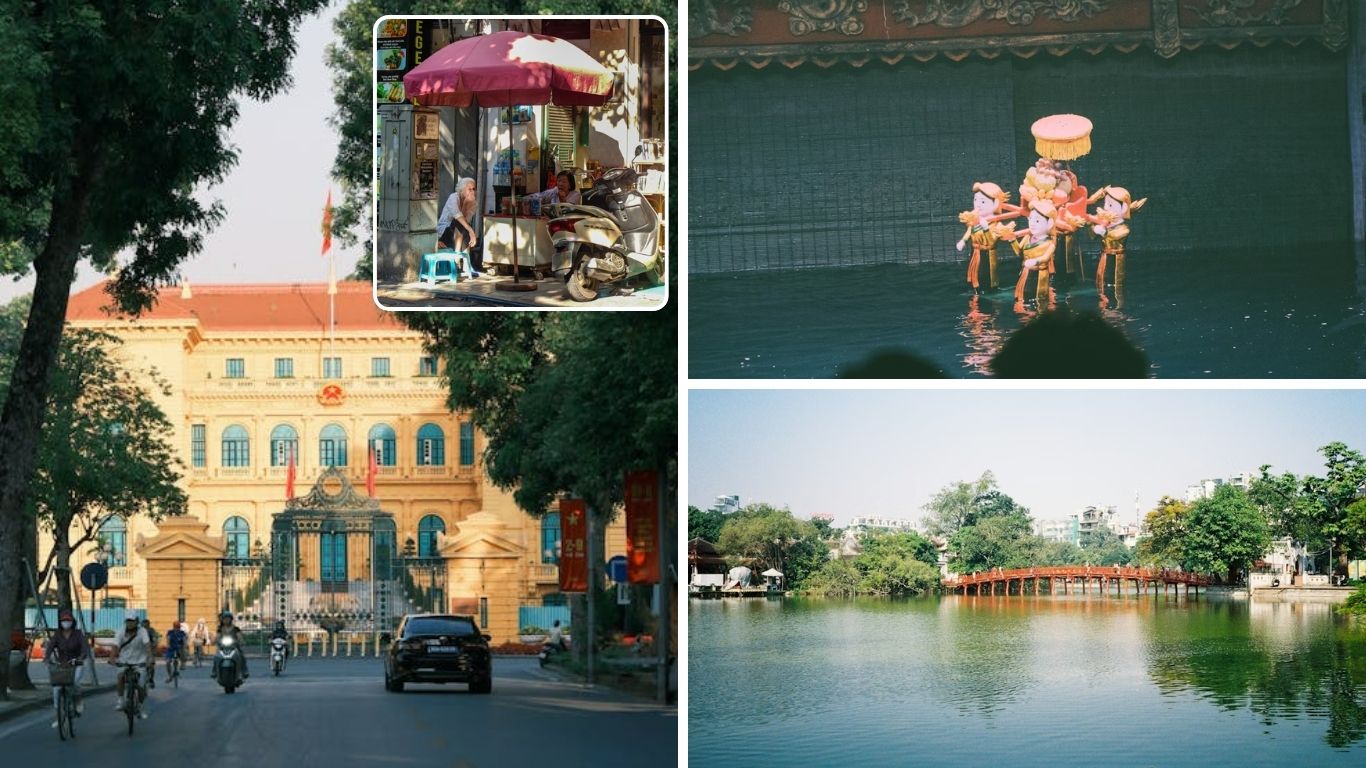
Hanoi serves as the political, cultural, and educational heart of the nation with over 1,000 years of history. The lifestyle pace is noticeably slower and more contemplative, with traditional routines carefully observed. You’ll witness strong preservation of Confucian values, ancestor worship, and ancient customs that have survived modernization.
The architecture tells stories through the Old Quarter’s 36 ancient streets, French colonial villas, and hundreds of pagodas and temples scattered throughout the city. Social attitudes lean traditional, with formal greetings considered important and respect for hierarchy deeply ingrained. People may seem reserved initially and prefer formal forms of address, but they become remarkably warm once trust is established.
The arts scene emphasizes tradition: water puppets, ca tru opera, lacquer painting, and calligraphy dominate cultural spaces. Hanoi’s morning culture is particularly distinctive, with early risers practicing tai chi by lakes and following traditional breakfast rituals that have remained unchanged for generations.
Ho Chi Minh City’s Cultural Character
Originally named Saigon, Ho Chi Minh City has been Vietnam’s commercial powerhouse since the French colonial era. The southern entrepreneurial spirit often called “the engine of Vietnam’s economy”- drives a fast, business-oriented lifestyle with 24/7 energy and constant hustle.
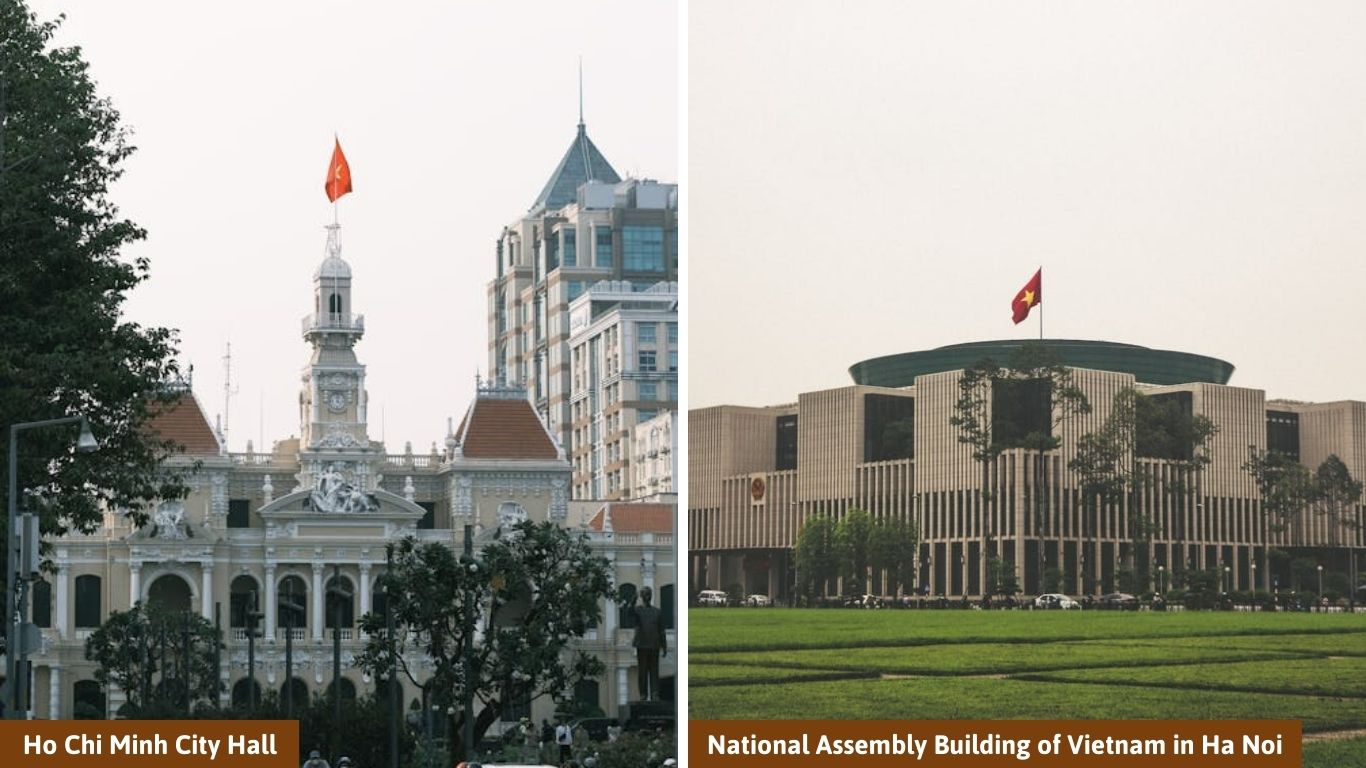
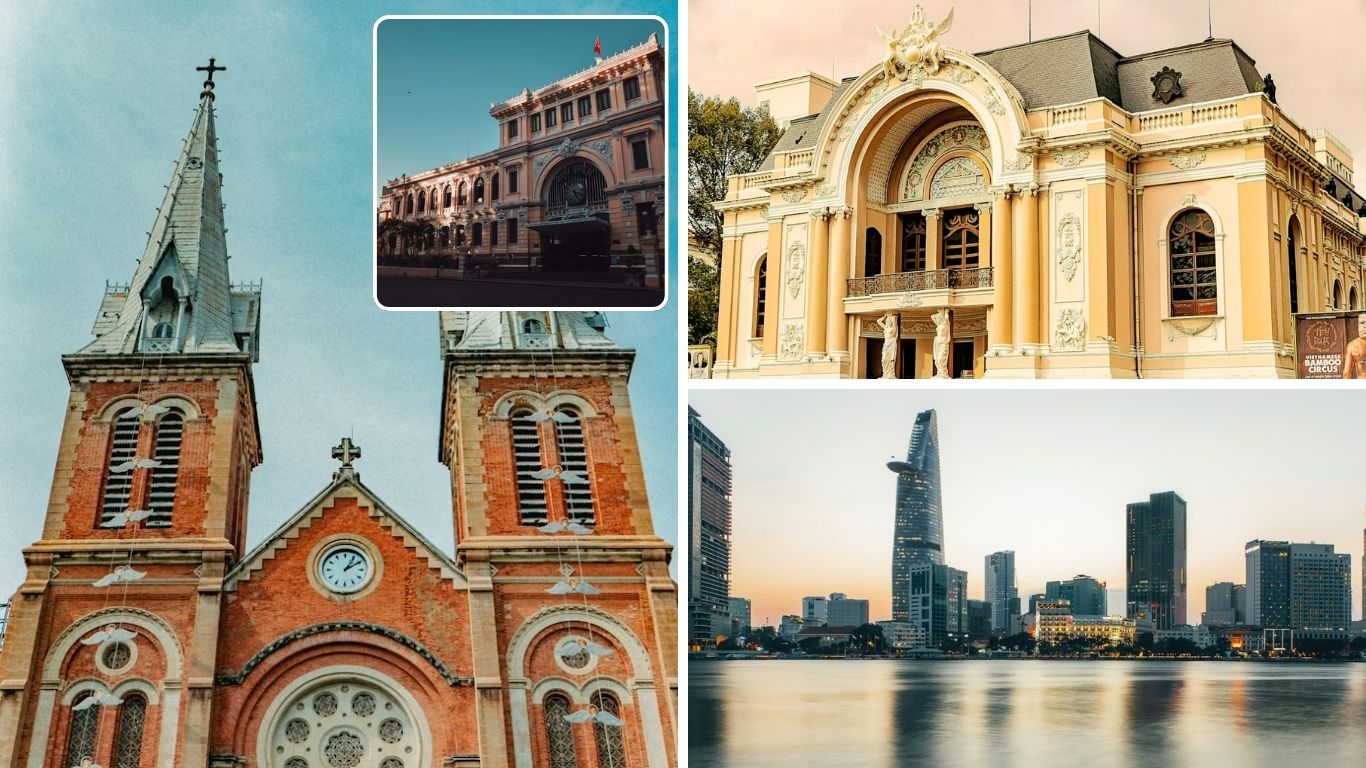
Multicultural influences are everywhere: Chinese merchants, French colonials, Cambodian neighbors, and modern Western trends blend into a unique urban tapestry. Architecture mixes French colonial landmarks (Notre-Dame Cathedral, Opera House), modern skyscrapers, Chinese temples, and contemporary art galleries in visually striking juxtaposition.
Social attitudes are more cosmopolitan, with casual interactions and openness to foreign cultures. People communicate directly, befriend strangers quickly, and make swift business decisions. The contemporary scene thrives with startup culture, international fashion, indie music venues, and vibrant street art.
Night culture dominates social life: late dinners, rooftop socializing, and extended business hours are standard. This difference between Ho Chi Minh City and Hanoi becomes most apparent after sunset.
Cultural Differences at a Glance
|
Categories | Ha Noi |
Ho Chi Minh City |
| Pace | Contemplative, traditional | Fast, entrepreneurial |
| Social style | Formal, hierarchical | Casual, egalitarian |
| Economy | Government/politics | Commerce/trade/tech |
| Architecture | Ancient/preserved | Colonial/modern fusion |
This cultural divide is why many travelers struggle with Ho Chi Minh City or Hanoi decisions, they’re fundamentally different urban experiences. Learn more about navigating these differences in our Vietnam travel guide.
Things to Do in Ho Chi Minh City and Hanoi: Top Attractions Compared
Hanoi: Must-Do Experiences & Attractions
City Center Highlights
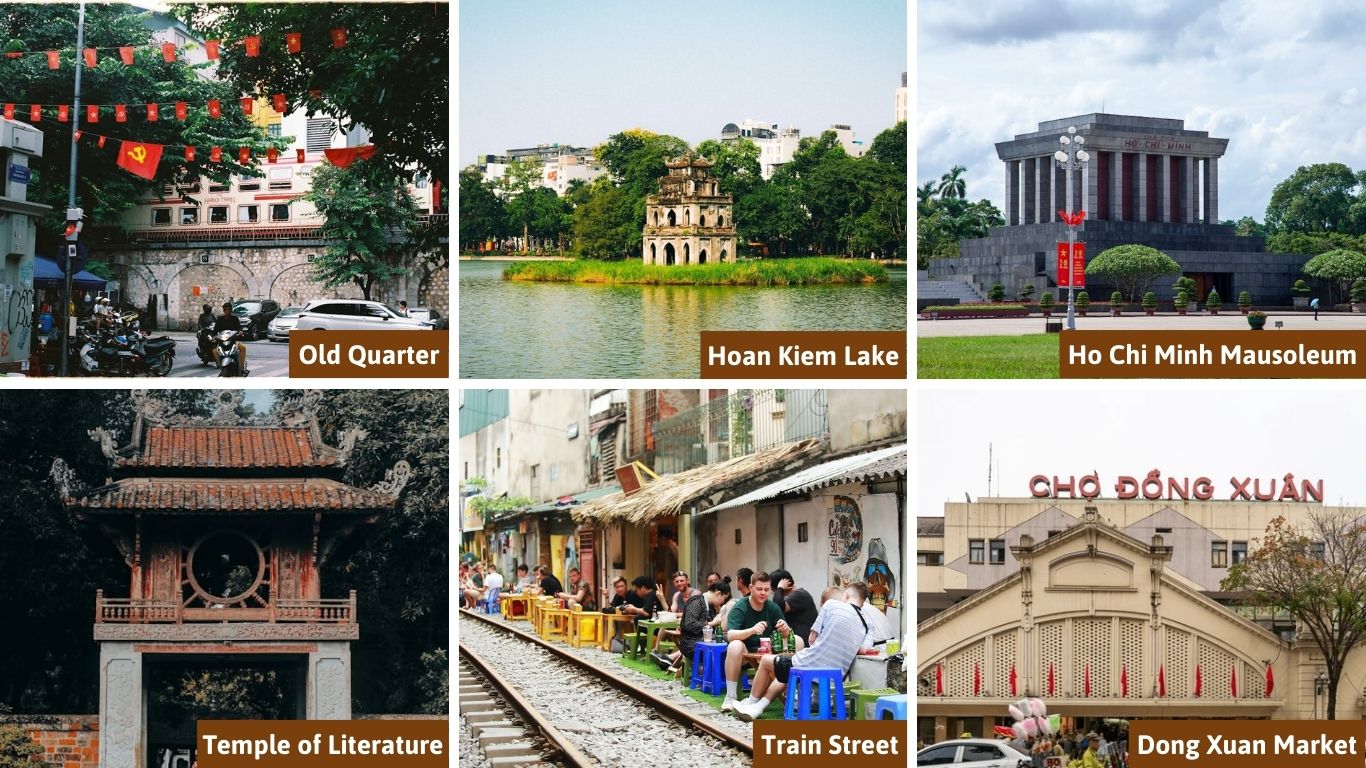
The Old Quarter (36 Ancient Streets) represents a 1,000-year-old merchant district where each street traditionally specialized in one craft or product. Best explored at dawn (6-8 AM) for authentic market life or evening (6-9 PM) for the street food paradise that emerges after sunset. The narrow streets pulse with energy, from silk vendors to silver craftsmen maintaining centuries-old traditions.
Hoan Kiem Lake & Ngoc Son Temple form the heart of Hanoi, where locals practice tai chi at sunrise. The famous Legend of the Golden Turtle tells how Emperor Le Loi’s magical sword was returned to the lake by a divine turtle after defeating Chinese invaders.
Ho Chi Minh Mausoleum Complex houses the preserved body of Uncle Ho (closed Mondays/Fridays and during October-November for maintenance). Visit his humble stilt house, the Presidential Palace, and the iconic One Pillar Pagoda to understand Vietnam’s most revered leader.
The Temple of Literature (Van Mieu), Vietnam’s first university founded in 1070, showcases stunning Confucian architecture with stone stelae mounted on turtle backs and peaceful gardens perfect for contemplation.
Train Street has become Instagram-famous for its narrow alley where trains pass twice daily mere inches from cafes. Check current access rules as authorities periodically restrict tourist access for safety.
Dong Xuan Market, Hanoi’s largest covered market, offers wholesale goods and unfiltered local life, far more authentic than tourist-oriented shopping areas.
Day Trips from Hanoi
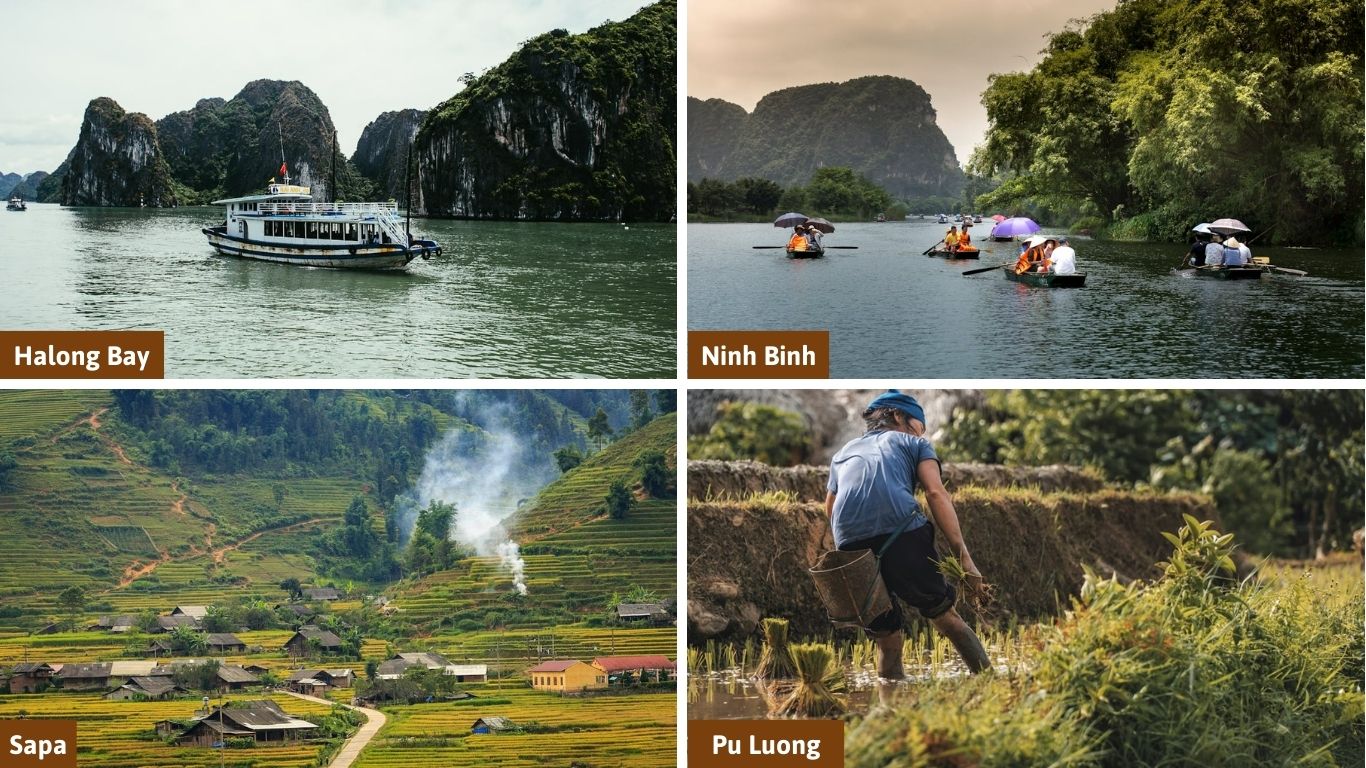
Halong Bay (3.5 hours) features UNESCO-listed limestone karsts rising from emerald waters. An overnight cruise is essential for sunrise views and full immersion. Book Halong Bay overnight cruises for the complete experience.
Ninh Binh (2 hours), often called “Halong Bay on land,” offers Tam Coc boat rides through rice paddies, the ancient capital of Hoa Lu, and stunning karst landscapes accessible by bicycle. Explore Ninh Binh day tour for guided options.
>>> Read more: Day Trips from Hanoi, Vietnam: 6 Experiences Within 3 Hours – From UNESCO Bays to Hidden Incense Villages
Multi-Day Trips from Hanoi (2-3 Days)
Sapa (5-6 hours by overnight train or 4 hours by car) presents terraced rice fields cascading down mountainsides, ethnic minority villages of Hmong and Red Dao people, and Fansipan peak – Vietnam’s highest mountain. Trekking through valleys requires minimum 2 days/1 night to appreciate properly.
Pu Luong Nature Reserve (3.5 hours) remains less touristy than Sapa while offering pristine valleys, cascading rice terraces, traditional Thai villages, and distinctive bamboo water wheels. Best experienced with 2 days/1 night for hiking and authentic homestay experiences.
Ho Chi Minh City: Must-Do Experiences & Attractions
City Center Highlights
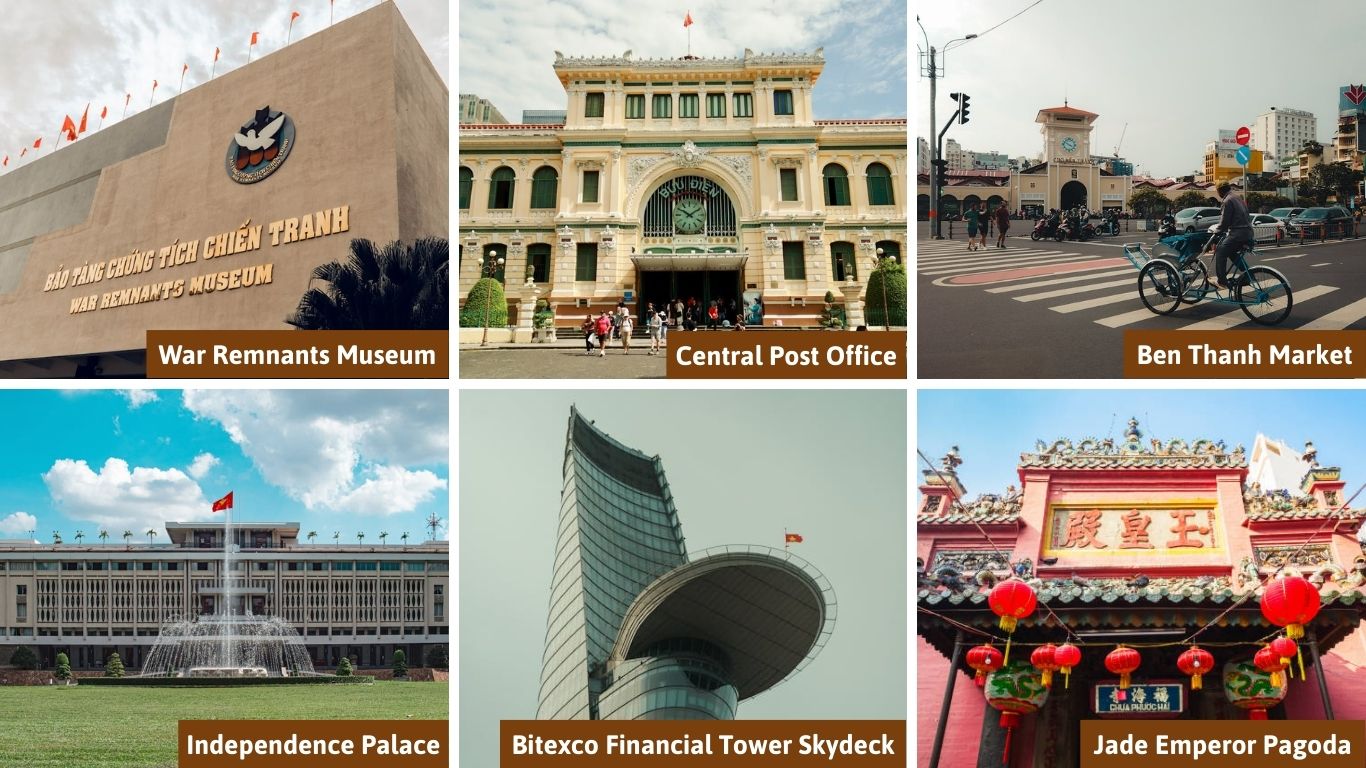
The War Remnants Museum provides essential Vietnam War history from the Vietnamese perspective. Sobering photos, military equipment, and Agent Orange exhibitions require 2-3 hours for thorough exploration. This isn’t easy viewing, but it’s crucial for understanding modern Vietnam.
Notre-Dame Cathedral & Central Post Office represent French colonial architectural masterpieces in downtown District 1, offering perfect golden hour photo opportunities with their distinctive red brick and intricate ironwork.
Ben Thanh Market delivers chaotic sensory overload with 3,000+ stalls creating a bargain paradise. Expect 30-50% markup initially and negotiate firmly. After sunset, the market transforms into a street food heaven with outdoor stalls serving local specialties.
Reunification Palace (Independence Palace) marks the historic site where the Vietnam War ended on April 30, 1975, when North Vietnamese tanks crashed through the gates. Preserved 1960s interiors and the underground war command bunker offer fascinating glimpses into that pivotal moment.
Bitexco Financial Tower Skydeck provides 360° views from the 49th floor, perfect for sunset cocktails overlooking the modern Saigon skyline’s transformation.
District 1 Walking Streets, including Nguyen Hue pedestrian boulevard and the Saigon Opera House area, showcase colonial architecture and contemporary urban life in perfect harmony.
Jade Emperor Pagoda features ornate Taoist temple architecture with intricate wood carvings and clouds of incense creating an atmospheric spiritual experience.
Day Trips from HCMC
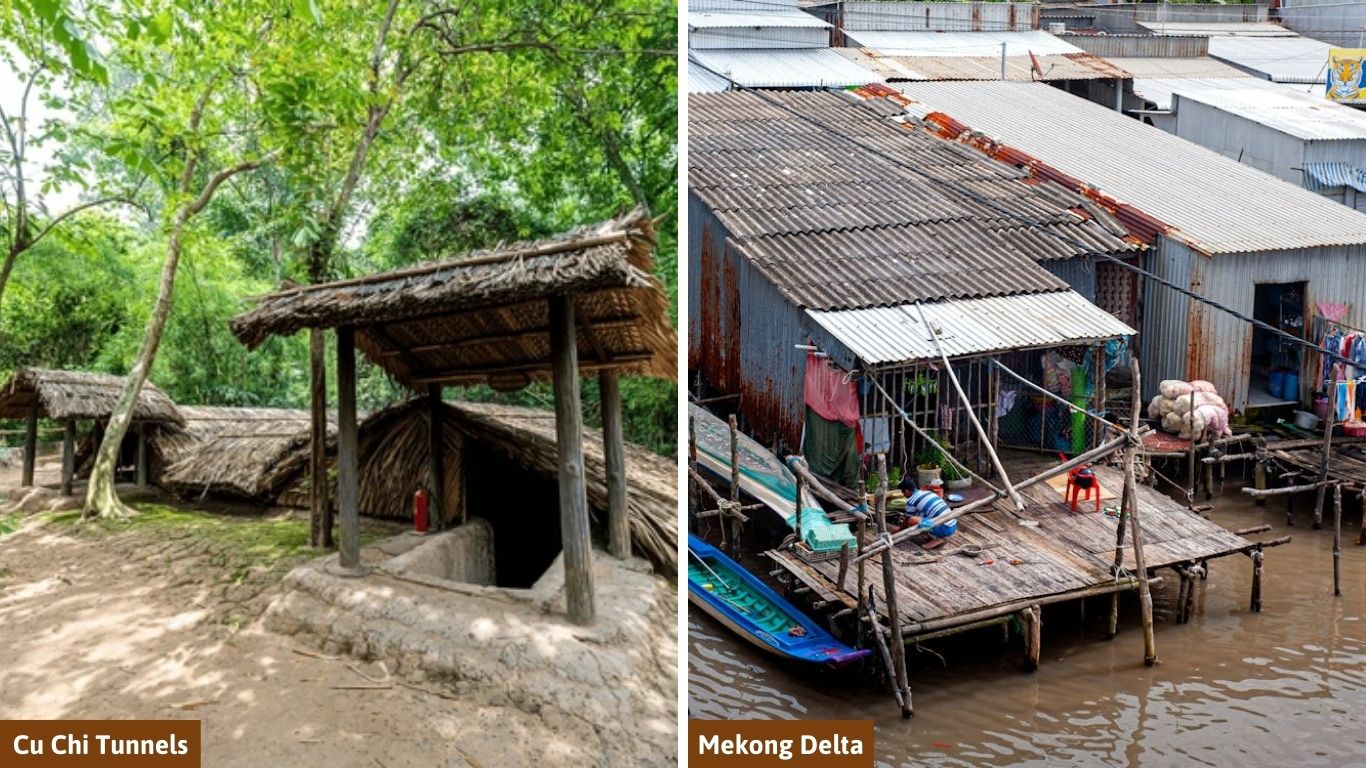
Cu Chi Tunnels (1.5 hours) reveal the underground Viet Cong network where you can crawl through narrow sections and visit the shooting range. Book Cu Chi Tunnels day tour for historical context.
Mekong Delta (2 hours) immerses you in floating markets like Cai Be and Cai Rang, coconut candy workshops, fruit orchards, and boat rides through narrow canals. Explore Mekong Delta cruises for overnight journeys deeper into the delta.
>>> Read more: What Are the Best Day Trips from Saigon – And Are They Worth It?
When comparing things to do in Ho Chi Minh City and Hanoi, both cities offer 3-4 days of urban exploration plus incredible day trips that extend your Vietnam experience. Check comprehensive Vietnam Tours for guided itineraries.
Difference Between Hanoi and Saigon Food: A Culinary Comparison
Hanoi’s Culinary Profile
Signature Dishes
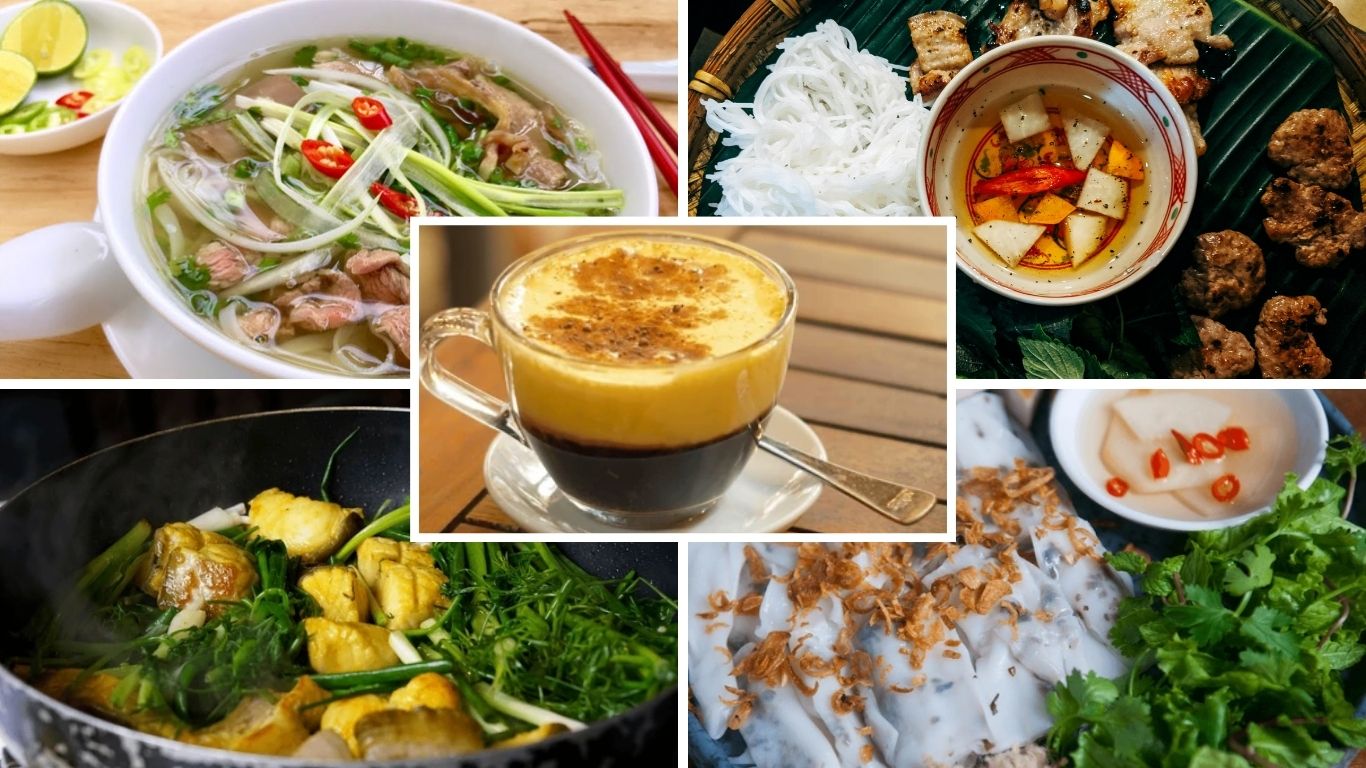
Pho features clear, delicate bone broth simmered for 24+ hours, wider rice noodles, and only green onions, no herbs or bean sprouts tableside. The broth’s purity is the star, and customization is considered unnecessary.
Bun cha consists of grilled pork patties and pork belly cooked over charcoal, served with vermicelli noodles, a herb plate, and tangy dipping sauce. This became internationally famous as Obama’s meal choice with Anthony Bourdain during his Hanoi visit.
Cha ca La Vong presents turmeric-marinated fish grilled tableside with generous amounts of dill – a Hanoi specialty for over a century.
Egg coffee (ca phe trung) features whipped egg yolk topping creating a creamy, dessert-like drink that has become a Hanoi icon.
Banh cuon offers delicate steamed rice rolls filled with minced pork and wood ear mushrooms.
Dining Culture
Expect low plastic stools on sidewalks with specific dishes eaten at specific times: pho for breakfast, bun cha for lunch. Portions are smaller, encouraging ordering multiple dishes per meal. Street food costs 20,000-50,000 VND ($0.80-$2), while restaurants range 100,000-300,000 VND ($4-$12). Join a Hanoi Street Food Tour for authentic local experiences.
Ho Chi Minh City’s Culinary Profile
Signature Dishes
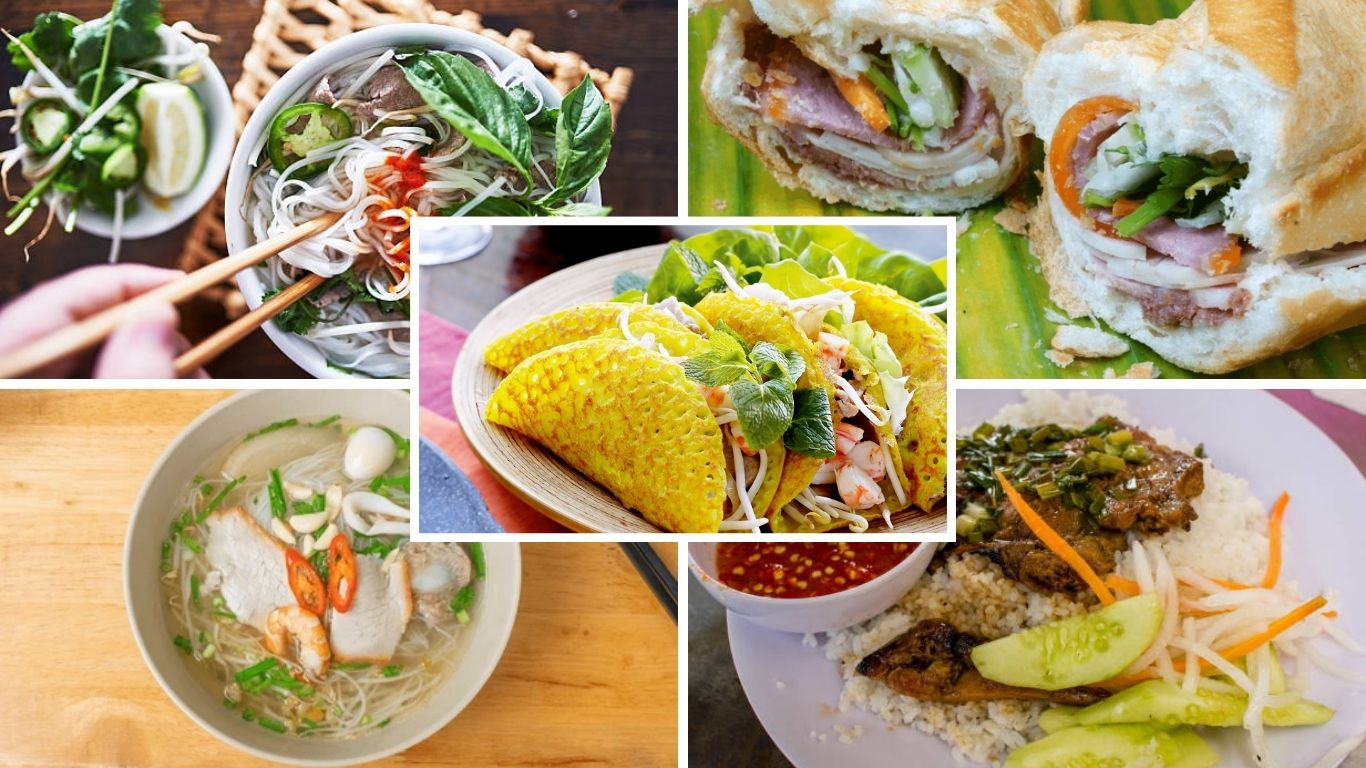
Banh mi, the Vietnamese baguette perfected in Saigon, combines French bread with pate, pickled vegetables, cilantro, and chili for the ultimate fusion sandwich.
Hu tieu offers clear pork bone soup with rice noodles, showing Cambodian-Chinese influence in its preparation.
Com tam features broken rice topped with grilled pork chop, shredded pork skin, and fried egg – a hearty southern favorite.
Banh xeo delivers crispy turmeric crepes filled with pork, shrimp, and bean sprouts, wrapped in lettuce with herbs.
Dining Culture
Saigon mixes street vendors with air-conditioned restaurants, and international fusion appears frequently. Portions are larger with “family style” sharing common. Coffee culture includes both traditional ca phe sua da (iced coffee with condensed milk) and trendy specialty cafes serving single-origin pour-overs. Experience it all on a Sai Gon After Dark On Vespa Tour.
Getting Around: Transportation & Accommodation Comparison
Airport Access
Hanoi (Noi Bai – HAN) sits 45-60 minutes from Old Quarter via expressway. Airport buses cost 30,000 VND ($1.25) and stop at major hotels. Grab or taxis run 300,000-400,000 VND ($12-16).
Ho Chi Minh City (Tan Son Nhat – SGN) offers shorter transfers at 30-45 minutes to District 1. Bus #152 costs just 20,000 VND ($0.80). Grab or taxis range 150,000-250,000 VND ($6-10).
Within City Navigation
Both cities rely heavily on Grab (ride-hailing app), download it before arrival for seamless transportation. Hanoi’s compact Old Quarter is walkable, with atmospheric cyclo tours perfect for sightseeing. Slower traffic makes motorbike rentals easier for confident riders.
HCMC presents more challenges: the sprawling layout (10x Hanoi’s population density) and notoriously chaotic traffic require more Grab/taxi reliance. Neither city has efficient metro yet, though both systems remain under construction.
Domestic flights between cities take 2 hours and cost $40-80 USD with multiple daily options from Vietnam Airlines, VietJet, and Bamboo Airways. Read our complete Transport Vietnam: Complete Guide for Best Way To Getting Around for detailed logistics.
Accommodation Comparison
Budget Range (per night):
- Hostels: Both cities 5-15 USD for dorms, 15-30 USD for private rooms
- Mid-range hotels: Hanoi 30-80 USD | HCMC 35-90 USD
- Luxury hotels: Hanoi 80-300 USD | HCMC 90-400+ USD
Pricing is generally comparable, with HCMC slightly higher at the luxury tier.
Best Neighborhoods
In Hanoi, choose Old Quarter for atmosphere, nightlife, and walkability; Hoan Kiem Lake area for central location with less chaos; or Tay Ho/West Lake for expat areas with lakeside dining further from tourist crowds.
In HCMC, District 1 serves as the tourist hub with all attractions walkable; District 3 offers more local feel at lower prices while staying central; District 2/Thao Dien provides upscale expat neighborhoods with excellent cafes and restaurants.
Booking Tips: Book 2-3 months in advance for peak season (December-April) in both cities. For Hanoi winters, verify heating exists, many budget hotels lack it, and winters get surprisingly cold. In HCMC, request higher floors for better air quality and noise reduction.
Our Vietnam Tours include carefully selected accommodations that match each destination’s character.
Hanoi vs Ho Chi Minh City Nightlife: After Dark Experiences
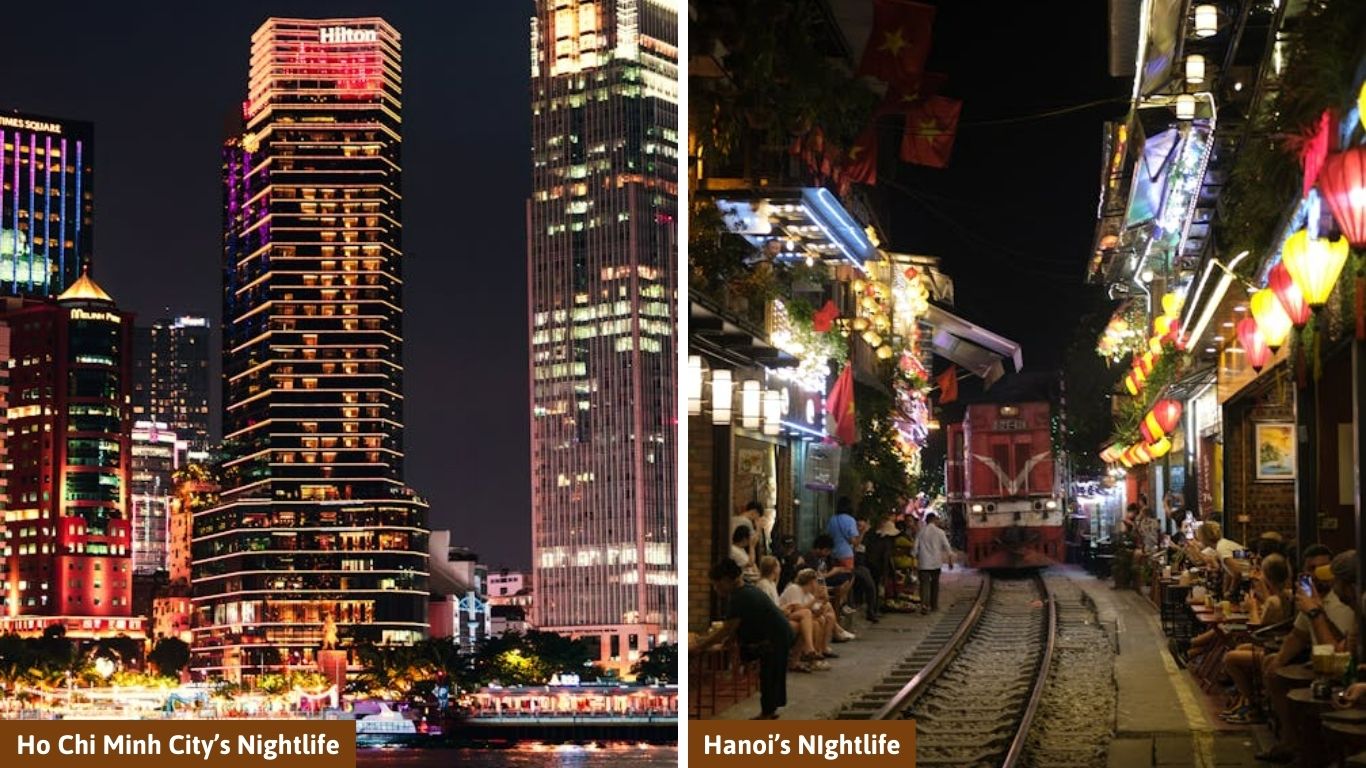
When it comes to Hanoi vs Ho Chi Minh City nightlife, these cities offer completely opposite after-dark experiences. HCMC pulses with international energy until dawn, while Hanoi offers more traditional, local-oriented evening entertainment. Here’s the detailed breakdown.
Ho Chi Minh City Nightlife
Vibe: Energetic, international, cosmopolitan. Dress codes apply at upscale venues. Late closings (2-4 AM) are common, creating an anything-goes atmosphere.
Hanoi Nightlife
Vibe: Subdued, authentic, local-oriented. Most places close by midnight-1 AM. Casual dress prevails with less glitzy venues.
Nightlife Verdict
The Hanoi vs Ho Chi Minh City nightlife comparison is clear: party animals, club-goers, and rooftop cocktail lovers choose HCMC without question. Culture seekers, beer enthusiasts, and travelers wanting authentic local experiences prefer Hanoi’s bia hoi corners. Consider nightlife priorities when deciding Ho Chi Minh City or Hanoi, your after-dark preferences might be the deciding factor.
The Smart Solution: Experience Both Cities on One Vietnam Trip
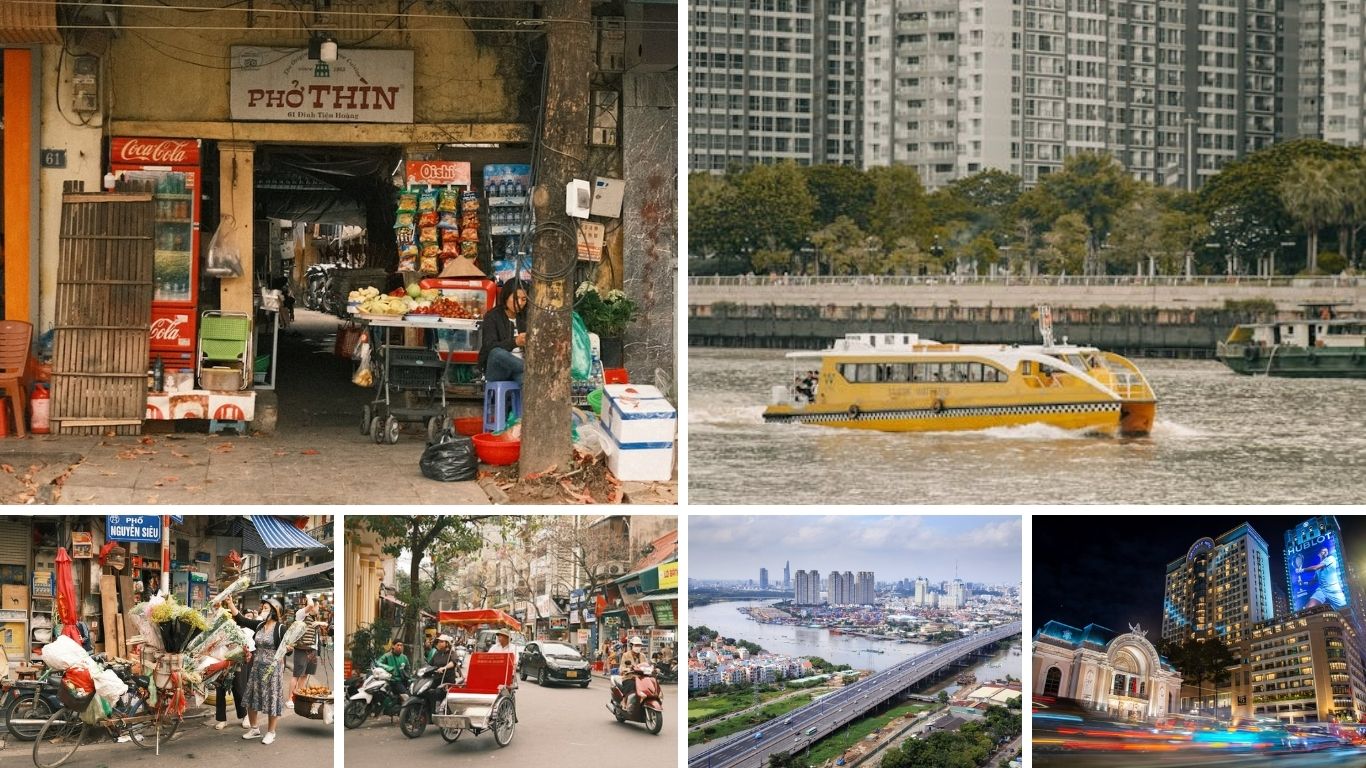
Why choose between Ho Chi Minh City or Hanoi when you can experience both? Understanding every difference between Ho Chi Minh City and Hanoi makes the case clear: seeing both cities gives you the complete Vietnam picture, and domestic flights make this surprisingly easy.
First-time Vietnam visitors should start with Hanoi if traveling October-April (best weather plus Halong Bay access); choose HCMC if traveling May-September to avoid Hanoi’s summer heat and humidity. This maximizes the Ho Chi Minh City vs Hanoi weather advantage and ensures optimal conditions for exploring each city’s highlights.
For more planning guidance, explore our Vietnam travel hints covering everything from visa requirements to cultural etiquette.
Logistics Made Simple
Flights take just 2 hours direct between Hanoi (HAN) and Ho Chi Minh City (SGN). Vietnam Airlines, VietJet Air, and Bamboo Airways operate 15+ daily flights with costs from $40-80 USD one-way when booked 3-4 weeks in advance. For adventurous travelers, the Reunification Express train takes 30+ hours but offers scenic countryside views.
Suggested 12-Day “Best of Both Cities” Itinerary
Stop wondering about Ho Chi Minh City or Hanoi, see both! Most of our Vietnam tour packages are designed to include both Hanoi and Ho Chi Minh City, along with highlights like Halong Bay, Hoi An ancient town, and Mekong Delta. Check out our Classic Adventure Vietnam 12 Days for comprehensive references!
Days 1-2: Arrive Hanoi. Old Quarter, Hoan Kiem Lake, Temple of Literature, bun cha lunch, bia hoi evening.
Days 3-4: Overnight Halong Bay cruise – kayaking, cave exploration, sunrise over karsts.
Day 5: Return to Hanoi. Afternoon flight to Ho Chi Minh City.
Days 6-7: HCMC city highlights – War Remnants Museum, Ben Thanh Market, Notre-Dame Cathedral, Vespa night tour.
Day 8: Day trip to Cu Chi Tunnels + Cao Dai Temple.
Day 9: Day trip to Mekong Delta.
Days 10-11: Optional extension: fly to Hoi An or Hue for central Vietnam highlights.
Day 12: Depart from HCMC (SGN).
We handle all logistics: domestic flights, hotels, guided tours, and seamless connections, so you experience the full spectrum of Vietnamese culture without planning stress.
Tour Comparison: Which Package Fits Your Trip?
| Tour | Duration | Route | Best For |
|---|---|---|---|
| Classic Adventure Vietnam | 12 Days | HCMC – Hoi An – Hue – Hanoi – Halong | First-timers wanting both cities |
| Vietnam Cultural Highlights | 14 Days | Hanoi – Halong – Sapa – Hue – Hoi An – HCMC – Mekong | Culture & nature lovers |
| Grand Sensational Vietnam | 20 Days | Hanoi – Ninh Binh – Halong – Sapa – Hue – Hoi An – Dalat – Nha Trang – HCMC – Mekong | In-depth explorers |
| Tonkin Elegance | 8 Days | Hanoi – Sapa – Halong | Hanoi-focused, short trip |
| Splendors of Vietnam & Cambodia | 17 Days | Hanoi – Halong – Hue – Hoi An – HCMC – Mekong – Phnom Penh – Siem Reap | Vietnam + Cambodia combine |
Let our local experts design your perfect Vietnam journey combining both cities’ unique experiences. Contact us here or drop us an offline message on the screen to receive customized itineraries with no obligation required!
Let Us Help Plan Your Trip
Not sure where to start? Our local experts have helped hundreds of travelers design the perfect Vietnam journey, whether you’re set on Hanoi, drawn to Ho Chi Minh City, or ready to explore both.
Tell us your travel dates, group size, and interests, and we’ll craft a personalized itinerary with no obligation required.